Metro Manila cyclists share tips on staying fresh while commuting
Amid rising fuel prices triggered by the Middle East conflict, cycling resurfaces as an eco-friendly and budget-friendly option to get around in Metro Manila, especially for work.
Pedaling may be a breeze for those who are used to it, but newcomers may have their share of concerns. For instance, how is it possible to cycle through the heat and arrive at work without being drenched in sweat? Seasoned bike commuters told PhilSTAR Life that staying fresh during a ride is possible with the right strategies.
Janardan Ladyong, 38, known online as “Manila Bike Commuter,” has been cycling as his mode of transportation for over two decades. Nowadays, he commutes at least three times a week for grocery runs and other errands.
For him, cycling is a highly efficient way to move around the metro, considering many traffic-congested areas in the country. He also finds commuting by bike three times faster than waiting on trains or jeepneys during the rush hour.
“Compared to refueling, maintenance, parking fees, and other things you commonly have to deal with when operating a motor vehicle, heat and sweat with bike commuting are actually very minor issues,” he added.
Meanwhile, content marketing professional Myta Santiago, 36, a regular bike commuter and road safety advocate, cycles to work because it doesn't strain the wallet as much. "It's an affordable way to get around,” she told L!fe.
For Geri Amarnani, 44, who goes by the name "Pinay Bike Commuter" online, biking is liberating and refreshing.
"There’s a sense of freedom and independence that biking gives which public transport or driving sometimes cannot," she said.
Planning to grab your helmet and bike to work or errands? Ladyong, Santiago, and Amarnani shared some tips to help take the hassle out of your ride.
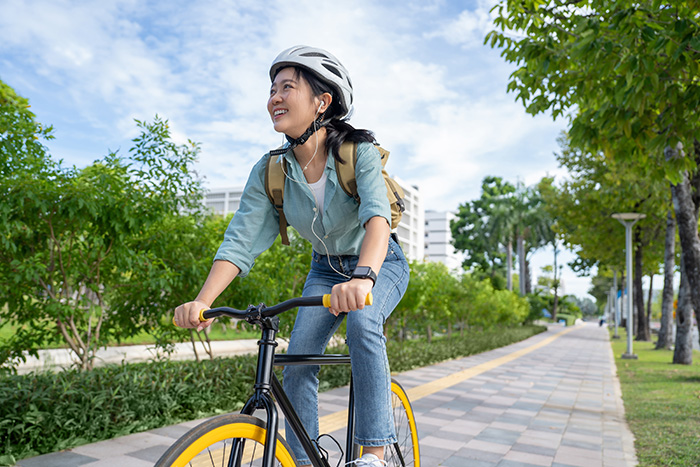
Plan your route
Before you hit the road, Santiago says staying comfortable on your bike commute requires preparation. For her, planning routes helps reduce heat exposure.
“I map out my ride and look for neighborhood routes,” she said. “While indirect, they usually have more shade and aren't as congested as main roads.”
Start slow and pace yourself
Adjusting to the weather is key for cyclists to manage the heat. “Acclimatize your body for bike commuting. Start with short trips and errands, and ride early morning or in the evening, then work from there,” Ladyong said.
He said finding the right pace is also important. “Bike like you’re walking. When you’re pedaling with less effort, you’d naturally sweat less.”
Stay hydrated
Ladyong also cited the need for constant hydration. “Always make sure you carry water with you, and drink throughout the day.”
He also said that sweating shouldn't discourage you from trying bike commuting. “Sweating [is] often perceived negatively, especially when it comes to bike commuting, but it’s just the body’s response to regulate one’s temperature,” he told L!fe.
To keep refreshed, Santiago suggested the use of cooling wipes while also providing an alternative.
"They're really helpful in regulating heat on the skin, but because they tend to be wasteful," she said. "I use a bimpo or a small towel, pour a bit of water on it, and wipe my skin."
Pack smarter
Also, you don't have to wear your office attire during your commute, too. Santiago shared its best to wear light clothing that will dry quickly. Bringing a change of clothes and a hygiene kit that you can easily use in the restroom is key to staying fresh after the ride.
“I also have a small kikay kit for essentials: face wipes, a small deodorant stick, just in case," she said while also reminding to apply sunscreen at least 30 minutes before heading out.
For keeping clothes wrinkle-free, Ladyong said the key is to find the right brands or the right clothing to wear.
"Clothing technology has progressed, and there are office clothes that are specific for bike commuters," he said.
Amarnani also shared a small, not-so-secret hack: "When I used to shower in the office, I would roll my extra clothes tightly instead of folding them and place them in a small garment pouch inside my backpack bike pannier bag," she said.
As for helmet hair, Amarnani said it is all part of the biking package. "I use hair velcro grippers for my bangs and tie my hair in a loose bun. When I get to work, I do a quick hair iron, brush, or apply a little leave-in conditioner to restore volume and neatness."
For Santiago, who has short hair, a cycling cap does the trick. However, her friends with long hair would tie their hair in a tight ponytail and use a balaclava to separate their hair from the helmet.