

The heart of the nation must beat equally—for the ‘haves’ and ‘have-nots’
At the recently concluded Philippine Heart Association Annual Convention, held from May 26–29 at the EDSA Shangri-La, nearly 3,000 cardiologists, cardiovascular surgeons, internists, nurses, rehabilitation specialists, and allied healthcare professionals gathered under one roof with a shared mission: confronting the growing cardiovascular crisis in the Philippines.
But amid the scientific sessions, cutting-edge technologies, and discussions on emerging therapies, one lecture struck a deeper emotional and national chord.
The Mariano Alimurong Memorial Lecture, delivered by past PHA president Dr. Joel M. Abanilla, was not merely an academic presentation. It was a sobering diagnosis of the country’s fragmented cardiovascular system—and, at the same time, a bold prescription for healing it.
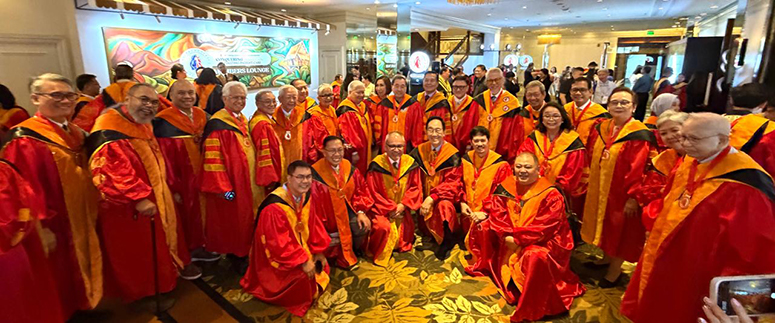
Current PHA president Dr. Walid Amil opened the convention amid growing concern over the relentless rise of cardiovascular diseases, which continue to be the leading cause of death among Filipinos. Meanwhile, Dr. Abanilla’s keynote lecture transformed statistics into a moral challenge: Why should survival from a heart attack depend on geography?
That question lingered in the ballroom long after the applause ended.
The Philippines is an archipelago of 7,641 islands with a population now approaching 117 million. Yet, according to the lecture, the country has only one cardiologist for every 44,000 Filipinos—far below the World Health Organization’s recommended ratio of one for every 25,000. Worse, advanced cardiac facilities remain heavily concentrated in urban centers, especially Metro Manila.

CONTINUE READING BELOW

For many patients in far-flung provinces, a heart attack is not only a medical emergency. It is also a logistical catastrophe.
A patient from Basilan, Samar, or Palawan may need to travel for hours—sometimes days—just to reach a cath lab or cardiac surgical center. In cardiovascular medicine, where “time is muscle,” every delayed minute means dying heart tissue, greater disability, or death itself.
Dr. Abanilla described this painful inequity with striking clarity.
Most cath labs remain in private hospitals clustered in the National Capital Region. Training programs are unevenly distributed. Workforce dispersion is poor. Financing barriers persist despite PhilHealth support systems.

In short, the country’s cardiac expertise has become geographically trapped.
Yet the lecture was not pessimistic. Far from it. Its most compelling feature was its realism.
Instead of proposing an entirely new healthcare structure, Dr. Abanilla argued for strengthening and connecting systems that already exist. His proposed “Cardio Satellite Roadmap” envisions a nationwide network of regional and provincial heart centers anchored by the Philippine Heart Center.
In essence, the goal is to bring the heart center closer to the Filipino, instead of forcing the Filipino to travel endlessly toward the heart center.
The concept is elegant in its simplicity.
A cardio satellite is not merely a temporary mission site or an occasional outreach activity. It is envisioned as a permanent regional cardiovascular ecosystem—complete with cardiology services, cardiac surgery, anesthesia, imaging, rehabilitation, intensive care capability, and local training infrastructure.
In essence, the goal is to bring the heart center closer to the Filipino, instead of forcing the Filipino to travel endlessly toward the heart center.
The lecture highlighted existing progress already achieved across the country. Regional heart centers in Davao, Cebu, Iloilo, Baguio, Cagayan de Oro, Ilocos Norte, Legazpi, Tacloban, Cotabato, and other regions are already performing open-heart surgeries and advanced cardiovascular procedures with impressive outcomes.
Perhaps the most remarkable statistic presented was this: the regional cardio satellites collectively performed 883 surgeries and procedures with a reported success rate of 98%.
That number deserves national attention.
It proves that excellence in cardiac care does not belong exclusively to Metro Manila. Filipino expertise exists throughout the archipelago. What many regions lack are sustained infrastructure, manpower support, financing stability, and long-term institutional commitment.
The proposed three-tier system presented during the lecture offers a practical framework. Tier 1 consists of the national mother institution, led by the Philippine Heart Center. Tier 2 comprises regional heart centers capable of providing advanced care and surgery. Tier 3 includes provincial cardiac units focused on prevention, diagnostics, rehabilitation, and follow-up care.
If fully realized, this could become one of the most transformative cardiovascular public health reforms in Philippine history.
But perhaps the most powerful line of the entire lecture came near the end: “Equity is not a destination. It is a network.”
That single sentence summarized the entire challenge facing Philippine healthcare.
Healthcare inequity cannot be solved merely by constructing one grand hospital in the capital. It requires a functioning ecosystem— interconnected hospitals, trained professionals, financing pathways, data systems, and political will working together.
The late Dr. Mariano Alimurong, in whose honor the lecture was named, would likely have appreciated this vision. Medicine at its best is not merely about scientific brilliance. It is about access, compassion, and systems that allow ordinary citizens to survive extraordinary illnesses.
Today, cardiovascular disease continues to rise due to aging populations, unhealthy diets, smoking, diabetes, obesity, stress, sedentary lifestyles and worsening socioeconomic disparities. The burden will only intensify in the coming decades.
The question is whether the country will respond proactively—or continue reacting one heart attack at a time.
The good news is that the roadmap already exists. The challenge now is implementation.
As the convention ended and delegates returned to their hospitals and clinics across the nation, one truth became increasingly clear: the future of Philippine cardiology may no longer depend solely on how advanced our technologies become.
It may depend more on whether a poor Filipino in a distant province can access those technologies in time. Because ultimately, the heart of the nation cannot beat unequally forever.

WATCH: Save for retirement or enjoy life now? (Generations Ep. 21)
September 16, 2026
WATCH: Do you still believe in marriage? (Generations Ep. 17)
August 19, 2026