

How Prometheus helped ease my anxiety
The legend of Prometheus has long fascinated me. I am always intrigued by his rather precarious position in the divine order of things. Where did he fit exactly in the social circle of the Greek pantheon?
On one hand, he was considered a trickster—a pariah who had the gall to steal fire from the clutches of the all-powerful Zeus and share it with our ancestors. On the other hand, he was regarded as humanity’s creator and savior, an audacious Titan who defied the Olympian top dog and gifted humans the very foundation of knowledge and technology.
When I found out that there was a karst cave in Georgia (or Sakartvelo, in the local tongue) named after him, I knew I had to see it for myself. Mythology has it that when Zeus punished Prometheus for his “misdeeds,” he was chained with adamantine bonds to a massive boulder in the Caucasus Mountains. Others claim he was bound to the bluffs of the Khvamli Massif, located in the Tsqaltubo municipality of the Imereti region— not far from the cave system that bears his name.
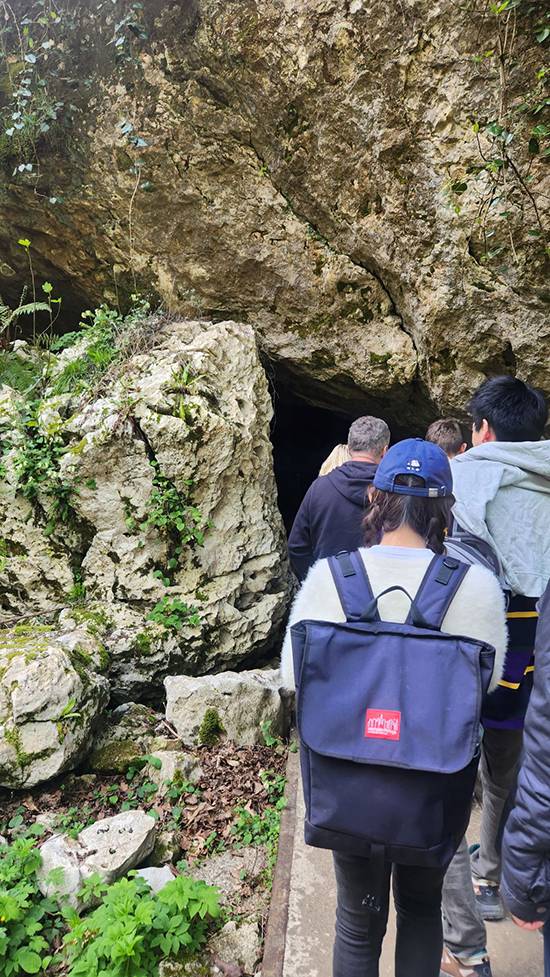
My Prometheus fanboyism aside, there was actually a more personal reason I wanted to go on this speleological adventure.
You see, a cave houses a multitude of things that could potentially send me spiraling into a panic attack: barophobia-inducing stalactites, a rabid bat tangled in my hair (its fangs turning me into Cujo), a spider the size of an infant’s fist crawling on my shoulder, a rat snake slithering into my pants, and patches of cold, damp darkness concealing unknown horrors.
I am the live-action version of Anxiety from Inside Out 2—only less orangey and less chaotic. I believed venturing into the Prometheus Cave could somehow turn me into Joy’s cousin Courage (or Fear’s stepbrother Fearlessness, if Pixar ever goes that route).
CONTINUE READING BELOW

I will overcome my fears. I will not allow feelings of dread to control me. Inshallah.
I am not a native Arabic speaker, but after hearing “Inshallah” so often in Saudi Arabia, I admit to using it excessively at times. It means “God willing.” If the Almighty allows it, it shall come to pass.
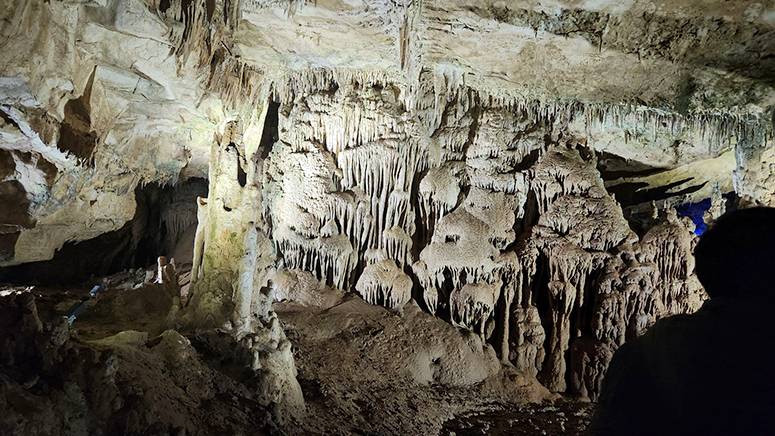
And so I dragged a couple of friends staying with me at a hotel in Batumi and hired a private driver to take us on a three-hour trip to Kumistavi. We were joined by throngs of Indian and Russian tourists on our descent toward the natural monument. The cave system boasts six halls out of 22 that are open to visitors. You are greeted by music and neon lights, and the risk of slipping is very real—the 1.8-kilometer path is nearly as slick as a skating rink.
But what a sight—and what a journey—it was to discover the secrets of Prometheus Cave. You immediately notice how richly adorned it is with practically every rock formation imaginable: stalagmites and stalactites, flowstones, calcite pearls, draperies, and curtains. Due to time constraints, we were unable to take the boat ride through the underground river, which would have enriched the experience even further.
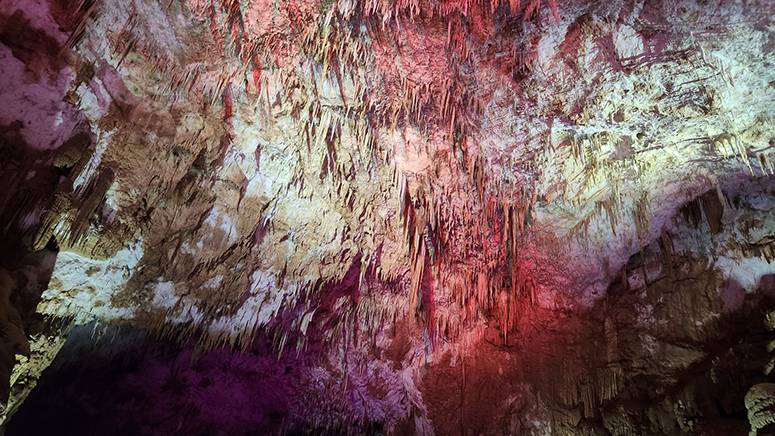
Surprisingly, I did not encounter any fauna at all, although I had a sneaky suspicion that the noise generated by tourists had scared them into hiding.
The drive to Martvili Canyon took about an hour, and we spent an additional 40 minutes walking and rafting through its pristine turquoise-green waters before returning to Batumi. Also called the Gachedili or Abasha Canyon Natural Monument, it is the very image of a gorge you usually only see in travel magazines and postcards. Adorned with seven breathtaking waterfalls cascading into the canyon, with the Abasha River flowing through it, it’s no surprise that it was once the secret bathing place of the noble Dadiani family in the 19th century.
On my flight back to Saudi Arabia, I no longer blabbered Hail Marys and Our Fathers at the slightest turbulence. I didn’t clutch the armrest as if I were holding on for dear life.
Did my Prometheus Cave adventure finally cure my anxiety? It’s hard to tell—but there is always hope.
Inshallah.
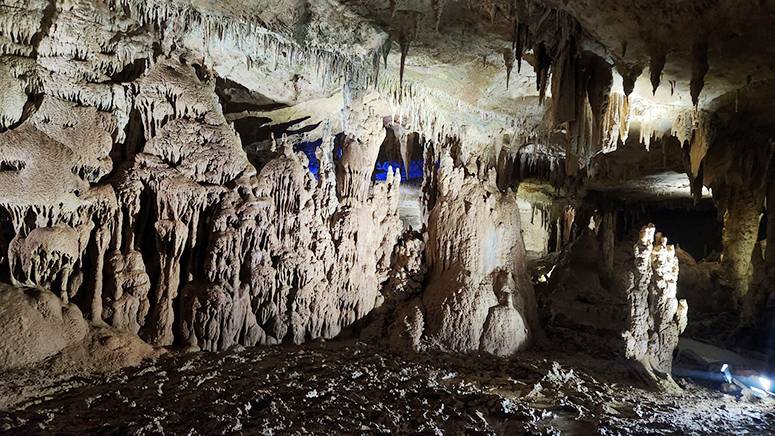
Shy fauna: The flash from dozens of phones and crowd chatter might have sent the cavern’s creatures scurrying for cover. But who can blame the tourists? Such surreal beauty cannot be left unphotographed.
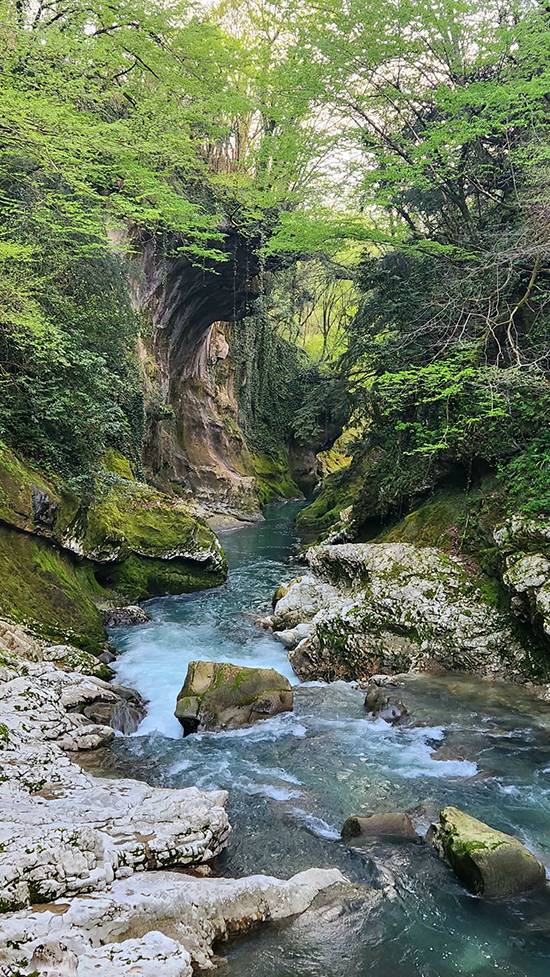
Ethereal vibes: Teeming with greenery on top and turquoise waters below, the cliffs of Martvili Canyon are certainly a sight to behold.
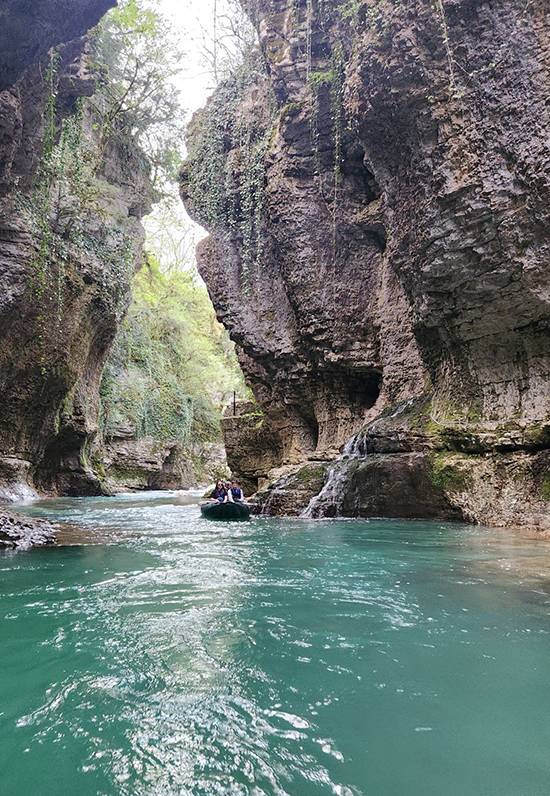
Rafting never crossed my anxious mind, but the river looked so tranquil that I decided to hop on a kayak and paddled my way through its serene waters. The experience was nothing but delightful.
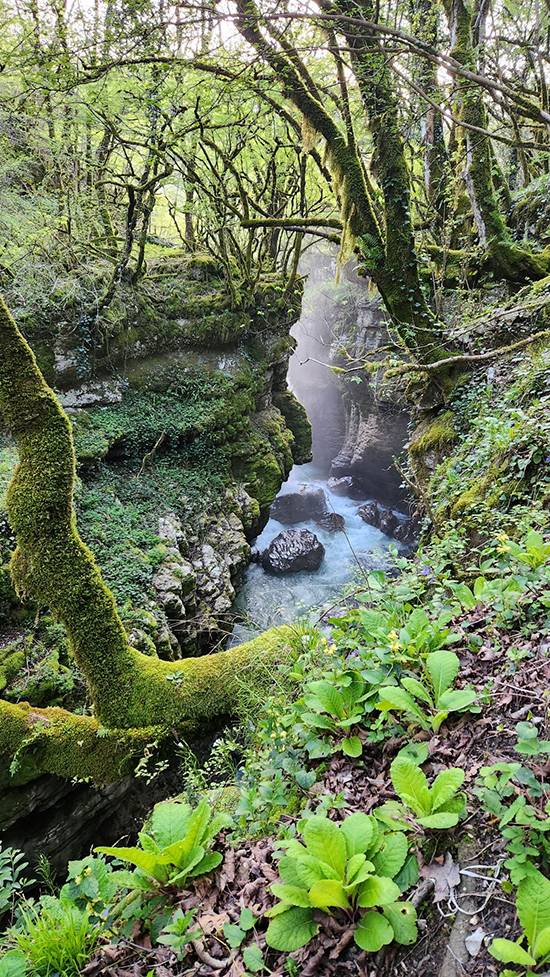
Gorge-ous: Photographed with just a Galaxy Fold unaltered and unprocessed, the resulting image I snapped speaks volumes of how striking a Martvili gorge is. No filters necessary.
Shy fauna: The flash from dozens of phones and crowd chatter might have sent the cavern’s creatures scurrying for cover. But who can blame the tourists? Such surreal beauty cannot be left unphotographed.
Ethereal vibes: Teeming with greenery on top and turquoise waters below, the cliffs of Martvili Canyon are certainly a sight to behold.
Rafting never crossed my anxious mind, but the river looked so tranquil that I decided to hop on a kayak and paddled my way through its serene waters. The experience was nothing but delightful.
Gorge-ous: Photographed with just a Galaxy Fold unaltered and unprocessed, the resulting image I snapped speaks volumes of how striking a Martvili gorge is. No filters necessary.
CLOSE

WATCH: LGBTQIA+ people with unlikely professions
June 28, 2026
WATCH: Is Philippine cinema still thriving? (Generations Ep. 19)
September 2, 2026