

The silent health threat we can stop
A visit to the doctor is something many of us tend to postpone until symptoms appear or a lab test tells us something is amiss. In 2025, my platelet count climbed to 560,000 (platelets/µL), so my doctor advised me to see a hematologist. I put it off, simply because I felt perfectly fine.
For my annual physical exam earlier this year, my platelet count had dropped to 450,000—still slightly elevated. Although this level is often benign and may simply reflect a temporary response to inflammation, infection or iron deficiency, I had none of these conditions. That was what concerned me.
Thankfully, my health scare turned out to be manageable. But the experience was a reminder that not all health problems announce themselves with pain or obvious symptoms.

The same is true of cervical cancer. The disease can develop silently for years, making regular screening—rather than waiting for something to feel wrong—one of the most powerful ways women can protect their health.
The facts behind the risk
Twelve Filipinas die from cervical cancer every day, with experts saying the disease is now largely preventable through vaccination, screening and early intervention.
This urgent reality took center stage at the recent “Together for Health: Towards a Cervical Cancer-free Philippines” forum, where health leaders, medical experts, advocates and policymakers renewed calls to strengthen human papillomavirus vaccination and cervical cancer prevention programs nationwide.

The forum served as a timely reminder of the need to sustain public attention and action on a disease that remains both preventable and treatable.
According to 2022 Globocan data, cervical cancer remains the second most common cancer among Filipinas, with approximately 8,549 new cases and 4,380 deaths annually.
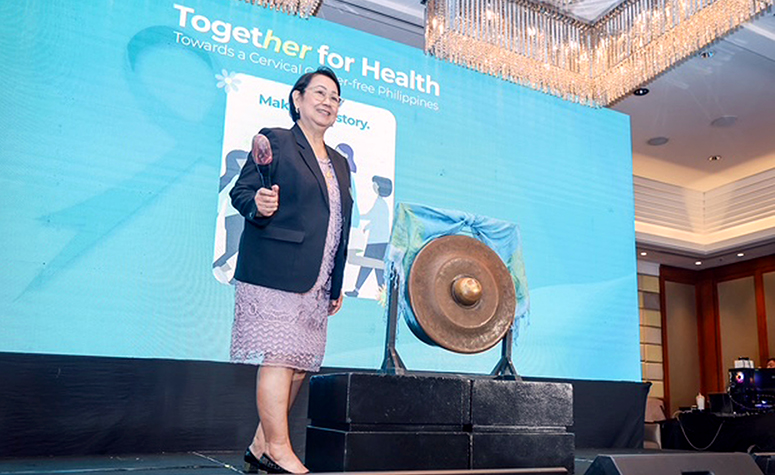
“Cervical cancer is preventable, yet more than half of Filipinas diagnosed with it still die from the disease,” said Dr. Concepcion Rayel, president of the Philippine Obstetrical and Gynecological Society (POGS). “We have the technical expertise and manpower. We have screening tools. We have subspecialists trained for treatment. But most importantly, we need leadership to establish a clear roadmap, so we move in the same direction.”
Dr. Christia Padolina, program director for Cervical Cancer Elimination at the Asia Oceania Federation of Obstetrics and Gynecology (AOFOG), said cervical cancer is one of the few cancers for which the cause is already clearly known.
“Because we know the cause, we now have the tools to fight it: vaccines that can prevent HPV infection, screening tests that can detect it early, and treatments that can prevent its progression to cancer,” Padolina said.
She added that the World Health Organization’s 90-70-90 targets provide a clear roadmap toward elimination: vaccinating 90 percent of girls against HPV by age 15, screening 70 percent of women using high-performance tests, and ensuring that 90 percent of women with cervical disease receive proper treatment.
Vaccine saves lives

Building on this regional perspective, Dr. Ana Victoria Dy-Echo, chair of the POGS Committee on Women’s Cancers, said international data continue to show the impact of vaccination programs in reducing cervical cancer incidence.
“HPV vaccination remains the optimal strategy for primary prevention,” Dy-Echo said. She noted that countries with well-established vaccination programs have reported substantial reductions in cervical cancer incidence.
“In fact, cervical cancer is one of the few cancers that can be prevented through vaccination, screening and early treatment,” she said.
Beyond vaccination, speakers also emphasized the need to improve cervical cancer screening rates in the country.
In the Philippines, however, screening participation remains extremely low. Forum speakers noted that only about 1.3 percent of eligible women underwent cervical cancer screening last year. The figure underscores that while the country has the tools, expertise and policy direction to eliminate the disease, stronger implementation is needed to reach women on a larger scale.
“We must move toward broader adoption of HPV DNA testing,” Padolina said. “What matters most is making screening widely available because testing allows early detection, appropriate management and preventive care.”
From policy to practice
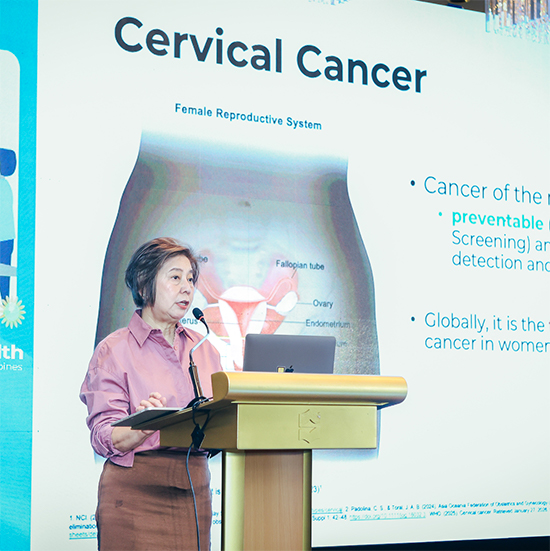
Despite advances in prevention and treatment, speakers agreed that putting these measures into practice remains the country’s greatest challenge. Padolina said eliminating cervical cancer will require closer cooperation among government agencies, local governments, schools, healthcare workers and communities.
“Successful programs begin with strong leadership and commitment,” she said. “The Philippines already has the policies, specialists, vaccines, screening tools, and treatment capacity. The challenge is making sure these reach women consistently and on time.”
PHAP executive director Teodoro Padilla added that a steady vaccine supply, stronger ties with schools and communities, better follow-up for missed doses, and sustained public education are all essential.
Cancer Coalition of the Philippines vice president Carmen Auste stressed that success should be measured not by national averages, but by whether women in the most remote and underserved communities are reached and protected.
The forum’s ceremonial gong-striking served as a reminder that eliminating cervical cancer will require everyone—from policymakers to local communities—to work together.
In the end, eliminating cervical cancer will depend not only on vaccines and medical advances, but also on a simple yet powerful act: ensuring that every Filipina has the knowledge, access and support to be screened and protected.

WATCH: Is Philippine cinema still thriving? (Generations Ep. 19)
September 2, 2026