

How Mauro Lumba scored a new Pinoy record at the Osaka Hyrox Race
For Mauro Lumba, fitness has never been only about looks. Although he was a Century Tuna Superbod winner, for him, it has always been about the journey toward becoming better. After his conquest of Muay Thai as a national athlete, Mauro pivoted to Hyrox, the world’s fastest-growing fitness race.
By clocking 1:10:56 in the Hyrox Pro Men division at Hyrox Osaka, he shattered the Philippine record previously held by Jonathan “JP” Amistoso. In a congratulatory post on Instagram, television personality Kim Atienza commented, “The fastest Hyrox pro racer in the country! Humble, walang sinisiraan, pogi.” Mauro remains humble and grateful, no matter what he wins.
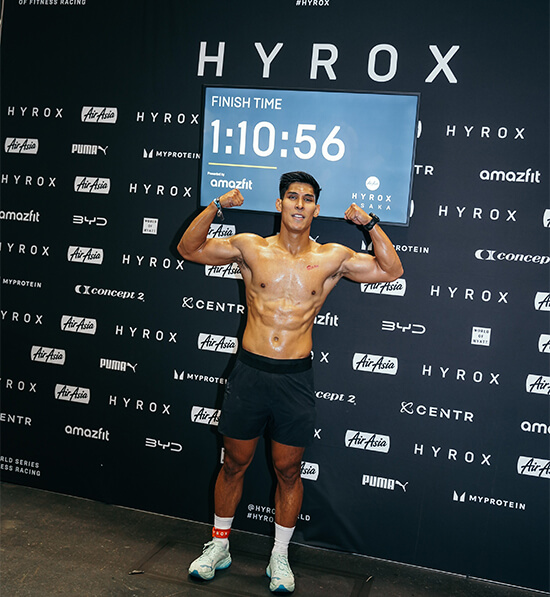
He was still celebrating in Osaka when I reached out, but he graciously answered our questions.
THE PHILIPPINE STAR: Looking at your splits, which Hyrox station do you feel gave you the biggest advantage in securing this record?
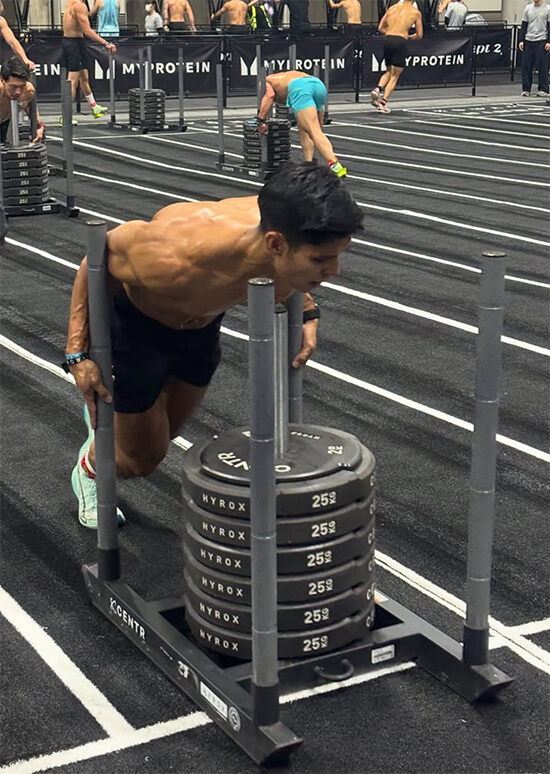
MAURO LUMBA: I think the sled pull gave me the advantage. People take a lot of time on the sled pull, but I’ve trained so hard for it that during the race, it felt easier. I was top 9 in the sled pull.
Has your training philosophy shifted now that you train for elite-level performance compared to training just for aesthetics or physique?
CONTINUE READING BELOW

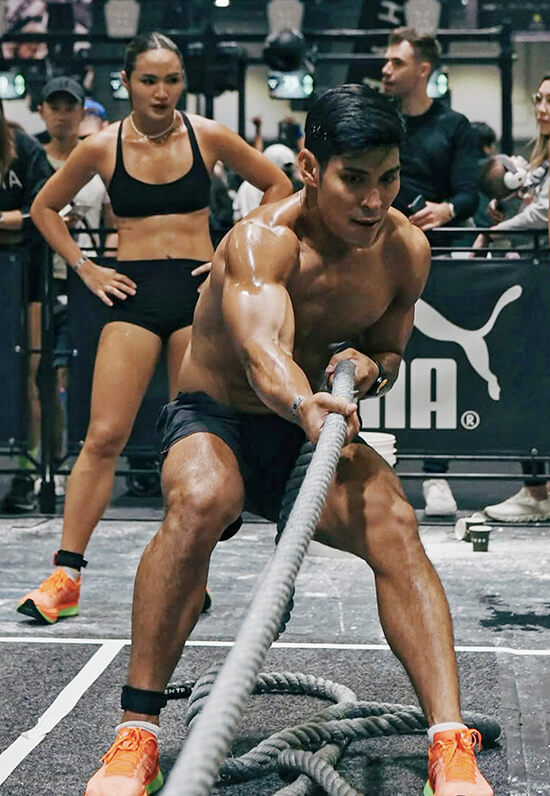
It definitely changed a lot for me because when I experienced training for aesthetics, I realized that I looked good, but honestly, I was weak in many ways. I couldn’t run far, I cramped up easily, and I just generally didn’t feel as strong. I think training for physique and aesthetics is a good base for building your figure. But training for high performance is really the best way to train, whether in Muay Thai, running, or Hyrox. You get to challenge yourself and measure whether you are improving.
What do you think is the biggest misconception Filipinos have about entering this sport?
I think a lot of people downplay the running in this sport because they tend to focus on the stations. But to really get a better time in Hyrox, your running has to be on point, too.
As a fitness coach, what are the benefits for gym-goers to train for the race even if they are not going to compete?
I think training for Hyrox not only improves race performance, but also involves functional movements that can make you stronger in daily life. These are movements and exercises that can improve your overall fitness.
The race requires a massive amount of energy. How do you fuel before the race, and how do you replenish afterward?
I eat a lot of carbs pre-race, mostly rice meals with a bit of protein, then load up on electrolytes. Post-race, I focus on meals with a lot of protein to recover.
Recovery is the hidden station of Hyrox. What is your post-race recovery routine, especially when competing abroad?
Post-race recovery usually involves a lot of stretching. When doing back-to-back races, I try not to fatigue myself further by walking around too much or touring the city. We just stay at the hotel or apartment, eat, stretch, and recover.
In the eyes of a friend
I asked coach Culver Padilla, Mauro’s friend who also participated in Osaka, for his view on Mauro’s stellar performance.
“Mauro’s performance in Osaka wasn’t just a personal breakthrough—it was a defining moment for all of us representing the Philippines. To witness him become the Philippine national record holder in the Pro division with a time of one hour and 10 minutes validated what we’ve all believed from the beginning: that Filipino athletes belong on the global Hyrox stage.
“As his friend, I’ve seen the discipline behind that performance. Hyrox exposes everything—your aerobic engine, your strength, your efficiency, and your mental resilience. Mauro’s record proved that our level of preparation, our systems, and our commitment as Filipino athletes are world-class. It raised the standard. And when one athlete raises the standard, he pulls everyone else up with him.
“As part of the Philippine delegation that brought nearly 50 athletes from his gym alone to Osaka, it was powerful to see not just one athlete succeed, but an entire movement growing. Mauro’s performance didn’t just validate him—it validated all of us who have been building toward this moment.
“This is exactly why we are continuing to build awareness here at home. This coming weekend, we are bringing Hyrox 365 to Cebu through the Awaken Outdoor Series. Our goal is to give more Filipinos access to the sport—to experience the structure, the standards, and the discipline that Hyrox represents. The more we expose athletes to this level of training and competition, the more Mauro’s performance becomes not an exception, but the beginning of a new normal for Filipino athletes,” Padilla said.
In the eyes of an analyst
Another Hyrox coach and athlete, Eron Castellon, also offered his insights on the record:
“His pacing was controlled from the start. Walang hero pacing. He stayed close to a ~4:30/km average on the runs, which is a smart place to be for a pro race where the goal is to finish strong, not just start fast.
“What stood out most was how calculated the entire race was.
“On the SkiErg (4:23), he clearly chose not to overreach early. That’s a high-level decision. A lot of athletes burn too much there and pay for it later. He preserved lactate, which set up the rest of his race.
“The same goes for the sled push (3:37). With his size and strength, he could have gone faster, but he stayed controlled. That decision paid off on the sled pull (3:46), where he ranked in the top 6.5 percent (9th overall). That’s a key separator, especially since the sled pull is one of the hardest stations in pro due to the heavier load.
“The row (4:16) was also disciplined. Not aggressive, but technically clean and within range. No panic, no wasted movement.
“The farmer’s carry (2:13) was on the conservative side (around the bottom 30 percent), but it fit the overall strategy. He wasn’t trying to win that station—he was managing fatigue heading into the final stretch. Then you see the payoff.
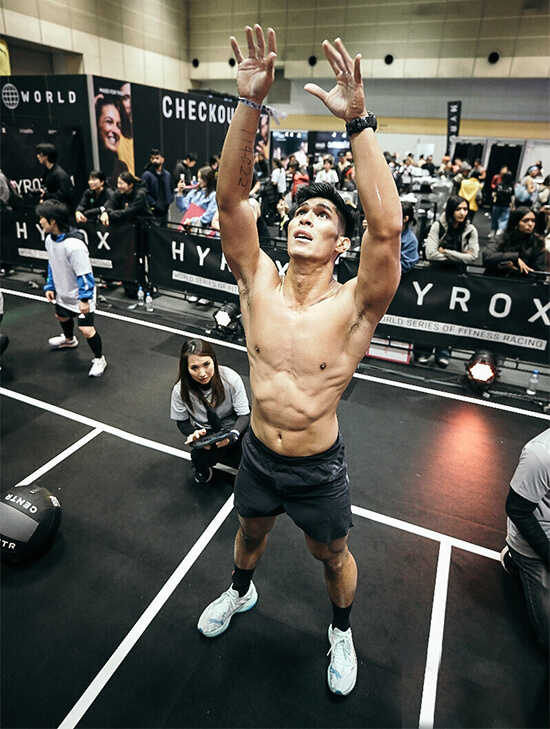
“Sandbag lunges at 3:59 (top 23 percent) show he still had strength late in the race. Finishing with wall balls at 4:39 (top ~12 percent) is a strong close, especially under fatigue.
“Overall, this didn’t look like an all-out, risky race. It was composed, controlled, and very intentional. Stable running, disciplined stations, and smart energy management from start to finish.
“He didn’t win through aggression. He won through control, which ultimately allowed him to close strong and take the current fastest Filipino Hyrox Pro mark,” Castellon said.

WATCH: Pixar Summer Fest adventure at Hong Kong Disneyland
August 10, 2026
WATCH: Is Gen Z too soft? (Generations Ep. 23)
September 30, 2026