Teen consistently gets severe asthma attacks from her own menstrual period
When Sophia Gulle, 19, gets her period, it triggers asthma attacks so severe that she would end up confined in the hospital for days.
Sophia got COVID-19 in 2022. Two years later, she caught viral pneumonia. With a weakened immune system, she eventually realized that her asthma episodes, which she's had since childhood, seemed to be in sync with her menstrual period.
Later on, her doctors gave her a diagnosis: perimenstrual asthma.
For years now, this has been Sophia's life. The asthmatic episodes have become so attuned to her ovulation cycle that she's able to track her period according to the intensity of the attacks.
"About a week before my period, nahihirapan na 'kong huminga. Sumisikip na dibdib ko," Sophia told PhilSTAR L!fe. "Dahan-dahan na dapat 'yung galaw. Hindi na 'ko umaakyat ng hagdan namin. Dahan-dahan na lang sa chores, sa paglabas."
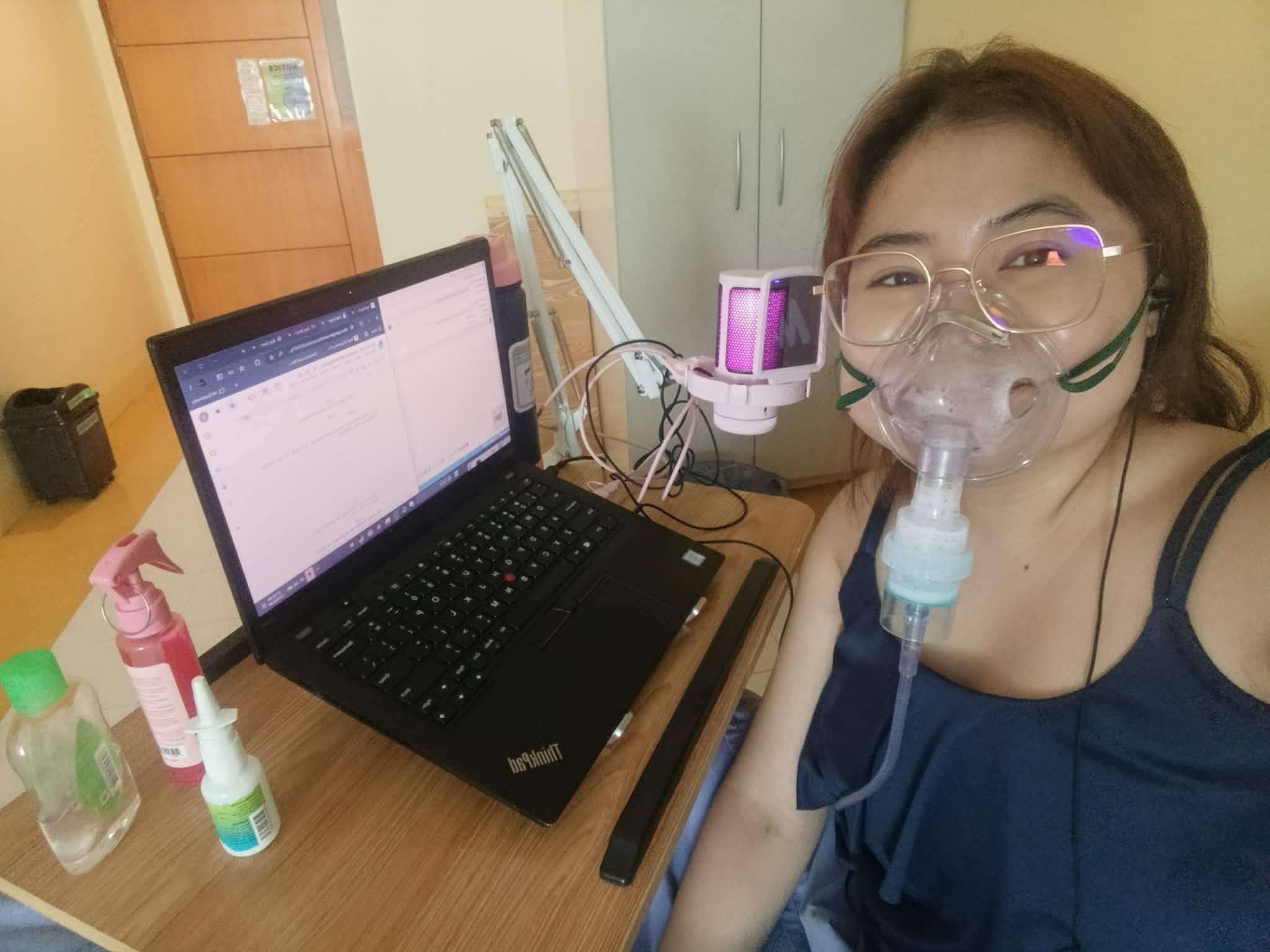

On the first day of every period, the asthmatic episodes get more severe, especially at night. To cope, Sophia has to take six or more puffs on her inhaler, nebulizing in between. Once a month, she needs oxygen support for about 30 minutes.
Sophia has no choice but to stay in defensive mode constantly. Her preventive method, as ordered by her doctors, involves taking vitamins and asthma maintenance medication daily, with additional support from a steroid inhaler—possibly a nebulizer, too—especially a week before her period starts. She uses her portable oxygen tank at home only as a last resort so her lungs don't get used to external help.
According to her, even the steroid medication comes with nasty side effects. It triggers constant hunger, which is bad news for Sophia who also suffers from GERD and laryngopharyngeal reflux, both chronic forms of acid reflux. Joint pain is also an issue, especially in her ankles.
It is difficult to imagine that Sophia experiences all these every month. But she does, with much support from her medical team.
What is perimenstrual asthma?
Perimenstrual asthma refers to the "worsening of asthma symptoms during the perimenstrual period," pulmonologist Dr. Jennifer San Luis told L!fe.
According to OB-GYN Dr. Manbee Gene Granada, the likelihood of asthma attacks coinciding with one's monthly period "is due to the decrease in estrogen and progesterone, which causes an inflammatory effect on the lung tissue."
Other triggers include second-hand smoke, pollution, and drastic weather changes.
Once activated, according to Granada, perimenstrual asthma causes wheezing, chest tightness, and enhanced mucus production. In severe cases, as Sophia also experiences, the asthma attacks become so severe that maintenance medications are no longer enough, which leads to hospital confinement.

Coping with perimenstrual asthma requires a daily commitment from the patient and their family. However, according to San Luis, there is no known cure for the chronic condition.
"Conventional asthma therapies are not always effective, which makes management particularly challenging," she said. "The management approach should target both standard asthma control, with inhaled corticosteroids or the use of biologics, and the hormonal triggers, with hormonal contraceptives or hormonal replacement therapy."
According to Granada, the exact hormonal treatment depends on the patient's age. Adolescents are usually prescribed increased doses of inhalers and steroids in the premenstrual phase as a preventive measure. Older women can take oral contraceptive pills or combine this with hormonal therapy. This suppresses menstruation and hormonal fluctuations.
To manage it better, Granada stressed the importance of doing a lifestyle check. "Healthy diet and exercise still come into play as obesity and a sedentary lifestyle may worsen hormonal fluctuations and cause the attacks to increase in severity," she told L!fe.
When Sophia was younger, even after she first got her period, she didn't think much of her asthma attacks, especially after a school nurse dismissed them as "psychological."
Now that she's older, however, and taking a gap year before college, the effects of perimenstrual asthma on her daily life are undeniable. But it doesn't stop her, her family, and friends from finding humor in some of her symptoms, like her sometimes "walking like an old man" because of joint pain.
"It's just something I live with," she said, "like a really, really big inconvenience."