

When medical rounds look like EDSA rush-hour
If you’ve ever joined ward rounds in a government hospital, you know exactly what I mean.
I fondly remember my days at the Philippine General Hospital decades ago, when making rounds with residents, interns, clerks, nurses and medical students felt less like a clinical exercise and more like surviving morning rush hour on EDSA.
This is not the elegant, orderly procession of doctors gliding quietly from bed to bed like in foreign medical dramas. No—the scenario is more like a jeepney ride at peak hour: crowded, noisy, unpredictable, occasionally dangerous, but somehow always moving forward.
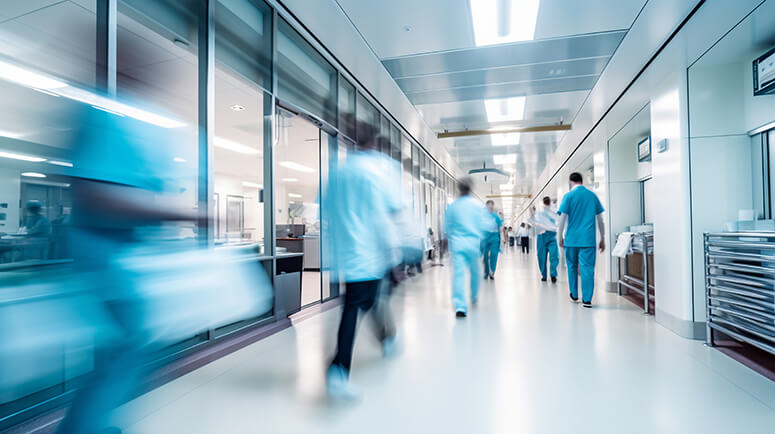
White coats press shoulder to shoulder. Clipboards poke ribs. Someone’s stethoscope gets tangled in another person’s ID lace. Patients watch wide-eyed as the medical convoy approaches, wondering whether they’re about to be examined… or accidentally steamrolled.
It’s medicine, Filipino style—equal parts education, endurance test, and live comedy.
But beneath the humor lies an important truth: these chaotic rounds reveal both the strengths and challenges of healthcare delivery in a resource-limited system.
Why ward rounds feel like a jeepney ride
CONTINUE READING BELOW

The similarities are uncanny.
Overcrowding is the default setting. A single patient’s bedside can attract 15 to 20 people: consultant, fellow, senior resident, junior resident, intern, clerk, nurse, plus medical students who appear out of nowhere.
Like rush hour in Cubao, someone is always standing, someone is always squatting, and someone is always blocking the way. There is no such thing as “maximum capacity.” If there’s space for half a foot, someone will squeeze in.
From a training perspective, this has advantages: more learners witness real cases and clinical decision-making. But from a patient care perspective, overcrowding has downsides. Hospital infection control guidelines generally recommend minimizing unnecessary traffic around patients—particularly in wards housing individuals with weakened immune systems.
In reality, however, teaching hospitals must balance education with safety.
Stops are spontaneous and unscheduled. Just as jeepneys stop anywhere—kahit saan, kahit kailan—ward rounds pause without warning.
“Dito muna tayo.”
“Check natin labs.”
“Ano creatinine niya kahapon?”
The group halts abruptly. Those at the back crash gently into those in front. Nobody complains. This is expected behavior. Yet this spontaneity reflects an important part of clinical medicine: real-time decision-making.
Unlike textbooks, real patients rarely follow neat schedules. Doctors must adapt continuously—reviewing lab results, adjusting treatments, and responding to sudden changes in a patient’s condition.
The noise level rivals traffic. Jeepneys blast music. Ward rounds blast medical jargon.
“CBC! FBS! Creatinine! Potassium—Stat!”
To an outsider, it sounds like a foreign language. To trainees, it’s the soundtrack of survival. But for patients—especially those who are elderly, critically ill, or anxious—the environment can feel overwhelming.
Studies in hospital design show that noise levels influence patient recovery, sleep quality and stress levels. A ward round that sounds like a medical debate club may be educational—but it can also be exhausting for the patient lying at the center of the discussion.
From the patient’s point of view
Now imagine being the patient. You wake up to 20 strangers surrounding your bed. One loudly announces: “This is the patient with uncontrolled diabetes and poor compliance.” Suddenly, your life story becomes a public announcement.
Some patients enjoy the attention. They sit up proudly and join the discussion. Others shrink into their blankets, wishing the crowd would disappear.
A patient once asked me quietly, “Doc, lahat ba sila doctor?”
I smiled and replied, “Yung iba oo; yung iba… future doctors.”
The hidden hierarchy
Ward rounds operate with a hierarchy as precise as any public transportation system. The consultant is the driver—deciding where to stop and what route the discussion will take. The fellows act like conductors—keeping the group moving and gathering clinical details. Residents are the experienced passengers—handling most of the work.
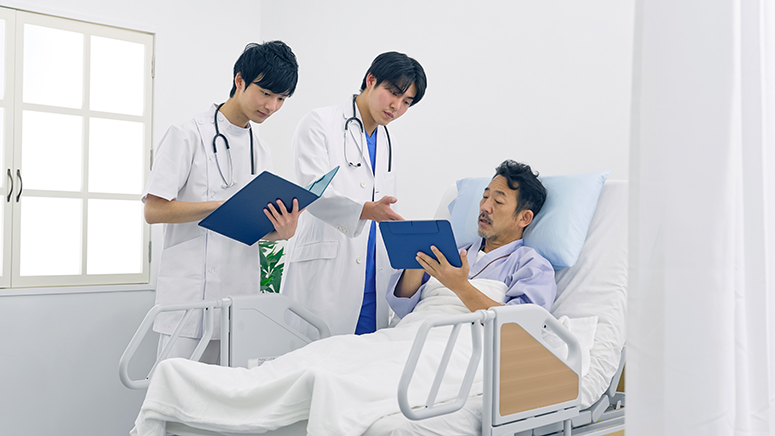
And the interns and clerks? They’re hanging on at the back, hoping they don’t fall off—or get called to present.
This hierarchy may look intimidating, but it plays an important role in training. Medical education has long relied on apprenticeship learning, where junior doctors absorb knowledge by observing experienced clinicians manage real patients.
Like jeepneys navigating EDSA, hospital ward rounds may look chaotic — but they are powered by teamwork, resilience, and the shared goal of healing.
As chaotic as jeepney-style rounds appear, they serve several critical functions:
- Real-world learning. Students see diseases as they actually present, not as tidy textbook examples.
- Clinical reasoning. Repeated case presentations sharpen diagnostic thinking.
- Accountability. Being questioned in front of peers forces young doctors to prepare carefully.
- Team-based care. Modern medicine depends on collaboration among multiple professionals.
These rounds, messy as they may be, are where future physicians learn how to think.
Of course, no jeepney ride—or ward round—is complete without mishaps.
A consultant asks, “Where’s the chart?” The chart is missing, last seen in radiology.
A sleep-deprived intern accidentally introduces a female patient as having prostate cancer. The entire ward bursts into laughter.
Humor in medicine is more than entertainment. It’s a coping mechanism. Doctors working long hours in emotionally intense environments often rely on shared laughter to survive the pressure.
Behind the humor lie legitimate concerns. Overcrowded rounds can contribute to higher infection transmission risk, communication errors in patient care, reduced patient privacy, patient anxiety and fatigue.
International healthcare organizations increasingly advocate for structured bedside rounds, smaller teams, and improved communication systems. Electronic medical records and digital case discussions may eventually reduce hallway congestion. But in many public hospitals across the Philippines, resource limitations make these ideal systems difficult to implement fully.
Why it still works
Despite the apparent chaos, this system has produced generations of competent Filipino physicians. Why? Because it teaches adaptability. Doctors trained in these environments learn to think quickly, improvise solutions, and collaborate under pressure. In a healthcare system where patient loads are heavy and resources limited, those skills are invaluable.
Ward rounds in Filipino hospitals may resemble a traffic jam. But somehow, the journey continues. The consultant teaches. The trainees learn. And the patients—despite the constraints—heal.
It’s not always elegant. It’s rarely quiet. But it reflects something deeply Filipino: a communal effort to care for the sick despite the odds.
Medicine, jeepney style—crowded, noisy, imperfect, but propelled by bayanihan and the stubborn determination to keep moving forward… kahit traffic.

WATCH: Do you still believe in marriage? (Generations Ep. 17)
August 19, 2026
WATCH: Can you still trust someone who betrayed you? (Generations Ep. 22)
September 23, 2026
WATCH: Is OPM still as good as it used to be? (Generations Ep. 20)
September 9, 2026