

Jeremy Renner: Lessons from death
I have heard countless “comeback” stories—from athletes recovering from ACL tears to clients reclaiming their health after a heart attack. The human body never ceases to amaze me. But the story of Hollywood star Jeremy Renner is in a league of its own.
On a freezing January morning in 2023, the man the world knew as an “Avenger” found himself pinned beneath a 14,000-pound industrial snowcat. He leaped toward the moving vehicle to save the life of his nephew, but he missed and landed in its path. There he was, on the driveway of his vacation home in Lake Tahoe, fighting for the one thing we often take for granted—his next breath.
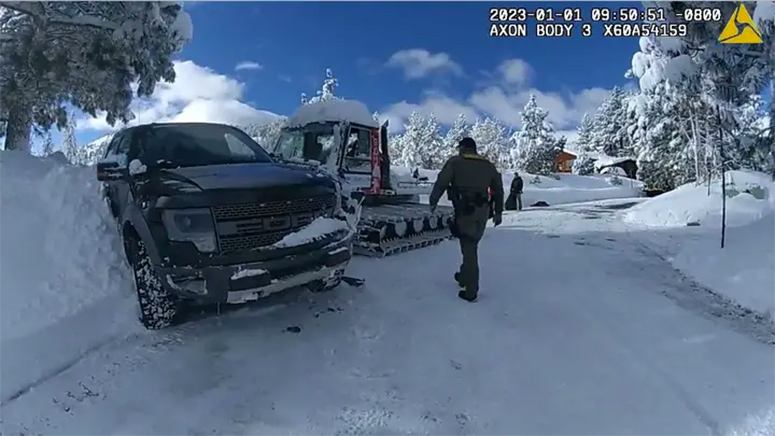
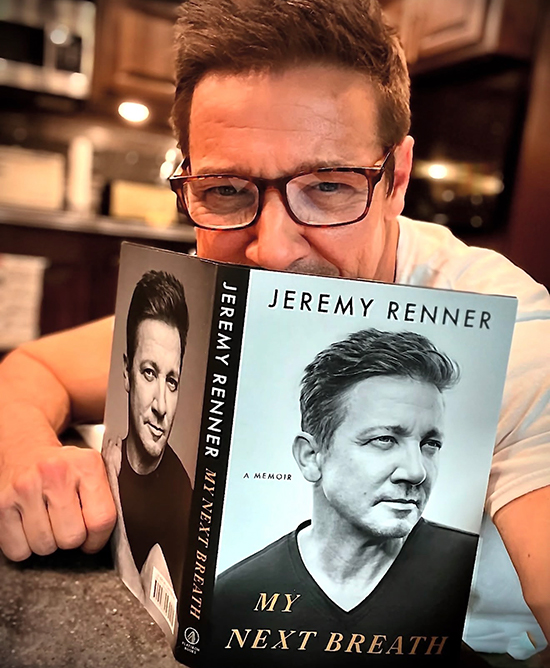
As we emerge from the quiet reflection of Easter Week, a season defined by the journey from crushing despair to miraculous renewal, I felt compelled to share Renner’s journey from his memoir, My Next Breath. It is a modern-day testament to the grit of the human spirit.
For those of us in the wellness community, we often define “well-being” through metrics: heart rate, muscle mass, or endurance. But Renner reminds us that true well-being is a radical, daily decision to live with gratitude—even when we feel broken beyond repair.
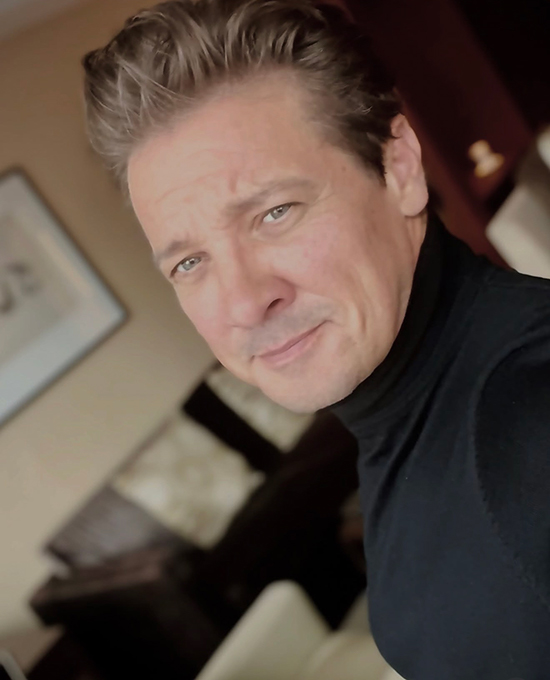
We usually focus on the mechanics of strength—how much can we lift? How far can we run? But what happens when the kinetic chain is completely shattered? Renner’s book isn’t just about the clinical healing of 38 broken bones; it’s about the “resurrection” of a mindset. This Easter, his journey serves as a powerful reminder that our greatest strength isn’t found in peak performance, but in our ability to start over at zero.
CONTINUE READING BELOW

“Six wheels, 76 steel blades, 14,000 pounds of machine, all ranged against one human body. Skull, jaw, cheekbones, molars; fibula, tibia, lungs, eye sockets, cranium, pelvis, ulna, legs, arms, skin—crack, snap, crack, squeeze, crack. More sounds: a ringing in the ears, as if a large-caliber gun had gone off next to my head. A sting of bright white in my eyes—I am blinded by a coruscating lightning, a lightning that signals the break of my orbital bone, causing my left eyeball to violently burst out of my skull. Fact: I can see my left eye with my right eye,” Renner graphically wrote.
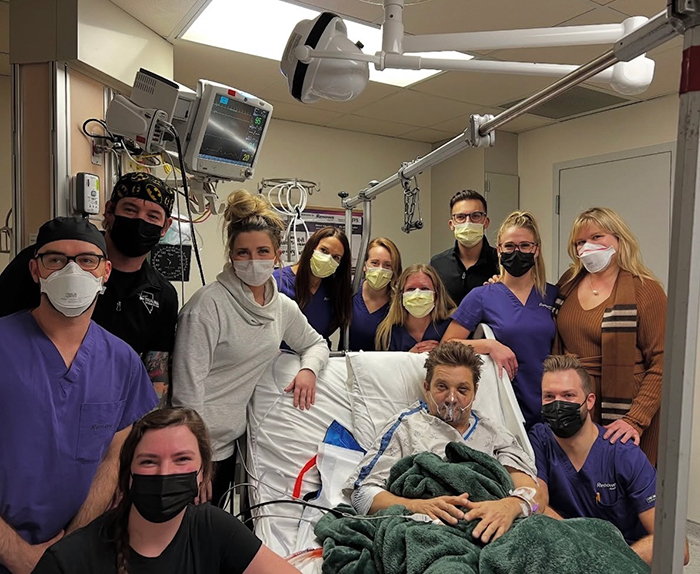
With a collapsed lung and bones snapping like dry twigs, Renner lay on the Nevada snow, fully conscious as his body failed him. Yet he describes this not as a tragedy, but as a “cleansing.” There is a profound spiritual lesson here for anyone overwhelmed by life’s “macro” problems—careers, finances, or family pressures. Renner survived by shrinking his world to the “micro”—the singular, sacred act of simply breathing.
In our own Lenten journeys, we often find our greatest clarity not at the peak of our lives, but in the valleys of suffering. Whether that struggle is mental or physical, there is a certain “electric serenity” that comes when we are forced to wait for the light to return.
“I know I died—in fact, I’m sure of it. When I died, what I felt was energy: a constantly connected, beautiful and fantastic energy. There was no time, place, or space, and nothing to see except a kind of electric, two-way vision made from strands of that inconceivable energy, like the whipping lines of cars’ taillights photographed by a time-lapse camera. I was in space—no sound, no wind, nothing save this extraordinary electricity by which I am connected to everybody and everything.
What came to me on that ice was an exhilarating peace, the most profound adrenaline rush, yet an entirely tranquil one at the same time: electric serenity. I can still feel that space—silent, still, empty, yet filled with every instant and all the forevers. For the first time ever, my existence had nothing to do with time. It was an entirely beautiful place, filled with a knowable magic. It pulses; it floats; it is beyond language, beyond thought, beyond reason—a place of pure feeling. I could see my lifetime. I could see everything all at once. It could have been ten seconds; it could have been five minutes; it could have been forever. Who knows how long? In that death there was no time—no time at all— yet it was also all time and forever,” he recalls.
Renner writes that his brush with death acted as a filter, stripping away the “white noise” of ego, petty grievances, and social clutter that distract us from what truly matters. He didn’t simply return to his old life; he was resurrected into a new one. For him, the compass became his love for his daughter, Ava, and a renewed sense of purpose.
“Death is not something to be afraid of. I’m really excited about living, of course—but death? It’s not something I’m scared of anymore. I was never all that afraid of it before the incident, to be honest, but now I know that death is something to look forward to—a return to that electric serenity outside of time. To me, death is a confirmation of life, something always connected and eternal. It is not dark, not the end, not a disaster—it is magnificent and exhilarating. It is your soul and your love, concentrated into their purest forms.
Dying, you become connected to the collective energy everywhere all at once, which is itself a kind of divinity. And it is a fierce teacher. In dying, I learned the futility and temporary nature of hatred, ranged against the permanence of love. Though fear and hatred are the flashiest and sometimes the most powerful human emotions, they are merely the hare facing off against the tortoise of love. Love slowly, quietly, and patiently waits for hate to burn out,” Renner said.
Renner’s journey reminds us that no matter how heavy the weight upon us may be, there is always a “next breath” waiting to be claimed. His story is not just a memoir; it is a manual for anyone seeking resilience, reflection, and a renewed perspective.

WATCH: Can you still trust someone who betrayed you? (Generations Ep. 22)
September 23, 2026
WATCH: Is Philippine cinema still thriving? (Generations Ep. 19)
September 2, 2026
WATCH: Do you still believe in marriage? (Generations Ep. 17)
August 19, 2026
WATCH: Save for retirement or enjoy life now? (Generations Ep. 21)
September 16, 2026