A world we will never see, but must still heal
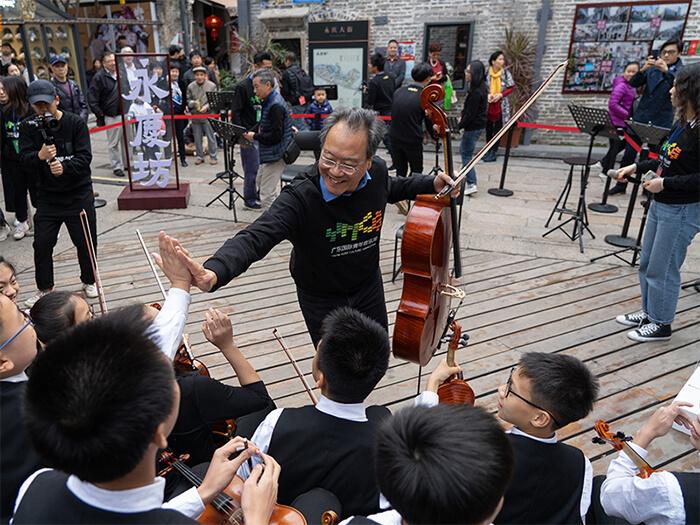
When world-famous cellist Yo-Yo Ma turned 70 a month ago, on Oct. 7, he asked a question that stopped me mid-scroll:
“In the year 2100, my youngest grandchild will be 76. What kind of world will she be living in? And what can we do now to ensure that today’s children can live with hope, purpose, and meaning?”
That, my dear readers, is not just a birthday reflection—it’s a moral MRI of our times.
The grandparent’s dilemma
At some point in life, we stop counting years forward and start counting generations downward. I know the feeling. Seeing toddlers and babies makes me think of my own grandchildren, Leon and Elliott—three years and two months—blissfully unaware of the world they’ll inherit. Will they also be hopeful and active—yet wonderfully distracted by the same glowing screens that both connect and divide us?
When you’ve seen enough heartbeats on a monitor, you start to realize that the most fragile organ of all is not the heart but the conscience. And Yo-Yo Ma’s question pierces exactly that: What kind of conscience will this world have when we are gone?
We are nature, whether we like it or not
In his birthday letter, Yo-Yo Ma wrote, “We are nature.” It’s a simple line with a profound prescription: we are not outside the system we’re trying to fix.
Doctors like me are trained to manage nature—blood pressure, cholesterol, infection, pollution. But the truth is humbling: we are part of the same feedback loop. Every plastic fork we discard, every car trip we take, every kindness we show—all of it returns to us in some form.
Biology reminds us that the human body is its own living ecosystem—around 30–36 trillion human cells sharing space with roughly 38 trillion bacterial cells—a near 1:1 partnership that thrives only in balance.
There’s a popular parable, often attributed to Indigenous storytellers, about two wolves within us: one of compassion, one of anger. “Which wolf wins?” asks the child after listening to his grandfather tell the story. “The one you feed.” Attribution of this parable is debated, but the wisdom endures: attention shapes character.
Modern civilization, unfortunately, has been binge-feeding the wrong wolf—algorithms that reward outrage, economies that prize consumption, politics that amplify division. Yet in our quieter moments—when music plays, when prayer happens, when a child laughs—we still remember the gentler wolf.
Lessons from the clinic
I see both wolves in my clinic every day. The patient who skips medicine and some laboratory tests I had requested, just so he still has enough to feed his family—light triumphs over darkness. The policymaker who cuts hospital budgets but builds campaign billboards—darkness wins again.
But I also see hope. When a young nurse comforts a dying patient who’s not her relative; when a medical intern works 36 hours straight but still smiles at the janitor; when a child donates her piggy bank to buy medicines for an indigent patient—those are glimpses of the better world Yo-Yo Ma envisions.
Hope, purpose, and meaning
These three words are not interchangeable. Hope is emotional fuel; purpose is directional; meaning is the spiritual map that connects both. Without hope, we stagnate. Without purpose, we drift. Without meaning, we despair.
Our challenge is to nurture all three simultaneously—in our children, institutions, and ourselves. That’s easier said than done in a world where we spend more time curating our lives online than cultivating them offline.
Sometimes I joke that if Moses received the Ten Commandments today, he’d have to condense them into a TikTok reel: “Thou shalt not ghost thy neighbor”—especially if he’s in need.
But humor aside, the same digital platforms that divide can also unite. We just need to use them consciously—to teach empathy, spread verified health information, and remind people that faith and science are not enemies but teammates in the same rescue mission for humanity.
The planet doesn’t need more geniuses — it needs gentler souls.
A planetary prescription
Yo-Yo Ma calls for “Planetary Humanism.” If I were to translate that into medical language, it would read like a prescription:
Rx: Planet Earth
Take one dose of empathy daily.
Avoid prolonged exposure to arrogance.
Exercise humility.
Hydrate with gratitude.
And please—no skipping doses.
We can all start with small habits: planting trees instead of excuses; listening before debating; reusing, recycling, and reimagining; checking on a lonely neighbor. The planet doesn’t need more geniuses—it needs more gentle souls.
The divine whisper
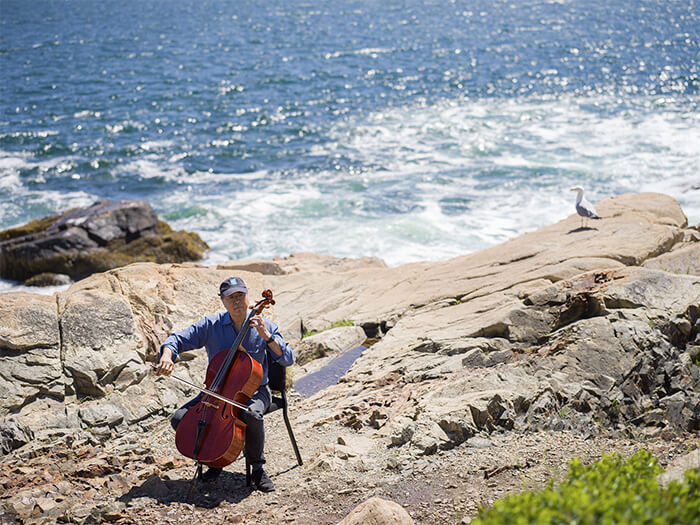
Although I may not be that religious, I consider myself a man of faith, and I believe that God speaks not only through Scripture but also through silence, through music, through the faint rustle of conscience. Perhaps Yo-Yo Ma’s cello is one such whisper—a sound that reminds us of our shared fragility and grandeur.
In a society obsessed with volume, maybe our next evolution as humans is learning to listen again—to God, to nature, to each other.
On borrowed time
Yo-Yo Ma worries about the year 2100. I worry too—but not with despair. The truth is, every generation lives on borrowed time. What matters is what we do with the loan.
When I see a young doctor treating an elderly patient with respect, when a teacher stays late to mentor a struggling student, when a farmer prays for rain not just for his field but for his neighbors’—I see repayments being made daily.
Humor as healing
We Filipinos survive partly because we laugh through everything. Even in traffic, calamity, or politics, we still find reason to smile. Humor is not denial—it’s defiance. It’s our way of saying, “We’re down but not defeated.”
Maybe Yo-Yo Ma would appreciate that our national instrument is the guitar, but our national anthem could well be laughter—because laughter, like music, is the shortest distance between fear and faith.
The final symphony
Yo-Yo Ma ends with a wish that all humans live “in equilibrium with one another and with our planet.” That, to me, sounds like the final movement of a symphony yet unfinished.
We may never hear its full crescendo in our lifetime. But if each of us plays our part—tending our small corner of the world with kindness and purpose—then maybe, just maybe, our grandchildren will.
And when the year 2100 finally comes, they’ll remember not the noise we made, but the harmony we tried to keep.
So here’s to you, Yo-Yo Ma—and to everyone asking the same question.
May our remaining years compose not a lament, but a love song to the planet and the people we’ll leave behind.