Triumphs & tragedies: 65 years after Camelot
Exactly 65 years ago today, before most of us were even born, history was being written at the Capitol in Washington DC. John F. Kennedy was sworn into office as the 35th president of the United States, the youngest and the first Roman Catholic elected to the post. He was only 43.
And the pages of that chapter in history has not been dulled by time. JFK, despite his reported flaws and indiscretions, remains the most popular modern US president in public memory as of 2026. According to Gallup’s most recent retrospective approval ratings, 90% of Americans approve of the job he did, placing him well ahead of all other former presidents.
And according to YouGov, “Real-time data trackers for 2025 and 2026 show JFK has a 98% fame rating and is liked by 73% of the public, ranking him as the second-most popular US president in their database, just behind Abraham Lincoln.”
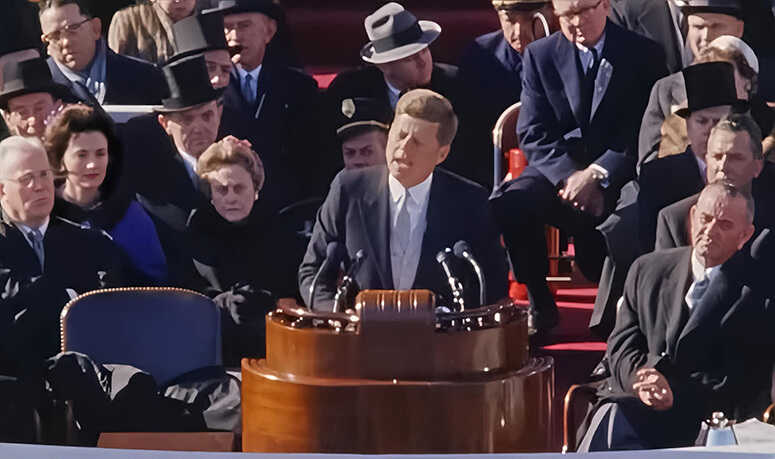
John F. Kennedy’s inauguration on Jan. 20, 1961 was a milestone that spawned that famous and powerful exhortation, “Ask not what your country can do for you, ask what you can do for your country”—delivered with such purpose and emphasis, both the medium and the message seared his words in stone.
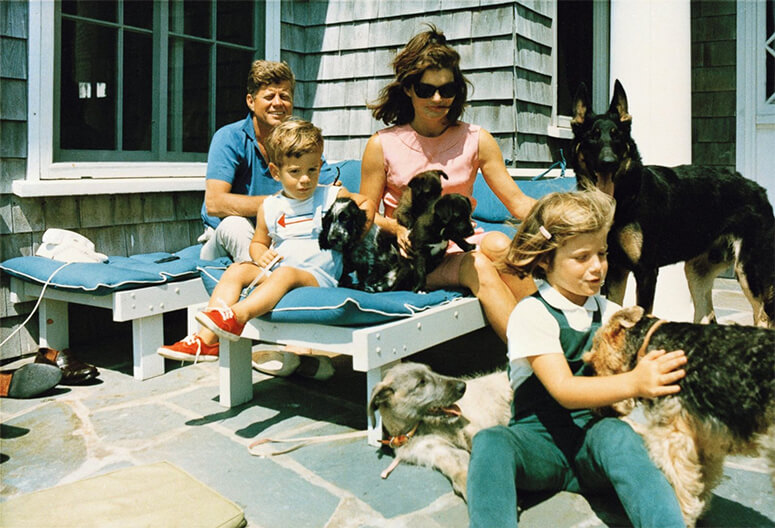
He had a First Lady, Jacqueline Bouvier, who was as beautiful as she was cultured, gaining her own cult following distinct from her husband’s parade. At the time he took his oath, JFK and Jackie had a golden-haired, blue-eyed three year-old Caroline, who looked like a model for children’s wear, and a two-month-old son John Jr., symbolizing the youth and vigor (“vigah”) of the Kennedy presidency.
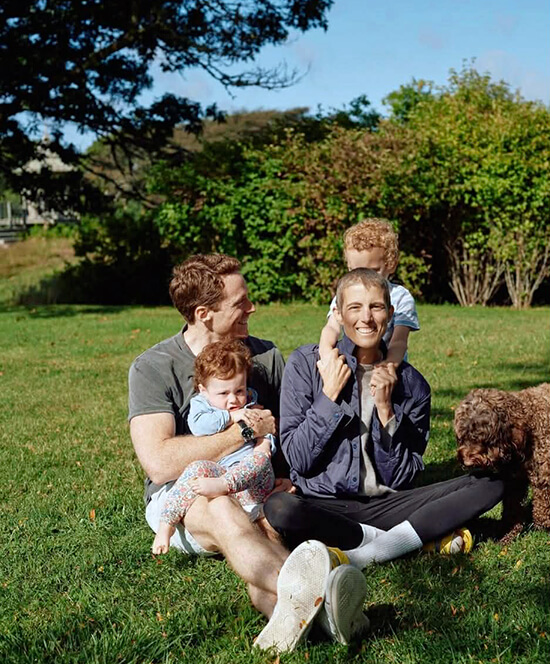
Fast forward to Dec. 30, 2025, less than a month short of the 65th anniversary of her legendary grandfather’s inauguration. Tatiana Kennedy Schlossberg Moran, a climate journalist, dies from an aggressive form of cancer that she disclosed in November of the same year.
In between grandfather and granddaughter’s deaths were the tragic assassination of Robert F. Kennedy, JFK’s brother; the death from cancer of Jackie at the age of 64; the very untimely demise of John K. Kennedy Jr. at 38 when a light plane he was piloting plunged into the Atlantic Ocean. The aforementioned list only includes the heartbreaking deaths in the immediate family of Jack and Jackie—excluding the deaths of World War II hero Joseph Kennedy Jr. and Kathleen Kennedy in separate plane crashes.
Which makes one wonder, is there such a thing as a Kennedy curse, especially for Caroline who had lost three members of her family before they even hit the age of 47—JFK was 46, JFK Jr. was 38 and Tatiana, her youngest daughter, 35. Jackie was 64. Is there even such a thing as a curse?
In an article published last November in The New Yorker titled, “A Battle With My Blood,” Tatiana revealed she had been diagnosed with acute myeloid leukemia in May 2024, after giving birth to her second child, and had less than a year to live.
“My first thought was that my kids, whose faces live permanently on the inside of my eyelids, wouldn’t remember me,” she wrote in the essay.
“For my whole life, I have tried to be good, to be a good student and a good sister and a good daughter, and to protect my mother and never make her upset or angry,” Tatiana wrote.
“Now I have added a new tragedy to her life, to our family’s life, and there’s nothing I can do to stop it,” she said. Her thoughts were of her mother, Caroline. Mine were, too. How much more could she bear?
***
How do the Kennedys cope with unspeakable grief?
In her oral history interview in 1964 with historian Arthur M. Schlesinger Jr. released in 2011, Jackie recalled one of her quiet moments with her mother-in-law Rose Kennedy. She recalled a specific instance when Rose began to speak about her late children.
“Her voice began to sort of break, and she had to stop. Then she took my hand and squeezed it and said, ‘Nobody’s ever going to have to feel sorry for me. Nobody’s ever going to feel sorry for me,’ and she put her chin up. And I thought, God, what a thoroughbred,” Jackie recalled to Schlesinger.
In her memoir, Times to Remember, published in 1974 and which my mother Sonia Mayor gave to me on my grade school graduation, Rose wrote that she didn’t believe that “time heals all wounds,” explaining instead that the mind covers them with “scar tissue” to protect its sanity.
Perhaps, that’s how the Kennedys cope with bad times. They wait for the wounds to become scar tissue.
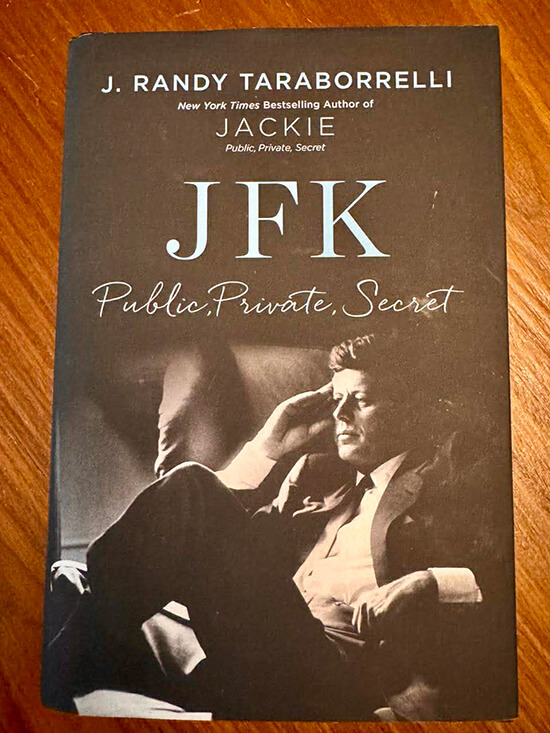
JFK: Public. Private. Secret.
When my sister Mary Mae and I met up in Rome last November, she gave me a hardbound copy of the 568-page J. Randy Taraborrelli book JFK: Public. Private. Secret (first published in the United States by St. Peter’s Press), which she hand-carried all the way from the United States.
I read the book from cover to cover because it was a mix of political drama, history, romance, betrayal, forgiveness, triumph, and tragedy. Some details were quite personal I don’t know how Taraborrelli’s sources knew about them—like Jackie and JFK’s last night in Texas. The sources cited included an unpublished transcript attributed to Jackie’s mother Janet Auchincloss.
According to that chapter, the couple, used to sleeping in separate beds as was the norm in aristocratic families at the time, came together in the middle of the night.
“We were together as husband and wife for the last time,” Jackie reportedly told her mother and stepbrother.
The book also cites a notebook from a wedding planner that the President and Jackie were planning to renew their vows in September the following year, their 11th wedding anniversary.
The book acknowledges the infidelities that may shatter one’s view of the magic of Camelot, but the author does take note of some unverified claims, and one alleged contract between Marilyn Monroe and JFK obtained from a collector that was determined to be fraudulent. The material was then pulled out from a certain book and according to Taraborrelli, the collector was arrested.
But make no mistake, Taraborrelli doesn’t omit what his research shows were the women JFK had relationships with, before and during his marriage.
For sure JFK was spoiled—he was handsome, powerful and independently wealthy—and reckless, but towards the end of his life, especially after the death of his prematurely-born son Patrick just 15 weeks before his own, the couple became very, very close, and according to anecdotes in the book, very sweet and affectionate toward each other.
One of JFK’s best friends George Smathers is quoted in the book as saying he doesn’t know what precipitated JFK’s change of heart, but by early 1963, the President reportedly told him, “I love Jackie. She’s my whole life.”
Another time, he reportedly told Smathers, “I’ve never loved any woman the way I’ve loved my wife.”
And Jackie? Maybe her first impression of JFK, as quoted in the book, says it all:
“I listened to what he had to say, and how he felt about other people and the way he wanted to serve, I suppose, and the things he wanted to do with his life to make things better, and I thought, my God, just look at him—those blue eyes, that hair, that face, and just the way he is…the way he thinks about the world and the way he talks about the world and the way he is in the world. He’s just so…beautiful.”
Yes, I still believe in Camelot after all these years.