
Why we still need ‘bad’ books
Who is writing really for? Every time I introduce myself, I am asked why I write. I often say I pour my thoughts into poetry, essays and any form that allows me to translate what I feel into words. In this sense, I write for myself. Writing becomes a space to process emotions, articulate ideas, and make sense of my own experiences.
But this answer feels incomplete without acknowledging how reading came before it. How the books I encountered, in their own varied forms, urged and shaped me into the writer I am now. The stories revealed themselves in pieces: from lines of dialogue to familiar tropes and characters whose emotions seemed larger than the language used to contain them. I did not always know what made them compelling, only that they stayed; certain scenes repeated themselves in my mind, certain lines resurfaced without warning, until I began to notice the spaces they left behind. In those gaps, I found myself asking questions the stories did not fully answer, and, without realizing it, trying to answer them in my own ways.
The very works often dismissed as ‘bad’ can, in fact, serve as the foundation for deeper engagement with literature.
Writing, and more importantly, reading, extends beyond a personal act. It is shaped by access, environment and the kinds of material available to us. Not everyone begins from the same place, and not everyone is introduced to literature in the same way. If writing is for the self, then how do we account for the reality that many people struggle to even enter the world of reading in the first place?
Philosophers have long debated the purpose of art and literature. Some argue that art exists for its own sake, grounded in personal expression and free from social obligation. Others insist that art must serve a function, reflecting life and shaping how people understand the world around them.
While these perspectives offer useful frameworks, they often assume an ideal reader, someone who already has access to books, education, and the ability to engage with complex texts. In reality, however, this is not always the case. For many, resources are limited, and a reading culture is not strongly cultivated. The question, then, shifts from “what is art for?” to “who gets to access it at all?”

CONTINUE READING BELOW

My reading journey (as a current creative writing major) did not start with the common reasons of “because my parents love to read” (because they don’t), nor “because we have multiple books at home” (we only have Avon and “How To Get Rich" magazines stacked somewhere). It began in a much more ordinary way: overhearing my classmates talk about Wattpad in grade school. Wanting to belong, I went on the app and searched for “Cinderella,” the only story I was familiar with at the time. From that simple search, I was drawn into the platform’s algorithm, which introduced me to a wide range of teenage stories.
Many of these stories were far from perfect. They often relied on repetitive tropes, predictable storylines and exaggerated characters. One of the most common narratives I encountered was the “bad boy” trope, which I initially found entertaining and even exciting. At that time, these stories made me feel something, keeping me engaged and encouraging me to continue reading. More importantly, they did not intimidate me. Their informal style and accessible language allowed me to immerse myself without feeling inadequate as a reader.
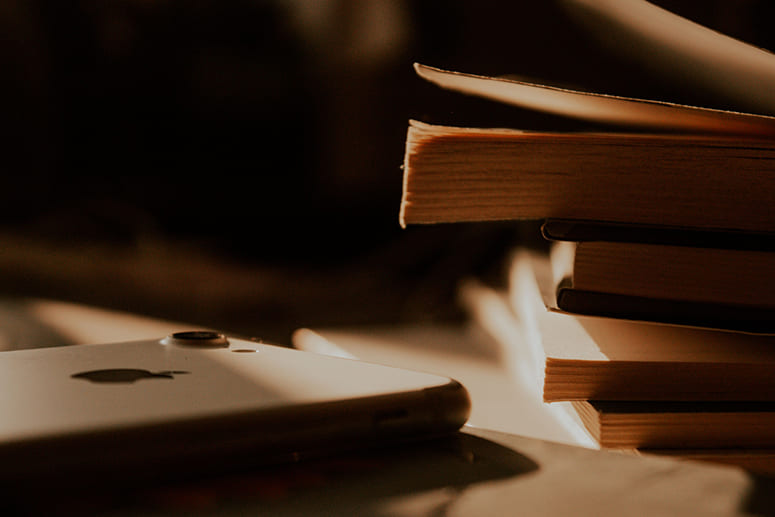
In societies where inequality shapes educational and cultural experiences, access to literature is uneven. For many young people, particularly those from less privileged backgrounds, engagement with literature depends on what is available, affordable, and unintimidating. In this context, so-called “badly written books” take on a different role. Often criticized for clichés, predictable plots, and lack of technical refinement, these texts are dismissed as inferior. Yet to judge them solely by these standards is to overlook their function. These works are not meant to represent the highest form of literary achievement; rather, they serve as entry points into the act of reading itself.
Accessibility is crucial in the formation of readers. Texts that are simple, familiar, and emotionally engaging allow individuals to participate in reading without feeling excluded or overwhelmed. They create a space where reading becomes less of an academic requirement and more of a personal experience. They make reading feel possible. Without such entry points, the transition into more complex forms of literature becomes far more difficult, if not impossible.
Drawing from my personal experience, as I continued reading, my perspective began to change. The same narratives that once made me feel kilig eventually became questionable. I started to notice problematic dynamics within the stories, particularly in the way relationships were portrayed. What I once accepted without question, I began to critique. This shift did not occur because I suddenly transitioned to more “refined” literature. Rather, it happened because I had already developed the habit of reading and the ability to engage with texts.
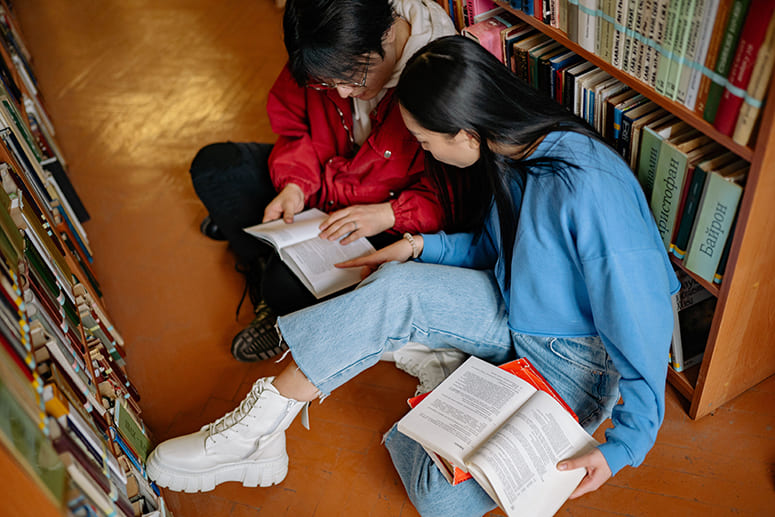
Critical thinking skills begin with participation. By interacting with texts, whether they are polished or not, readers learn to interpret meaning, form opinions, and eventually refine their own standards. The very works that are often dismissed as “bad” can, in fact, serve as the foundation for deeper engagement with literature. They create a pathway through which readers can grow.
In this sense, even imperfect writing plays a role in society. It fosters engagement, encourages imagination, and allows individuals to take part in the process of meaning-making. Writing may begin as a personal act, but once it is shared, it becomes part of a larger conversation. Readers bring their own experiences into the text, interpret it in different ways, and respond to it based on their own understanding.
Wattpad, often dismissed as producing “bad” writing, in fact helped democratize a historically gatekept publishing industry by lowering the barriers to entry. No agents, editors, or institutional backing are required; writers can share their work directly with readers. It gives visibility to a broader range of voices, especially young women, who might otherwise remain unheard. Through this process, literature becomes not just a reflection of individual expression but a collective space where ideas are formed and exchanged.
Ultimately, the question of whether writing is for the self or for society may not require a definitive answer. Writing can be both. However, before it can fulfill either role, it must first be accessible. In a world where not everyone has equal access to literary resources, the presence of approachable and relatable texts becomes essential. For many readers like me, the most important book is not the most well-written one, but the one that made reading feel possible.

WATCH: Boomers: Hirap mag-adjust o ayaw lang? (Generations Ep. 27)
October 28, 2026
WATCH: Do you still believe in marriage? (Generations Ep. 17)
August 19, 2026