

How do we critique the upper class spaces we enjoy?
On a slow Sunday morning, my friend and I argued over neoliberalism in pink imported fast-fashion pajamas, then I went ahead and booked my next Pilates class.
While the solo dates and weekend side quests keep the 40-hour workweek from completely breaking us, they feel increasingly dystopian. As a Gen Z in my early 20s, I live on the same feed that shows café dates beside corruption, brutality, and inflation. It’s as if a strained economy is only something you scroll past on the way to something lighter—if you’re geographically lucky.
But we also know not posting won’t end a war, and skipping brunch won’t redistribute anything. We still read and critique the news. So the cycle repeats: we show up at the latest TikTok-viral café, we ask how each other are, say we hope the war eases somehow, and then we move on.
I find myself asking why we, the younger middle class, keep ending up in the same spaces — taking corny photos at the same BGC black wall or Salcedo Market pedestrian walk. We all look performative, but really, it’s because there’s so little space left just to be.
Otherwise, how can we enjoy ourselves without flinching at the fact that these spaces aren’t available to everyone, upheld by systems that are beginning to falter?
The over-aestheticization of third spaces
It seemed so simple just to hang out when we were younger: at a friend’s house, on a neighborhood street with no solid plans, without even needing to be reminded that “the price of community is inconvenience.”
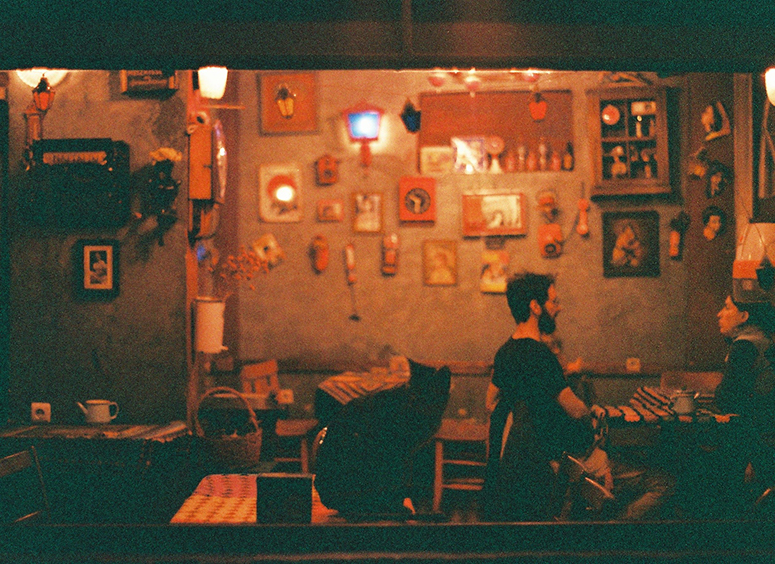
It could be just growing up, or that spaces now have become more curated, gentrified and uniform. We still try to recreate the kind of hanging out we did as kids—cafés, flea markets and run clubs standing in for playgrounds. We’re social creatures, so we improvise our own versions of third spaces anyway. But our participation in these spaces is never neutral.
CONTINUE READING BELOW

As Guy Debord writes in The Society of the Spectacle, “The more (man) produces his world, the more he is separated from it.” We craft our lives yet become alienated from them. As kids, we didn’t have to aestheticize how we spent time. But now, a café is not just a café, but content and taste. A run or hiking club is exercise, but also networking and branding. It still feels good, but we joke with our chest—everything feels like clout-chasing now. At no other point have time, attention and enjoyment been so co-opted into circuits of value.
Brand strategist Eugene Healey also notices this pattern in his essay on post-luxury culture. “Being seen is algorithmic: 10,000 followers watching your story. Being known is analog: eight people around a table who remember how you take your coffee.” But is it so wrong to fight doomscrolling by getting back into “analog” things: journaling, game nights, art fairs, running, coffee raves, pickleball sessions, book clubs, trivia nights and pottery classes?
While these communities can be great, they do not erase the divide. Spaces curated for connection still feel inaccessible or priced out for many. Public libraries are limited, and green spaces are scarce. I think back to the “young stunnas” in BGC who were quickly branded as disruptive and “jejemon.”
But in a country already short on spaces for youth, public infrastructure and everyday hobbies, what does it expose in us when we call someone “out of place” in these so-called upper-class environments?
Belonging, but only after payment
In bazaars, my sisters and I like to observe the crowd because we exist in that exacting middle—able to buy while side-eyeing the price tags and thinking about production cost and markup. We know the unspoken rules, acclimate to accents, recognize certain brands, and act like diplomats when we’re just buyers who want the cute top or Dubai chewy chocolate like everyone else. It’s why we end up talking our way through it like commentary: to stay a little bit outside what we’re already inside of.
Psychologist and development worker Meg Yarcia, author of Dear Meg, notes that we often bend our lifestyles to fit elite spaces rather than question their structure. “We pay a lot for entry. There is a sense of self that we deny to blend in, and that’s not a small thing. Being in these spaces physically, mentally and emotionally—as they often require—would mean giving up energy that would otherwise have been available for such pressing issues as poverty and hunger, climate change, corruption, and many more.”
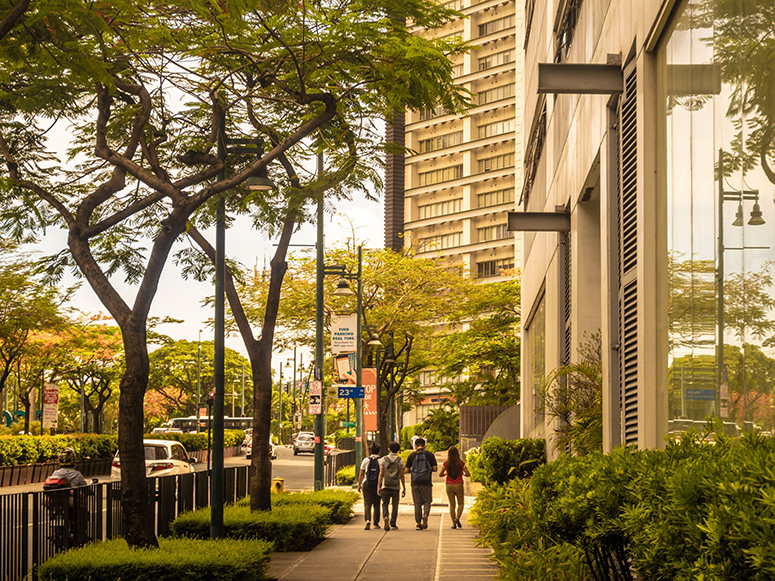
I find myself asking why we, the younger middle class, keep ending up in the same spaces—taking corny photos at the same BGC black wall or Salcedo pedestrian walk. We all look performative, but really, it’s because there’s so little space left just to be.
We can stand in a crowded train and register the failures of a system that makes this feel routine. But not so long after, we forget the journey it took to get that latte. The transition is almost jarring. In late-stage capitalism, socialization has been reshaped by this logic. To meet, to sit, to linger, you always have to buy something and aestheticize your third space.
On being a consumer and critic at once
If there’s a growing epiphany I always return to, it’s that contradiction is something we all share. As Yarcia points out, we should question what we’re reinforcing, who gets left out, and whether there’s a way to make it more than just consumption, or a cycle of hopping between the most “in” cafés and curated spaces. She brings up tai chi as an example. It used to be an elite practice in China, something reserved for aristocratic circles alongside poetry and calligraphy. But over time, it was simplified, made more accessible, and shared more widely until it became something ordinary people could actually practice. Something once exclusive became something shared.
Yarcia encourages readers to also turn inward, asking whether the spaces they occupy genuinely bring joy, growth and meaning: What does this activity spark in me? Do I like the version of myself in these spaces? Are there other spaces that offer the same sense of fulfillment without the same costs?
None of this ends in clean resistance. We will still return to the same viral cafés and book international flights because they offer rest, friendship and relief, even as fuel prices rise and people cross borders. Maybe the work is not self-blame, but refusing to unsee how ease is distributed, how community is shaped, and what it would take to make “casual” less exclusionary.

WATCH: Do you still believe in marriage? (Generations Ep. 17)
August 19, 2026
WATCH: Is OPM still as good as it used to be? (Generations Ep. 20)
September 9, 2026
WATCH: LGBTQIA+ people with unlikely professions
June 28, 2026