

Ramon Antonio: ‘I want future designers to be more Filipino, but with a modern look’
Ramon Antonio is among the most revered residential architects, having spent five decades designing homes for prominent Filipino families.
He came from a privileged family, but he says he also started his career the hard way.
“I was very privileged because I belonged to a family of architects,” Ramon says. “My father, Pablo Antonio, was an architect and a National Artist. We grew up in a very beautiful house in Pasay, which was very open and very tropical. Living in a tropical country, we have to work around a tropical climate, with hot summers and very harsh rainy seasons with typhoons.
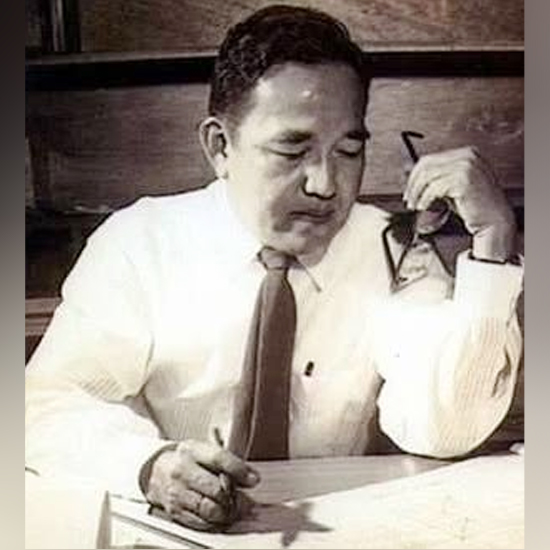
“Growing up, my father would bring us to different job sites because he was doing lots of homes, buildings, and business establishments. I saw Manila when Manila was really beautiful. Maybe I would call it the Pearl of the Orient, when everything was so green. I remember that my father built houses in Forbes Park, and Forbes Park was P2 (per square meter) when it started. The most expensive area was Gilmore in New Manila.”
To explain the look of older homes in New Manila, including the house of Doña Sisang Buencamino-de Leon designed by National Artist Pablo Antonio, architect Ramon offered this perspective:
CONTINUE READING BELOW

“To give a brief history, Philippine architecture really starts from the culture. We were under Spain, and then we were Americanized, so there in New Manila you still see houses with the patio, the azotea, with that feel. Then you have the modernity of the mid-century American period, which I think is wonderful.”
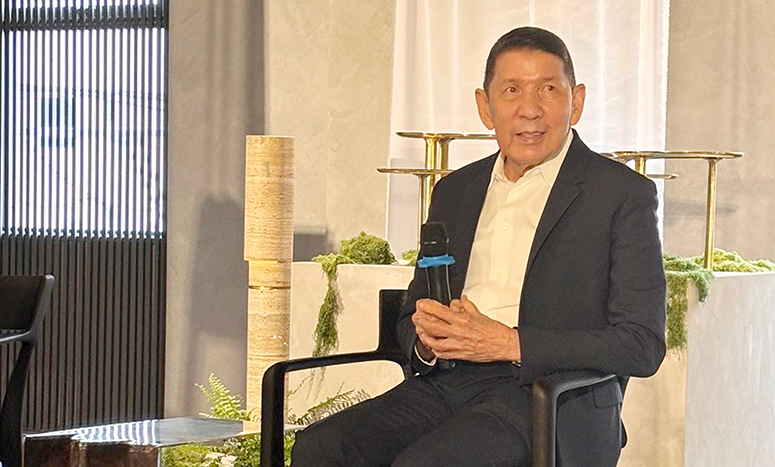
Today, designers have numerous showrooms and brands to work with. But what was it like when architect Ramon was just starting out, before so many choices became available?
“In the Seventies, when I had just graduated from school, what was wonderful was the time of the Philippine Institute of Interior Design (PIID), when we had exhibitions,” he recalls. “We all had our own cubicles, and every designer had his own interpretation.
If I have one wish for the design industry, it’s to make Manila beautiful again. Not only the developed areas, but every area should be gentrified.
“Every year there was a theme, and my favorite was ‘turn of the century.’ I had to borrow that type of furniture from a friend, from an old family in Urdaneta Village, for the exhibit. That was nice. We had to go around the old houses in San Miguel and Sampaloc to get a feel for the turn of the century and then interpret it in today’s home. Manila was beautiful then, and there were so many things to draw inspiration from.
“I really started the hard way. At first, there was only Townes (upholstery) and places like that,” architect Ramon recalls. “People gave me a budget, so I had to go to Divisoria, to Ilaya. A very good upholstery material was corduroy. It had a feel similar to velvet and was very cheap. There was a way of making things that were not expensive look good.”
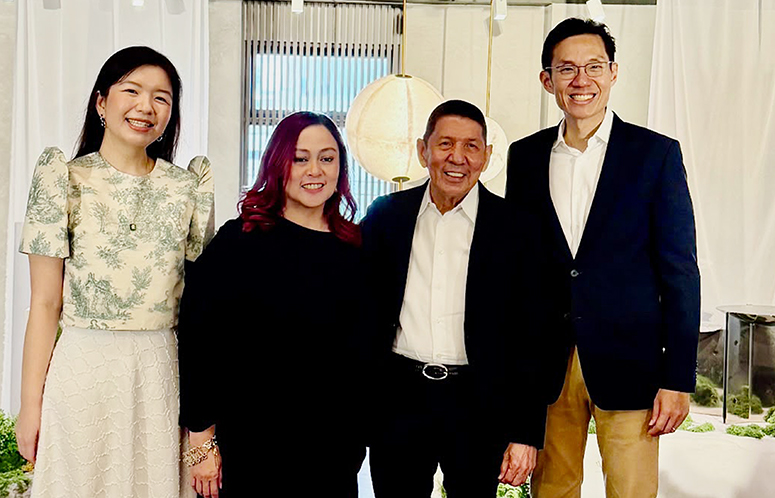
What draws clients to architect Ramon, however, is his attention to their needs, his pursuit of flawless finishes, and his guidance on maintaining their homes. In the process, he often becomes a good friend rather than simply an architect. It is not surprising that many of his clients today are the children of parents whose houses he built.
“I enjoy being a residential architect. It’s a lot of work. You have to get the feel of the family because one wants this way while another wants that way,” says architect Ramon, who recently shared his insights during a talk at the Casa Bella furniture showroom. “But at the end of the day, it can be done, and you can all work together in harmony. You know you’ve done a nice job when you enter a home and you have the feeling that the home is smiling at you.”
Architect Ramon adds that today’s designers are fortunate because almost everything they need is available.
“In our time, there was a shop we used to go to on EDSA that had beautiful woven fabrics. When Taft Avenue was still beautiful, there was an area in Pasay called Patio Kamalig, owned by the Kalaw family. They had a furniture shop there called Ambiance. Back then, there wasn’t much imported furniture; it was mostly local.”
Asked about artificial intelligence and how other designers have incorporated it into their practice, architect Ramon says, “Honestly, I’m still old-school. Everything I draw is manual. I do everything manually. On the job site, I tell my contractors, ‘I’m so sorry, you can charge me for the repainting because the wall is my blackboard where I draw.’”
He adds, “Design is not like a fax machine. Design is actually feeling, and the most important thing is to be able to feel what you’re doing. Design is really an emotion that you interpret.”
Homes nowadays are often designed for multigenerational families, a setup architect Ramon knows well.
“If you look at your hand, we have our fingers, and not one is the same,” he says. “So even when you build a house, every child has their own expression. To make them happy, you have to listen to them because they will be the ones living in that home. You have to imagine the flow, think of young children and older people with caregivers, and make sure even the powder rooms are designed for safety.”
His design process begins with observation and imagination.
“Whenever I have a new project, I look, study, and put myself inside that plan. When I go to see a property, I walk around and feel the orientation. To me, orientation is very important—the morning sun, the afternoon sun. I look at the trees and study even the neighborhood. I try to feel and imagine myself already sitting in that area, having a good cup of coffee or tea.
“When you take on a project, the client gives you a wish list, which is the most important thing. You follow the wish list, make a checklist, and use it as a good guideline. The most important part of the layout is the flow, so once I have the wish list, the flow follows. Circulation is very important. Ventilation is very important.”
Often asked about his youthful appearance, Ramon talks about eating according to his blood type, reducing meat while including plenty of fruits and vegetables, taking things in moderation, exercising, and drinking plenty of lemon water. But he also credits another source of rejuvenation.
“Now that I am—I won’t say old, I’ll say mature—I have found myself a life extender, which is my second home. It’s being able to spend time in an adopted country I have fallen in love with: Bangkok, Thailand. I have seen the work there, and many times I’m very envious. I feel like crying because the professionalism is so amazing. All I do when I go to Thailand is look at the new developments and say, ‘Why is everything they do in Thailand possible, while in Manila they always say, “Hindi kaya”?’ It’s a different attitude. Sometimes I say to my workers, ‘Walang namamatay sa sipag.’”
For future designers, architect Ramon has this advice:
“I want them to be a bit more Filipino but with a modern look. When you go to other Asian countries, you can see the influence of their own culture, but done in a modern way. Stone, adobe, whatever material, but presented in today’s style. That stamp is our own identity.
“Wright said design is like a fountainhead. Imagine your mind is like a faucet and all the ideas are flowing. That’s how we should be thinking as designers. There is so much opportunity and so many doors to open. If I have one wish for the design industry, it’s to make Manila beautiful again. Not only the developed areas, but every area should be gentrified.”
For architect Ramon, a home brings together all aspects of design, from architecture and interior design to landscaping. Each element contributes to the story of the people who live there.
“The design that you make is like a story, so you have all the chapters,” he says.
“Building a home is not building a shell. We’re building a lifestyle, and I always tell my clients, ‘I made you a nice house, so enjoy your home. Entertain, have flowers, have books. Live in your house not only for parties. Enjoy every moment of it.’”
***
Casa Bella Home and Living is located at 8 Jupiter St. corner Canopus, Bel-Air. It is owned and managed by Joseph Tay and Stephanie Coyiuto Tay.

WATCH: Is Philippine cinema still thriving? (Generations Ep. 19)
September 2, 2026
WATCH: LGBTQIA+ people with unlikely professions
June 28, 2026