

All you can read, all you can eat
It was the perfect day for me. Books plus food equals happiness.
On an overcast Friday afternoon in September, I went to the Manila International Book Fair at the SMX Convention Center Manila in Pasay City, which ran from Sept. 9 to 13. I discovered it to be a place where one could spend hours surrounded by books and, theoretically at least, become a better person. Then I walked over to IKEA, with its seasonal Crayfish Buffet at its Swedish Restaurant, where one could eat as if there were no tomorrow and, quite possibly, become a worse person.
My quest for self-improvement naturally came first—besides, I had time to kill before the start of the buffet—but the moment I stepped inside the convention center, any quiet expectations of a traditional book event vanished.
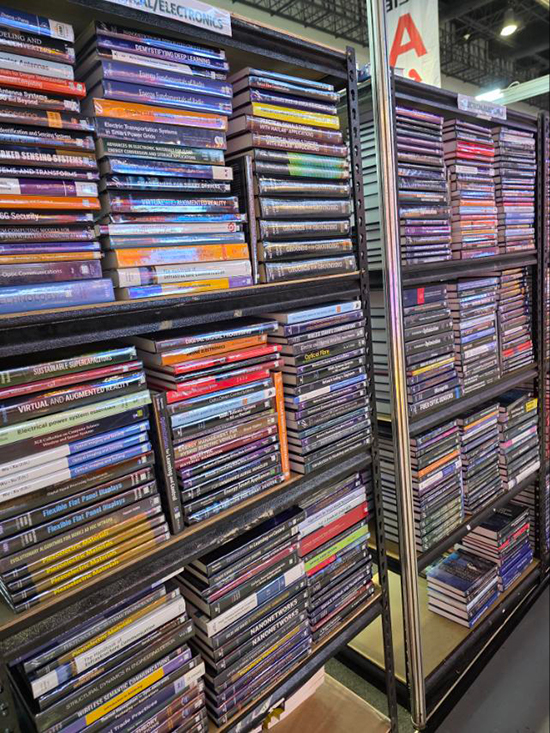
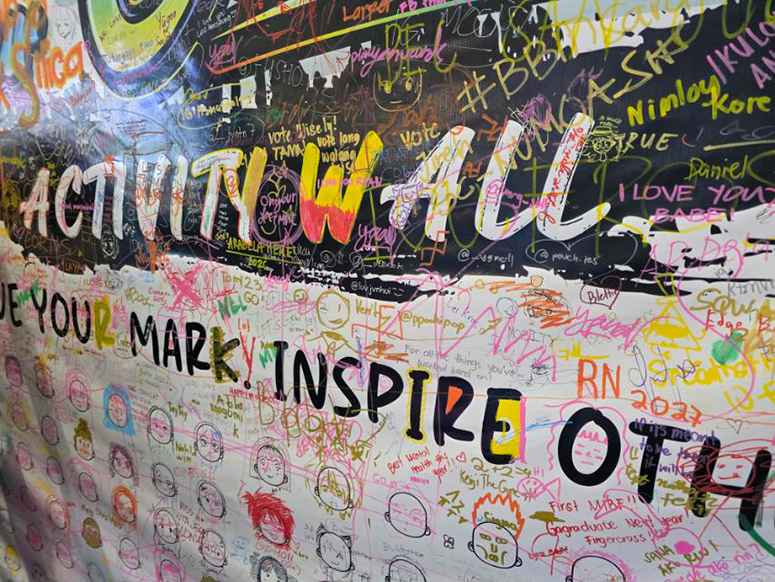
Seeing all those people of different ages and persuasions browsing, jostling for position, queuing to enter the more popular booths, and actually buying books convinced me that the future isn’t lost. The atmosphere was far from library tranquility and nearer to Comic-Con hype, especially with nerds and geeks converging at the center like the Fellowship of the Ring in Rivendell. They proudly carried bags full of purchases, talking to each other instead of staring at their phones.
Both the book fair and the buffet were exercises in beautiful, chaotic excess.
For this event, phones mostly served as cameras to capture the sensory overload: books on super sale, graphic novels, anik-anik, impressive booths, and celebrity authors (I spotted Howie Severino promoting his latest book, People I Knew: And Some I Didn’t But Wrote About Them Anyway). I geeked out over maps, pens and art supplies. I even stared at different kinds of staplers as if they were fetishes in a psychedelic dream. In the end, I showed remarkable restraint, buying only three things: two Nordic graphic novels by Malin Falch—Nordlys: Books One and Two—and Ambeth Ocampo’s Cabinet of Curiosities.
CONTINUE READING BELOW

AI had no room in here, unless, of course, it was shamelessly utilized by the writer in the first place. The fair proved that the publishing industry is flourishing and that many people still prefer the tactile experience of reading books on paper. Sure, the MIBF was crowded, but it was, like the Alex Eala horde that follows her everywhere, a “good problem to have.” The silver lining lay in the fair’s multigenerational appeal. It was a family hunt and a barkada outing all at once. There were cookbooks for grandma, history books and sudoku sets for the parents, manga and YA fiction for the teenagers, 30-minute romance novels for Inday, and loads of picture books for the kids. And the family geek could spend 20 minutes comparing staplers.
Another come-on was the aroma—not the intoxicating scent of paper and ink but the alluring smell of food. By the time I left SMX, I reeked of international flavors, which felt almost like a betrayal of my second quest.
“Where is the crayfish?” I heard one child ask in his shrill, annoying Batibot voice while navigating the walkway between SMX and IKEA. In my head, I channeled the MCU: What is a crayfish? Why is a crayfish? Forgive me, but by then I had walked over 6,000 steps and was literally hangry.
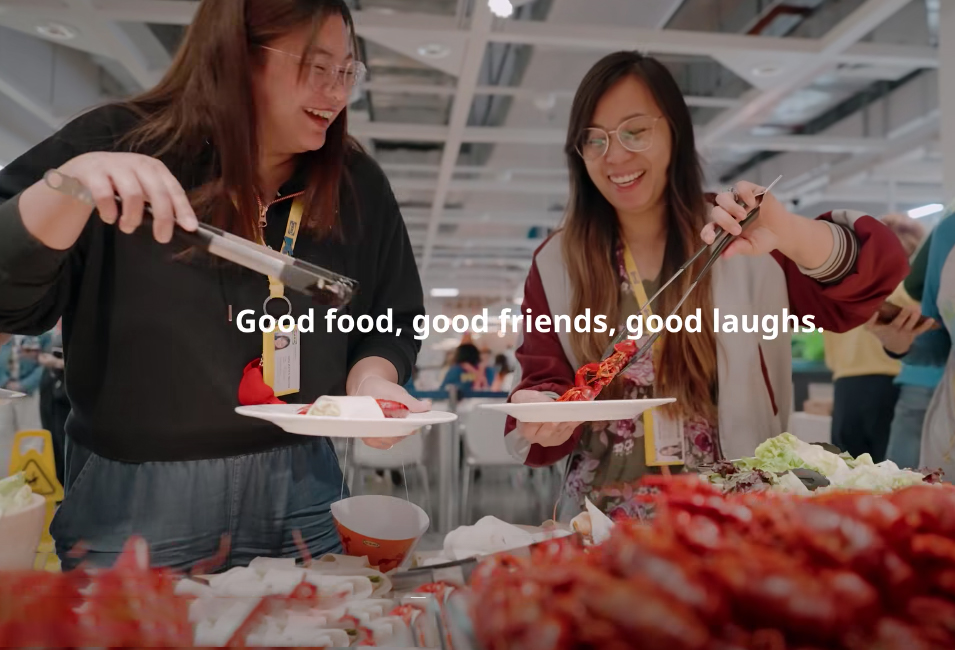
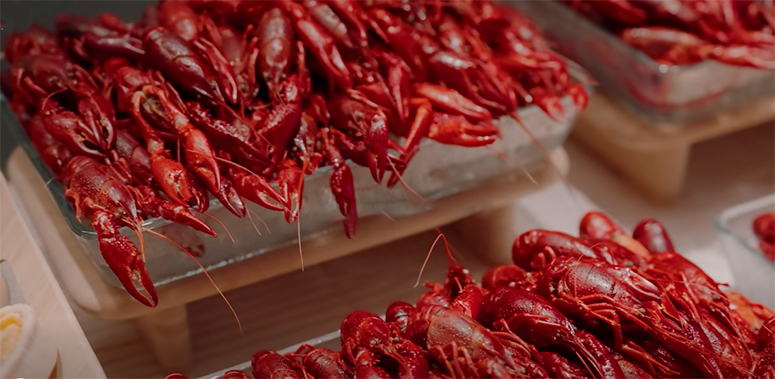
At the IKEA Crayfish Buffet, I met up with my daughter and her two friends. It was the second visit for me and my mini-me; my wife and son had gone there two weeks earlier. Since our family’s first visit, we had endorsed it enthusiastically to family and friends. In hindsight, we probably should have kept it to ourselves—our little Swedish secret shame.
The buffet is inspired by Sweden’s traditional kräftskiva, the late-summer crayfish party celebrated with family, friends, food, drinks, and, traditionally, plenty of singing. IKEA’s 2026 version offered unlimited crayfish, salads and sides, desserts, and refillable drinks, but no singing, which Filipinos could very well take to, say, like crayfish to freshwater creeks.
To make up for all that book fair walking, I consumed about three heaps of crayfish, but not before devouring the sides: deviled eggs, egg salad, sausages, cheese tarts, and other stuff I can no longer recall putting on my extra plate, let alone stuffing into my mouth. The brownies weren’t bad at all, either.
Amid this adephagous exercise, a family at an adjacent table took the concept of “all you can eat” to a whole new level. For a family of four, two of them kids, they incredibly consumed roughly as much as our own group of four ravenous adults. After wondering how they managed to finish everything, my daughter’s friend revealed, in his most authoritative Marites tone, that the mother was handing over crayfish to a fifth member of their group: the dad, who was sitting at a table outside the buffet area. I wasn’t sure whether to salute them for ingenuity or pour those crayfish discards over their heads for brazen fraud.
We have a legal term for it: estafa.
Yet, as I watched them, I realized my two weekend destinations weren’t so different after all. Both the book fair and the buffet were exercises in beautiful, chaotic excess. Both offered irresistible opportunities, and both exposed that tiny, mischievous part of human nature that looks at a mountain of books—or a mountain of seafood—and whispers, “I want more.”
We might try to police our greed, but deep down, we all agree with Mae West: “Too much of a good thing can be absolutely wonderful.”

WATCH: Is Gen Z too soft? (Generations Ep. 23)
September 30, 2026
WATCH: Is OPM still as good as it used to be? (Generations Ep. 20)
September 9, 2026
WATCH: Can we talk about death and grief? (Generations Ep. 25)
October 14, 2026