

Is imposing a wealth tax on the rich a better solution for the fuel price hike crisis?
As the Philippines grapples with increasing fuel prices brought about by tensions in the Middle East, the government is now racing to come up with solutions to ease the burden on consumers.
One approach that's being discussed is granting President Ferdinand "Bongbong" Marcos Jr. the authority to temporarily suspend or reduce excise taxes on fuel during national emergencies.
Under the proposed measure, the president is given the authority to suspend fuel excise taxes during national or global economic emergencies to prevent sharp increases in pump prices, electricity rates, and transportation fares.
However, economist Winnie Monsod, on her YouTube account, said that this may not necessarily be an ideal solution.
"I read that the suspension of the excise tax on oil and the VAT on oil is going to cost the government P136 billion," she said.
She then floated the idea of imposing a one-time wealth tax on the country’s richest Filipinos instead.
CONTINUE READING BELOW

"Why don't we ask our Congress to impose a one-time wealth tax on the 50 wealthiest Filipinos in the country? In other words, every time we have a crisis, I want the rich people to come in and say, 'Alright, we will help." So merong nagsu-suggest niyan," Monsod said.
A wealth tax is based on what a person owns, such as assets like real estate, stocks, and other investments, rather than what they earn over a period of time. In contrast, an income tax is imposed on salaries, business profits, and other forms of earnings.
"If your wealth is over a billion pesos, 1% tax on the amount over a billion pesos. If your wealth is over P2 billion, 2% tax on the amount over 2 billion," Monsod said. "I have not done the arithmetic myself, but I read somewhere that the tax that we would get from that [is] about P137 billion in revenues."
Is the one-time wealth tax practical?
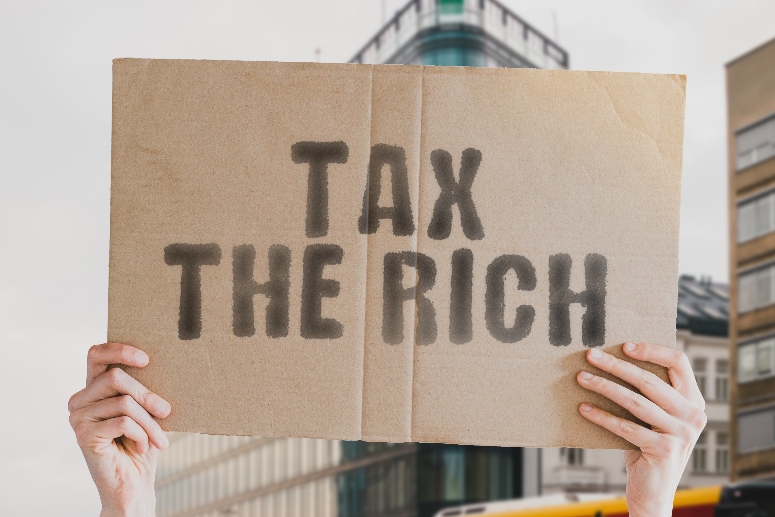
While a one-time wealth tax may seem like a quick fix, experts warn of significant legal and economic "red flags." Economics professor Bruce Ivan De Guzman and Rizal Commercial Banking Corporation's chief economist Michael Ricafort both highlighted the risk to the country's competitiveness.
Ricafort noted that many nations are using tax incentives as a strategic tool to spark economic growth.
He explained: "Some countries are attracting investors and wealthy individuals through lower taxes or no taxes, in an effort to attract more capital and investments to create more jobs and other business/economic activities. Best to align with internationally acceptable standards and global best practices on this."
De Guzman agreed, noting that the one-time wealth tax seems practical on the surface, but the government must be prepared for consequences, such as reduced investment from the private sector, low collection due to legal tax avoidance, and political and social tensions.
"Implementing a wealth tax can benefit more Filipinos if the collected revenue is sufficient and properly allocated, but this is only a short-term solution," he said.
Meanwhile, Augusto Laforga, a Juris Doctor and economics professor, and Mon Abrea, a prominent tax consultant and advocate, argued that the issue is more legal than economic in nature.
Laforga explained that while the government has the "police power" to make laws for the public good, those laws must be fair. Since a wealth tax targets only a specific group, Laforga warns the Supreme Court might strike it down for being discriminatory.
"If the bill becomes a law, the Supreme Court will interpret its legalities based on check and balances. In my own opinion, it cannot pass through the Supreme Court because it is discriminatory," he continued.
He remarked that suspending the fuel excise taxes is still more justifiable than the one-time wealth tax, as the measure applies to all.
Abrea, on the other hand, noted that the Philippines currently lacks the tools to enforce it effectively.
"For a wealth tax to work, we must have a reliable and integrated database of assets, clear valuation standards, and appropriate access to financial information, including bank data for tax enforcement purposes," Abrea explained.
He warned that without these prerequisites, the policy risks becoming an administrative failure that falls short of revenue targets.
For Mon Abrea, Chief Tax Advisor of the Asian Consulting Group, a one-time wealth tax "may be considered in extraordinary circumstances, particularly to signal equity and shared responsibility."
However, he stressed that its effectiveness still depends on "key prerequisites that we currently need to strengthen."
"For a wealth tax to work, we must have a reliable and integrated database of assets, clear valuation standards, and appropriate access to financial information, including bank data for tax enforcement purposes. Without these, a wealth tax risks being difficult to administer and may not generate the expected revenues," he said.
"At the same time, we must be mindful of policy stability and investor confidence, especially as we position the Philippines as a competitive investment destination," he added.
Exploring alternative measures
Beyond proposals such as a fuel tax suspension or a one-time wealth tax, there are other approaches that the government could consider to cushion the impact of rising oil prices on consumers and other crises in the future. Instead of creating new tax brackets that might be easily evaded or tied up in legal battles, Abrea suggested that the government should look inward at its current capabilities.
"In my view, the more immediate and impactful approach is to strengthen enforcement within the existing system," he said. "This includes pursuing a nationwide audit and investigation of unexplained wealth, particularly among public officials, where such wealth can be treated as prima facie evidence of tax evasion under existing laws."
He contends that rigorous enforcement—rather than new legislation—could be the key to the fiscal recovery the country needs to weather the fuel crisis.
"If implemented effectively, this can unlock significant revenues—potentially in the billions, if not trillions—while reinforcing accountability and public trust," he added. "Ultimately, fiscal recovery is not just about raising new taxes. It is about building a fair, transparent, and enforceable tax system—one that rewards compliance, deters abuse, and restores confidence in government."
Laforga advised practicing energy-saving measures in the business sectors, such as "using non-motorized vehicles as a means of transportation."
He noted that addressing the issue requires long-term solutions, saying: "Look for other sources of oil outside the Middle East and develop more renewable sources of energy like solar, windmills, and geothermal, and prioritize government spending in the utilization of our own oil mining industry."
Highlighting the need for structural change, De Guzman advocated a transition away from car-dependency toward mass public transit.
"This will not happen overnight and will require significant time and effort from both the government and the people. If most Filipinos rely on cars, they will be negatively affected during fuel crises, as we import fuel rather than producing it locally," he said.
Abrea, on the other hand, underscored that the "more immediate and impactful approach" that the government could do is to strengthen enforcement within the existing system.
"This includes pursuing a nationwide audit and investigation of unexplained wealth, particularly among public officials, where such wealth can be treated as prima facie evidence of tax evasion under existing laws," he told L!fe.
If implemented effectively, Abrea said that this can unlock significant revenues—potentially in the billions, if not trillions—while reinforcing accountability and public trust.
"Ultimately, fiscal recovery is not just about raising new taxes. It is about building a fair, transparent, and enforceable tax system—one that rewards compliance, deters abuse, and restores confidence in government," he said.
Government's response to the price hike
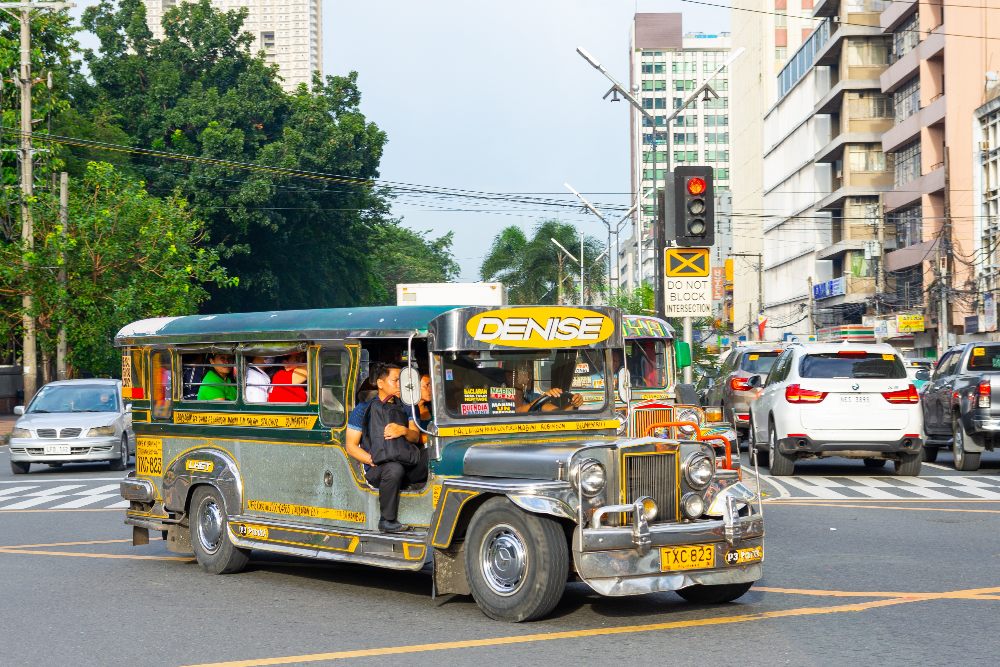
In an email sent to L!fe, Jolly La Rosa, Director of the Office of the Chief Economist at the Department of Finance, assured that the government is actively addressing the oil price hike.
"The government has started rolling out targeted subsidies to the most vulnerable groups, including jeepney and tricycle drivers, actively building up fuel inventories by procuring oil supply from other country sources, and implementing staggered price adjustments on petroleum products," she said.
"We also have other potential policies and programs in case the US-Israel-Iran conflict lasts longer than expected," she added.
Currently, the government is unable to control fuel prices since the oil industry is deregulated, meaning oil companies are obligated to only report and justify their price adjustments to the DOE.

WATCH: Is Philippine cinema still thriving? (Generations Ep. 19)
September 2, 2026
WATCH: Can you still trust someone who betrayed you? (Generations Ep. 22)
September 23, 2026