

‘There’s no market for Filipino literature’ is a lie. Here’s why.
If you spend enough time in the comment section of bookish communities in the Philippines, you will discover that there is a loud minority that takes offense when you call on them to read more local literature. These readers insist that Filipino literature is inferior, that our fantasy authors don’t hold a candle to their contemporary peers in the West, or that we have no Emily Henrys and Sally Rooneys to boast of.
This is, of course, false, but to frame the conversation that way is to center Western authors as the baseline, the blueprint, and the framework from which all good literature stems.
Often, the books we escape to cage us in systems of our own oppression.
When the US colonized the Philippines, it brought with it its gunpowder and movies: the full strength of its power, both hard and soft. Hundreds of years under Spanish colonial rule had primed us to accept our new masters. Not all of us, but enough of us. Had our revolutionaries lost and the fight for Philippine independence not been won, they would have been labeled insurgents and terrorists.
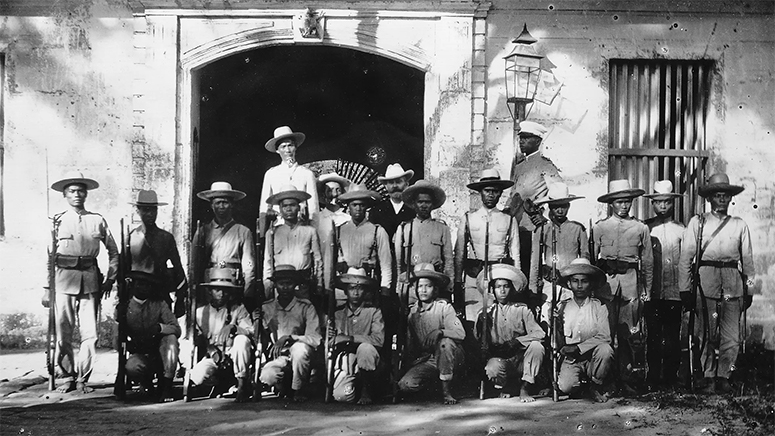
All of history is a story we tell ourselves, and only victors live to tell their stories. But the war was won, and as author Omar El Akkad put it, "One day, everyone will have always been against this."
So it is: here I am writing, and here you are reading, and it is thanks to the battle waged by our predecessors that we can do so freely.

But we are not entirely free. Vestiges of colonialism and Western imperialism still have their grip on us, only this time we refuse to let go. As both an avid reader and author, I take it upon myself to do my part in supporting our literary industry. But called on to read our own books, watch our own movies, and listen to our own music, we are told that our activism alienates our would-be audience.
It calls to mind the prominent excuse white readers give when asked to read diversely: “I focus on quality, not identity.” Other cultural workers have offered better rebuttals, but it all boils down to our unconscious biases as informed by the racist, capitalist power structures imposed on us today.
Western publishing is one of the longest-standing bastions of imperialism. We need not look further than our own bookstores to see its dominance. While local literature is relegated to the back shelves of the Filipiniana section, white authors are front and center. Despite pledges by Western publishers to diversify their catalogue in 2020, statistics show that it remains majority white. Our local publishers are dismissed altogether. More recently, across the small row of Filipino literature in a popular bookstore, there is a whole section dedicated to Japanese literature and manga, both translated and in its original text.
Online, invitations to read more local literature are misconstrued as shaming. Reading is political—and the mere fact that we turn to it for entertainment after a long, grueling day at work is proof of that. Surrounded by corruption and robbed of the fruits of our taxes so contractors and politicians can go on their hundredth Europe shopping trip of the year, we seek lighthearted stories to escape.
Which is precisely why we can’t rely on the West to tell our stories—or to validate them. Who better to give you relief from your everyday struggles than someone going through it with you? Filipino writers are just as imaginative, if not more, and can provide the same escapism we so desperately seek. There is so much value in our affirmation of our own stories, in their echoes heard and felt right here in the homeland. Reading Filipino literature enables us to envision a better future where we are not beholden to corruption or self-loathing. A future where “literature” is not shorthand for Western canon, and we are forced to Other ourselves in our own country.
The only thing standing in our way is our own adamant refusal to investigate our preferences and to branch out of our comfort zones.
When confronted by the responsibility (yes! The responsibility!) to read Filipino literature, many take it to mean that they are barred from enjoying foreign literature. It’s not unique to Filipino culture to dismiss calls to action when they take on a direct tone. Still, we accept instruction from foreign peers, but question our fellow countrymen: Sino ka ba? Why should we listen to you?
These same readers come out in droves, chanting “Filipino pride!” whenever a Filipino is published by a foreign publisher.
“It is the dream of the colonial writers to be recognized and be published in the country of the colonizer whereby he will then be able to claim equality with his colonizer,” wrote the controversial F. Sionil Jose in his essay, “Our Literature in English.” We see this in a large chunk of our respected cultural workers’ refusal to boycott the genocide-complicit Frankfurt Book Fair despite calls from Palestinians and the global Boycott, Divestment, Sanctions movement to do so. Appeals to our vanity and promises of global success keep us attending, and the only cost of entry is to uphold the very same system that keeps us invisible in our own country.
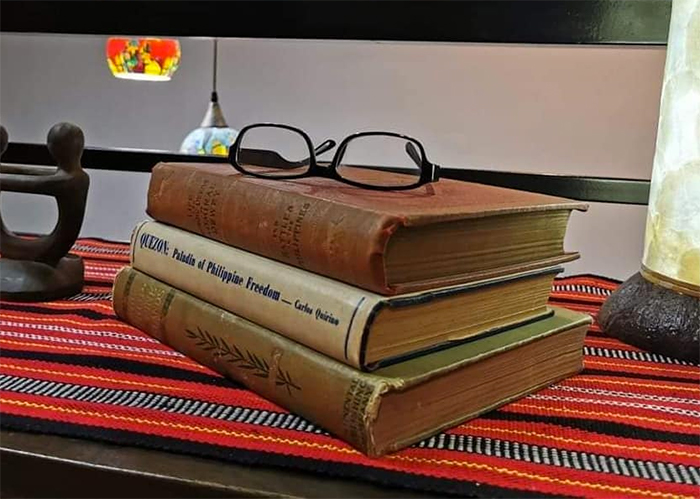
So now we ask: Why do our writers have to be published abroad to be locally recognized and respected? What part of our history and our hard-won freedom that heroes paid for with their lives have we forgotten? The excuse that there is no market for Philippine literature is false. There is a clamoring for it, but easy access to it remains an issue to be solved, especially for independent authors who work with small budgets and can’t meet the high barrier of entry to stock their books in bookshelves.
In one of his YouTube videos, Kenyan writer Mordecai Ogada discusses imperialism's effect on all of us to this day: “So you think imperialism doesn't affect you? That's because you don't know what it is." He outlines how our silence is bought, and how that silence is imperialism in action. We are so hung up on the prestige and reputation of certain institutions, like Western publishing and the Frankfurt Book Fair, that we are more than happy to give up on our moral convictions for a scrap of Western validation.
I imagine, if you’ve gotten this far without angrily turning the page, you have opinions and rebuttals of your own. Good. That’s the point. Filipinos are notoriously non-confrontational. We deal with our grievances by way of parinig. We forget that anger is a spark, a starting point for a deeper conversation that leads us toward a better future. Every great progress starts with an acknowledgement that things cannot go on the way they are. Whether you agree or disagree, you are already taking part in the conversation.

WATCH: Is Gen Z too soft? (Generations Ep. 23)
September 30, 2026