

What’s behind our obsession with ‘exclusive’ luxury products?
In the past few weeks, people online grew frenzied for the Adidas Tang dynasty-inspired jacket, perhaps partly because it was so hard to find. The limited-edition piece was initially only available in Mainland China, Hong Kong, Macau, and Taiwan; Filipinos abroad posted their rare sightings on social media, and “pasabuy” businesses quickly sold out.
The global demand drove Adidas to expand its market. This included select stores in Manila, where the jacket is being sold for P6,500—even It’s Showtime hosts Vice Ganda and Anne Curtis donned matching jackets on the show.
Now, online conversations are singing a different tune. “Never wearing my Adidas Chinese-style jacket anymore kasi nagiging too common na siya,” wrote one user in a now-deleted viral post on Threads. “Tapos people [are] calling it ‘jeje’ which is funny, kasi usually those are the ones who can’t even afford it in the first place.”
Almost overnight, the jacket went from this elusive piece worth flying thousands of miles for, to something never to be worn again. Why the change of heart?
This, according to sociologist Marc Angelo C. Sanchez, is a clear case of “conspicuous consumption”—the consumer practice of buying a specific product not primarily for its practical value, but its ability to signal wealth and social status. Essentially, it’s a way to emulate the elite while you’re unable to climb the ranks yourself. While you can’t wholly afford their way of life, if only because social mobility in the Philippines remains almost an impossible dream, at least you can buy the clothes and look the part.
We learn to do this because in Filipino consciousness, although such is the case in any capitalist society, wealth is the ultimate marker of success.

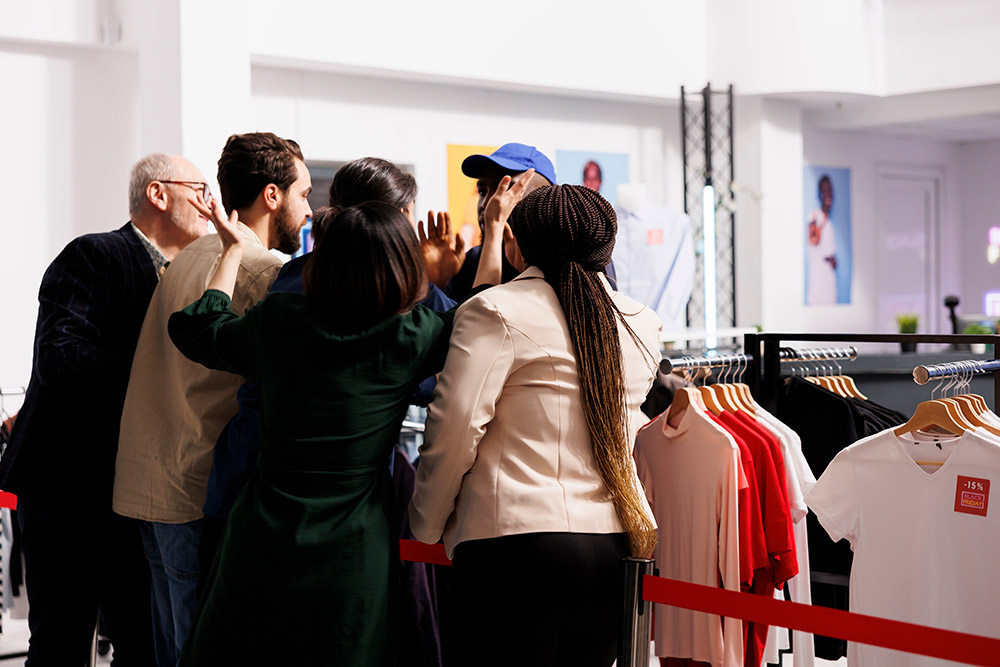
“We see politicians, businessmen, and influencers on our screens showing their lives and their power,” Sanchez told PhilSTAR L!fe. “Filipinos are constantly exposed to what they wear and what they do, and in order to at least position [ourselves] within the same socio-economic category, [we] wear their clothes or buy the same brand of gadgets [...] to at least feel a sense of success.”
Sanchez, who also runs the Facebook page “The Pinoy Sociologist,” gave more examples of this in a widely-shared post: Filipinos buying luxury phones even at the cost of accruing debt, or shelling out years-long payments for a fancier car.
When the jacket first dropped, it was desirable because it offered twice the social status. It signalled the kind of access reserved for the wealthier —maybe you can afford the jacket, but you can’t afford to fly overseas to get it. As it becomes more widely available, this social status diminishes. The jacket now fails at the very function it was bought for in the first place.
The popularity “ruins [people’s] attempt to increase their social capital,” explained Sanchez. Buying exclusive items increases our proximity to the elite and to success. However, when people we deem “unsuccessful” acquire the same items, even if it’s through imitations, it loses its exclusivity and becomes more closely associated with this “unsuccessful” social group.
Physical appearance, especially clothing, is one of the most obvious ways we determine each other’s social standing. It’s also among the easiest to fake, especially with social media granting us more exposure to what the rich and famous have in their closets.
To preserve their identification with the elite, buyers will vow never to wear the jacket again and defend themselves from “jeje” allegations. After all, as the viral Threads post said, “Those are the ones who can’t even afford it in the first place.” Implicit is the attempt to differentiate themself, as if they’re saying, “How can I be ‘jeje’ when I can afford this and they can’t?”
Sanchez added that using “jeje” to describe the jacket is a way to stigmatize the product, warning that it shouldn’t be worn unless one wants to be associated with the wrong group. It’s a form of “symbolic violence,” where language and symbols are used to subconsciously maintain social inequality. “Jeje” has negative connotations because, colloquially, it has become shorthand for the lower class.
We’re seeing the same thing with “geng-gengs” and “youngstunnas,” who were the subject of earlier online discourse about whether they should be banned from BGC due to “disruptive” behavior. Notably, the group are also most commonly identified through their distinctive clothing.
“People generalized the group’s aesthetic and socio-economic upbringing as dangerous and violent,” Sanchez explained. “If a relatively financially stable group of people become violent in BGC—be it bar fights, road rage, etc., which do happen in BGC—we will not see directives involving the banning of their socio-economic group [...] They will never be called ‘geng-geng’ or ‘jeje.’”
Physical appearance, especially clothing, is one of the most obvious ways we determine each other’s social standing. It’s also among the easiest to fake, especially with social media granting us more exposure to what the rich and famous have in their closets. It’s largely why, when the flood control corruption issue blew up last year, the outfits worn by political “nepo babies” were the main targets of vitriol. Not only were the clothes purchased with ill-gotten money, but they were also signalling a higher social status that these nepo babies did not deserve to have.
It’s also why the Threads post about the trending jacket drew so much flak. It was incredibly elitist, but also naive. We will never be good enough for the elite, no matter how convincing our cosplay. They will simply keep moving the goalposts. And ironically, being hyper-aware of the social status ascribed to our belongings exposes the very thing we wish to conceal: our actual social status and our attempts at augmenting it.
Arguments about Adidas “not even being a luxury brand,” as some users replied, are also beyond the point. We criticize the original poster not because they did not do a good enough job of emulating the elite. It’s because they even felt the need to do it, to the point that they bring other people down in the process.
If anything, at least the post invited us to examine our longstanding habit of putting up appearances—again, the impulse to drown in debt for a flashier phone or a grander wedding. Perhaps it’s our way to cope with inescapable economic precarity, caused precisely because of the elites we deem aspirational. Or perhaps we think physically fitting in will consequently grant us access to the power and wealth they keep to themselves. But that’s all it will be at the end of the day: appearances, cosplay, a jacket. The wealth and power we so badly want remain in their inner circle. We’re left waiting for the next trendy thing to find and flex.
Disclaimer: The views expressed in this article are those of the author and do not reflect the opinions of PhilSTAR L!fe, its parent company and affiliates, or its staff.

WATCH: Pixar Summer Fest adventure at Hong Kong Disneyland
August 10, 2026