

The barrio doctor who didn’t want to make his patients wait
He gave his own blood when there wasn’t any available.
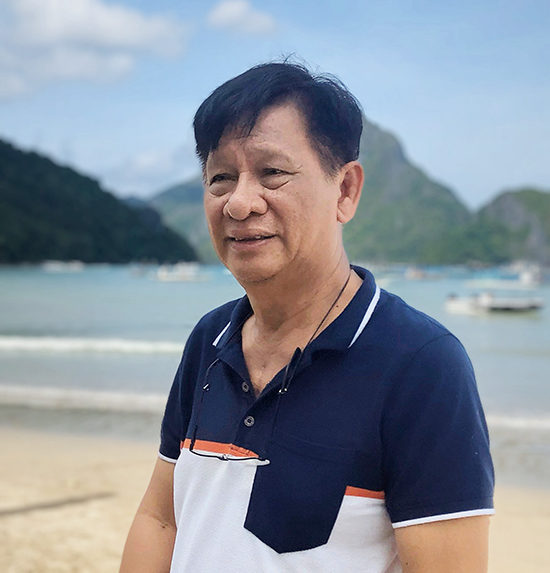
He was the quintessential dedicated barrio doctor, turning his back on opportunities to practice in Manila or in the United States because he did not have the heart to leave his patients in Liminangcong, a coastal barangay in the town of Taytay, northern Palawan.
Dr. Nestor Arellano Reyes, a cum laude graduate of the University of Santo Tomas, started serving the people of Liminangcong in the early ‘70s when it was still off the beaten path. Though it boasted marine sanctuaries, it had no resident doctor or pharmacy at the time. It was largely inaccessible, except by banca or the weekly cargo boat from Manila and nearby provinces.
One of these cargo boats that plied the Liminangcong route was owned by Dr. Reyes’ parents, Igmedio and Jovita Reyes of Bongabon, Oriental Mindoro. And so it came to pass that it was in Liminangcong that the idealistic Dr. Reyes found purpose. For over 50 years, until he passed away last May in Puerto Princesa at the age of 80, Palawan was his home. His passion, his paradise.
His daughter Rhea Reyes Jacob tells her father’s story:
“Being a doctor to the barrios, before that program even started in the Philippines, he was practicing in Liminangcong while reviewing and waiting for the results of the US medical board exams. When he passed the boards and eventually needed to leave for the US, he decided to stay.”
CONTINUE READING BELOW

“As a doctor, my dad always put his patients first. He never wanted them to wait. As a government doctor whose home was attached to the hospital, he would get up mid-meal, or finish right away, to go and see a patient. There were no office hours or holidays. He would be awakened at all hours of the night, and he would simply get up and go. He was so committed that his life revolved around his practice,” Rhea, an expatriate wife whose husband Mikel has been stationed all over the world, shares.
“He gave his time and effort unselfishly, gave his own blood when there wasn’t any available, sometimes even having to operate on the same patient a few hours after. He gave his own resources to many who could not afford to pay or buy medicines. And he shared his home with those who had been abandoned by their families—like the boy who fell from a santol tree who was so badly broken that his parents left him in the hospital, thinking he would never recover.”
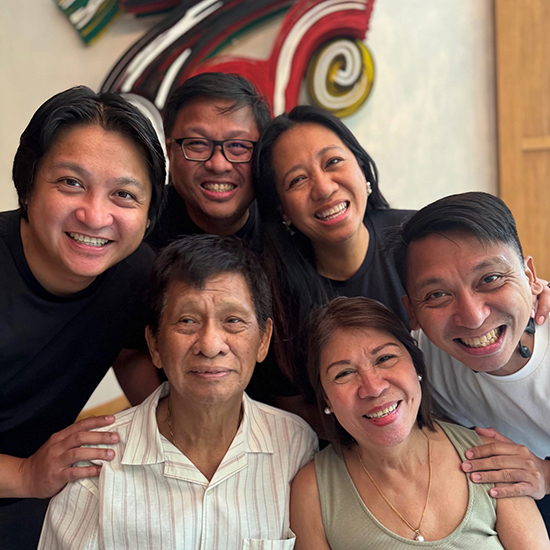
Her youngest brother Kevin, a surgeon, followed in their father’s footsteps and now practices in Puerto Princesa while her brothers Kenneth and Karl are successful entrepreneurs with deep ties to the province as well.
Dr. Reyes’ children imbibed his love for Palawan, even if none of them, including their mother Lilian, were born there.
“He loved Palawan and its people too much to leave,” Rhea says wistfully, recalling the idyllic summers they spent in Liminangcong, and later in Taytay, the main town, which was only 52 kilometers away from El Nido.
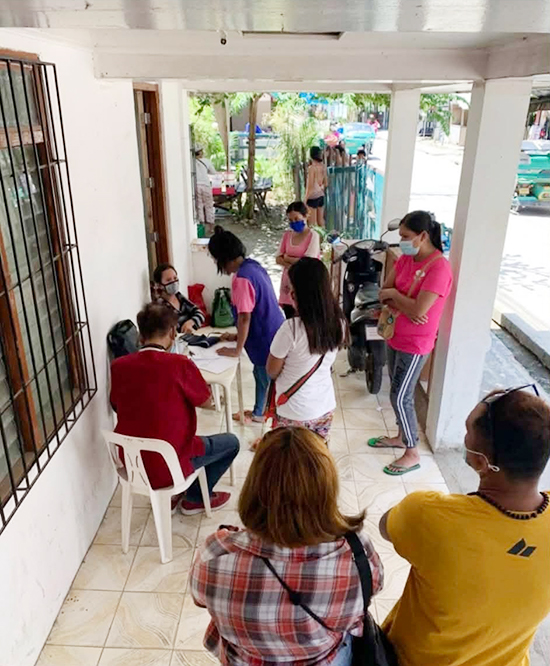
“He had been treating Palawan’s patients for decades,” she continues, “suffered from three bouts of COVID at 74 years old because he would not turn a sick person away because even the government center was closed.”
When Rhea begged him on the phone not to expose himself to the virus, he replied, “Ano pang gagawin eh wala nang mapuntahan ang mga tao? (What else can we do? The people have no other option, nowhere else to go but to me?)”
In 2023, Rhea and Mikel visited him in his El Nido clinic after the pandemic. They hailed a tricycle to take them from the dock of Lagen Resort, where they had just stayed, to the town proper.
“When I told the tricycle driver, who used to live in Liminangcong, if he knew where Dad’s clinic was, he proceeded to tell us that he is the best doctor and people called him the ‘malaria master’ because ‘Si Dr. Reyes ang nakatuklas ng gamot sa malaria.’ Apparently, in the ‘70s there, when someone contracted malaria, it was almost always synonymous with a death sentence. But when my dad arrived, people started going home cured. I was bawling in the tricycle, to the driver’s bewilderment.”
Rhea says her father missed many school events—except for graduations—because he could never leave his patients. There was always someone who was too sick for him to leave behind. During his wake, the heartwarming stories about Dr. Reyes from visitors were “overwhelming.”
***
“As a father, Dad spoiled me. He was tough on the three boys, always giving them chores when we were home for the summer. Even then, five-year-old Kevin had to clean chicken coops before breakfast,” Rhea remembers. Kenneth, the eldest son, recalls that he had to feed all the farm animals before he himself could eat. Karl also worked on the farm.
“But even if I escaped from heavy chores, Dad didn’t make me feel that I should sit in a corner to preen and depend on others,” says the unica hija. “Dad taught me how to ride a motorcycle at nine years old, not those scooter types but the big metal ones that were used for tricycles in the ‘80s. He taught me how to shoot, how to make furniture, and wrestle a big antlered goat!”
“He and my mom Lilly gave us the most wonderful childhood,” Rhea recalls. Their dad would make house calls on the various El Nido resorts in their early days, and she and Ken would tag along. The world-famous beaches were their playground.
When the road from Taytay to Puerto Princesa was practically non-existent, Dr. Reyes would take Rhea and Ken on his motorcycle back and forth during vacations from school in Manila.
“The ground was practically all mud, and the roads were just narrow paths through the forests. Once, he stopped, as we reached one of the highest peaks of the drive, and told Ken and me to get down from the motorcycle. We didn’t know why we had to go down. We just wanted to go home to see Mom. He told us to sit on the edge of the road. Our feet were dangling over the ravine below us. Still confused. Then Dad said, ‘Be quiet and listen.’ It was nothing and everything at the same time. So still yet so alive—birds chirping, bees buzzing, leaves rustling. We were witnessing the pure beauty of the Palawan rainforest. Then Dad said, ‘Remember and savor this moment because it will not be like this all the time.’”
Now, almost four decades later, when Rhea closes her eyes, “I can still transport myself to that time and place and realize what an immeasurable gift Dad had given Ken and me.”
Her sister-in-law Di Marquez Reyes, Ken’s wife, said in her tribute, “A visionary my father-in-law was.”
Dr. Reyes was “near perfect” says his widow Lilly. She chooses to dwell on the joy instead of the pain.
“Despite his shortcomings, my brothers and I love him with a fierceness that allowed us to forgive him and keep the peace in the family. And we are grateful for the little time that we had with him. We squeezed every drop of togetherness and happiness that we could out of those last two years we had together,” Rhea shares.
They see him in the stillness of the forest, in the unfathomable blue seas of Palawan, in the unfathomable gratitude his patients—like the tricycle driver in El Nido—hold in their hearts for him.

WATCH: Do you still believe in marriage? (Generations Ep. 17)
August 19, 2026