

How the Juvenile Justice Law handles crimes committed by minors
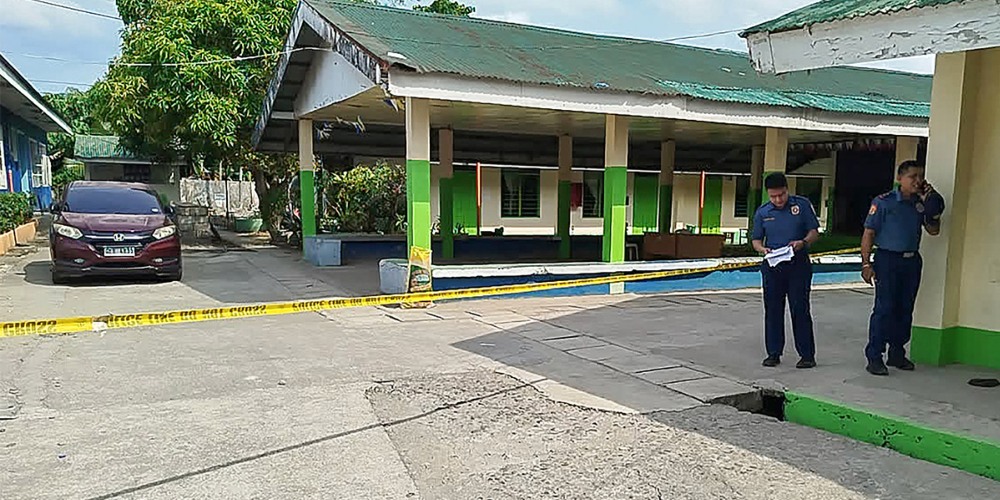
The recent shooting incident at a high school in Tacloban City has reignited discussions about how the Philippine justice system handles crimes committed by minors.
Three teenagers died after two students from San Jose National High School carried out a shooting on June 22. Investigations revealed the suspects were just 14 and 15 years old.
Under Republic Act No. 9344 or the "Juvenile Justice and Welfare Act," which was signed by former president Gloria Macapagal Arroyo in 2006 and amended with RA No. 10630 in 2013, children are treated differently from adults in criminal proceedings, with factors such as age and discernment playing a key role in determining accountability. Here's what the law says:
What the law says about minor offenders
The law states that a child 15 years old or below is exempt from criminal liability. Instead, they must undergo a government-supervised intervention program.

"The child shall be subjected to a community-based intervention program supervised by the local social welfare and development officer, unless the best interest of the child requires the referral of the child to a youth care facility or ‘Bahay Pag-asa’ managed by local government units or licensed and/or accredited non-governmental organizations monitored by the DSWD," Atty. Carlo John Pascual told PhilSTAR L!fe.
Atty. Carlo John Pascual told PhilSTAR L!fe that a common misconception is that minors face no consequences. He explained that a child between 12 to 15 years old who commits serious crimes like murder, kidnapping, or serious illegal detention will be deemed a "neglected child" and this means they will be placed in a special youth care facility called the Intensive Juvenile Intervention and Support Center.
Should they commit the offense for a second time or more, they will still be deemed a neglected child, but will now undergo an "intensive intervention program supervised by the local social welfare and development officer."
"If the best interest of the child requires that he/she be placed in a youth care facility or ‘Bahay Pag-asa’, the child’s parents or guardians shall execute a written authorization for the voluntary commitment of the child," Pascual said.
Meanwhile, those above 15 but below 18 years old are also immune from criminal liability, unless they acted with discernment—meaning the child understood the wrongfulness and consequences of the act. If discernment is proven, they may face appropriate legal proceedings.
How minors are handled

Pascual said that a child in conflict with the law will first be taken into custody to determine how the case should be handled based on the offense.
By law, the child cannot be detained with adult offenders or be subjected to abuse or unnecessary restraints. They have the right to privacy and access to a lawyer, parent/guardian, and social worker during questioning.
If the child is not eligible for a diversion program, or if the parents refuse it, the case will proceed to a preliminary investigation and potential court proceedings.
"If an information is filed in court, the child may now be subject to court proceedings as provided under the law," he said.
Balancing the rights of child offenders vs. victims

In the wake of the Tacloban shooting, many social media users questioned whether the law gives too much protection to minors accused of serious crimes.
Atty. Carlo Saplan, a criminal law specialist, explained that the measure balances the rights of both parties by providing due process.
"As for the victim, he or she will be given the right to present evidence," he said. "As for the child, he or she shall be afforded the right to due process as well, specifically the right to be presumed innocent until proven guilty."
Saplan remarked that the Philippines adheres to "restorative justice."
"Instead of viewing a criminal act as simply a violation of a rule or statute, restorative justice sees this action as a violation of people and relationships," he said.
He continued, "It seeks that there should no repeat offense and at the same time, it focuses on the social and economic reasons why said child committed the act. In a sense, this also affords protection to the victim, considering that this focuses not only on the child but the family and the society that surrounds him."
On victim protection, Saplan said the child's parents or guardians are held liable for damages.
"Definitely, they will be made liable for the damages the child in conflict with law has made. In addition to this, under the diversion program, the victims also have a say as to how the child shall be approached as to the reparation of injury and their opinion as to the propriety of the measures to be imposed," he said.
Additionally, the Department of Justice has a Victims' Compensation Program to reimburse victims for expenses incurred during the case.
This is in addition to the liability to be imposed with the parent or guardian having custody of the child.
Pangilinan: Minors can still be held accountable
Sen. Kiko Pangilinan, who authored the Juvenile Justice and Welfare Act, maintained that minors involved in crimes can indeed be held accountable.
"Marami pa ring maling impormasyon tungkol sa Juvenile Justice and Welfare Act. May pananagutan. May proseso. May mga intervention upang matiyak na hindi na ito mauulit," he wrote in a Facebook post.
"May pananagutan din ang mga magulang. May tungkulin naman ang pamahalaan—sa pamamagitan ng DSWD at iba pang ahensya—na magbigay ng suporta sa mga biktima, kanilang mga pamilya," he added.
He further stressed how it is illegal to simply release a minor involved in a crime, and those who do so may face penalties.
"Ang tunay na hamon ay hindi ang pagpapakalat ng takot at disinformation, kundi ang ganap na pagpapatupad ng batas at pagtiyak na may hustisya, accountability, at proteksyon para sa lahat ng bata," he ended.

WATCH: Is OPM still as good as it used to be? (Generations Ep. 20)
September 9, 2026
WATCH: LGBTQIA+ people with unlikely professions
June 28, 2026