

Why write with the archipelago on fire?
FRANKFURT, Germany—How could we still be writing as the world is burning? How could we still be congregating as writers, illustrators, translators, literary agents or publishers as cities turn to dust and ash? We should be madly, starvingly, hysterically dragging ourselves through the national highway demanding an end to a reign of greed (here in our lost, lost woods), the triumph of fascism and xenophobia (Yes Men Create Authoritarianism), and the zealousness of the war pigs crawling (everywhere where bombs start dropping). The not-so-simple, almost rage-baiting answer is, write we must. To chart the entire gradient between love and death, hope and despair, peace and the state-sponsored monstrous, gnashing teeth of what is not peace. The marchers and protesters will disagree, as they should. But writers, not just soldiers, have taken down empires and colonizers before.
After all, writing is more than just professing the inexpressible.
These thoughts were stirred up by a speech—what commentators cited as “polarizing”—during the opening press conference of the 2025 Frankfurter Buchmesse (FBM) by German novelist Nora Haddada, who complained that very few in the media and literary community spoke against the horrors of the last few years and missing the “absolute dullness” of times before. But, waxing a bit optimistic after unleashing verbal hellfire, she points out that literature is a weapon. Literary history, she stressed, gives us the means to mask criticism. Haddada’s words may have lost none of their sharpness in translation: “(Literature) is the slower type of art which is consumed in seclusion, a great antidote against the flood of information.” Counteracting the hectic hysteric thinking of social media, the zombifying pull of TikTok trends, the screeching capitulation of mainstream media, and (to steal a line from Allen Ginsberg) the “obscene odes on the windows of the skulls” of bloggers and influencers.

Haddada also declared (and I’m putting it here because it’s cool as hell), “You can’t kill us, because we are already dead.”
So, why should we not be here in Frankfurt? (As the protesters protest via their MacBooks in cozy condos, in between their Netflix bingeing, Shopee surfing, Grab food in their maws.) Specifically here in this German city where books are read, passed around, propagated, rightfully celebrated—unlike in the land of “The Lottery,” Fahrenheit 451 and Gilead. Praise be!


Here at the center of the spotlight, as the Philippines deservedly takes on the mantle of being the FBM’s Guest of Honour country, in between its predecessor Italy and successor the Czech Republic. This is a once-in-a-lifetime gig, no other literary gathering of such magnitude. Margaret Atwood, Slavoj Zizek, Salman Rushdie were attendees in past incarnations of the book fair. Literary greats Butch Dalisay and Virgilio Almario deserve to be here with other literary greats from all over the world. Something worth celebrating for goddamn once amid this deluge of bad news in our country. Our National Hero, Jose Rizal, in a manner of speaking, brought us here to this very stage, made our writing known worldwide, and took our nation to more poignant heights.
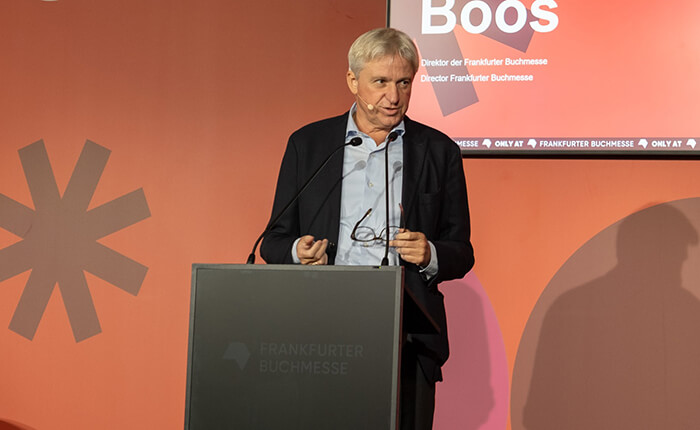
In her speech on opening night, Senator Loren Legarda (who first envisioned our country as FBM Guest of Honour as far back as 2015) shared how Rizal sparked the liberation of our nation “not as a warrior with a sword, but a writer with a pen.”

She said, “I stand before you as a daughter of an archipelago of more than seven thousand islands, scattered across the sea like pearls. Geography that others call fragmented, we call infinite. Imagination is the vessel that inspires our people of many tongues and many spirits, across mountains and seas. A nation freed because a son who set out to heal his mother’s eyes became the writer who illuminated his people.”
Rizal had the vision, gave us that spark, but we Filipinos (or whatever we were called before) already had a great tradition of communally sharing stories, ideas, folklores, musings and imaginings, written or oral. We’ve told tales to define ourselves and the cosmos, to explain away the dread and the gathering dark, to woo the other half that makes us whole, to lament those whom we have lost. And what comes after Rizal are entire generations of storytellers, pundits and poets who’ve seen “God dancing on phosphorescent toes” or “marionettes without strings, but still caterwauling over the revenue.” Nick Joaquin. Jose Garcia Villa. F. Sionil Jose. Cirilo Bautista. Ophelia Dimalanta (who will forever be missed). Krip Yuson. Erwin Castillo. Eric Gamalinda. Lourd De Veyra. Bob Ong. Dong Abay. Jessica Hagedorn. Danton Remoto. Ricky De Ungria. Miguel Syjuco. Yvette Tan. Whichever Filipino authors have made you stay up late at night, looking at the abandonment of stars, intoxicated by language, addled by the methadone of metaphor, fearlessly free and dreaming, with the Imagination walking around as if made flesh to dwell among us. With distant apocalyptic fires burning, you read on.
And to read, to write, to rage we shall.
Imagine all the people
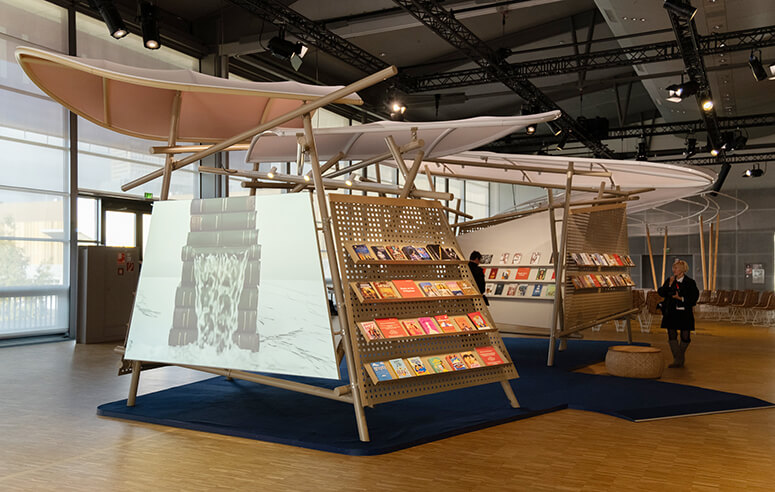
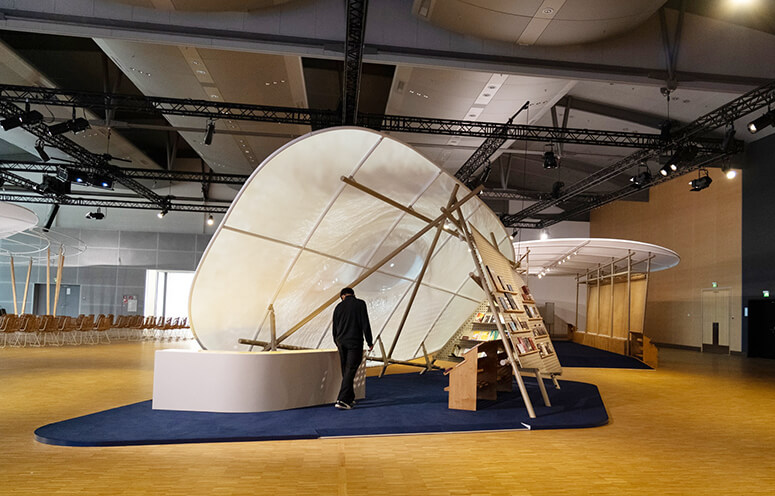
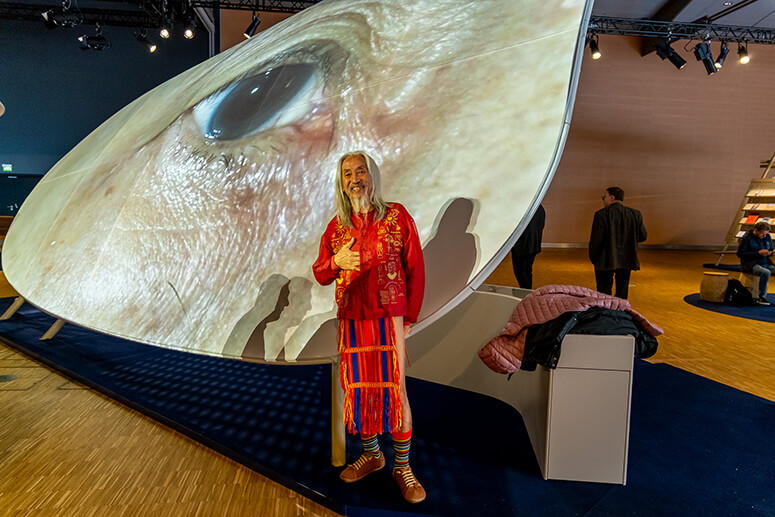
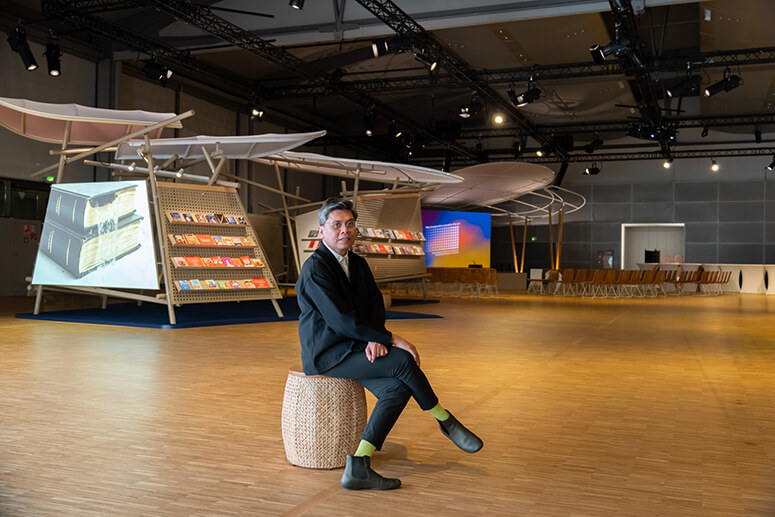
With the theme “The imagination peoples the air,” the Philippine Pavilion buzzed with warmth, pride, and creative energy. Senator Loren Legarda, who championed the country’s participation, stood alongside curator Patrick Flores, designer Stanley Ruiz and executives from the National Commission for Culture and the Arts and National Book Development Board, who together built a space that felt both deeply Filipino, boldly international and characteristically airy or maaliwalas. Writers, artists, and cultural figures—from Kidlat Tahimik, Virgilio Almario and Butch Dalisay to Maria Ressa, Sarge Lacuesta and Mookie Katigbak—filled Frankfurt with stories, poetry and conversations that crossed borders, blew minds. For a few unforgettable days, the world listened as Filipino voices spoke of history, hope and, of course, imagination.
Watch
WATCH: Save for retirement or enjoy life now? (Generations Ep. 21)
September 16, 2026