

Is Dumaguete City our literary Shire?
Launched on July 17 during the 6200 BookFest in Dumaguete City was a milestone of a book celebrating the spirit of the place, all of 482 pages, and it couldn’t have come at a better time, since the genius loci has been on quite a roll.
The Gentlest City Imagined: An Anthology of Literary Works About Dumaguete City and Negros Oriental, edited by Ian Rosales Casocot and published by the Vibal Foundation, strengthens the appropriate glorification of a cultural site that gained official status as a UNESCO Creative City of Literature on Oct. 31, 2025.
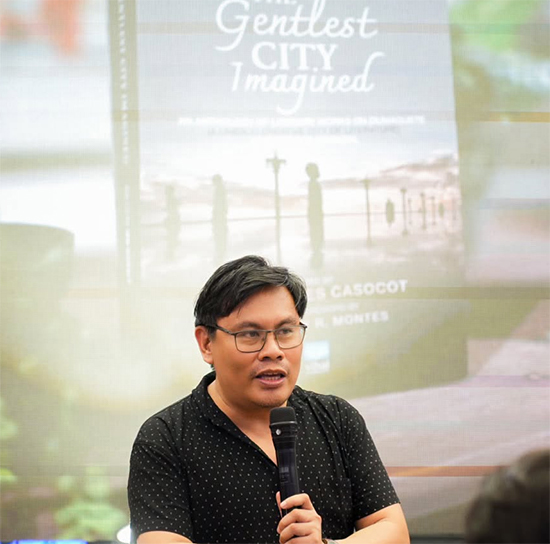
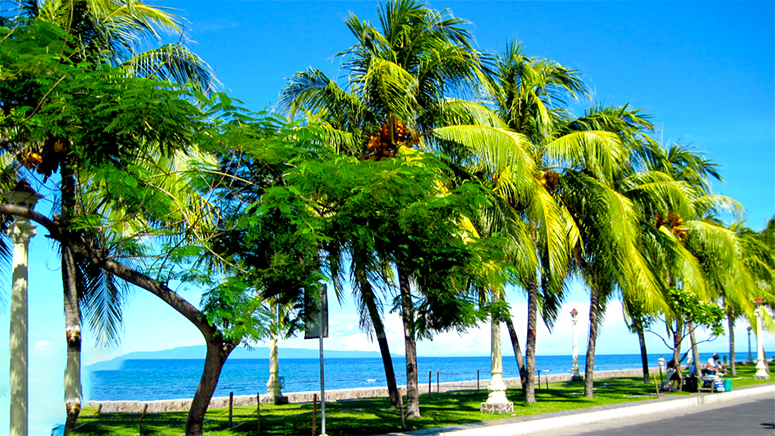
Since then, what has long gained the popular tag as “the city of gentle people” has kept enhancing its international designation. Not a day passes without a socmed citation or mention of Dumaguete as having hosted a gamut of events involving literature and related arts.
The iconic historian Ambeth Ocampo delivered the keynote address for the 6200 BookFest and gave a special public lecture on July 20, titled “RA 1425 at 70: Rescuing Rizal from the Rizal Course” at Silliman University. He also had a meet-and-greet and book-signing session on the same day, at Libraria on 58 EJ Blanco. Prior to his departure, he participated in a local literary tour around the city and examined the Jose Rizal monument at the Pantawan along Rizal Boulevard.
CONTINUE READING BELOW

These were all such a fit, as the new compendium of creative writing edited by Casocot, the local writer who led the campaign for UNESCO citation and continues to conceptualize assorted activities, made it a point to start the anthology with a historical recollection by Rizal. It memorializes the day, Saturday, August 1, 1898, when he had an overnight stop in Dumaguete while on a steamer bound for Cebu. Among the national hero’s recollections: “I heard the piano expertly played. I observed that the people of Dumaguete are fond of decorating their houses with plants and flowers.”
Following this Spanish-to-English translation in this starting section are pieces from Dean C. Worcester, Edith Moses, and Florence Kimball Russel. Casocot writes: “I made the conscious choice to begin this book with some historical recollections, culled from the public domain, which give us an idea of how Dumaguete (and Negros Oriental) was constructed in the literary imagination right from the beginning.”
Preceding these are the Foreword by Timothy R. Montes and Preface by Casocot. The anthology is then sectioned into three literary genres.
Montes’ Foreword starts:
“Dumaguete (which is also a metonymic shortcut for the province of Negros Oriental) has to be the most written-about place in the country. As such, it has transformed itself from an insignificant geographical dot on the map of Central Visayas into a mythical space in the country’s literary landscape—bigger, more symbolic, more representative of the ethos of what is called The South. It is the Shire, the clearing in the middle of the cornfields of Iowa; it is also Lyra’s Oxford, or the painting in the middle of the sala of Nick Joaquin’s A Portrait of the Artist as Filipino. It is the canvas on which some of the best writers of the country have painted their self-portraits.
“… (O)ne has to remember that Dumaguete is just a typical small place in the South where one heard the strains of piano music… Each writer here stakes a claim to a square kilometer of its true geography: in the human heart.
“That this small place has generated so much storytelling magic is nothing short of a literary miracle.”
In 2012, Merlie M. Alunan had edited The Dumaguete We Know, published by Anvil Publishing, Inc. It consisted of personal essays. Alunan had written: “This is the Dumaguete of the chance sojourner, innocent of purpose or desire, who in a time, finds himself wandering the streets, the boulevard, the marketplace, walking amongst the friendly and gentle people and suddenly discovering in his heart a longing to stay. … This is the Dumaguete of the poet, the teller of stories, the artist, sharer of secrets, hoarder of memories.”
This time, to avoid replicating that earlier anthology, Casocot decided to structure this new collection as a repository for fiction, poetry, and drama—with each of the contributors represented by only one genre. “(H)ence, the drama of Elsa Coscolluela but none of her poems or fiction; the poetry of Ernesto Superal Yee, but none of his fiction; the fiction of Bobby Villasis but none of his plays or poems; the fiction of Edith Tiempo, but none of her more celebrated poems, etc.)”
The roster of poets alone is outstanding. But this section takes up only less than a fourth of the book, with the short story writers and dramatists taking up much of the space.
Casocot writes additionally: “The rest of the book is a treasure trove of writings by Filipino writers, both native to Negros Oriental and not, with Dumaguete or the province at the center. They have all defined, in their very specific ways, what Dumaguete means—as home, and as haven for literary artists. I hope this endeavor—to create a literary treasury that is geographically specific—will resonate with readers as well, and convince them of the truism that Philippine literature is not just Manila; it is every town and city we call home, commemorated by our writers.”
The book will have another launch and be available at the Manila International Book Fair at the SMX Convention Center Manila on the second weekend of September.

WATCH: Is OPM still as good as it used to be? (Generations Ep. 20)
September 9, 2026
WATCH: Discovering Vietnam in three days
June 9, 2026
WATCH: Can you still trust someone who betrayed you? (Generations Ep. 22)
September 23, 2026