

Are lit majors being urged to hasten their own AI extinction?
The damnedest things keep arriving. Job descriptions through my emails and LinkedIn feeds open with: “Are you a literature expert eager to shape the future of AI?”
This is the type of pitch that many online job markets offer people of roughly my résumé specs these days.
“Large-scale language models are evolving from simple conversational tools into systems capable of analyzing texts, interpreting themes, and supporting literary scholarship,” the pitch goes. “With high-quality training data, tomorrow’s AI can help democratize access to literary analysis, support education, and deepen understanding of world literature.”
Another pitch: "What if your instinct for clear, polished writing could directly shape how AI communicates with millions of people? We’re looking for sharp, detail-oriented English writers and editors to review AI-generated content and ensure it meets a high standard of quality—catching the subtle issues that others miss."
Who doesn’t want to make literature and text more understandable to the world? It almost sounds noble. But of course, once we “lit experts” have helped AI learn the ropes of analyzing literary text, there will be little need for us human lit majors in the near future. And probably, little need for novelists, playwrights and poets, either.
Imagine: You get to see, in real time, your final move as a lit major—as the worlds of publishing and literature and text comprehension continue collapsing around us—is to fine-tune your AI replacement.
CONTINUE READING BELOW

"That training data begins with you! We need your expertise to help power the next generation of AI."
They’re not subtle about it, our future overlords.
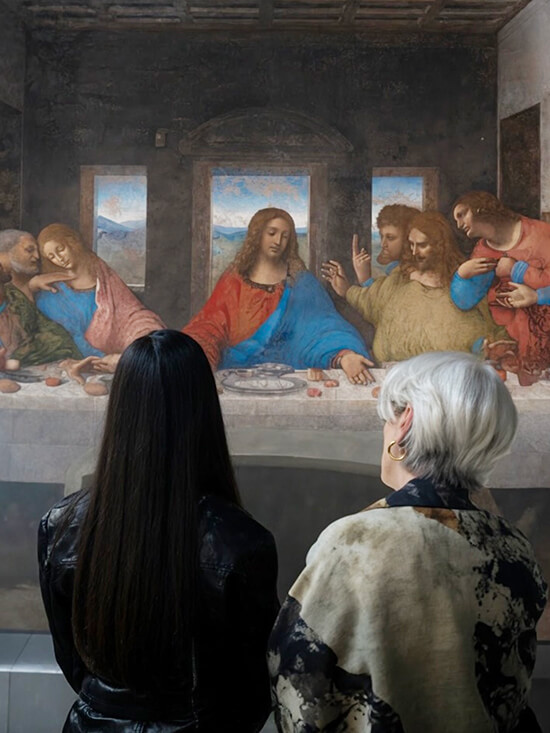
We’ve seen this scenario show up a lot in fiction lately. In The Devil Wears Prada 2, Justin Theroux plays a philistine, Bezos-like billionaire who schemes up media mergers at the expense of journalism. He sits in Milan’s Convent of Santa Maria delle Grazie, where Leonardo’s “Last Supper” hangs in the background, and muses to Miranda Priestly and Andy Sachs that whatever mark humanity has left on the world now exists only in “traces,” like this faded Renaissance painting. It’s chilling. We see the battle shifting from preservation to accommodation, turning our cultural resources over to new AI caretakers.
Literature is no different.
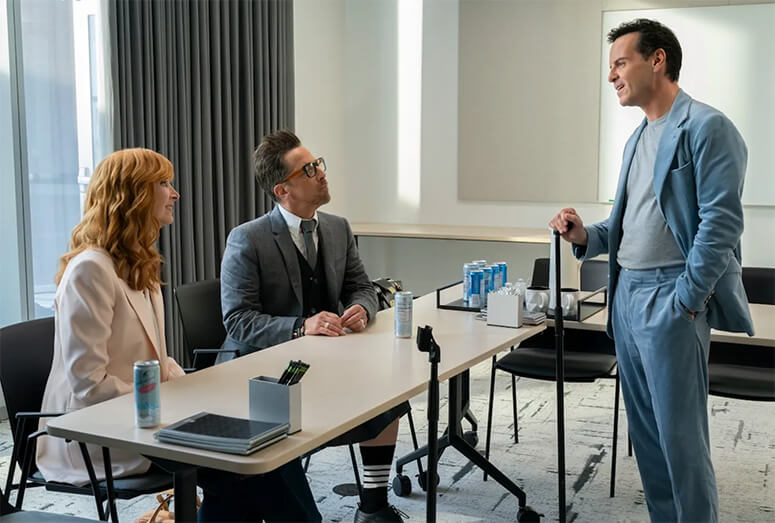
Writers have always been a bane to Hollywood, the necessary irritant in the process of moviemaking. (Hello, writers’ strike!) But in HBO’s final season of The Comeback, Lisa Kudrow’s fading TV star Valerie Cherish comes back for one more shot at a sitcom hit—only to quickly learn from network overlord Andrew Scott that the writers are gone; the show will be mostly written by AI, with a couple humans on staff as window dressing. Valerie’s the space monkey hired to star in a project fueled by rapid-fire AI-generated gags. The season takes a darker turn as you realize this is the likely future for many Hollywood jobs—from the camera operators to the actors to the directors. Why would the industry not replace them all with bots, when it would dramatically cut overhead costs?
(The recent Studio A theater controversy raises the same question, what with suspiciously AI-sounding musical scores.)
But somehow, the training of Lit Major AI hits different. Artificial intelligence is in the midst of an increasingly self-guided mission to hoover up all of our humanity, to scrape the internet for all existing text and nuance, to become more like us, to pass as us.
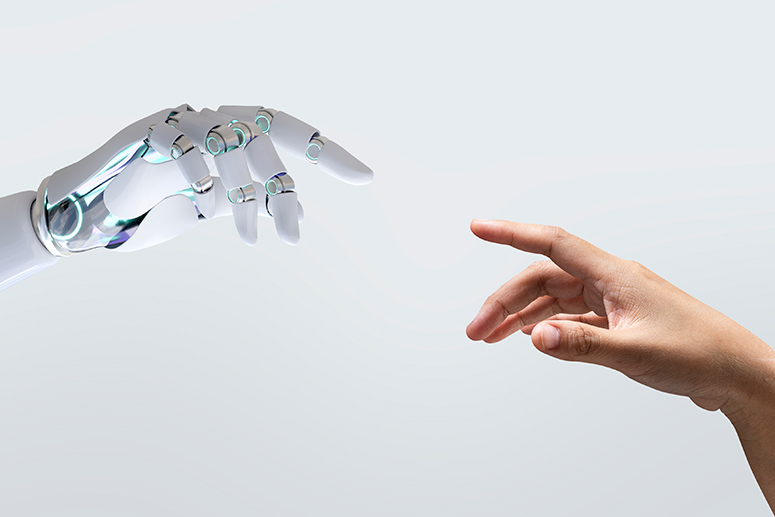
The debate then becomes about whether we will be the ones utilizing the tools of AI to aid our own creative endeavors—YouTube is awash with ads that promise to teach you how to master and maximize your AI tasks and skills—or whether we will find ourselves increasingly redundant in that most human of skills: creative thought.
Elon Musk, that Mars-coveting trillionaire, admits that in the near future, most jobs will be lost to AI and robots. But he shrugs this off, saying we will live in a global economy of such abundance that “universal income” will replace manual jobs, and working is something we will simply “choose” to do, rather than need to do in order to live. (Somehow, I’m not sure I trust the beneficence of a guy who fired Tesla workers during COVID for working from home.)
In his AI utopia, most people will simply enjoy their ample leisure time, while others, of course, are free to take up their personal “hobbies.” You know: If you want to write a novel or paint a masterpiece in your spare time, have at it. But it won’t be to earn a living.
This scenario kind of erases one of the measurable purposes of effort and work throughout human existence: to bring a sense of satisfaction to our lives. To create things. To see the fruits of our labors. Yes, capitalism has rendered that effort into a quantifiable equation that generally leads us to a paycheck. But doing something—whether it’s landscaping, or coaching a basketball team, or proofreading a newspaper article—is about seeing our imprint on the world in some way. Feeling like our efforts mattered, if only a little bit.
AI wants to render even that small impact on history into dust.
We are the dust.
Think about it.

WATCH: Save for retirement or enjoy life now? (Generations Ep. 21)
September 16, 2026