

EXPLAINER: What constitutes reckless driving?
The Land Transportation Office had earlier addressed its actions following the issue raised by vlogger-TV host James Deakin regarding the process of settling the violation involving his son.
In case you missed it, Deakin narrated in his Facebook post the ordeal he and his son experienced with the LTO when trying to settle the latter's traffic violation. His son, a newbie driver, was pulled over by a traffic enforcer for an improper lane change along Skyway Stage 3 in Quezon City. "He doesn’t know the area well yet, realizes too late he needs to exit, and mistakenly crosses a double yellow line," he wrote.
He also argued that his son's action, while a traffic violation, doesn't constitute reckless driving.
"Reckless Driving isn’t just a heavier fine—it can also be a criminal offense under Philippine law that goes on permanent record. It requires 'willful or wanton disregard for safety.' A new driver making an improper lane change at very low speed doesn’t meet that standard. What my son did was a traffic violation. It happens. Imagine if what the officer wrote affects his future employment, insurance, and travel. That’s not 'following the rules'—that’s creating them on the spot," he said.
LTO chief Markus Lacanilao reiterated that Deakin's son committed reckless driving for crossing the double solid yellow line, as well as for driving an unregistered vehicle. He added that the driver was given five days to contest the ticket, but he didn't. A subpoena was served on Wednesday, Jan. 7, requiring Deakin's son to explain why the incident should not be classified as reckless driving.
What does the law say about reckless driving?
The Republic Act No. 4136, or the Land Transportation and Traffic Code, was enacted in 1964 to establish traffic rules and “control as far as they apply, the registration and operation of motor vehicles and the licensing of owners, dealers, conductors, drivers and similar matters.”

Under section 48, the law prohibits motorists from operating a vehicle on any highway in a reckless manner, which involves the following:
- not considering the traffic consideration, including the width, traffic, grades, crossing, curvatures, visibility, and other conditions of the highway, and weather conditions
- so as to endanger the property or the safety or rights of any person or
- so as to cause excessive or unreasonable damage to the highway.
Some of the traffic violations that fall under reckless driving are:
- over-speeding, defined as driving over the maximum allowed speed on certain roads
- drunk driving, or operating a vehicle under the influence of alcohol, dangerous drugs, and/or other similar substances
- distracted driving, which refers to driving a vehicle without full focus on the road, by doing other activities like answering a phone call, replying to a text message, getting items from the dashboard or the floor, adjusting the car radio, and eating or drinking, among others.
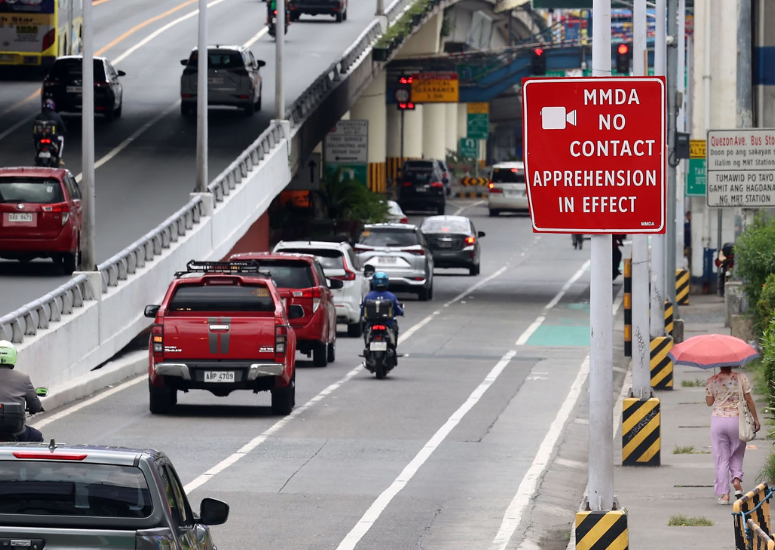
Violating the double yellow solid line rule—by overtaking, crossing the line, or changing lanes—is also considered a violation in this category. These lines are commonly found on bridges, blind curves, and other areas with limited visibility to prevent head-on collisions.
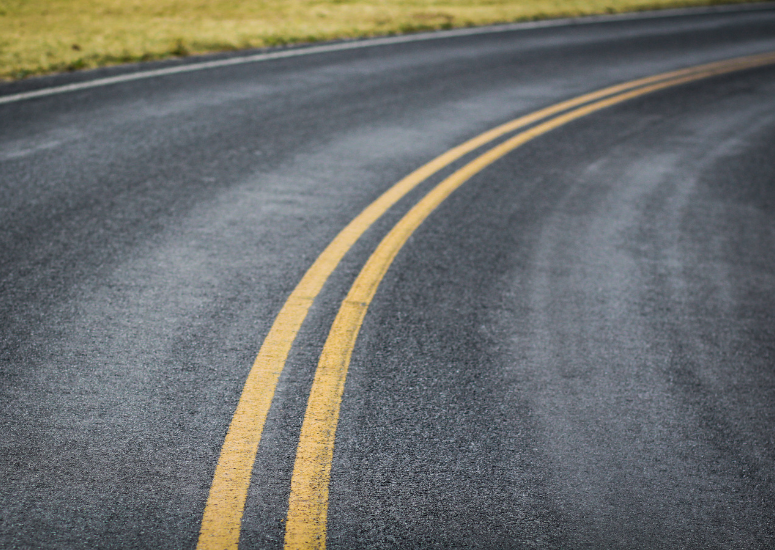
"This restriction applies regardless of whether there’s a designated passing zone or if you’re unaware of any accompanying signs," the LTO said.
Other violations that fall under reckless driving are:
- using an improper registration
- operating a vehicle with an expired registration
- driving with a revoked registration
- driving with a suspended registration
- operating a vehicle with an invalid registration
- using an unregistered or fake substitute or replacement engine, engine block, or chassis
Fines and penalties
Reckless driving violations come with penalties. When it results in injury or property damage, it is punishable under the Revised Penal Code. Depending on the severity of the offense, consequences may include liability for property damage, physical injuries, or, in severe cases, charges such as homicide or murder.
- First offense: P2,000 fine
- Second offense: P3,000 and a three-month suspension of the driver's license
- Third offense: For a non-professional license holder, there will be a P10,000 fine, six months suspension, and revocation of the driver’s license on the succeeding offense for two years, counted from the date of revocation. While a professional license holder will face a P10,000 fine, and six months suspension, plus revocation of the driver’s license on the succeeding offense
Meanwhile, drivers whose professional licenses have been revoked are permanently barred from obtaining another driver’s license.
Reckless imprudence resulting in injury or homicide carries fines of P150,000 to P250,000 for physical injuries, with a penalty of imprisonment, in accordance with Article 263 of the RPC.
For homicide, there will be a P350,000 to P500,000 fine, with an additional penalty of reclusion temporal, per Article 249 of the RPC.
Non-professional driver’s license
- First offense: The non-professional driver’s license will be confiscated and suspended for 18 months.
- Second offense: The non-professional driver’s license will be permanently revoked.
Professional driver’s license
- First offense: The professional driver’s license will be permanently revoked, and the individual will be prohibited from obtaining any type of driver’s license in the future.
Per the LTO, drivers involved in accidents have a legal duty to assist victims and provide their identity and vehicle ownership details. Failure to help may result in liability for abandonment of one’s victim, except in cases of imminent danger, reporting to authorities, or seeking medical help.
Local ordinances on reckless driving also apply. Penalties can include detention periods of 12 hours for property damage, 18 hours for physical injuries, and 36 hours for homicide.
When to pay your fines

If your driver's license has been confiscated, you will be given a temporary operator's permit valid for 72 hours or three days. You are also allowed to submit a written contest within five days of apprehension to dispute the violation.
On the other hand, fines must be settled within 15 days of apprehension. Failure to do so may result in an additional 30-day suspension or revocation of the driver's license.
To settle the violation, the driver must go to the LTO office indicated on the TOP within 15 days from the date of apprehension, as long as the case has been recorded in the LTO system. Note that not all cases can be settled at any LTO office.
For violations in Metro Manila, the driver must personally settle the case at the LTO Traffic Adjudication Service in East Avenue, Diliman, Quezon City, or at the specific LTO office stated on the TOP.

WATCH: Pixar Summer Fest adventure at Hong Kong Disneyland
August 10, 2026