Here are the discounted toll rates for PUVs, buses, freight services starting March 23
The Department of Transportation announced that toll concessionaires will offer discounts for public utility vehicles, buses, and freight services starting March 23.
The adjusted fees will be available for Class 1 Public Utility Vehicles (PUVs)/Jeepneys, with up to P18 saved per end-to-end trip; Class 2 Public Utility Buses (PUBs), with up to a P47 discount; and Class 3 vehicles engaged in freight services, with up to P72. Per the DOTr, Class 3 includes "those involved in logistics and the movement of essential goods."
Check out the new rates below.
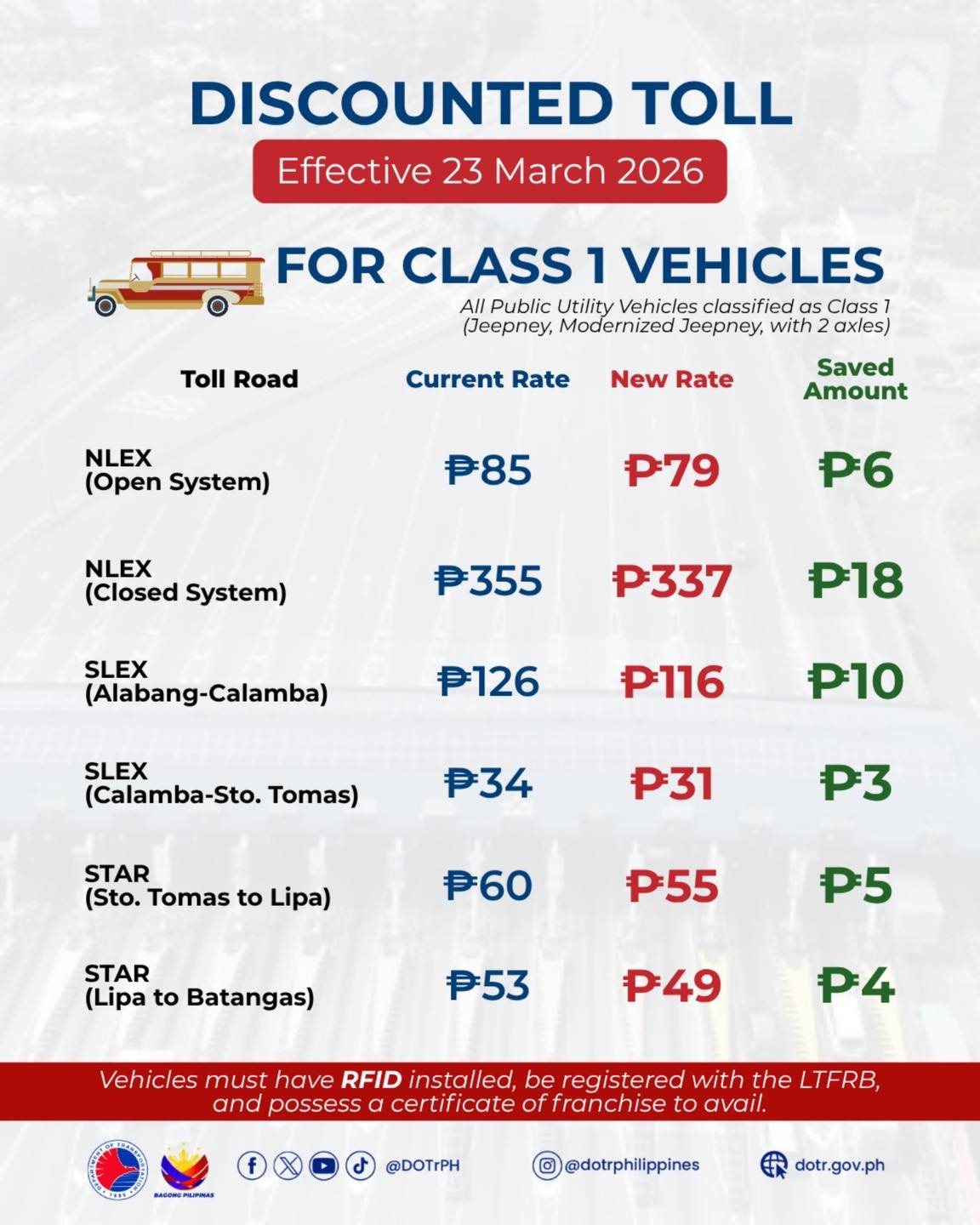
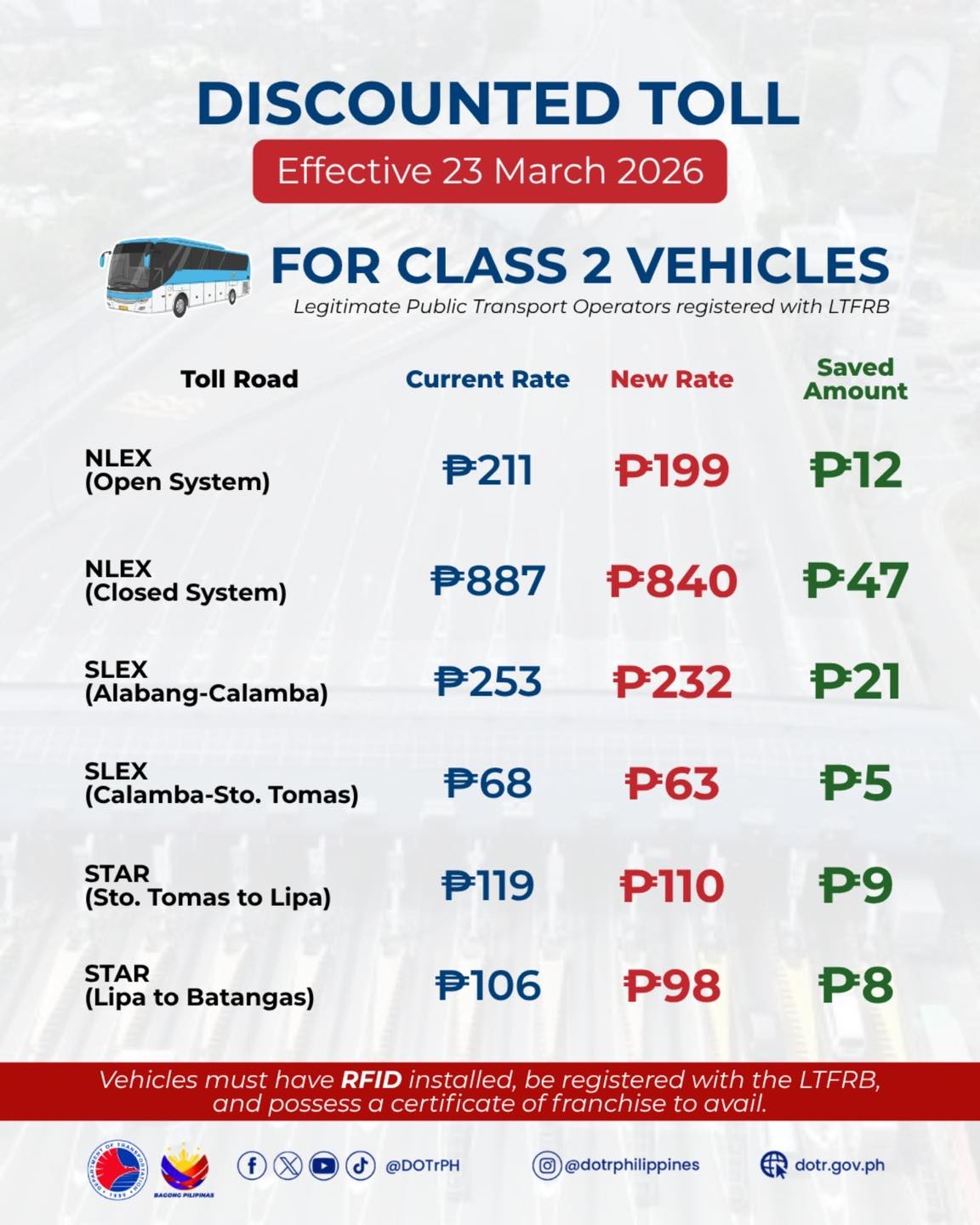
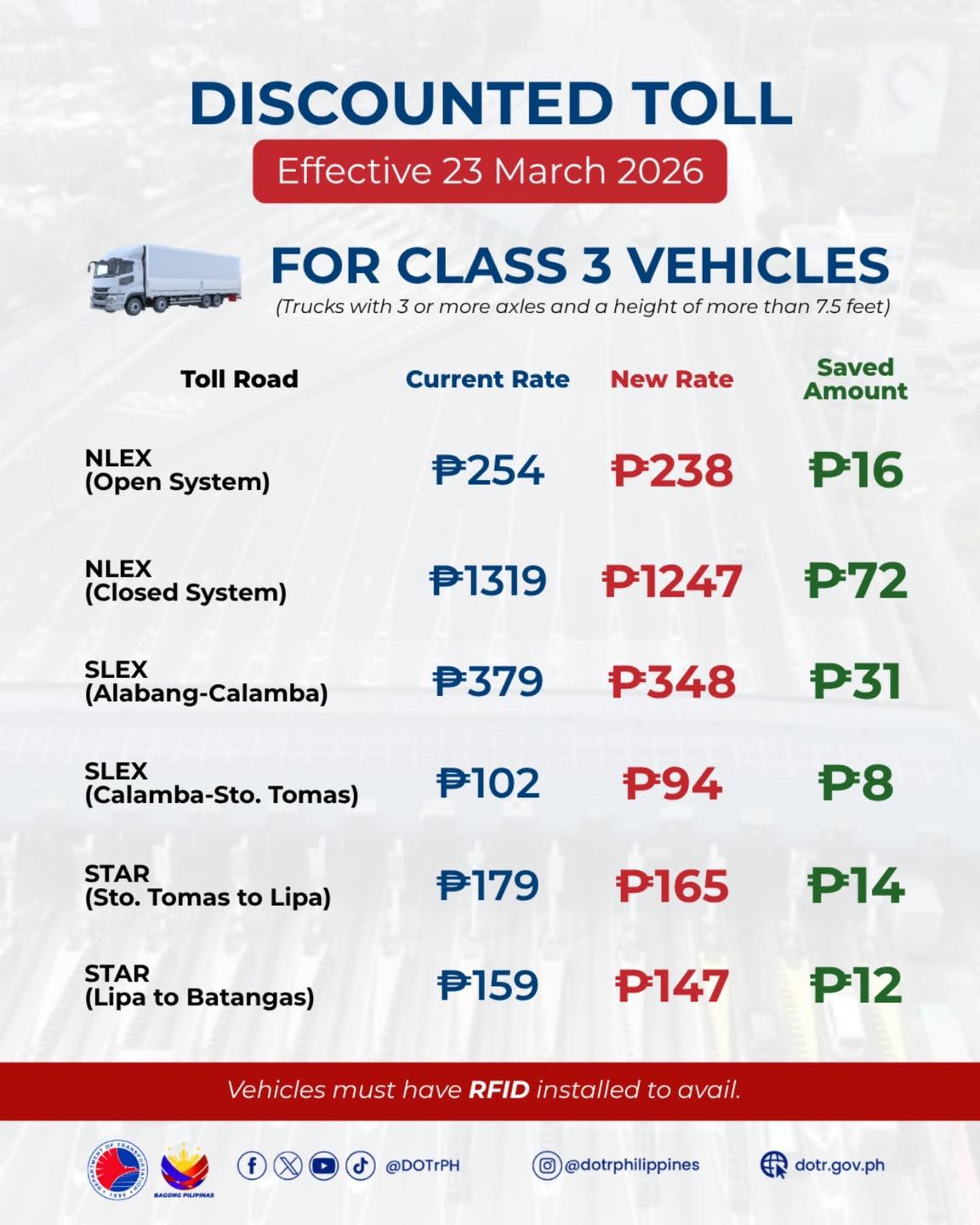
To avail of the discounts, Class 1 and Class 2 vehicles must have RFID installed, be registered with the LTFRB, and hold a certificate of franchise. Class 3 vehicles must also have the RFID installed.
"Toll discounts will be provided through rebates, which will be credited weekly to all qualified vehicles," per the DOTr.
According to the agency, the discount period will initially run for two months, though it may still be extended.
“Nagpapasalamat tayo sa San Miguel Corp., kay Mr. Ramon Ang, at sa Metro Pacific Tollways Corp., kay Mr. Manny Pangilinan dahil malaking tulong ito sa ating mga PUV drivers, commuters, pati na rin sa ating mga mamimili at mga negosyante sa kabila ng kinakaharap nating krisis ngayon sa langis,” DOTr Secretary Banoy Lopez said in a statement.
The DOTr said the move follows President Ferdinand Bongbong Marcos Jr.’s directive to the agency "to find ways to alleviate the effects of soaring gas prices to the transport sector amid the Middle East crisis."
On March 18, Marcos ordered the postponement of fare hikes for public transportation, along with mitigation programs to help the commuting public—including Libreng Sakay, toll discounts, and fuel subsidies for qualified drivers and operators.
The global fuel crisis springs from the Middle East conflict, which began in February. Iran, in retaliation to attacks from the US and Israel, closed the Strait of Hormuz, through which oil tankers carrying about 20% of the world's oil supply need to pass.