

AI ate my books
News around the world is usually dire in the first place and most often I try not to engage, seeing as these issues are beyond my scope of knowledge. But this—this destruction of books for the benefit of AI—is something that just got me in my gut, at my most primal. As an avid reader, self-proclaimed book worm, and baby book collector, this just hurts my heart. I was always told and believed that books were what opened the world for you, when you opened one up, there is a new story, a new adventure, a new way of looking at things that isn’t your own. To learn empathy, and imagination, go through the whole human condition as you ride on words and their meanings, or what they could mean.
This is the news that Anthropic, the company behind the AI platform Claude, has been acquiring books, which to be honest, is fine with my bookworm heart, welcome, even, but then there is the destruction of said books by cutting off spines and whatnot in order to scan their contents. WHY IS THIS NECESSARY? They already have the information, right?

On top of this, I am a digital practitioner, so this actually did not make ANY sense to me whatsoever. Digital is supposed to help, especially in the world of literature, by digitizing it. Why the need to destroy it when we have scanners and other instruments that are specifically MADE to not destroy physical pieces of literature like the papers from the Herculeum Scrolls. I don’t know why they made that decision.
Let’s backtrack a little. To be absolutely honest, I was actually a little fan of AI. As a digital practitioner, it seemed, at least in the beginning, that this could help in terms of medicine, teaching, and in areas that you wouldn’t necessarily think of, like archeology; the ability of having Enoch, the AI model used to help date the Dead Sea Scrolls through handwriting analysis, is on top of this list of awesome to me. It was when AI started putting these shows on socials, funnily enough, that got me starting to wonder what they are doing. Then of course, the fact that Denmark was moving to be the first to let their citizens copyright their faces, started to really get me concerned.
And then the music industry started getting really mad because there were tracks that were flooding music platforms that were just AI made; none of it was human anymore. And worse than all that is the AI trying to pass off as human. I think this is what angered the majority most of all, understandably so. It’s like plagiarism, but of your own species. And maybe that is the part that breaks my heart the most: that AI did not come up with these things in a vacuum. It learned this from us. From our photographs, our music, our writing, our voices, our books, our mistakes, and probably the ridiculous things we have put on the internet over the last few decades. It is essentially learning how to sound human by consuming what humans have already made.
There is something both incredible and horrifying about that. Because where is the line between learning from something and simply taking from it? Humans learn from other humans all the time. Every writer has writers they admire, every musician has influences, every artist has looked at someone else’s work and thought, I want to learn how they did that. But there is still a person at the end of that process who has to interpret all of it through their own experiences and make something new.

We have technology sophisticated enough to preserve the past while still allowing us to learn from it. So surely, surely, we can figure out how to teach AI without destroying perfectly good books in the process?
What happens when you take that person out?
The thought and intention that AI is still helpful is undeniably there still. I do not think that there is a question of usefulness. It is how it is being used that is now under scrutiny, understandably. And should be.
I was actually telling people that AI wasn’t so bad. It is helpful when you need an objective sounding board about things like how an article sounds, what it is actually conveying, and whether I have wandered so far from my original point that I need directions back. I have been told I digress. A lot. It can also point out when ideas are running into each other, when I have basically said the same thing three different ways, and help me cut things down when someone has had the audacity to give me a word count.
That is mostly what I use it for: editing, questioning, and occasionally telling me to get back to the point. The ideas and reasoning are still completely my own. The rambling, obviously, is also mine.

Which is precisely why this whole thing bothered me so much.
Going back again a little bit without being preachy, we all know that AI, or artificial intelligence, cannot exist, essentially without it being fed, or “taught” information and data. This includes data or information such as layouts of cities, which roads of said city are one-way or dead ends, which is straightforward data, right? Anyone can tell you where the street is, but the nuance of humanity will tell you if the street is one-way, and that the potholes weren’t fixed there so be careful with your car. There are still these things that need to be taught. It is the nuances that still make it human. And nuance is incredibly difficult to turn into data. A map can tell you where something is, but it cannot necessarily tell you what it is like to be there. Facts can tell you that something happened, but they cannot always tell you what it felt like to live through it. There is information, and then there is human experience.
And this is precisely what we have been putting into books for centuries. Not just facts, but experiences. Context. Opinions. Arguments. Stories. Humor. Fear. Love. Prejudice. Imagination. Even the things we eventually discovered we were completely wrong about. If AI is supposed to learn how human beings think, then of course books would be invaluable. They might be one of the richest records of humanity we have.
The saying “I want AI to do my housework so I can do my art, and not the other way around” is glaring. Naysayers of AI have said already that this is something that will at least keep humanity from being extinguished. So if this is so, why am I so pissed off about the books being destroyed?
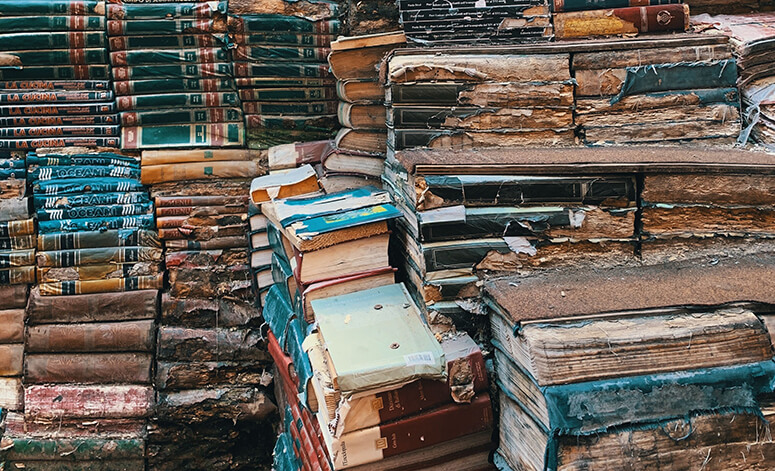
If the point was to get the knowledge in the books, then why destroy it? Of course it is because of an apparent legal loophole, as all things are. (insert eyeroll here) And the loophole is that no two owned copies can exist when you own one; you need to be paying for the other. Since they paid to get the physical copies of the books, duplication of it is illegal. So they destroyed the books.
Instead of, you know, donating them somewhere.
Maybe they didn’t use AI for this decision, as I think they did. Human nuance would have helped them realize they didn’t need to destroy the books.
But hey, AI-reliant and all now, aren’t we? The irony of this is the blackest comedy of the year.
I used to like AI and for the power it wields for the betterment of humanity. I knew that it cannot progress without us feeding it, our intellects, and that was why books are so important, especially now. And it is even more imperative that we read things that make us uncomfortable and, sometimes, even feel icky. There is a challenge to push your understanding and empathy further, where the boundary for you lies, and most importantly WHY it is a boundary, a limit, a thing.
Books have always been my safe space, words are always a blanket that keeps me warm and, like music, makes me feel better about the world. Etymology, which is a love of mine because of my sister-in-law and brother, helps me navigate overly confusing passages, letters, rules, terms and conditions, etc. It helps me figure out the majority of things I read and don’t understand, plus there is the inevitable history lesson of where the word came from. In my nerdy heart, that is a major win-win.
I’ll go as far as saying that this is just as bad as burning books. And looking at history where that happened, I mean, what good did it do, right?
Of course, I know the intention is completely different. Historically, burning books was about censorship, control, and deliberately making ideas disappear. That isn’t what is happening here. Nobody is destroying these books because they are terrified of what people might read in them. Somehow, this might actually annoy me more: they did it for convenience. There was an absolute certainty that whatever could be scanned and extracted from the book was worth more than the physical book left behind.
Maybe it is. But I also think that completely misses the point of a book.
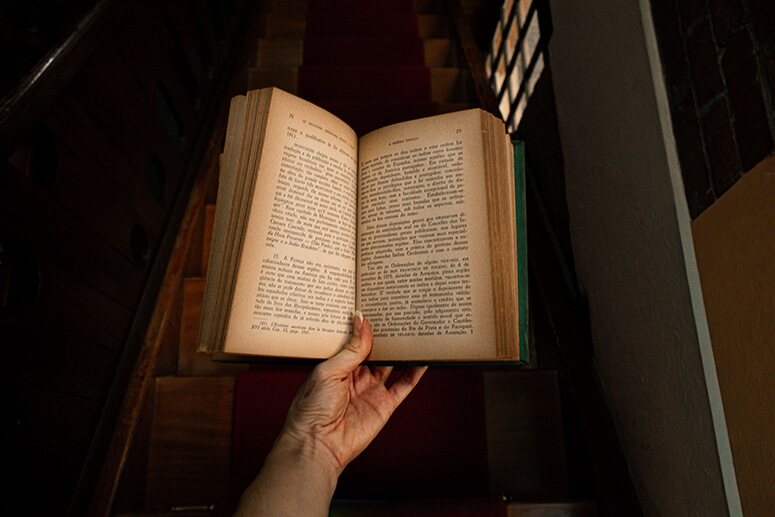
There is something about holding the actual thing in your hands. The weight of it. Knowing how far you have gone and how much you have left. Going back three pages because you realized you were technically reading but actually thinking about lunch. Finding an old receipt or a boarding pass someone used as a bookmark. Underlining something you want to remember and then, years later, wondering what on earth was so profound about it. A physical book carries its own history alongside the one printed inside it.
So yes, perhaps it is the act itself that bothers me. Both require us, for completely different reasons, to decide that the physical book no longer has value. Here, once its contents have been extracted and turned into data, apparently the object itself becomes disposable.
Which is a very strange conclusion to arrive at when the entire reason the book was valuable to AI in the first place was because a human being put something worth learning inside it.
And annoyingly enough, after all of this, I still like AI. Or at least I still like what I thought AI was going to be. I still think there is something absolutely extraordinary about technology that can help us understand things we could not understand before, see angles we could not see, and even read words written thousands of years ago without destroying the fragile material they were written on. We have technology sophisticated enough to preserve the past while still allowing us to learn from it.
So surely, SURELY, we can figure out how to teach AI without destroying perfectly good books in the process?
AI needs human knowledge to become better. Fine. Feed it. Teach it. Let it help us discover things and solve things and find things we thought were lost forever. But perhaps don’t destroy the library on the way out.
Because it would be the blackest joke of all if, in our determination to teach machines everything humanity knows, we somehow forgot that all of this knowledge was supposed to be for humans, too.

WATCH: Do you still believe in marriage? (Generations Ep. 17)
August 19, 2026
WATCH: Pixar Summer Fest adventure at Hong Kong Disneyland
August 10, 2026
WATCH: Save for retirement or enjoy life now? (Generations Ep. 21)
September 16, 2026