Three weddings and a usable past
There is a curious alchemy to marriage—that mysterious collision of two lives becoming one shared story.
Some unions glitter with the wattage of wealth and celebrity. Others endure like ancient coral reefs, shaped patiently by unseen tides. Then there are those rare partnerships that not only transform two hearts but also help awaken the memory of a formerly colonized nation.
In one remarkable week, three marriages—one unexpectedly reborn, one diamond-bright after 60 years, and one that continues to illuminate our national consciousness—reminded me that what binds people is never merely ceremony. It is the quiet courage to keep dancing with history.
Consider first the wedding that almost wasn’t. Actress Bea Alonzo and Puregold business scion Vincent Co had planned a lavish celebration in Spain, reportedly with a hundred guests from the groom’s family alone. Then came silence. Rumors swirled that a prenuptial agreement had caused last-minute friction. The grand destination wedding in two cities vanished. Yet love chose another path.
The couple quietly married instead at Makati City Hall before Mayor Nancy Binay, witnessed only by four close friends. Their lawyer later confirmed the prenup had been signed “freely and voluntarily.” The Spanish spectacle gave way to a simple Basque-inspired dinner reception.
Sometimes love sheds its grand costume to reveal its true face. Some marriages inherit privilege; wiser ones inherit humility.
The second marriage follows another rhythm. Former Manila Mayor, ex-Congressman Lito Atienza and his wife Beng recently celebrated their diamond anniversary with family and friends at Gloriamaris Seafood Restaurant at the Mall of Asia complex, where their TV host son Kim Atienza joyfully served as emcee. Guests included ex-President Gloria Macapagal Arroyo, Senator Bong Go, tycoon William Tiu Gatchalian, Batangas Vice Governor Dodo Mandanas, the young-looking Congressman Roman Romulo and wife Shalani.
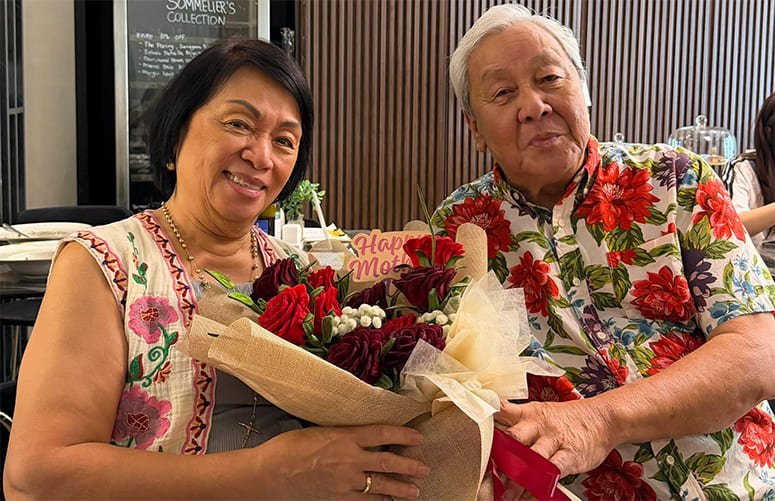
They first met as young folk dancers, discovering that life’s earliest language is often shared rhythm. Through six decades of public service and family life, Beng remained not a spectator but an equal companion in every challenge.
Sixty years is not merely longevity. It is thousands of ordinary mornings choosing kindness again. Even when the orchestra falls silent, they still know each other’s steps.
But it is the third marriage that continues to haunt—and inspire—me.
As an Ateneo college business student, Guidon editor and Matanglawin writer, I discovered Renato and Letizia Constantino’s landmark history, The Philippines: A Past Revisited. Those volumes awakened me. They seemed less like books than windows opening after centuries of closed rooms.
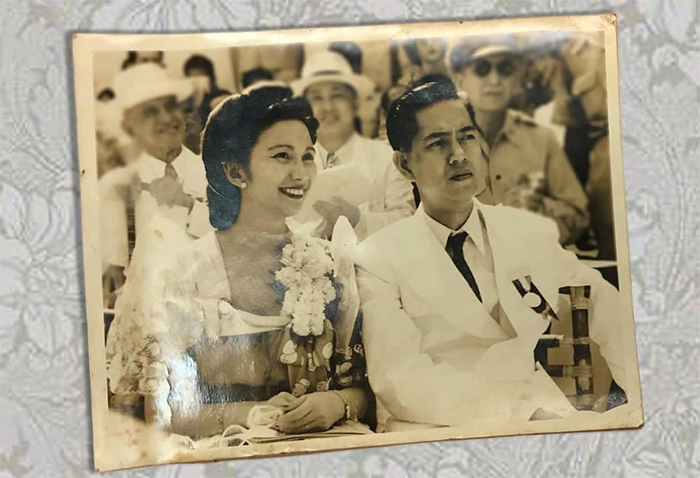
Curiosity eventually brought me to their modest home on Panay Avenue. I still remember Letizia tending her bonsai garden with gentle precision. Watching her shape small trees while discussing the destiny of a nation, I realized that both history and bonsai demand patience, vision, and faith. I never asked either of them for an autograph. The youth assumes there will always be another visit.
Their books, now republished in a handsome 50th anniversary edition, remain among the finest antidotes to colonial thinking that we all should read.
Renato challenged distorted narratives that glorified colonial conquerors while diminishing the roles of ordinary Filipinos. Yet Letizia was never merely beside him; she was editor, collaborator, and intellectual equal, quietly refining manuscripts and strengthening ideas. Together they practiced what biographer Rosalinda Pineda Ofreneo beautifully called a “usable love”—a partnership where devotion to one another deepened devotion to country.
Their inspiring story now lives in the excellent exhibit “Pasts Revisited” at the Yuchengco Museum at RCBC Plaza in Makati.
More than displaying manuscripts, letters, and treasured keepsakes, it honors generations of Filipinos—from Apolinario Mabini to courageous women and unsung patriots like Gregorian de Jesús, Apolonia Catra (who colonizers killed and unjustly libeled as a "bandit"), Kumander Liwayway, who fought Japanese military invaders, Lorena Barros, Gloria Capitan, etc.—who refused to surrender memory, dignity, and hope. Curated with imagination by Ninel Constantino, the exhibit invites visitors not merely to remember history but to enter into conversation with it.
Sometimes I think old books are never truly silent. Open them with honest hands, and they breathe. Sometimes history itself waits patiently, like an old tree, until someone is ready to hear its leaves whisper.
In today's uncertain and morally chaotic world—when new geopolitical rivalries among powerful nations echo old empires and fresh forms of dependence threaten smaller countries—the Constantinos' call for a courageous «usable past» becomes ever more urgent. The past is not a prison. It is a lantern.
Three marriages. One teaches that love stripped of spectacle often shines brightest. Another proves that six decades of fidelity can become a blessing shared with an entire community. The third reminds us that the deepest romance is not only between husband and wife but between truth and courage, memory and freedom.
Visit the exhibit. Read the books. Carry their questions home with you.
And if, someday, you find yourself in a quiet garden where someone patiently shapes a bonsai, pause for a while. Trees remember what hurried people forget. I never received Renato and Letizia Constantino's autographs, but perhaps some encounters never truly end. The people who enlarge our minds continue walking beside us long after they have left this world.
For one fleeting moment, as I left the exhibit, I imagined those little bonsai lifting their branches toward the morning light, each new leaf becoming another unwritten page in the Filipino story of struggle for emancipation.
It almost seemed that history itself smiled—not as a ghost trapped in yesterday, but as a faithful companion gently reminding us that no nation is ever truly conquered while its people remember who they have been, cherish who they are, and dare together to become who they have yet to be.