

Airports, travel etiquette, and a little common sense
Airports can be stressful because almost everything is shared: space, time, queues, seats, overhead bins and, unfortunately, sometimes other people’s distress. We are all trying to get somewhere, and we all believe our particular situation deserves a little more consideration.
The problem begins when we forget that everyone else probably feels the same way. And not all of us can travel business class and be given access to the lounges and priority boarding.
Let us take a look at four common situations where a little travel etiquette—and common sense—can make the journey considerably more pleasant for everyone.
Fall in line and stay in line
Q: I always dread arriving in any country where there are impossibly long lines and after a long, tiring flight, we still have to join a queue and wait for immigration officers to review our papers. I am especially concerned about young, single Filipino women who occasionally experience extra questioning and screening especially when they are traveling alone. How should they deal with this bias?
A: Few things can be more annoying than arriving after a long flight only to discover an immigration hall filled with hundreds of people.
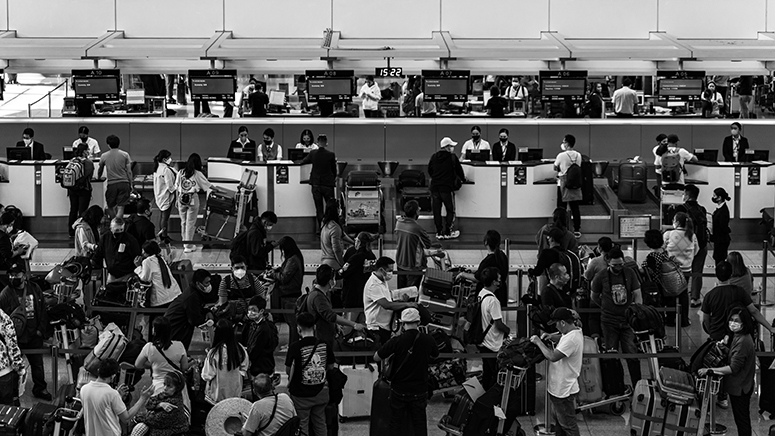

You may be tired. You may have a connecting flight. You may desperately want to get home. But unless airport personnel specifically direct you to another line or give you priority, your urgency doesn’t automatically take precedence over everyone else’s.
Don’t hover beside the queue looking for an opening. Don’t ask to squeeze ahead because your luggage is already on the carousel.
The best airport etiquette is remarkably simple: fall in line and stay in line. Use the waiting time productively. Have your passport and documents ready. Pay attention when the line moves. If you’re traveling as a group, organize yourselves before reaching the counter.
A long immigration queue is frustrating, but people trying to outsmart it is worse.
We may not be able to control delayed flights, long queues or crowded terminals. But we can at least make sure we’re not the passenger making everybody else’s experience distressing.
Regarding the seemingly stricter evaluation of single, young Filipino women traveling alone to another country, there is hardly anything that can be done to avoid this apparent bias because this might have been caused by countless previous cases when some single young ladies chose not to come back to the Philippines and probably got lost in the country where they arrived. The immigration officers have most likely been warned to be extra cautious and discerning so as to avoid such mistakes.
One way to avoid being screened for a long time is to have all your papers complete and ready for close inspection and to reply to all questions kindly and respectfully. It’s always better to be dressed in proper, smart attire rather than in old jeans or too-sexy, revealing tops that would give the wrong impression about you. Remember, these immigration officers don’t know you so don’t give them reason to doubt your person. Be friendly but not excessively so.
Pack only what you can carry yourselves
Q: I always try to follow the rules of limiting my carry-on bags to what is allowed but sometimes, when I arrive at my seat, the overhead bins are already full and the flight attendant has to direct me to a bin that’s not directly overhead. I find this extremely annoying and I wish passengers could be conscious of not bringing excessive carry-on bags at someone else’s inconvenience.
A: You are right: Someone’s carry-on shouldn’t become everyone else’s problem but unfortunately, some people are unaware of this.
We’ve all seen passengers board with a roller bag, backpack, shopping bags, handbag, and perhaps one mysterious package acquired at Duty Free—and then proceed to occupy half an overhead bin.
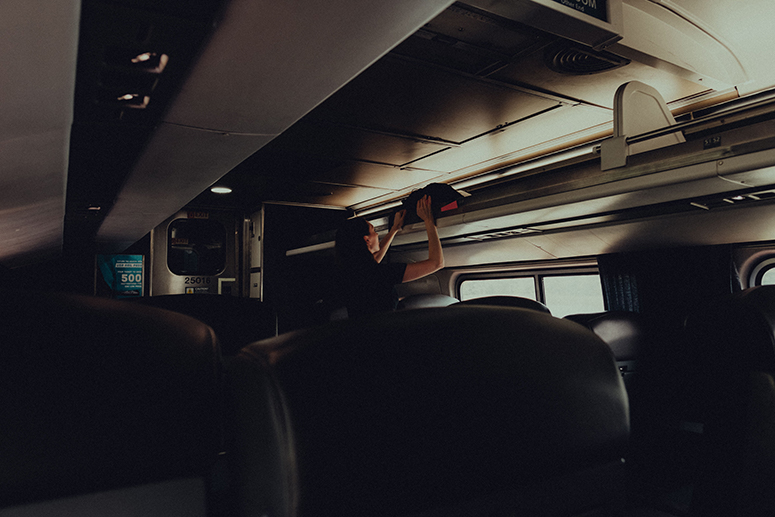
If you have more luggage than your allowance permits, check it in or pay the appropriate excess baggage fee. Don’t transfer the inconvenience to fellow passengers who followed the rules.
And when placing luggage overhead, think about space. A small handbag that fits under the seat must not occupy precious overhead space while someone else’s regulation-size cabin bag has nowhere to go.
The basic principle is this: bring what you can reasonably manage and store what you bring responsibly.
Offer your assistance only when you comfortably can
Q: Whenever I see older people or women with excessive baggage (including their little children) I wish I could assist them, but I literally also have my hands full. Should I just completely ignore them or should I try to offer my assistance?
A: Courtesy says we should help someone struggling with a suitcase. Common sense says nobody should deliberately bring luggage they cannot reasonably manage and simply assume another passenger will take care of it.
This can become awkward when an older traveler—or anyone traveling alone—looks around expectantly for someone to lift a very heavy suitcase into the overhead compartment.
By all means, help when you comfortably can. Kindness between strangers is one of the nicest parts of traveling. But while assistance is much appreciate, it is not expected.
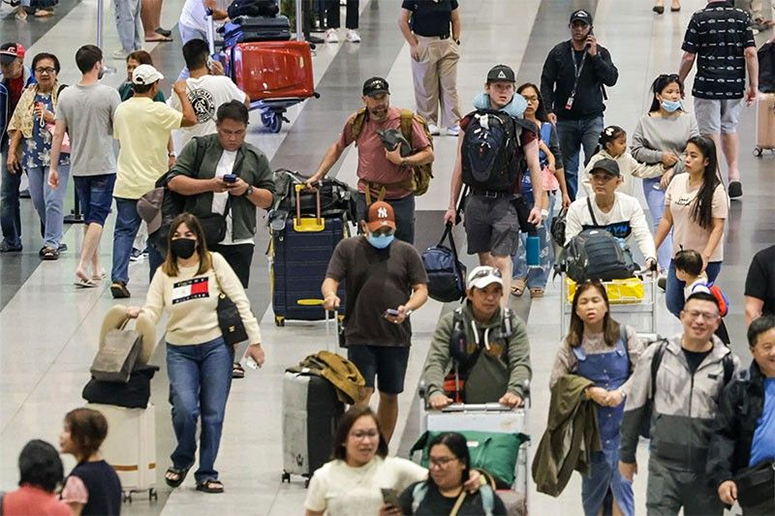
If you know you cannot lift your cabin bag, consider checking it in or asking airline staff for assistance. Fellow passengers may themselves have bad backs, injuries, or other limitations that aren’t obvious.
Good manners work both ways: offer help generously when you can, but don’t assume that strangers are obligated to provide it.
Let the ‘wheelchair brigade’ be
Q: I have noticed that only in the Philippines do we have extremely long lines of passengers who are brought to immigration on wheelchairs. I often think that this might be a privilege that is being abused because when we look at some of those who are on the wheelchairs, they seem to be stronger and more able bodied than I am. What do you think?
A: Wheelchair assistance is indeed a privilege and an extra service that older travelers welcome. But don’t assume you know someone’s condition just because they look strong or young.
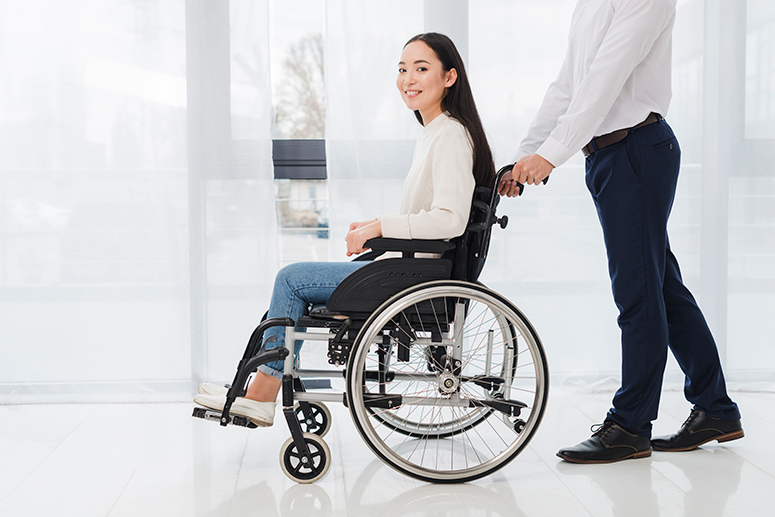
Frequent Filipino travelers sometimes jokingly refer to the large number of wheelchair passengers on certain international flights as the “wheelchair brigade.” It can admittedly be frustrating when priority boarding, immigration procedures or disembarkation appear to impede the general flow. And because some wheelchair users look perfectly able-bodied, it’s tempting to wonder whether everyone requesting assistance genuinely needs it.
But this is one situation where our irritation needs to be tempered by something more important: we don’t know another person’s medical circumstances.
Not every disability is visible. A person may be able to walk short distances but not stand in a long immigration queue. Someone may have a heart condition, severe arthritis, balance problems or another limitation that is not visible to all.
If wheelchair or priority systems are being abused, that is ultimately for airlines and airport authorities to manage — not for fellow passengers to assume by sight. So, resist the eye-roll and exercise some patience and understanding. You, too, might need that wheelchair someday.
The golden rules of airport etiquette
Perhaps the best rule for travel is this: Your inconvenience does not give you the right to inconvenience everybody else.
Airports bring together people of different ages, cultures, physical abilities, and levels of travel experience. Some people need more patience. Some genuinely need assistance. Some simply don’t realize they’re blocking the aisle.
So, travel etiquette isn’t about policing everybody around us. It’s about being aware of the space we occupy and the effect we have on other people.
Stand in your proper place in line. Pack what you can manage. Don’t monopolize shared spaces. Help someone when you can. Give people the benefit of the doubt when you don’t know their circumstances.
And perhaps most importantly, remember that the airport is not our home, the overhead bin is not our closet, and the immigration line is definitely not the place to assert our competitive spirit.
We may not be able to control delayed flights, long queues or crowded terminals. But we can at least make sure we’re not the passenger making everybody else’s experience distressing.

WATCH: LGBTQIA+ people with unlikely professions
June 28, 2026