

Communication Research is a space of tending and growing
Among many stories about my collegiate program, one that I’m sure is universal is the little dance we do when we explain what the course is and follow it with how we fell into it. Because the common scenario, at least in most of my peers’ experience, is that we really didn’t mean to. Some didn’t even know the course existed until it was presented to them on a drop-down list.
It is often mistaken (in good nature) for Communication Arts or something along the spectrum of Broadcast and Media Studies. Those are close sisters—the art and theatre to its analytics, theories, and frameworks. If it were a March sister in Little Women, it would be a mix of Jo’s nature and Meg’s affection.
The course in discussion is the Bachelor of Arts in Communication Research (CommRes). As of June 2026, it is only offered at two campuses in the country: the University of the Philippines Diliman and the Polytechnic University of the Philippines - Sta. Mesa. It pushes for an in-depth and rigorous study of communication theories, models, research techniques, and other forms of social science research—a never-ending discussion that always circles back (but always on a new, elevated level) to the hows and whys and “what now?” of society. A speaker in a recent colloquium described it as a constant relay race: We, researchers, stand on the shoulders of giants, and it is our duty to pass on knowledge as much as we can.
“(Because) what field or industry in this world does not do research?” says Dr. Kriztine Rosales Viray, Associate Professor in the Department of Communication Research at PUP, and our beloved thesis advisor. “Whether it’s a full scientific research or a (simplified) laymanized work of research, they are still doing research.”
The wild card
When I was a freshman, seniors would get excited over Zoom calls whenever I would mention that CommRes was my first choice during enrollment. I very quickly learned that this was because it was not a popular occurrence. However, proud as I am, I confess that I did not even know what CommRes was before 2022, until the word “research” glittered to me like how an international fellowship would shimmer in a fresh graduate’s resume. I thought it was impressive. I thought I could be impressive. Teenagers moving from the province to The City are always so ambitious that way.
CONTINUE READING BELOW

Despite my research (oh, the irony), upon getting accepted into the university, I still didn’t fully know what I was in for until the start of my first semester. Until Dr. Kriztine Rosales-Viray started teaching and demonstrating communication models that were refined over decades of trial and observation. Research. And how they manifested into every aspect and relationship I’ve had in my life. The complexity and nuance of the communication processes soon became fascinating to me, and I’ve grown to appreciate how they impact the growth of all of society’s relationships in return. We exist in the context of it.
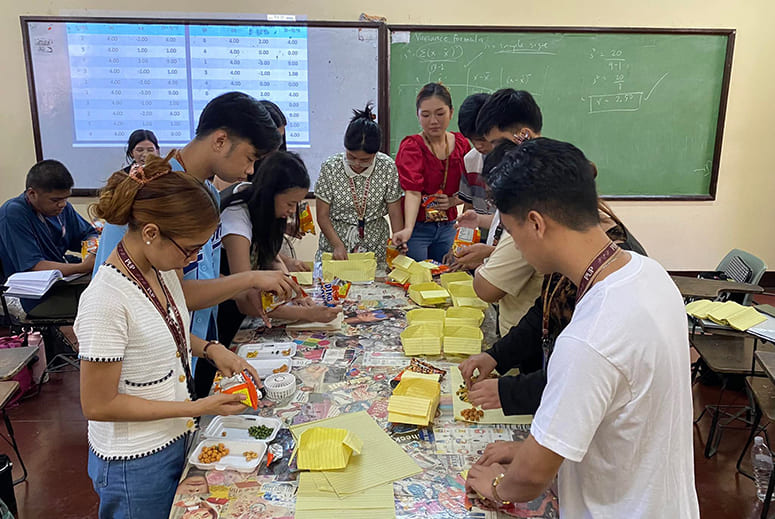
My take is that CommRes is all about growing. Things, relationships, and everything in between. Whether it is the internal work of educating ourselves or the external work of researching to fill the gaps within communities. It comes down to the intricacies of connectivity and curiosity, and the creativity that guides us along all of it.
“Because things don’t just ‘happen' to exist, they come with the grounds, and with grounds comes reasoning and myths,” says my college best friend who is a fellow CommRes student, Maoui Andrada. “That is our cue to become curious.”
The makings of a CommRes Major
The first time you ever take a class on campus, affectionately called Sinta by other students, you will feel a sense of vibrancy humming in the halls of the College of Communication. This means you’re in. The feeling is not of ghosts or supernatural elements; on the contrary, you will soon learn that the university is very much alive. Practically vibrating with color, sound, movement, and texture all around. Students, especially freshmen, are always so eager to jump right into the middle of the cacophony.
For some, it was organizations; for others, internships, production roles, part-time jobs—the works. All I know is that everyone was always seemingly in a constant state of rush, in feeling and in practice. When I asked Vince Manda, the former president of PUP’s Circle of Research Enthusiasts (PUP CORE), about how he approached the grandness of it all, he simply told me that opportunities for growth excited him. He was one of those people who jumped right in freshman year despite CommRes being his fourth choice. He became the president of the course’s central organization before we were even seniors.
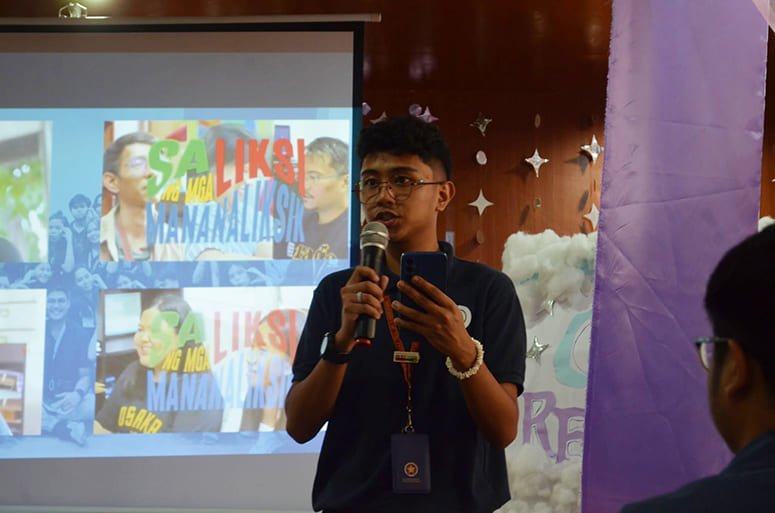
We talked about expansion once, the act of contributing to your field via research. I knew exactly what Vince was talking about. Because somewhere in all of the data gathering, commuting, and hours poured over conversations with community members, a sharp sense of responsibility will hit you in the chest. And you’ll realize that from that point on, it is never just about you. No matter how factual it feels that you are only doing this for a grade, you will realize, in CommRes, that your ability to care is a need in society. Like a beating heart to a body so intent on getting better.
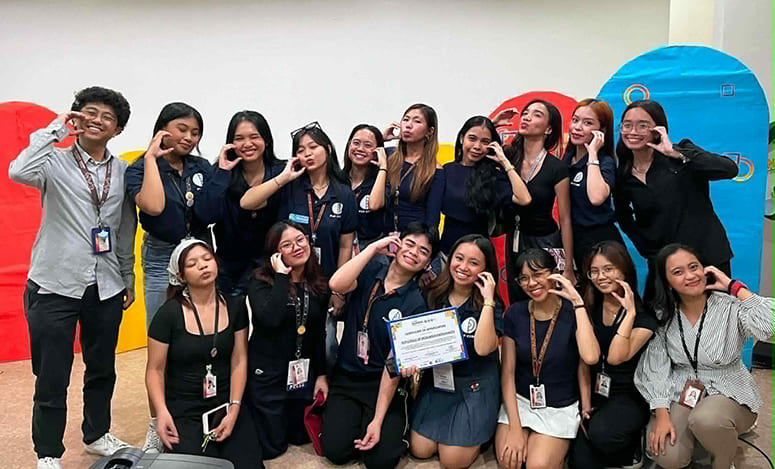
“We need to keep moving forward,” Vince tells me as we wrap up our recent conversation, referencing the great Disney classic, Meet the Robinsons. “I think CommRes is for people who had big dreams, but the universe had bigger plans.”
The intimidation in research
I won’t be the first to admit that it is daunting to declare a hypothesis and have no way to ensure it turns out exactly as you hope. Even in our senior year, we were still doubting our credibility as researchers, always asking when we could declare something as fact or well-grounded, if we had enough proof and evidence, and if it would hold up in rooms where it would be discussed and maintain its stature in the face of heavy questioning.
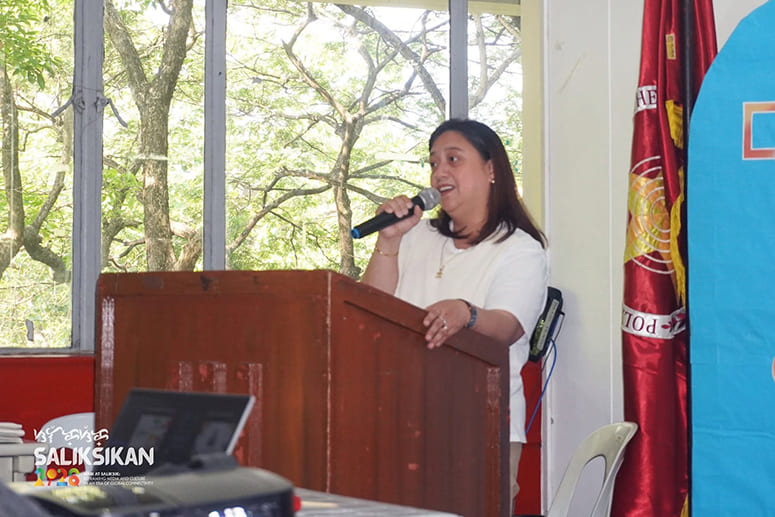
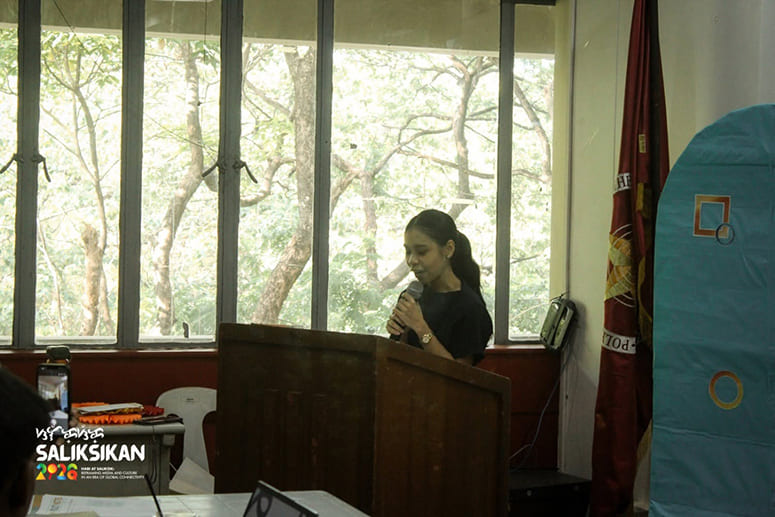
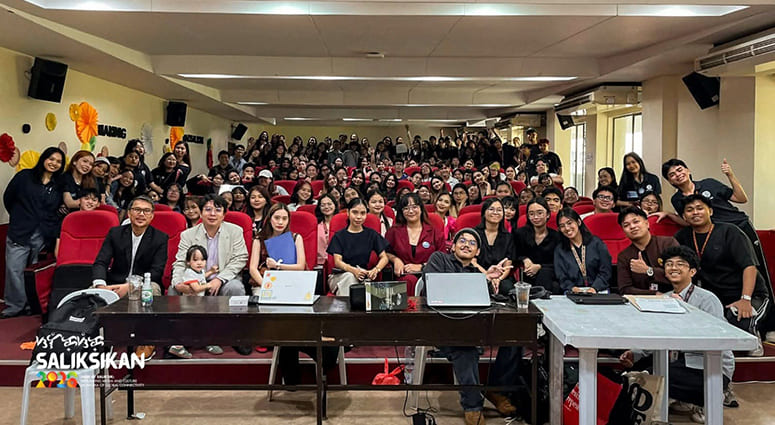
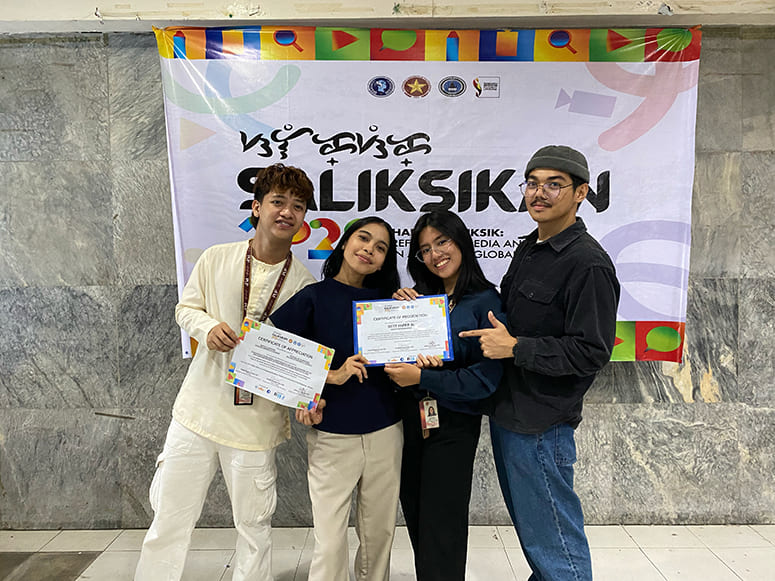
This was tested the most during Saliksikan 2026, an annual research colloquium hosted by the graduating batch of Communication Research in Sinta. It was the final requirement before graduation. Maoui was one of the directors, so it was also high stakes for both of us. The gathering is particularly special because this year, the department only has three blocks, containing around 40 students each. In Saliksikan, senior theses were sectioned into parallel sessions, and researchers were required to present them to an audience of fellow researchers and students. It is meant to stir productive conversations and keep the collaborative aspect of research rolling. And that it did.
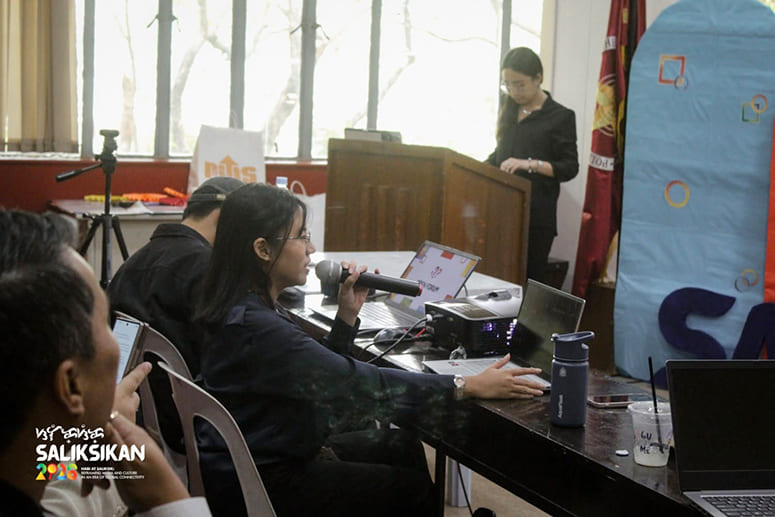
I remember thinking how fortunate I am to be in a room of people who share the same unabashed enthusiasm and insistence on development. It is a wonderful thing to know that people still care, despite despite despite.
I got to speak with another one of the directors post-event, Raphaelle Rodriguez, on the anxiety of anyone else possibly caring other than us. The fear of an echo chamber. Optimistic as she is, she told me that it is simply impossible for anyone not to be interested, even in the face of burnout, intimidation, and the rampant use of artificial intelligence. “(I know na) intimidating ang research, pero it does not have to be. You only have to let the researchers tell the story,” she says.
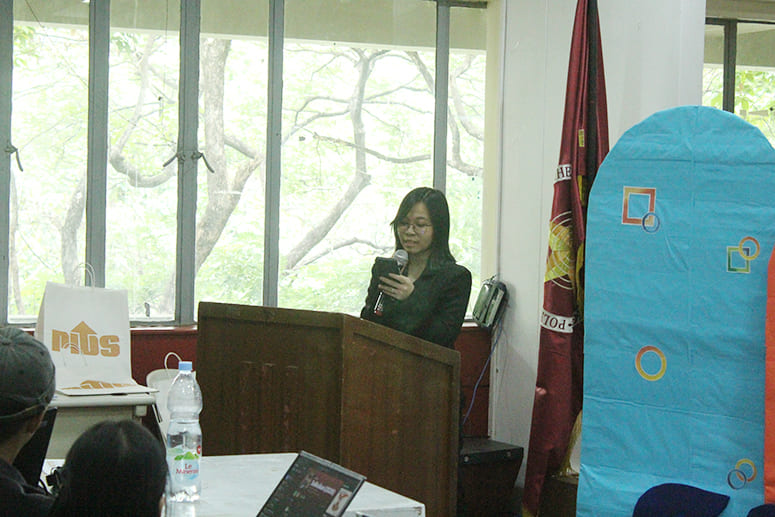
To appreciate research is to pay attention. It is an act of listening and storytelling. And I do not mean to merely listen to professionals and the people being interviewed (although that is part of it too), but also to pay mind to the hum of the world and its inner workings. Creativity is needed, even in the most mathematical explanations. One must always ask the whys and hows, seek collaboration, and be curious enough to continuously move the goalpost.
“We must be continuous,” Rapha tells me, because it is up to us to expand and find new ways to get excited (and even passionate) about things, fields, and communities, even the most trivial.
On pushing forward
I once travelled to Sagada, Mountain Province, to interview the people behind Radyo Sagada, who, according to Glecelyn Simba in 2024, is the only surviving community radio in the Philippines. They were awarded the Ka Louie Tabing Memorial Achievement Award in the recent 18th Gandingan Awards 2024 at the University of the Philippines - Los Baños. It was an honor to be granted an interview as a sophomore in college.
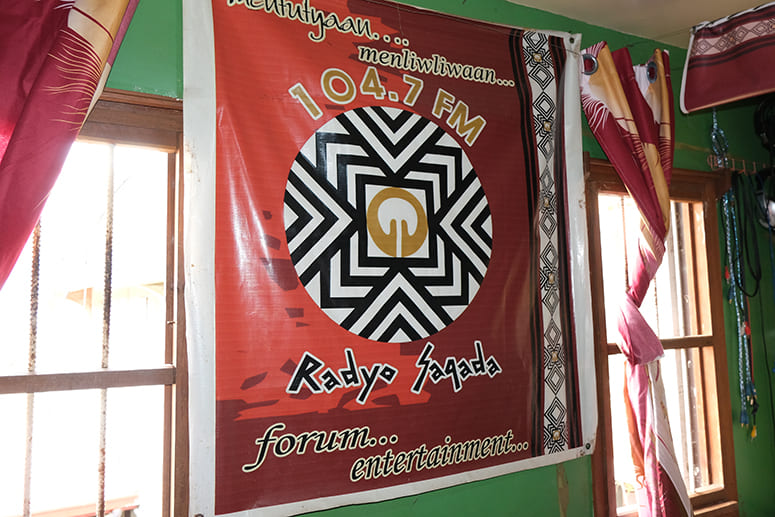
Funded by nothing but sheer will and our own pocket money, with mine coming from odd jobs I took here and there making graphics, our small all-women group (and my mom, who acted as our guardian. Thank you, mom!) commuted almost ten hours from Cubao while our finals were taking place back in Manila.
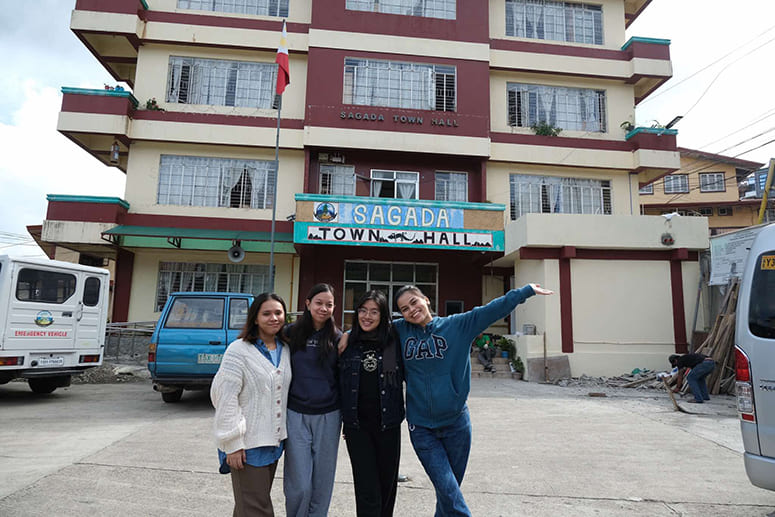
Travelling almost 400 kilometers to speak with the team made me anxious, to say the least. I doubted my credibility as an undergrad and my ability to portray their narratives in our paper with the volume it deserves. I questioned myself if I was even capable of that level of amplification. It was in that nervousness that I first started to realize that part of the process of expansion is to rally for my own capability. The terrifying feeling of wanting to do well means that I care about who I’m studying and the bridges they want to make. Why should my fear get in the middle of that construction? Why should it be about me?
Coming to my senses, I’ve learned that it is often best to get out of my own head and instead place myself in the process of communication. To exist in the context of my surroundings.
One of the theses that won best paper in Saliksikan 2026 belonged to a group that also travelled a great distance from the university. Jen Antiniolos, the third director of Saliksikan 2026, recounted their story: investigating the media circulation process in the narratives of the fisherfolk from Masinloc, Zambales, who live near the Scarborough Shoal. They called themselves Eskarborista—a term I might have never known in my university years if it were not for those who amplified their stories to us.
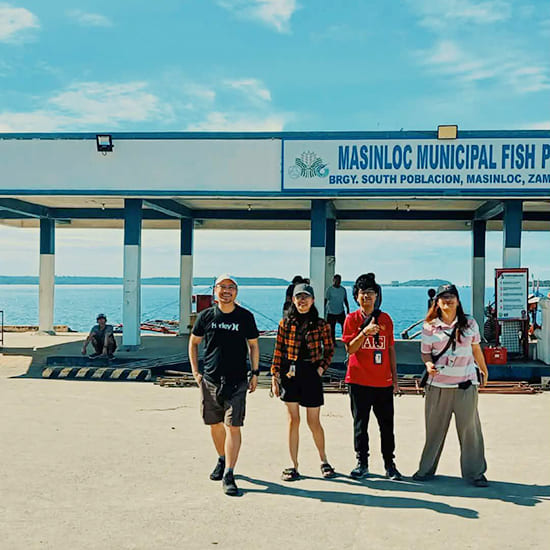
“If we stop caring to ask the questions, how do we expect something to improve? If we don’t care about research or understanding or listening, how will we move forward?” she said to me as a matter of fact. For it is our curiosity that fuels the constant recalibrating research requires.
Research is a relay race
Sometime in my stay at Sinta, I wanted to document my university years through video logs and editorial diary entries. As one of my favorite poets, Savannah Brown, says, “We'll someday ache for any regular Sunday in June,” the same way I know that one day, I’ll also ache for the regular Wednesdays in the pavilions of PUP Lagoon or the stairs of COC’s amphitheatre, when the sun was a sure, hot thing and the only respite is a Jisulife from a blockmate who let you borrow her things and a packed lunch in a Tupperware shared among friends.
At the time of writing this, I’ve already submitted my final papers, and I’m in that limbo where you don’t quite know how to reckon with the end of your beginning. Nowadays, I go to work in Makati and occasionally chew on my nails, thinking about The Future and whether I’ll be the first in both of my extended families to earn a laude. It’s hard not to be scared when you care so much. When you know that you are a part of the greater picture, and that things are rarely just about you. I think of my family and CommRes as a whole the most these days. I worry if all I have done is enough, if I have given enough proof and evidence, if they’ve heard my indignation loud and clear, and if I have made a solid enough jumping point for the studies I have started and built upon others’ works.
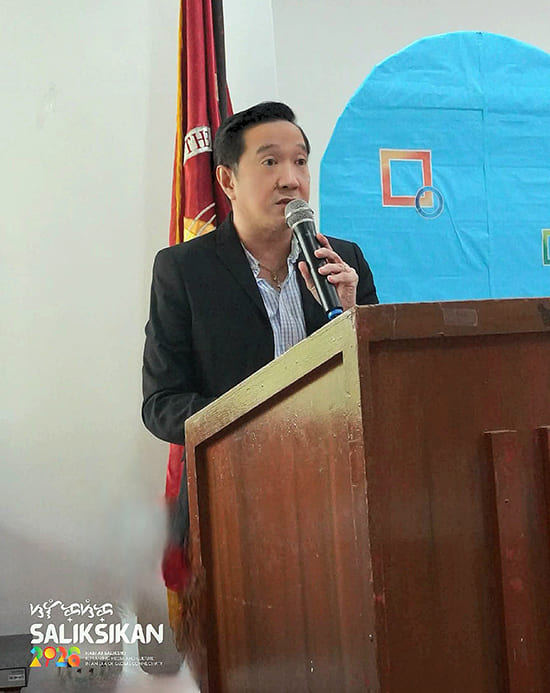
When the worry sinks in, I think back to Saliksikan, our batch’s legacy, and Dr. Ernesto V. Carandang II’s parting words: “Research is not a dead end; it is a relay race.”
I keep moving forward.
There is a point of becoming in every story. A stage where you know change is taking place. I’m in it now, and I was in it when I was knee-deep into reading Roland Barthes’ Mythologies (1972), palpitating from a cup of diluted coffee, clammy in my work clothes, and connecting points of Barthes’ strategies to the political imagery in the Philippines for the past 15 years. Expanding context and tracing myths. Finding and pulling and connecting. Developing new terrains for better, more informed understanding—I thought, this is it, just as all the researchers that came before me, we’re making things grow.

WATCH: Do you still believe in marriage? (Generations Ep. 17)
August 19, 2026
WATCH: Can we talk about death and grief? (Generations Ep. 25)
October 14, 2026
WATCH: LGBTQIA+ people with unlikely professions
June 28, 2026
WATCH: Why is it so hard to make friends? (Generations Ep. 26)
October 21, 2026