

The audacity of the unbusy heart
Let us confess a modern heresy: Somewhere along the way, we began worshipping busyness. We transformed crowded calendars into status symbols, sleepless nights into medals of honor, and perpetual exhaustion into proof that we mattered.
Then, like a mischievous imp hiding in the calendar, July 5 today arrives each year bearing an unexpected gift: "Workaholics Day."
Its quiet message is almost subversive.
Slow down.
The irony is delicious.
Perhaps life was never meant to be conquered like a mountain, but savored like freshly baked bread—best enjoyed while still warm, shared generously with friends, and never hurried. Some blessings arrive not with the thunder of achievement, but with the soft fragrance of an ordinary afternoon.

The Italians have a beautiful phrase: dolce far niente—the sweetness of doing nothing.
The ancient Chinese Taoist tradition offers another way of seeing life. It calls this wu wei—the art of effortless action, of going with the flow instead of arguing with the tide. It does not celebrate laziness. It celebrates harmony. Water never quarrels with rocks. Yet rivers, without speeches or slogans, patiently sculpt mountains.

There are afternoons when sunlight lingers upon old windows, reluctant to leave the day behind. During those quiet hours, the heart remembers what the calendar has long forgotten—that wonder keeps no appointment book.
The wisdom of Chinese civilization is quietly etched into its writing. Consider the Chinese character for "busy" (máng). It joins the radical symbol for heart with a symbol meaning "to perish," "to disappear," or "to be lost."
Linguists explain its historical composition, yet generations of Chinese philosophers and teachers have cherished the symbolism hidden within it: when life becomes endlessly busy, the heart is often the first thing to disappear.
What an astonishing thought.
For thousands of years, a single brushstroke has whispered what our digital calendars still refuse to hear.
Perhaps the greatest poverty of our age is not the lack of money, but the disappearance of an unhurried heart.
Modern civilization, however, seems determined to prove the opposite.
We hurry through breakfast and lunch.
We multitask through conversations.
We even purchase watches that remind us we have not rested efficiently enough.
If our ancestors could see us, they might conclude that modern civilization has somehow managed to schedule even relaxation.
Somewhere, an old Zen monk smiles into his tea, wondering why human beings keep trying to outrun sunsets.
Nature, meanwhile, remains magnificently unconcerned. The mango tree never envies another tree's fruit. The moon has never apologized for waxing slowly. Even dough insists upon its own timetable.
Imagine scolding it:
"Become magnificent in three minutes!"
It would simply shrug.
The yeast has always been wiser than deadlines.
Even the stars seem in no particular hurry, yet somehow they always arrive on time.
Good things possess their own clocks.
Or perhaps time—that old pickpocket—occasionally returns what it stole: a golden quarter-hour during which nothing important appears to happen, and everything important quietly does.
A little secret.
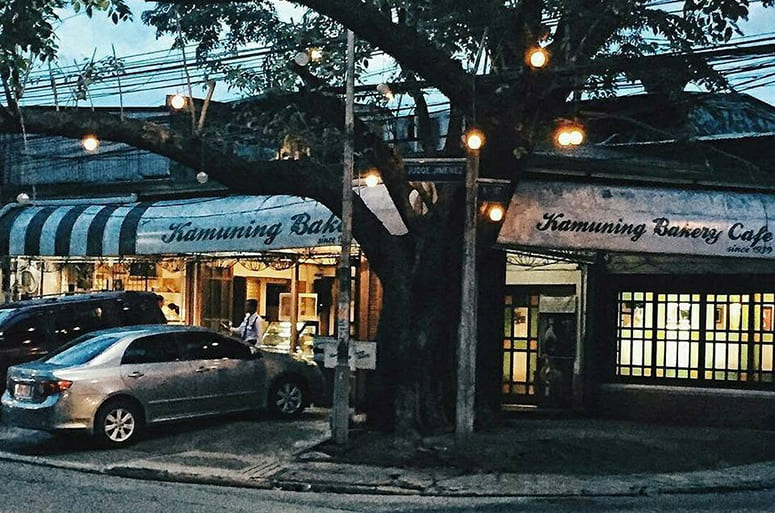
For decades, I have wandered through life with a rather happy-go-lucky spirit. My real estate investments quietly mature without demanding that I anxiously supervise every sunrise. Later, due to a realty purchase, I found unexpected delight in nurturing Kamuning Bakery Cafe, our 87-year-old neighborhood "panaderya"—not because I needed another business, but because it had become something rarer: a labor of affection rather than merely an enterprise of profit.
There is a curious difference between making a living and making a life.
One fills calendars.
The other fills hearts.
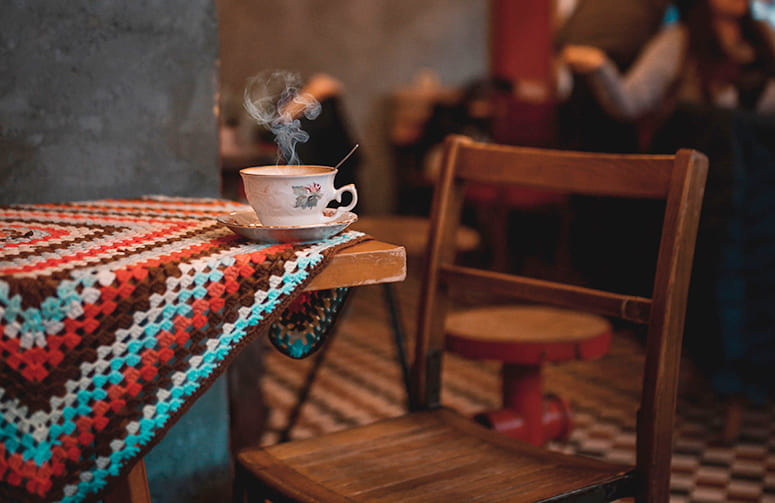
Sometimes, after midnight, I imagine invisible spirits gathering inside old cafés. They borrow the aroma of freshly-brewed coffee to mend the torn seams of exhausted dreams. Before dawn, they whisper only three things:
"Sit."
"Take another sip."
"The world can wait."
Then they scatter invisible crumbs of contentment across every wooden table. Those fortunate enough to breathe deeply mistake them for the fragrance of an ordinary morning, never realizing they have just inhaled a little happiness.
By sunrise, the spirits have vanished.
Only serenity remains.
Perhaps miracles have always preferred arriving quietly.
The great irony is that some of humanity's finest ideas arrived precisely when their creators stopped chasing them. Archimedes was bathing. Newton was contemplating an apple tree. Lao Tzu preferred wandering beyond city gates to attending endless committee meetings.
Perhaps wisdom dislikes crowded calendars.
Perhaps inspiration refuses appointments.

Perhaps every sunset is the sky's gentle reminder that endings can be beautiful, that slowing down is not always falling behind, and that even the sun refuses to rush its departure from the world.
Work certainly matters. Honest labor builds families, businesses, communities, and nations. There is dignity in craftsmanship, perseverance, and discipline. But when work becomes our only identity, we risk becoming efficient machines instead of fulfilled human beings.
A violin string pulled too tightly eventually snaps.
So does the human spirit.
The Taoists remind us that water is soft enough to cradle a leaf, yet patient enough to carve canyons through stone. Gentleness is not weakness. Rest is not the opposite of achievement; often it is achievement's quiet companion.
Perhaps another question deserves equal respect:
When was the last time you laughed so hard that you forgot to check the time?
On this whimsical "Workaholics Day," may we give ourselves permission to become slightly less hurried and considerably more human.
Drink coffee slowly.
Listen to old songs.
Watch the sunset without photographing it.
Allow silence to finish its sentences.
And if, for a little while, it appears that you are doing absolutely nothing, smile knowingly.
Sometimes the soul is busiest doing its finest work precisely when the world believes it is doing nothing at all. The Italians call it "dolce far niente." The Taoists call it "wu wei." I simply call it remembering that before we make a living, we must first remember how to live.
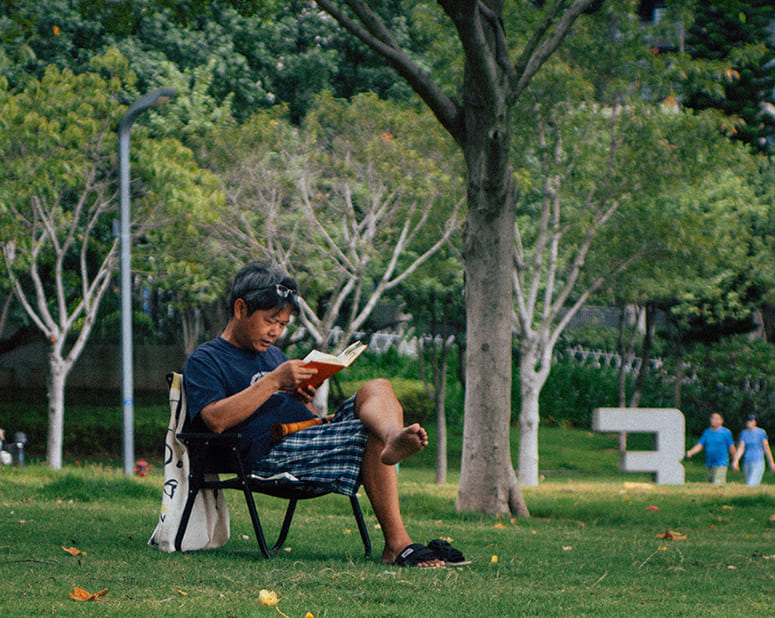
Perhaps the richest people are not those who possess the most, but those who still have time to linger over coffee, to laugh until twilight, to watch rain without impatience, to look up at the evening sky as though seeing it for the very first time, and to treasure the quiet company of those they love.
The older I become, the less I admire people who outrun time, and the more I admire those who know when to sit quietly beside it.
One day, our calendars will close, our inboxes will finally fall silent, and our meetings will become memories. Yet rivers will continue flowing toward the sea, children will continue chasing butterflies without consulting their watches, and somewhere, I like to imagine, those invisible café spirits will still be whispering that the world can wait.
For in the end, perhaps the greatest act of quiet courage in our hurried age is simply this: the audacity to keep one's heart unbusy.

WATCH: Discovering Vietnam in three days
June 9, 2026