

Philippine Retailers Association fireside chat
Tessie Sy-Coson: At my age, I have to work like I am part of the Gen Z
The last time I went to SMX Convention Center was a kilig moment. Korean idol Lee Minho was launched as SMDC’s brand endorser there, with an intimate interaction with a giddy audience at the nearby Conrad Hotel in 2023.
Last Friday, I attended the Philippine Retailers Association event at SMX for a fireside chat with retail icon Tessie Sy-Coson and SM Supermalls super boss Steven Tan. It was such an engaging hour full of lessons, laughter and untold stories. And some cute and candid kilig moments.
“How many of you are familiar with the word ‘Shoe Mart’?” Rico Hizon asked as his opening question to the audience.
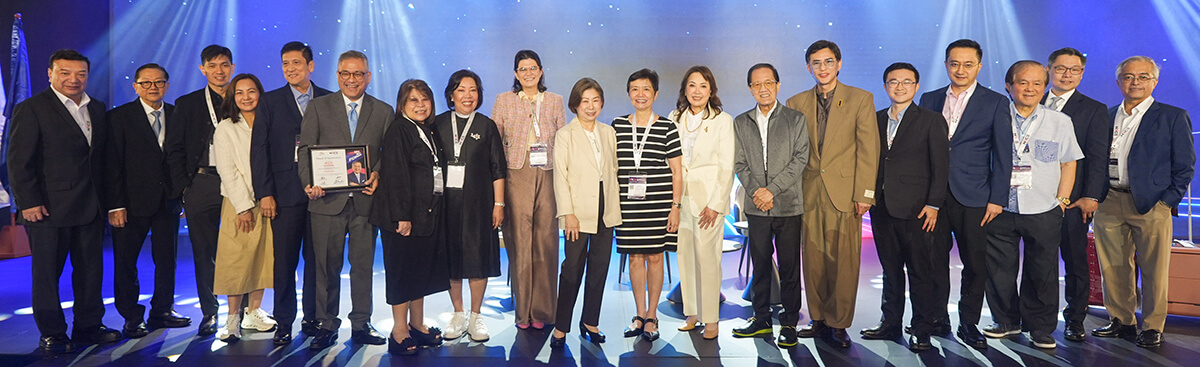
When the audience answered “All of us,” Rico said, “Oh, my gosh. You all belong to the Baby Boomers and Gen X generations. What about the word ‘SM’?”
The audience howled “Woohoo!”
Tessie Sy-Coson: [There are] still a lot of (young) people in the room. Today is the 15th anniversary of PRA. I remember one of the first things I had with them in Japan in 1980, the first time we had a world event with them.

CONTINUE READING BELOW

Rico Hizon: So those are for people who still remember Shoe Mart. Yes. That’s where I got my grade school shoes, Ma’am. When they would order, “Size 5 1⁄2, please.” And it would come back all the way from the ceiling. I would always wait for that moment when I would go to a Shoe Mart Department Store.
So Ma’am, let’s start off with the foundation of Shoe Mart built by your father, Tatang Henry Sy Sr. It was a small shoe store in Manila that was built on discipline, service and trust. I mean, looking back on the principle of Tatang’s leadership, what do you think retailers today need to rediscover?
Tessie: It’s perseverance. You know, all of these years, we never thought that we would reach this stage. We just go on and on. He always told us about his hard work, integrity, credibility, frugality. These are the things that we need.
Steven Tan: Don’t be a slave of Artificial Intelligence. Make AI your slave.
And so we just kept on continuing, whatever political situations there were. So that’s what keeps us rolling. We never thought of having so many [stores]. It’s just that it grows and grows.
Rico: What can the millennial and Gen Z retailers learn, continue to learn, and still imbibe from the old values of retailers?
Tessie: You have to multitask. You have to get all the undivided attention of the client—I’m sorry—of the customer. Today is my banking day, so I said client.
Rico: You just came from BDO. You talk about perseverance, patience, service. Do you think the millennials and Gen Z retailers have those traits today? Or are they so impatient that they want to grow quickly?
Tessie: Yeah, I think a lot of things are already ready-made for them. So they may not have the patience.
Rico: And for Steven Tan. I read your story.
Did you know that Steven started in Taiwan? He was waiting on tables and got a promotion to become director of rooms. And then eventually took up his MBA in Europe, came back to the Philippines. You met Tatang in your early work at Taal Vista Hotel. And then you joined SM as the mall manager of The Podium. What traits will you always remember about Tatang in the first years of working and being mentored by him?
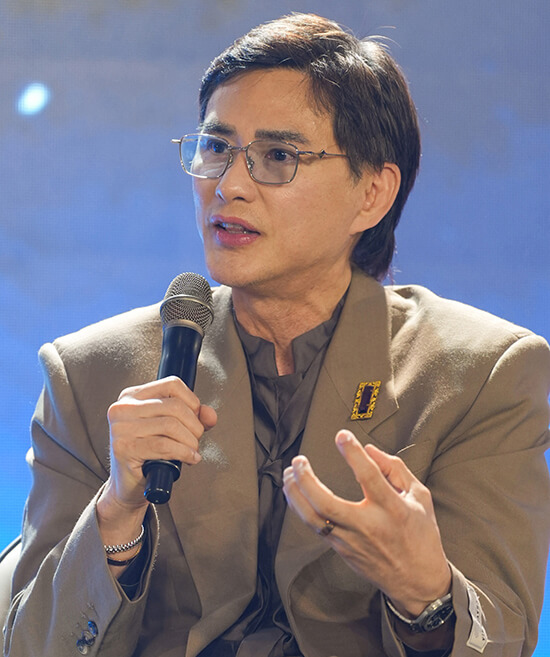
Steven Tan: I was quite fortunate to have been mentored by Tatang. During the early days of SM Mall of Asia when we just first opened, Tatang would go to the malls almost every single day. For six months, I didn’t take a day off. Because he would come every afternoon.
And I didn’t want to miss that opportunity to be mentored by him. You can call it just chit-chatting or mentoring. Because when you sit down together, Tatang would tell you a lot of things about how the people move. What store should we put up in that corner? How many stores should we put before you put a cafe for the husband to sit, while the wife is shopping? Those are all learnings really I get from him. So for me, it’s really putting your ears on the ground and listening to what your customers want. And give them what they need.
Rico: So a lot of those little things, very intricate practices were imbibed by you from Tatang during your first few years at the SM Group?
Steven: Yes, even until this very day.
If there’s a situation that I’m not sure of, I’ll step back and think, what would Tatang decide in a situation like this? And more often than not, he would be leading in my head.
Rico: I read an article in Esquire magazine and found that when you were with the Taal Vista Hotel, there was a time you already wanted to move on and do something different. And before you left, you were about to leave the Philippines, and one person gave you a call and asked you to stay. And that was TSC. So what did she tell you that made you decide to stay and join the SM Group full-time and become the mall manager?
Steven: With TSC, it’s no nonsense. She just gets straight to the point. So she gave me a call. I was watching a movie then, believe it or not, at Greenbelt, Mariana (Zobel, in the audience). So I was watching Mamma Mia! when the phone rang; I stepped out, and it was TSC: “Can you come see me tomorrow at 7 o’clock?”
I said, “ 7 a.m.?” She replied: “No, 7 p.m.”
So I was actually planning to move back to Paris. And then she says, the growth is in Asia. And she was right. She’s always right.
Rico: So, Ma’am Tessie, what really transpired in that meeting?
Tessie: I saw this tall guy at the hotel. And I thought, this guy is diligent, and he can persevere with all of the complications of the hotel. And he can also handle the details. So I thought, if he likes details, then he would like retail. Because retail is detail.
Rico: Absolutely. I mean, with close to 90 malls, SM, and then, of course, you have quite a number of malls in China. There’s really a need for attention to detail.
Tessie: Yeah, he did well. From the time he was talking to my dad until now. My father’s attention to detail was very close, about 99%. And sometimes, you don’t always like it, but they respect you for all the attention to the details.
Rico: Ma’am, you basically started in the business at the age of 13. And then you opened the SM Department Store at the age of 22.
Tessie: Because I was ignorant. I didn’t know. I was very naive. I thought I could do big things. So I went into it.
Rico: How important is it for the next generation of retailers to learn the business at a very early age? Like you, 13. Not 13, maybe after university, 21 or 22.
Tessie: Oh, no! That’s too late.
You have to be exposed early. Expose lang. And try to just observe what is going on. And then you will also find your own passion after a while. I guess I was born into a retail family. I had no choice. I just had to go into it, on and on. So that’s my life.
Rico: But we’ve seen the retail industry, Ma’am Tessie, continuing to evolve over the past decades. And now it’s even faster than ever. Especially in this digital age. How do you keep yourself abreast of all that is happening in the digital platforms, in social media? Basically an omni-channel strategy from written word to digital.
Tessie: We’re still trying very hard every day. But I have to say that we have good teams in many areas. We have people in the mall, other people in retail, and also in all the other areas. What is important is to have good teams. And, of course, you have to listen to them because you can never always have the right answer. Having a good team helps a lot. And if it does, it will not induce stress.
Rico: So basically it’s a combination of the baby boomers, the Gen X, the millennials, and the Gen Zs. Putting all their ideas together.
Tessie: Yes, we need all generations.
Rico: But, Ma’am Tessie, (they) will come up to you and say, “Oh, what you’re doing now is passe!”

Tessie: Yes, of course. Sometimes our idea can be passe because it doesn’t relate to the market… Another thing that we have to do as retailers is to always be alert. Alert for the trends, alert for the organizations, alert for many things.
Steven: She knows more AI than I do. Really. She knows what font is uso and what font to use. She knows all those details.
Rico: So Ma’am, do you have somebody who gives you a briefing on a daily basis on the latest trends? Or do you read a lot? Do you go online to see what the latest happenings are in the world of fashion?
Tessie: At my age, I have to work like I am part of Gen Z. So I have to be online. I have to always look at social media, listen to them. Not that our customers are all Gen Z, but you have to know what is the latest. And the best is to listen to Gen Z and the millennials. Of course, we also have the older ones, the baby boomers who have the money to buy.
Steven: Rico, I get rewarded almost three times a day or more with suggestions from her on a daily basis.
Rico: To get yourself updated, Ma’am Tessie, do you still travel to the different cities in Asia, in the US, and Europe to see the latest trends? Or is everything already in the palm of your hands because of the various digital platforms and social media?
Tessie: I have to say that I look at the numbers. I do not travel as much. But I listen to many people in the provinces. They tell me this, and they tell me that. So you just have to read between the lines.
Rico: And what about your nephews and nieces? I’m sure they’re also up to date with the latest trends.
Tessie: Yes, they also guide me on what is the latest trends. So I’m happy that they’re with me because I’m going to download all my work to them.
Rico: Steven, how do you also keep yourself abreast?
Steven: Well, it’s fortunate that I really like what I’m doing. I’m passionate about what I’m doing. I’m interested, and I’m hungry to learn. That’s very important. But for us to keep abreast of new things, we actually have a think tank that’s composed of the Gen Zs in the office.
It is important that as a leader, you have to have that skill to also learn from the younger generation or the people around you. It’s not always that you are the best and that you are always right. No, that’s dangerous.
Rico: So how do you do your research, Ma’am? When you go to a mall, if you see that there’s something wrong in how the products are positioned, there are hundreds, if not thousands, of products at SM Department Store. Do you personally have to see to it? Do you have to feel a product before it is on the store shelves of SM Department Stores?
Tessie: I don’t do all of that. But I do look into some of the items... I always look between the discussions, between the lines, and between the items. So it’s not about planning. It’s just that I have random thoughts, random research that I will impart to them.
Rico: And what about for you, Steven? How often do you visit the malls and check out product placements and new products that have to be introduced into the market?
Steven: We travel a lot. I go to China for some meetings, because we have shopping centers in China as well. That gave us the opportunity to really learn. You really have to open up your mind and look at it from the perspective of a global leader.
Tessie: I think when we started the retail, we were hoping to bring the world to the Philippines in terms of the presentations, the marketing. So that was our intention with my father.
Rico: We see a lot of international retailers in SM malls across the country. What can these retailers learn about the Filipino consumer?
Tessie: It’s hard to say. The best is to look at the surroundings from the eye level. Maybe some of the foreign retailers look at it from above.
Rico: So even if we are 118 million Filipinos with a large consumer base, with a large OFW community overseas that contributes about $38 to $40 billion a year, it doesn’t necessarily mean they will be successful in the Philippines?
Tessie: Yeah, we have 118 million people, but those who are really in the consumption strata, it’s about only 30%. So from the 30%, we still have to segmentize them. So it’s actually not a lot in terms of the consuming public.
Rico: What are your observations, Steven?
Steven: You know, I was talking with a foreign brand just a day ago. I really told them that, yes, when you enter a market, you have to really study the local consumer because it’s totally different from what they may want, what they are looking for. Just in China alone, the preference of the consumers from the south is totally different from the preference of the consumers up north. It’s the same thing here in the Philippines.
Rico: Speaking about the consumers, they’re very fickle. They’re now more demanding. They want convenience. They want experience. And now, they also want sustainability and authenticity. It seems a lot. But where does Philippine retail need to catch up with all of these demands of consumers, especially the millennials and the Gen Zs?
Tessie: They want all of that. But they don’t want to pay. You have to find portions where you can fit in. And then also, there’s a lot of online (sites) which sell very inexpensive items. So, you have to be able to compete with the online as well. So, it’s not an easy market. But we’re still surviving.
Rico: Ma’am, during the pandemic, everybody went online. And now, you have to adapt and pivot. So you really have to have an omnichannel strategy, including brick and mortar, and also, of course, your digital platforms and your social media platforms. Does that give you headaches, migraine on a daily basis?
Tessie: Yeah, it does give us a lot of stress. The online (space), which is not ours. Ours is just so-so. That’s why we thought since we cannot compete with online, we might as well do it in terms of the assortment, the customer service, the convenience. So, that’s the way that we can decode some customers.
Rico: Going into an SM mall should be experiential.
Tessie: Yes.
Rico: Steven, the attention span of Gen Zs right now is just like maybe five to 10 seconds. So, you really have to catch their attention?
Steven: Yeah. Experience is really key here. I was in Singapore last night. I was buying a jacket. But the saleslady suddenly told me, “Sir, this would look good with your fair skin. You’d look brighter here. It matches the jacket very well, and would look perfect on you.”
I tell you, budol is real. And online cannot do that for you. That human connection between the salesperson and the consumer. You have to make sure that your people on the ground are really trained, knowledgeable about your product, and able to sincerely tell the consumer, you know, to upsell what needs to be done.
Rico: It’s really very important to have that human touch, despite our lives being taken over by technology. And when I go to most of the malls, whenever I enter, “Good morning, sir. Good afternoon, ma’am.” You feel welcomed.
Tessie: Yes, we have to do that. And we think that Filipinos, consumers like it.
Steven: Yeah. I’ll ask the audience now, especially the ladies. If you buy lipstick, I’m sure that even if you know your shape, it would be helpful if the salesperson would tell you, ‘this matches your complexion, this does not,’ you know, ‘this would make you look younger.’ Those things are very important. So train your sales associates to be like that. This is for the retailers.
Rico: Personal. I mean, SM also has its personal shoppers.
Tessie: But if most of the retailers in the mall he is looking after would have good customer service, that would really be good also for the mall. That’s why he is also encouraging everybody to have good customer service.
Rico: Yes. I can see that. Whenever I see Steven in the malls, he’s always personable, he’s always talking to the customer, he’s talking to everybody. He’s the most friendly president I know of in an organization. So we have the human touch, the personal shopper, personal service, customer service. We have AI. How are you dealing, ma’am, with this AI evolution?
Tessie: AI, actually, if used in the right area, will increase productivity. So, I’d like to encourage the use of AI. But maybe some of what was discussed is a bit different, where you forget about your critical thinking. But on some of the basics, I think it’s good.
Rico: How far will you go in terms of using artificial intelligence within the SM group?
Tessie: I don’t know, because at this point, the AI is still evolving. So, for us, the AI that will give you the right numbers, will collect all of those things that are good for you, you know, good to guide you in your work. And also, in creativity, AI is good as well. So, yeah, sometimes when I don’t have a solution, then I just look for the AI.
Rico Hizon: I still remember Shoe Mart, where I got my grade school shoes. You order your shoe size, and it would come all the way down from the ceiling to the salesgirl.
Rico: How involved is AI in your life?
Steven: Don’t be a slave of AI, make AI your slave.
Tessie: That’s true.
Steven: But, you know, AI is all about innovation. You just have to keep on adopting the new technology. There will be new technology in no time. Maybe AI will just move on, and then there will be something new that will come up.
Rico: Let’s talk about micro, small, and medium enterprises. You are a big advocate. How important are the MSMEs for the large retailers like SM?
Tessie: They are very important. First is because of their size. They are creative. Second, they do things faster. And third, they are passionate about their business.
We also started as an SME. But, you know, those are where you can really learn the basics of business. And you have a lot of time to learn. Also for economy, it’s very important that we have a lot of MSMEs for livelihood. So, if you’re not employed, you go to MSME. And I think that that’s the way to survive this economy.
Rico: Because if you talk about the MSMEs, this basically creates inclusive growth in the economy. It is not just the large retailers or enterprises; MSMEs make up more than 99 percent of employment in the Philippines.
Tessie: It’s very important. Also, it’s really for persons in work. It’s either you do your employment or you do your small business. Even for the retirees, you know, it would be good for them to also go into business. So, you know, the livelihood continues and the purchasing power continues.
Rico: And of course, in this period of uncertainty, the Middle East conflict, higher prices, inflation, a weak peso against the US dollar, the first ones to really be affected are the MSMEs. How are you helping them? How are you mentoring them to get through these challenges?
Steven: We have a lot of programs for MSMEs. One of them is actually financial literacy. We have fairs all the time in our centers. Currently, we have a Matcha Fair in Mall of Asia where we get a lot of all these small cafes around the country or around Luzon at least, and then put them all together.
This is so many young people who are so passionate. We believe especially that the youth, they are so creative when it comes to how they do packaging and all these things. You just have to give them a platform.
Rico: What advice would you give micro, small, and medium retailers who are here with us today?
Tessie: I guess if (you) are creative, you have to work hard as a retailer. I have not seen a retailer that is successful who did not work hard. And you persevere with all the factors that are affecting business—the global war, the domestic economy. So, you know, it’s very difficult. But if you are able to get over the hump, then, you know, you can be successful.
Rico: But how ambitious are these small- and medium-sized retailers? How driven are they? Especially during these tough and challenging times?
Tessie: You really have to expand in order to distribute your head office OpEx (operational expenses). Of course, it’s not as simple as that. But after a while, in terms of the inflation, the cost will catch up. So you really have to expand and grow your top line. And that is actually — well, you grow your business. You survive it. But, of course, you will have to understand the numbers. So we usually would not leave a store alone. Unless their lifetime dream is only to have one or two stores that they can handle themselves. Otherwise, we always encourage them to expand.
Rico: So how do you pick out these micro-enterprises, these retailers, and get them to eventually scale up and lease a space in the mall? How do you identify them?
Steven: We actually review their application and review their product. You have to make your product unique and appealing to our consumers.
We normally choose the ones that do not have an existing store. Normally, it’s like maybe a stand-alone store or they’re selling online—the ones who have a platform but are afraid to go into a brick-and-mortar store because of the expenses and all these things.
Rico: Do some of these micro and small enterprises come up to you and seek your advice?
Tessie: No, they don’t seek my advice. Because good MSMEs, they know what to do with their business.
Rico: What’s one leadership lesson that took you years to learn from 13 years old?
Tessie: When you’re in business for a long time and you just go on and on, you know that there’s no choice to back up, to step back or to go to the sides. Then you don’t really think about that.
Rico: Do you still enjoy shopping as a customer, or are you always observing?
Tessie: I don’t enjoy shopping in our malls because there are so many people looking at what I’m doing.
Rico: It comes out in various media platforms. Even in the airport, everyone’s watching you. So even for you to pick up your luggage from the conveyor belt, you don’t let it be featured.
Tessie: It takes my fun away.
Rico: So where would you rather do your shopping?
Tessie: Wherever.
Rico: Not in the Philippines?
Tessie: Yeah, in other countries I have more freedom to go around. I can be in the ugliest clothes, and nobody minds me.
Rico: And what are the ugliest clothes of Tessie Sy-Coson?
Tessie: I would be in my home attire. I don’t have to put on makeup. I just go around. It’s fun to be able to do things that you like to do without people watching. People watching or having selfies with you.
Rico: What about you, Steven?
Steven: No, I enjoy shopping. I enjoy buying things. Sometimes that’s my way of really refreshing my mind. There are a lot of things that I learn when I travel. Visiting other shopping centers, learning.
Tessie: I have to say that I do buy things from our own store. But what I do is I would ask them to shop for me. And that was the start of the Personal Shoppers in the store. Because, you know, that is the way I shop. And so I thought that maybe other customers would also like to do it the way I shop, where I would call them or text them, tell them what I need. Tell them to give me the photo. That’s where I make my decisions to buy.
Rico: Okay. So what was the last thing that you bought from SM?
Tessie: I think I bought some trash cans.
Rico: Let’s go to our Q&A portion. We have a question from Robina Gokongwei-Pe of Robinsons. Where is my favorite UP alumnus?
Robina: Yes. How many questions can I ask? Can I start with Steven? What do you love about the Sy family?
Steven: I really owe it to them. I am who I am today because of them.
Robina: Were you an obedient child or a naughty child?
Steven: Me? Yes. I was a naughty child. Growing up, my mom would always have to be called by the principal first before they allowed me to enroll because I was very talkative. The principal would say, your child is too naughty. Always talking and always speaking. But you know, those days, being talkative was being disobedient. It might not be true today because nowadays, you’re encouraged to express or to say a lot of things. But during those days, you’re supposed to just be quiet. And I’m never quiet.
Tessie: That’s why he has good customer service because he’s always talking.
Robina: What was your grade in conduct, Steven?
Steven: C!
Robina: So I’ll also ask Mrs. Coson. How were you as a student?
Tessie: I was a very quiet student because my mind was always somewhere else. But I ended up just about average.
Robina: What does “about average” mean?
Tessie: About average grade.
Rico: When you saw, Ma’am, that your mind was somewhere else, was It because you started at a young age, you were going to school, and you were thinking about what your dad was teaching you, and at the same time, you also had to learn academics?
Tessie: No, I was always crazy about what I could do in the store. Just crazy things. Just not maybe listening to the professor or the teacher.
Rico: What was your favorite subject?
Tessie: Math. I think it was math.
Robina: Math! I got a C+ in freshman algebra. So that doesn’t mean that you have to be an honor student to be very, very good in business because Mrs. Coson was quiet and her mind was always wandering — her creative mind — and Steven was always talking, and he’s very good at customer service.
Rico: Perfect fits for today’s retail landscape. Another question, Robina?
Robina: This is for Mrs. Coson. A few people have asked me if we were batchmates in ICA, and I almost jumped off the ledge, because...
Tessie: We weren’t batchmates. Schoolmates at least.
Robina: Schoolmate is okay.
Tessie: Batchmates because I like to be younger. You can say that I’m a batchmate.
Robina: So, what’s your secret for looking forever 59?
Tessie: (Robina is saying that) because she’s a good friend.
Rico: So what was it like studying at ICA and Assumption College?
Tessie: I was not really... I was not organized. So there’s nothing interesting. Nobody got interested in what I’m doing. It’s fine, because I loved to do my own things. My mind was always somewhere else, I was quiet, so they thought I was very attentive in school. Later on, I thought that maybe it was an ADHD mind, where your mind wanders all the time.
Rico: So, Ma’am, what was your schedule like in school? Would you just go to school, go through your subjects, and then go home and go back to the business, and help in the business?
Tessie: We didn’t have really so much fun. You know, we just went to school, and came back, help a bit, went back to the house. Those were the boring times. It’s fine. You know, I don’t regret it.
Robina: You said you started working at the age of 13. What exactly did you do?
Tessie: Yeah, I was just going through the clothes at that time. You know, but that was already in high school and in ICA.
So I was just helping with some of the clothing that my mother had in the shoe store. It was very early in the ‘60s. I was just going around, helping out here and there, but nothing really significant. You know, we started as a family business. So in a family business, all the children are expected to help out one way or another, or else you feel guilty.
So we had to help out after school or during weekends. We didn’t go out with friends on weekends, we just had to help out, because this is the thing that put the food on the table for the family. So even my siblings, they started in the warehouse. I started really on the clothing, on the cashier. But that was something that was natural for us.
Rico: Is it also natural for your nephews and nieces?
Tessie: They have more choices.
Rico: I remember your brother Lance was interviewed recently, Robina, and being asked about the second generation and the next generation. He was saying that there are about 50 cousins in the family, and only three are in the business.
Robina: Actually he made a mistake. It’s five.
Rico: Only five.
Robina: But it’s still very small.
Tessie: But that’s right, because not everybody is interested in the business.
Rico: And you will not force them to be part of it.
Tessie: Yeah. My own kids don’t like to follow me. So I’d rather have my nieces and nephews.
Rico: Okay, we have questions from Bryan and Brandon Liu?
Bryan Liu: My question is for Steven. I don’t dare ask Mrs. Coson. (Laughs). If you could sit down with your younger self at the start of your career, what advice would you give him?
Steven: I’d tell him not to panic. Really, don’t panic. Because when you’re younger, when you’re presented with a problem, you tend to panic and if you panic, you’re not able to think straight. You’ll be disturbed by all the noise, voices. So step back.
Brandon Liu: What’s something about Steven Tan that most people in this room probably don’t know?
Steven: I’m an ‘80s music junkie. With a few notes I can already tell you who’s the artist, what’s the song, and what’s the placing on the Billboard chart.
Rico: You were telling me off-grid your favorite quote.
Steven: “Put your feet on the ground and keep reaching for the stars.”

WATCH: Can we talk about death and grief? (Generations Ep. 25)
October 14, 2026
WATCH: Do you still believe in marriage? (Generations Ep. 17)
August 19, 2026
WATCH: Is Philippine cinema still thriving? (Generations Ep. 19)
September 2, 2026