

How sports feed literature: From Messi to Alex Eala
Among the sports books on my shelves, one I particularly treasure is Messi: More Than a Superstar by Luca Capili. But since the paperback is an updated edition released in 2016, I’ve often wondered if other editions have since come out. After all, in the past 10 years, Lionel Messi has racked up even more achievements to bolster the claim that he has become the indisputable GOAT in football. Primary among these has been his success in establishing chemistry with his national team.
It may be remembered that for some time, Messi’s early departure for professional play in Spain and stardom with the Barcelona team (and subsequently other teams) continued to raise doubts about his role with the Albiceleste. Continued failure to lead the nationals to a World Cup crown strengthened this concern.
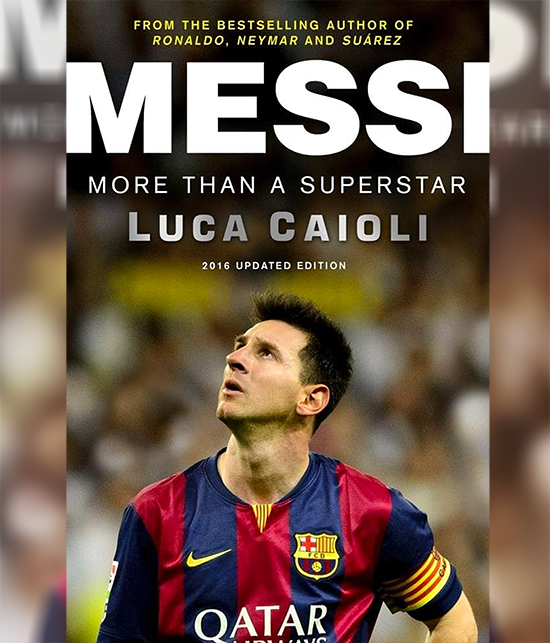
In the 2016 edition I’ve cited, there’s the “Hat-trick chapter” that includes an interview dated January 2012 where Messi expresses himself in his typically humble manner:
“Me? A killer? That seems a bit strong. I prefer to focus on mental strength, because you have to work hard to maintain that level. Every day it gets tougher, more competitive. I’m .not machine. When I hit a bump, I have to work on it. … I’d be happy to give up the Ballon d’Or for the next two years if we could be the best in the world. Winning it in 2014 would be amazing—that would mean Argentina are world champions. That would be the greatest thing ever.”
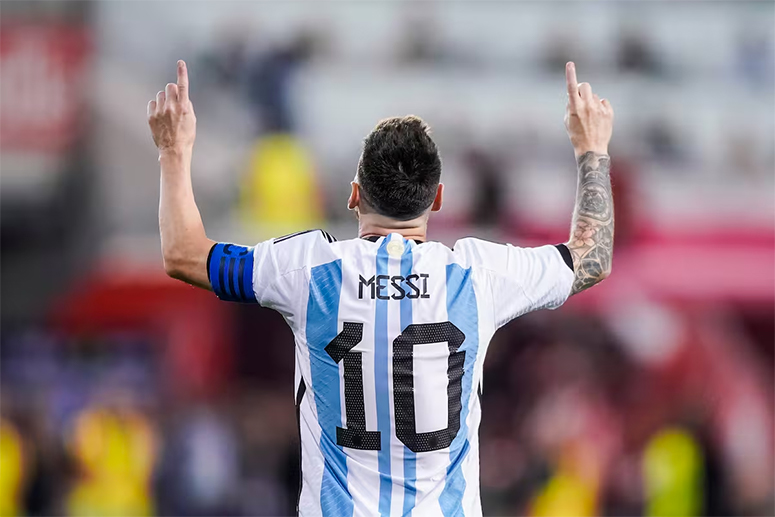
Well, they didn’t win the World Cup in 2014, nor in the following edition, despite Messi’s continued magical play. But when his home country was about to give up on team alchemy, the Albiceleste finally did it in 2022.

No team has won consecutive WC titles since Brazil in 1958 and 1962, and before that, only Italy in 1934 and 1938. It’s time Argentina did it, after over six decades. I won’t be heartbroken if they don’t. But it would be staggeringly celestial if it’s accomplished in the GOAT’s sixth and last appearance in the World Cup. The unbelievable 3-2 comeback against Egypt last week keeps that opportunity afloat.
Since the Finals won’t be until July 19, there’s still no telling if Argentina can hurdle the remaining challenges, against Switzerland in the quarters, England or Norway in the semis, and most probably in a dream match, its toughest Finals opponent, France with its terrifying speed and athleticism—unless Les Bleus are upset by the equally studs-studded Morocco.
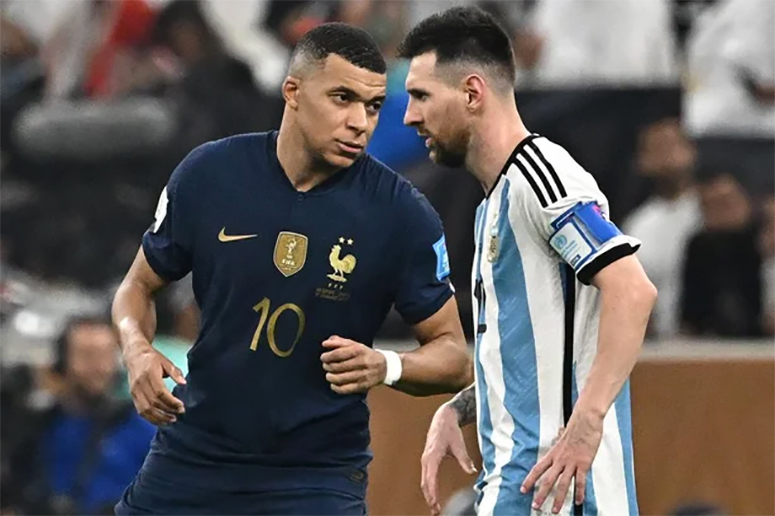
A France-Argentina Finals will also feature a personal battle between Messi and a potential successor as a GOAT claimant: the unstoppable Kylian Mbappe, who also continues to challenge Messi with total goals for the Ballon d’Or (Golden Ball)—as of this writing, tied at seven with Norway’s Erling Haaland, against Messi’s eight.
Much younger than Messi at 39 is 27-year-old Mbappe of the superior pace, dribbling and clinical finishing. The Viking Tower of Power Haaland, who has captivated everyone with his WC performances, is only 25. Both are forwards. While Messi may also be categorized as one, especially earlier in his career as a winger, he has become more of an attacking midfielder or central playmaker. He has full rights to wear the iconic squad Number 10, as had previous legends Pele and Maradona.
Mbappe and Haaland are strong runners who deliver powerful strikes. Jokers say that Messi basically stands in place at midfield, seemingly walking along sparingly. But when he moves with intent, defenders still can’t stop him when he receives the ball at dangerous positions. This coming week will show us if Lionel is fated to stamp his climactic boot for all time.
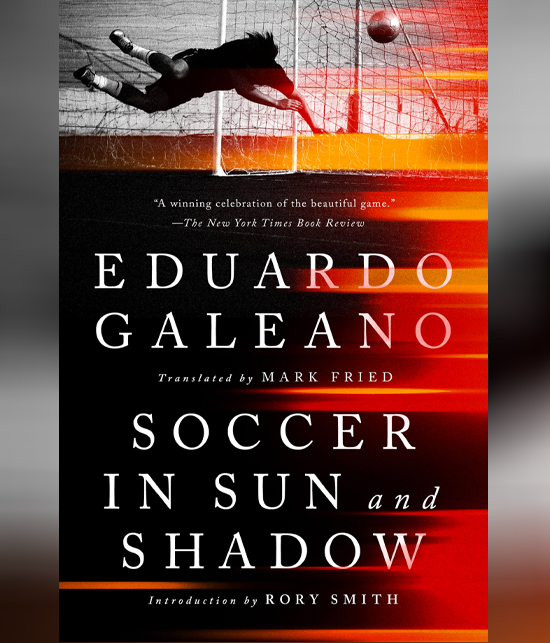
Another title I have somewhere is the Uruguayan author Eduardo Galeano’s Soccer in Sun and Shadow in English translation. It collects the multi-genre novelist’s poetic stories on soccer, which he calls a “pleasure that hurts.” While he explores the dark side of the sport, he also celebrates “the joy of the ball.” In the book of essays titled God Is Round, Mexican novelist Juan Villoro also likens football to a form of poetry.
With both the World Cup and Wimbledon upon us, I happily pick up memorable prose on soc-med feeds. My poet-friend George Szirtes, a notable translator born in Hungary but long based in England, wrote a beautiful tribute to honor Cabo Verde’s momentous stand against Argentina. An excerpt:
“Football, I’m afraid, is a vulgar sport, meaning ‘belonging to vulgus, the common people.’
“I myself can’t help being moved by this vulgar game played by artists, hoodlums, honest labourers, applied intelligences, crooks and, sometimes (very rarely) geniuses, or ordinary people who can produce a performance or moment of genius.
“I cannot honestly pretend to be a man-of-the-people type. I wouldn’t have been one in Hungary and was never likely to be one here, but it is the people, the people in their best, most heroic mood that moves me. Football has been called ‘the people’s game’ and so it is.
“Cabo Verde and Cabo Verde supporters moved me to a few tears. Cabo Verde stood for something in us, in me, and, I am claiming, in football itself.”
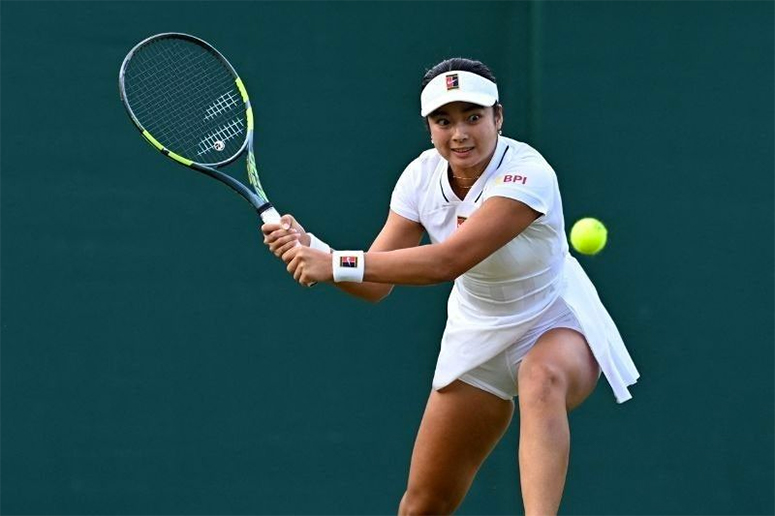
Now that our hero Alex Eala has drawn passionate adulation among Filipinos, and others who have abided by the non-vulgar sport of tennis, it may just be a matter of time when a bio of our “Princess” Alex is written, with her now iconic shot executing her “horizontal forehand” on the cover.
Gerry Cacanindin reminds us of the voluminous Infinite Jest by the late literary giant, novelist David Foster Wallace.
“… It’s no secret that writers have this weird, deep obsession with tennis. Nabokov, Updike, Camus, my Pinay literary hero Jessica Zafra, they all loved it.
“There’s something about the sport that feels like a gladiator match. No teammates to pass to, no clock to run out, just you trapped inside your own head while a yellow ball flies at you at crazy, deadly speeds.
“(It) makes you appreciate just how insanely tough Alex Eala is. It turns watching the match from just a Pinoy pride moment into a deep dive in human willpower.”
In January 2026, Carla Teng-Westergaard wrote Too Loud, "Or New to Tennis: Alex Eala and Filipino Fans" for the Business Mirror. She recently explicated on what had “sparked a polarising debate,” with some calling her “‘stupid,’ particularly over my argument about tennis’ colonial system.” Listen to her:
“I argued that Alex had made tennis personal for Filipinos. That, for perhaps the first time, many of us were willing to spend our hard-earned money to follow one of our own, not because tennis was suddenly popular, but because we finally had someone who made us feel we belonged in that space.
“… Filipino fans supporting Alex are not disruption. This is evolution happening in real time. After all, we’re not just watching the game; we’re helping it grow.
“… Six months later came Wimbledon.
“Alex made history on one of the sport’s grandest stages.
“… It was the story.
“… She is the real epitome of possibility.”
As with other younger writers, maybe Teng-Westergaard or Cacanindin would be equipped to eventually write the book on Alex.

WATCH: Discovering Vietnam in three days
June 9, 2026
WATCH: Is Gen Z too soft? (Generations Ep. 23)
September 30, 2026