

Juan Ponce Enrile: ‘The man who refused to fade away’
That line “The man who refused to fade away” wasn’t coined by me but by writer Franchesca Tuazon, a member of the Gen Z demographic, when she was writing the obit for former Senate President Juan Ponce Enrile. He passed away last Nov. 13 at the age of 101.
When I asked Franchesca why she thought of the line, which encapsulated the life of JPE, she said: “I think it’s mostly because I grew up seeing JPE always there, whether in the news, politics, or even memes in social media. So even if people expected him to retire or disappear from the public eye, he still stayed relevant and chose to be a part of national and political events. That’s why I used that line.”
His life was a saga, of cinematic proportions.
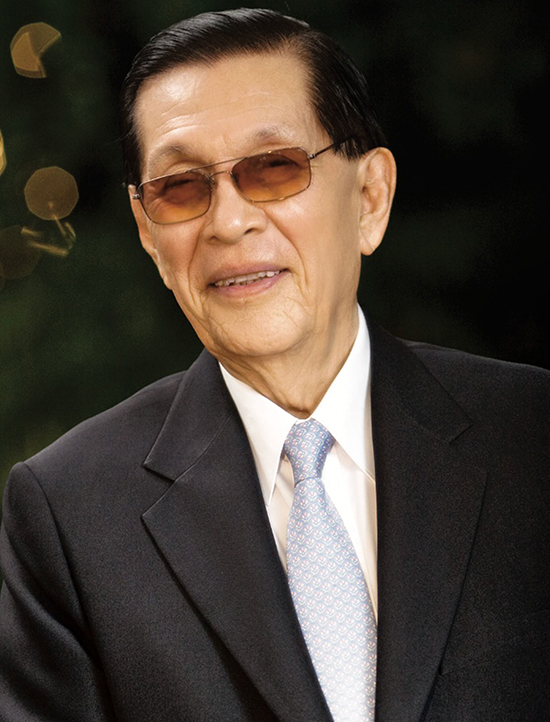
On Feb. 14, 1924, JPE was born out of wedlock to a fisherman’s daughter named Petra Furagganan and Alfonso Ponce Enrile, a young, powerful politician. He was teased a bastardo as a child.
In an interview with Kap Maceda Aguila for PeopleAsia magazine in 2010, JPE recounted he had a tough childhood.
CONTINUE READING BELOW

“Our house was a one-room affair. My mother, stepfather, half-sisters and half-brothers were all sleeping on the floor. Our house was on stilts, and it had a silong.” At the time, he had not yet met his father.
“During the cold monsoon season, we would dig a hole underneath the house, put firewood, and make a fire underneath. We could buy farmland and hire labor for a fee to plant and harvest rice but basically our occupation was fishing. I was quite adept at fishing in the river and open sea,” he continued.
“My mother did not want to tell me about my father, probably because she was embarrassed about my birth. But I told her, ‘Why are my classmates calling me bastardo?’ Finally, she told me, ‘Your father is a lawyer. He’s in Manila.’ She gave me the only photograph she had of my father. It was not really a photograph; it was one of those things that a candidate distributes to voters during the campaign,” Enrile recalled.
And then a benefactor came into his life. When Juanito was in fourth grade, a certain Mayor Suzario Peralta saw the potential in him and sponsored him from grades five to seven. “When I finished grade seven, I was already 16 years old,” Enrile revealed.
Peralta then helped him get a scholarship in a private school in Aparri called Cagayan Valley Institute.
Then one day, his father found him.
Alfonso Ponce Enrile reportedly got the help of a Gen. Courtney Whitney who was the judge advocate general of Gen. Douglas MacArthur to locate his son Juanito “because he learned that I was alive.”
“I was escorted into a room and here was a man in khaki shirt and khaki pants with white, grayish hair. He stood up, came forward and embraced me and he said, ‘I’m sorry, my son, that I abandoned you.’ I did not say much. After that I felt awkward that I was being embraced by this man who finally said: ‘I’ll take you home’.”
***
And so it came to pass that Juan Ponce Enrile earned a Master of Laws (with specialized training in international tax) from Harvard Law School in Boston. Prior to that, he finished Law at the University of the Philippines-Diliman—cum laude and the salutatorian of his batch. He passed the Bar in 1953, placing 11th, garnering a 91.72 rating and a perfect score in Commercial Law.
He also talked about EDSA during the interview.
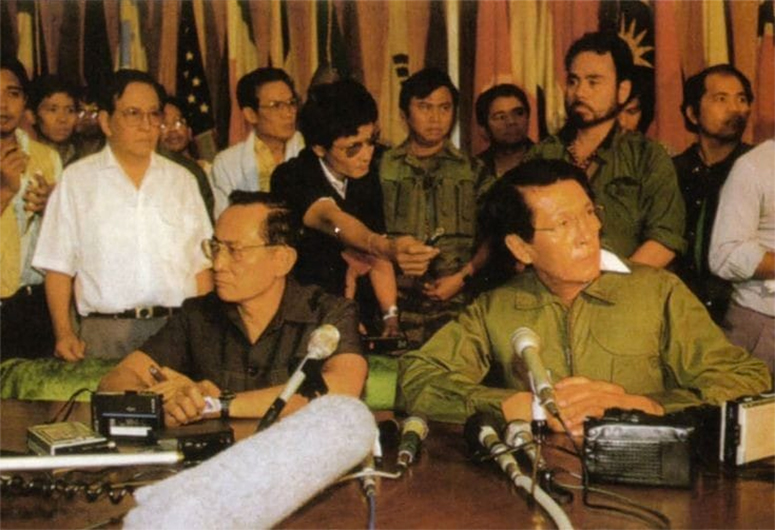
“Sa totoo lang (In truth), people did not know the reason why EDSA transpired,” he said at the time. “I was targeted to be assassinated and I knew that the country was going to be placed in a military junta because it turned out that (President Ferdinand) Marcos was sick. When I learned of this, we started the RAM (Reform the Armed Forces Movement). We wanted him to step down. But maybe it was fate. Marcos announced a snap election between him and Cory (Aquino). This changed the direction of the RAM because should Marcos lose, there would be no reason for our cause. If he won fairly, then there was no need for us to go against the will of the people. We never in our planning thought of using people to be with us, we planned the operation as a purely military operation. We had 10,000 people in our organization, I was the commander-in-chief of that organization.”
Then another fortunate break for him: People Power. He became an EDSA hero, though he had a deep falling-out with then President Corazon Aquino. He was allegedly involved in the “God Save the Queen” coup against her government in November 1986, and reportedly the 1989 coup attempt as well.
When he died, JPE was President Ferdinand Marcos Jr.’s chief legal adviser,. Indeed, he refused to fade away.
He once reflected about his life and longevity—he was only 86 at the time. He said ultimately, only God knows our fate.
“We think we control our lives—maybe we have some degree of control—but in the end, He is the one who decides how long or short you live, how you will fare in this world, what you will be. That’s it. You cannot tell,” he said.

WATCH: LGBTQIA+ people with unlikely professions
June 28, 2026