

Captivating Camiguin
Camiguin, an island province in the Bohol Sea in Mindanao, is the second smallest island province in the country after Batanes up north. I’ve heard so much about Camiguin and I was happy to have finally gotten to visit the place for the first time!
I joined the Philippine Travel Agents Association when the Department of Tourism showed them around the sights of this beautiful island.
All I knew about Camiguin prior to my trip was its lanzones. Sadly, it was not in season yet.
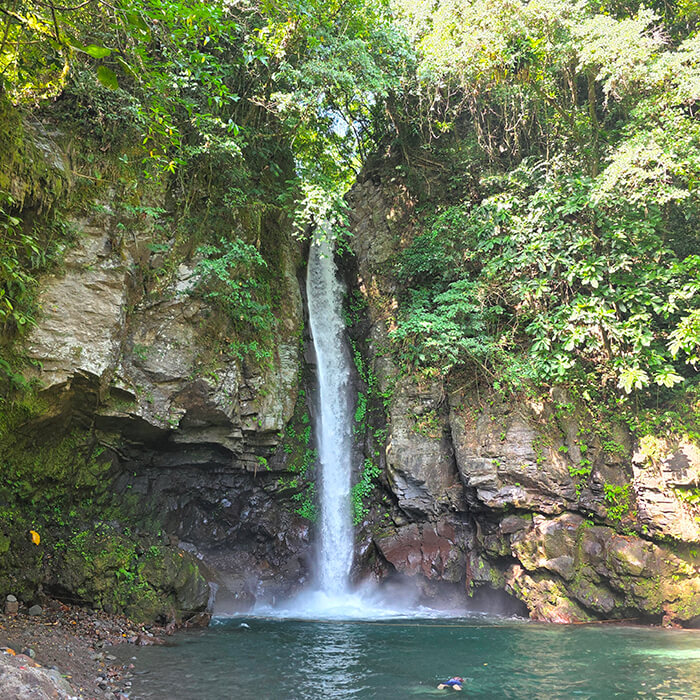
It is also called the “Island Born of Fire” as it has the highest concentration of volcanoes per square kilometer on this planet! It has seven active volcanoes on 238 square kilometers. People always search for Mount Tres Marias in Catarman, Camiguin. It is a prominent 731-meter high volcanic dome and part of the Mount Hibok-Hibok protected landscape. These three volcanic cones, associated with the Camiguin volcanic complex, are not far from another tourist spot—Tuasan Falls.
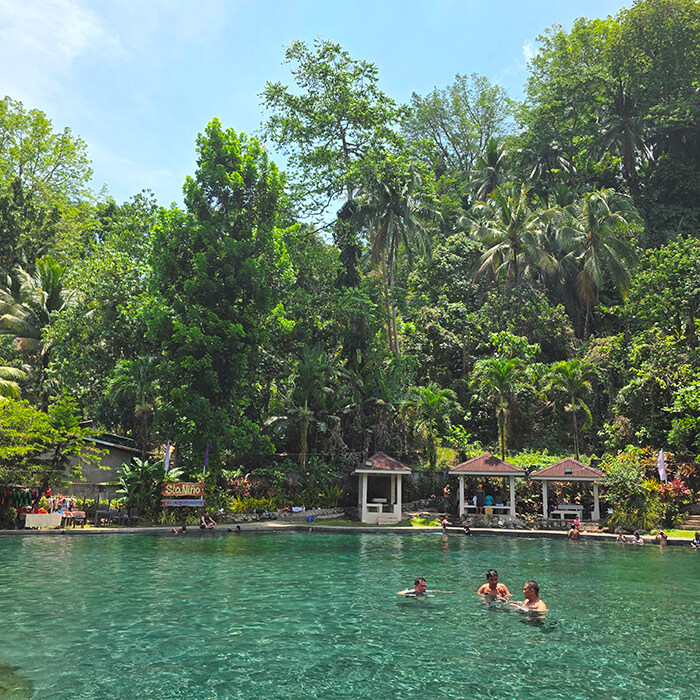
The picturesque 25-meter waterfall in Barangay Mainit, Catarman falls into crystal-clear, cold water surrounded by a lush jungle. It is a refreshing natural pool where people often take a dip to cool themselves. Another place to cool off is the nearby Sto. Niño Cold Spring, a popular natural, crystal-clear pool known for its cold 20°C–25°C water sourced from Mt. Mambajao.
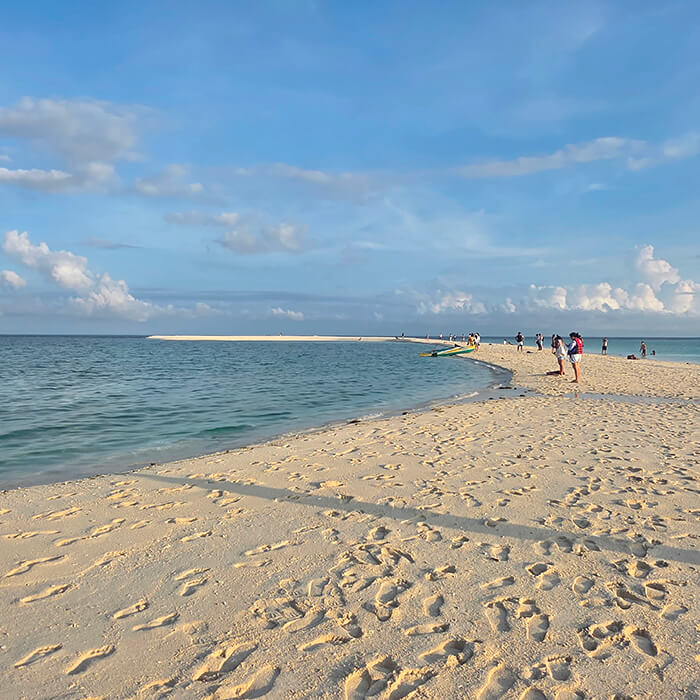
Probably the most visited site of Camiguin is the sandbar known as White Island. It is an uninhabited white sandbar known for its powdery sand, horseshoe shape, and 360-degree views of Mt. Hibok-Hibok. It is a premier spot for swimming, sunbathing, and snorkeling. There are no stores there but one can enjoy fresh sea urchin (P100 for four pieces served with vinegar). Do go early in the morning as there is no shade there and can get very hot under the sun!
CONTINUE READING BELOW

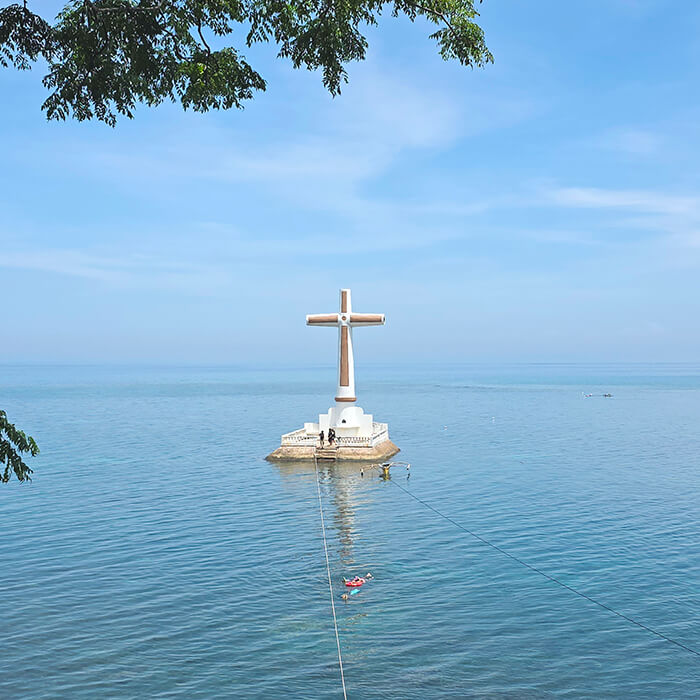
The Sunken Cemetery is also a tourist spot. It was above ground during the Spanish colonial era, but was submerged in water after the eruption of Mount Vulcan on May 1, 1871. A new concrete cross was built in 1982 by the provincial government of Camiguin to mark the cemetery.
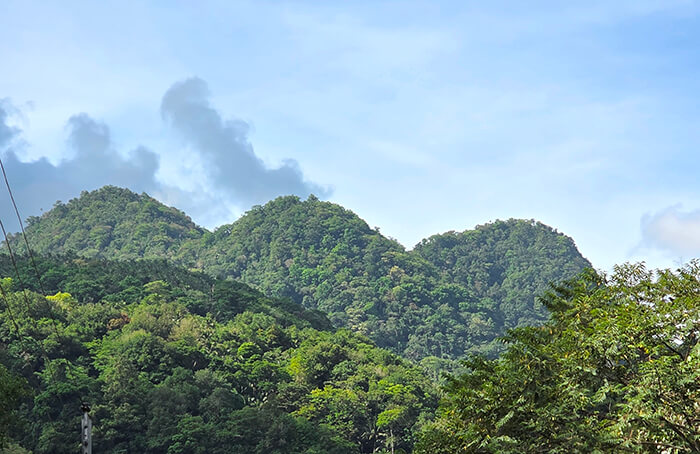
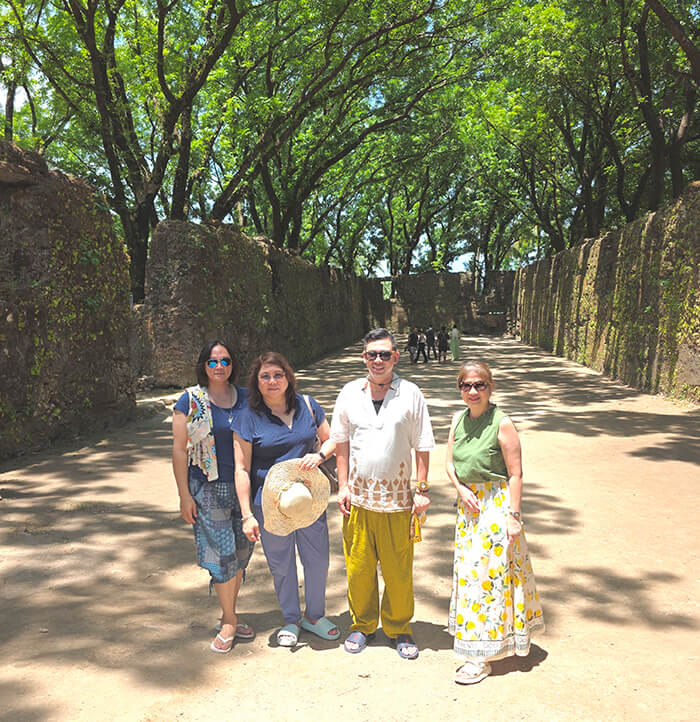
In 2018, the Sunken Cemetery was declared a National Cultural Treasure by the National Museum of the Philippines. Not far from there are the Old Church Ruins with coral stone walls also known as the Guiob Church ruins. These historic 16th-century Spanish-era remnants were also destroyed by the 1871 volcanic eruption.
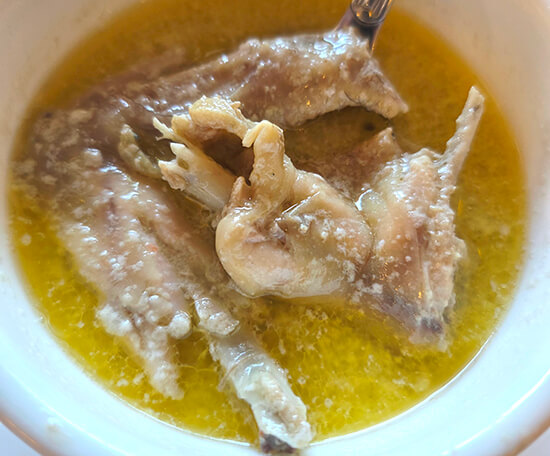
There’s lots of food to try here! Our first lunch was native chicken surol at Pedro’s. It’s a popular Camiguin dish made with native chicken cooked in coconut milk with lemongrass and ginger. Some recipes and restaurants even add oregano. It had interesting flavors I’ve never tried before.
At the Camiguin Market, we met this woman who had been selling these three things for the past 38 years—lumpiang Shanghai (spring rolls) using chicken instead of pork, sweet potato balls with cheese and egg, and fresh lumpia with singkamas (jicama) and ubod (heart of palm).
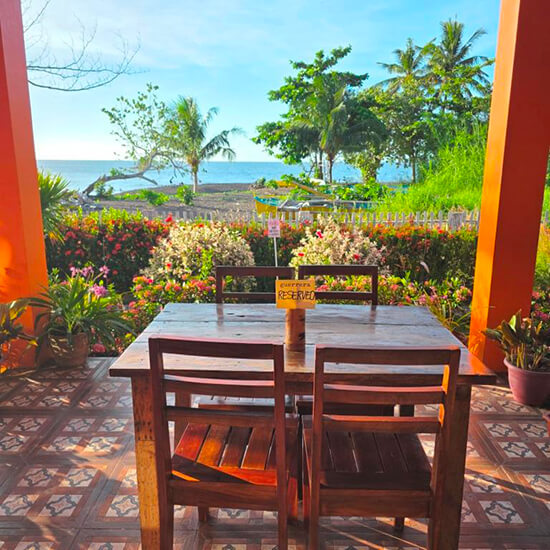
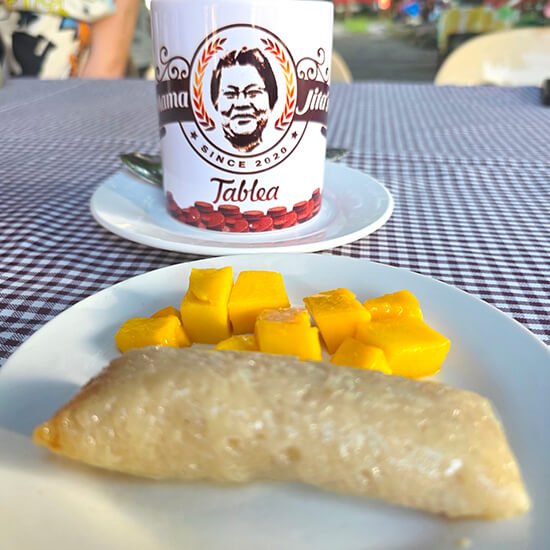
You can visit Mama Jitas for her famous hot chocolate made from the tablea (chocolate tablets) paired with excellent puto maya (suman with ginger) and mangoes. Drop by Guerrera (they also have three small rooms for rent) and enjoy its fine Asian street food heavily influenced by Vietnamese food. The place is picture-perfect, surrounded by rice paddies and lots of flowering plants! The former Kurma Kitchen, now named Malambo Kitchen at Malambo Lodge no longer serves purely vegan cuisine. They have added more non-vegan dishes to their menu but don’t miss their amazing coconut burger and ube turon with mango. Try the homemade ice cream of Moonflower Garden! They had lots of flavors but I had their ube, which was great, but I was imagining lanzones ice cream, only if the fruit was in season.
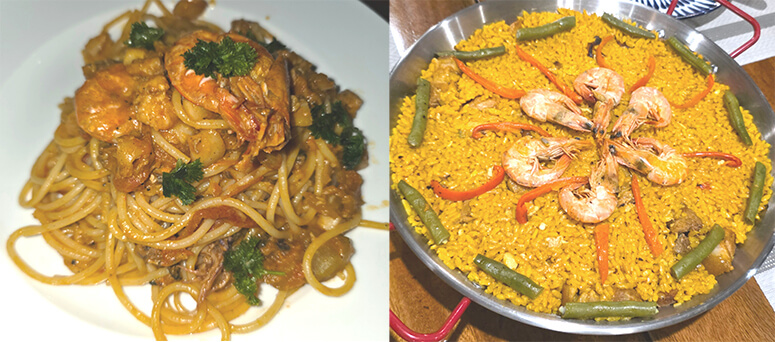
Utopia Cafe has great coffee and wonderful views. It is a popular café perched on a hilltop which also serves a great chicken sandwich! Need a break from local food? Delicious international cuisine is not far away. There is the Italian joint La Dolce Vita serving very decent pizzas and a superb seafood pasta with tomato sauce or choose Spanish food at Txaleta de Camiguin run by a Spanish chef. Get the gambas and paella here. One of the best snacks I had was fried kiping made from kamoteng kahoy (cassava) served with latik (caramelized coconut cream)! This is similar to the kiping of Lucban, Quezon seen during their Pahiyas festival, but this is not made of glutinous rice and is not leaf shaped like the one from Lucban. It is available all over the island, just like that other snack I couldn’t get enough of—crispy dried squid chicharon!
The island province is everything I expected it to be and more! I shall definitely go back to Camiguin and make sure it will be during the lanzones season!

WATCH: How to experience Bangkok and Kanchanaburi in one trip
October 21, 2026
WATCH: Is Philippine cinema still thriving? (Generations Ep. 19)
September 2, 2026