

If you ever find yourself down under
From Manila, it takes roughly eight hours in the air, several movies, and the mildly surreal realization that Australia is so enormous you can spend hours flying over the continent before finally descending into Sydney.
And increasingly, more Filipinos are making this journey.
Australia has become an increasingly familiar choice for Filipino students, families and young professionals—whether for university, work, migration or simply a change of scenery. The appeal is easy to understand. Depending on your residency status, there are practical advantages, but beyond those is something harder to quantify: space, proximity to nature, and a lifestyle that often feels less hurried.
There are plenty of reasons to find yourself down under. And if you do, make the geography work in your favor.
Having spent the last three years in Sydney, I have developed a few biases, several strong opinions, and a growing list of places I think are worth seeing.
Here are five ways to make the most of being this far south.
CONTINUE READING BELOW

1. Live a like a “Sydneysider.” Wellness is built into Sydney’s geography. After a long day of work or university, you can find yourself ankle-deep in ocean waters, walking through a park or driving home with the Pacific flickering between buildings. Nature never feels far away.
Coming from Manila, where escaping the city can mean packing a bag, getting into a car, and preparing yourself for hours of traffic, this feels almost indulgent. In Sydney, beaches are close enough to feel like part of ordinary life rather than long weekends.
Some of my favorite stretches of the city are carved into sandstone cliffs, with waves breaking hard against the rocks below. The famous Bondi to Coogee Coastal Walk threads through Bronte and Clovelly, shifting between open ocean views, small coves, and pockets of green.
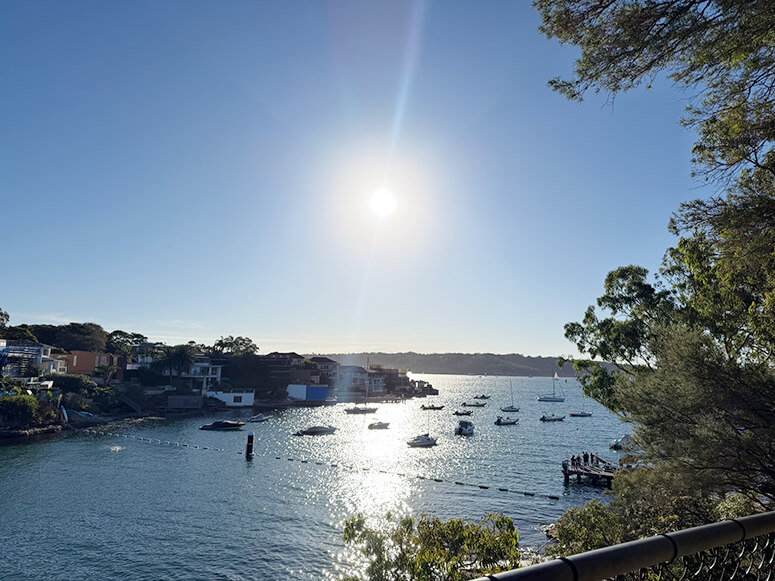
The Rose Bay to Watson’s Bay walk feels quieter. Along the route, beaches appear almost unexpectedly in the nooks of the harbor, where locals surf, fish, walk their dogs or simply sit by the water. Compared to the crowds of Bondi, it feels more intimate and unhurried: the kind of place where you can journal, meditate or simply sit long enough to hear yourself think.
Sydney is rarely stationary. There is a culture of movement here, walking, swimming, surfing, running, but also an appreciation for slowing down when you need to. Sometimes restoration is nothing more complicated than taking off your shoes, sitting beside the water, and letting the day loosen its grip.
2. Give Melbourne a chance. There is a running joke between the two cities, of course, with each convinced the other is somehow overrated. Sydney has the harbor and beaches. Melbourne has laneways, coffee, and apparently enough cultural confidence to compensate for weather that cycles through four seasons before lunch.
Still, Melbourne deserves its chance.
The trams alone make the city feel easy to move through. You can wander without much of a plan, hop on when your feet give up and find yourself in another neighborhood entirely.
Besides the CBD, Fitzroy, Collingwood, Carlton and Brunswick reward aimless wandering. Archival stores, second-hand shops, tiny boutiques, and cafes hide along the streets.

For shopping, SWOP, MANE, PPHH, and Somebuddy Loves You turn browsing into something closer to treasure hunting. In the CBD, buildings such as Curtin House and the Nicholas Building encourage the same curiosity vertically: climb another flight of stairs and see what is hiding above you.
And then, of course, there is the food.
Lune or Brunetti’s for something sweet. Florian or Sunhands for breakfast or brunch. Supernormal or Pochana for dinner.
As for the coffee, Melbourne takes it so seriously that ordering a bad one is impossible.
3. Semi-go off the grid. One of the best things you can do in Australia is to leave the city—just be careful not to wander too far into the wilderness, where, allegedly, everything wants to kill you.
Kidding! Mostly…
Head towards smaller coastal towns and life immediately seems to decelerate. You wake up slower. You hear birds before traffic. Your day begins to organize itself around weather and tides, not appointments.
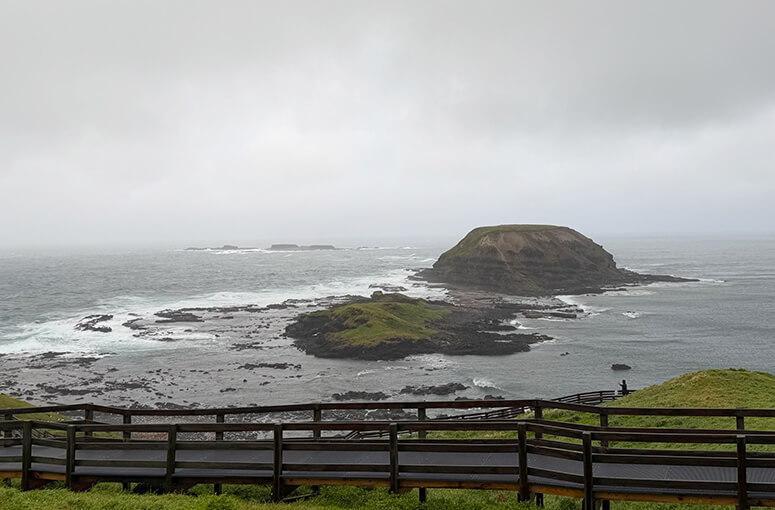
Philip Island, around two hours from Melbourne, offers this escape. You can also see the famous penguin parade here. You can watch penguins emerge from the water and return to their burrows.
Also on the island, the Nobbies are spectacular: wooden boardwalks suspended over a rugged coastline, dark cliffs falling into restless water and a horizon so exposed that the wind seems to pass straight through you.
I visited while it was raining.
For some, that might ruin the day. Instead, the rain transformed it. The sky became silver, mist softened the cliffs, and the ocean turned darker and more theatrical. It felt less like bad weather and more like the landscape revealing another version of itself.
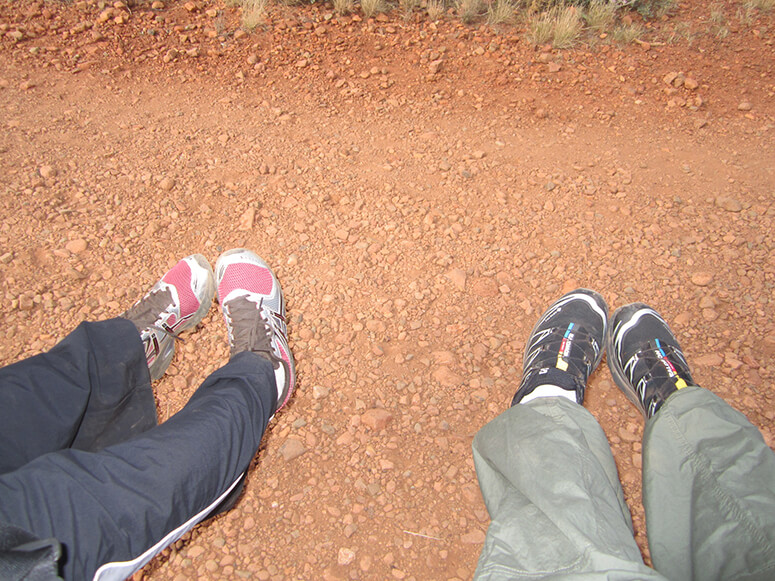
4. Visit the Red Centre. You have probably seen Uluru in photography: an immense red monolith rising improbably from a flat desert, glowing orange beneath an impossibly blue sky.
The images are beautiful. But they are also inadequate.
Seeing Uluru in person is startling not only because of its scale, but because of its presence. Everything around it seems to become quieter. The earth is intensely red. The air is dry and almost weightless. As the sun moves, Uluru seems to change with it — ochre becoming rust, rust becoming burnt orange, then deepening again as evening approaches.
But its beauty is only the surface.
Learning about the Anangu people, the Indigenous traditional Owners of the land, deepens the experience beyond what the landscape alone can offer. Their culture, knowledge and connection to Country have been carried across generations. Through talks on traditional tools, artwork and bush foods, the desert begins to feel less like an empty expanse and more like what it has always been: a living cultural landscape.
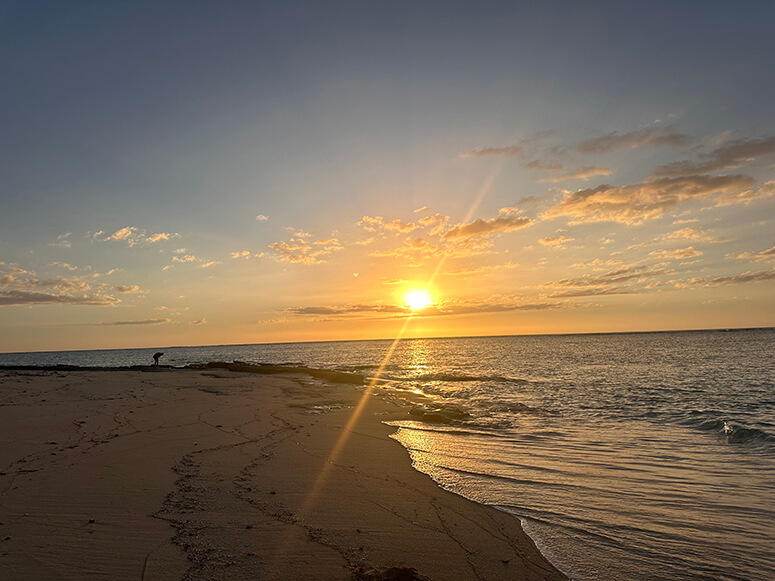
5. Go even further down. If you have already flown eight hours south, you may as well look at what else is nearby.
One unexpected advantage of living in Australia is watching places that once seemed impossibly distant suddenly move closer on the map. Growing up, I have always dreamed of visiting Fiji. It sounded wonderfully exotic and sufficiently far away to remain hypothetical.
Then I moved to Australia and realized Fiji was only a short flight away.
And when I finally went, it felt exactly as warm as I imagined. Not only in temperature, but in spirit. The people were kind, open and disarmingly easy to talk to, and there were plenty of budget-friendly but still comfortable and safe places to stay. It was also the kind of trip where you naturally ended up meeting people from completely different corners of the world, all temporarily gathered in the same place with nowhere more urgent to be.
The food was another highlight. Bright, generous, and full of flavor. And somehow, even there, I found a small piece of home. One evening, the dinner theme was Filipino food, which felt almost surreal: around 17 hours from Manila, there was something familiar on the table.
There is still so much of Australia I have yet to see, which is the best part of being here. Even after three years, the map still feels unfinished. Full of places to wander into, detours to take, and experiences still waiting somewhere down under.

WATCH: Save for retirement or enjoy life now? (Generations Ep. 21)
September 16, 2026
WATCH: How to experience Bangkok and Kanchanaburi in one trip
October 21, 2026
WATCH: Boomers: Hirap mag-adjust o ayaw lang? (Generations Ep. 27)
October 28, 2026
WATCH: Good parent ka ba? (Generations Ep. 28)
November 4, 2026