

Before the Michelin stars aligned
Just three days before the Philippines’ first Michelin Guide ceremony, the dining room of Gallery by Chele hummed with a kind of quiet electricity. It wasn’t nerves, exactly—more like the calm before a seismic shift. At the intimate dining room adjacent to the open kitchen, some of the country’s finest chefs gathered, soon to be recognized with their own Michelin stars. At the center of it all stood Chele Gonzalez, who, by week’s end, would be awarded his first stars for Gallery and Asador Alfonso, along with a Green Star for sustainability for Gallery.
But on this day, the spotlight was shared. Joining Gonzalez was Darren Teoh of Dewakan in Kuala Lumpur, whose restaurant holds two Michelin stars and a Green Star. Together, they staged a lunch that went beyond collaboration—it was a conversation between two nations, two culinary languages, and two philosophies rooted in purpose and place.
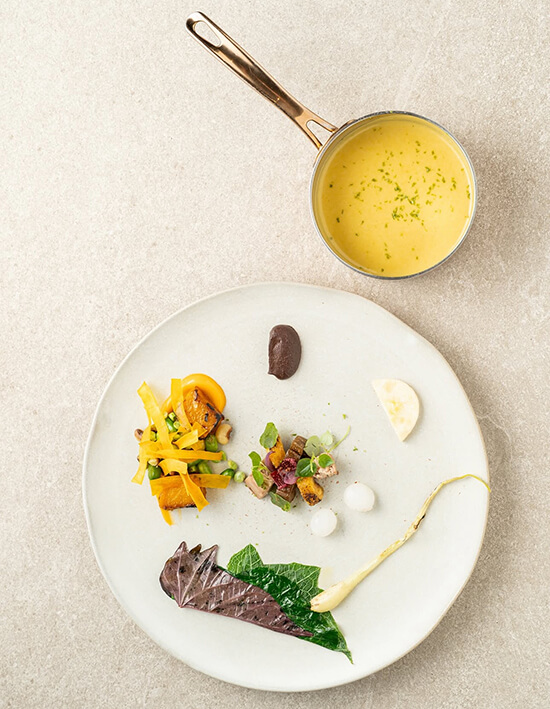
The event, Dewakan × Gallery by Chele, formed part of The Edible Thesis Series, Vol. 2: Explorers—a continuing project that pairs chefs known for taking unconventional routes to understand and expand their cuisines. For this installment, the theme was clear: to celebrate shared ingredients and regional kinship between Malaysia and the Philippines.
The menu read like an academic paper, complete with sections titled Abstract, Introduction, Methodology, Findings, and Conclusion. But while the structure hinted at scholarship, what unfolded on the table was all heart and instinct.
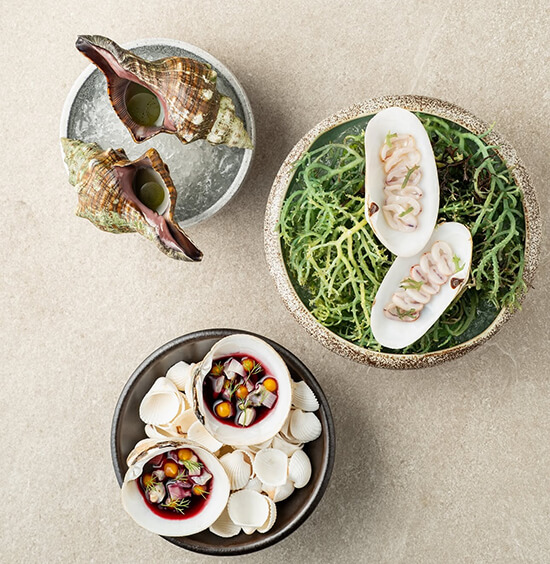
In the Abstract, diners were introduced to Gonzalez’s “Study into the World of Kabibe”—a marine trio of elephant clams, milk shell clams, and red sea snails, delicate and elemental, evoking both shorelines at once. From there, the Introduction traced Teoh’s “Coral Reef Equilibrium,” parrotfish dressed with selom (water dropwort) and oyster, a dish akin to kinilaw described as a meditation on the ocean’s balance. “The parrotfish,” we were told, “is a kind of meter for how healthy the corals are. They eat the algae that would otherwise choke the reefs.”
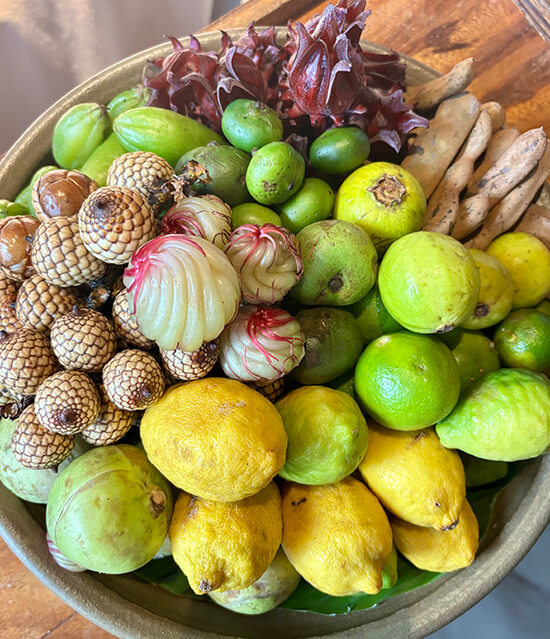
Gonzalez’s “Vegetable Thesis”—part of the Methodology—was a study in generosity and restraint. “More than 20 vegetables cooked in different ways,” he said, describing it as both homage and innovation. Inspired by the vegetable-centric cuisine of France’s Michel Bras, Gonzalez reimagined it with local produce: squash, cucumber, banana flower, even fermented cassava. “It’s to give value to the Southeast Asian region,” he said. “That we can do amazing things with local ingredients.”

CONTINUE READING BELOW

If Gonzalez’s cooking leaned toward the poetic, Teoh’s was anchored in philosophy. “Michelin will give you what it gives you,” he said, speaking as one already decorated. “What’s more important is to make sure that what you’re doing is meaningful, purposeful. And I think Chele already has that.”
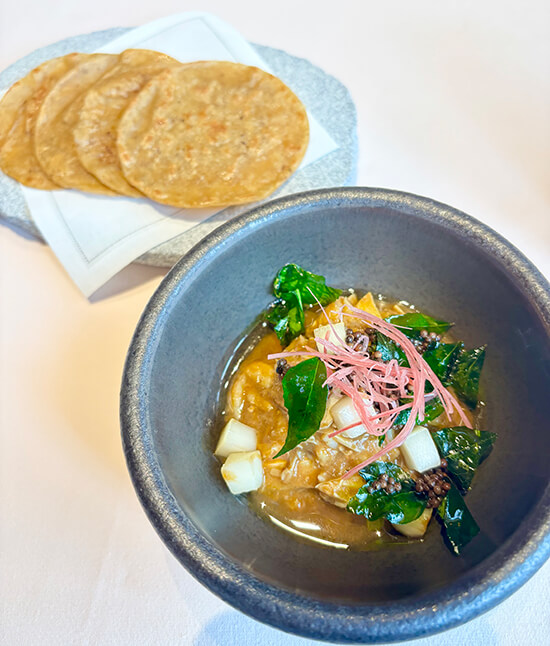
Teoh added, “Michelin is a reflection of the effort of the restaurant. It’s not about a chef, it’s about a restaurant.”
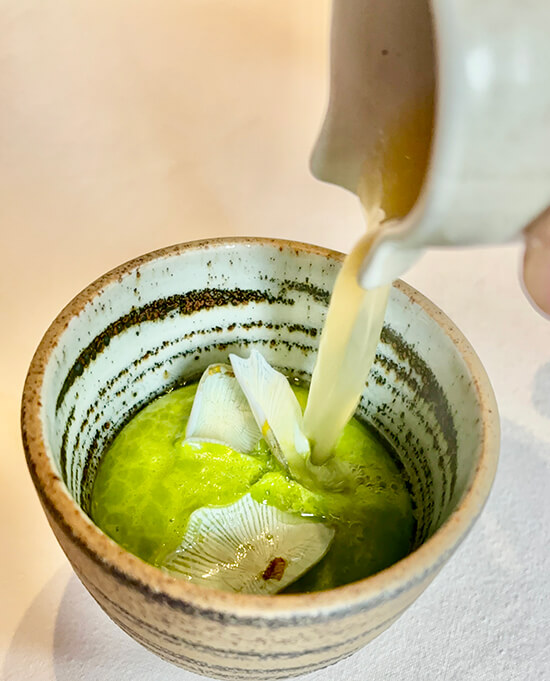
There was humility in Teoh’s words and also quiet pride. “There are very few of us pushing Southeast Asian cuisine in this direction,” he added. “And friendship—friendship is an important part of the motivation.”
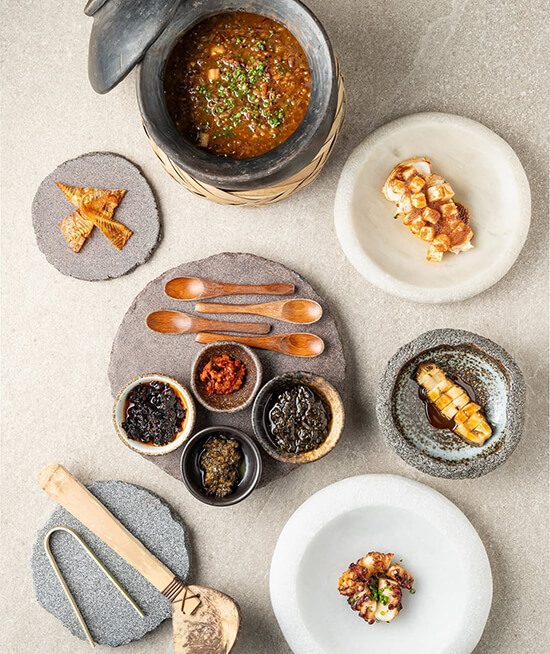
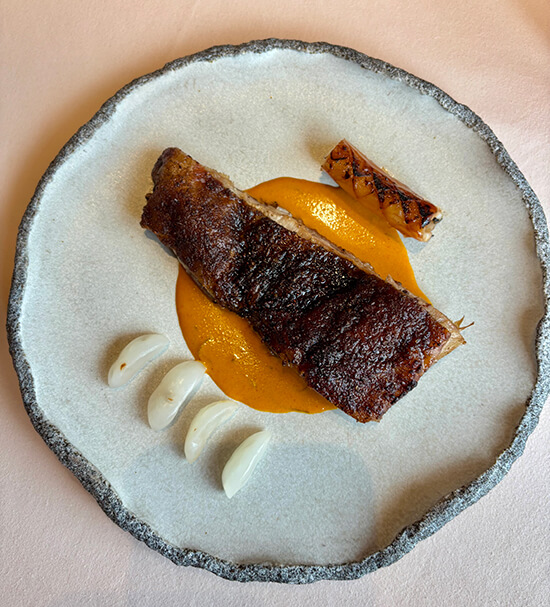
As the menu unfolded—Breadfruit Flatbread and Curry, Lechazo, Asim Kilig, and Etem/Pula Arroz Caldo—each course felt like an essay on heritage and innovation. The flavors were familiar yet foreign, tracing shared histories of spice, colonization, and adaptation.

At my table was Aaron Isip, who predicted that Gonzalez would get two stars for Gallery. Days later, that prophecy would almost come true — Gonzalez earned one each for Gallery (an honor the Spanish chef shared with Carlos Villaflor) and Asador Alfonso (one he shared with Rodrigo Osorio). Cantabria by Chele Gonzalez and Enye by Chele Gonzalez would also be included in the Michelin Guide. Isip himself would be recognized with a star for Kasa Palma, his restaurant in Makati.
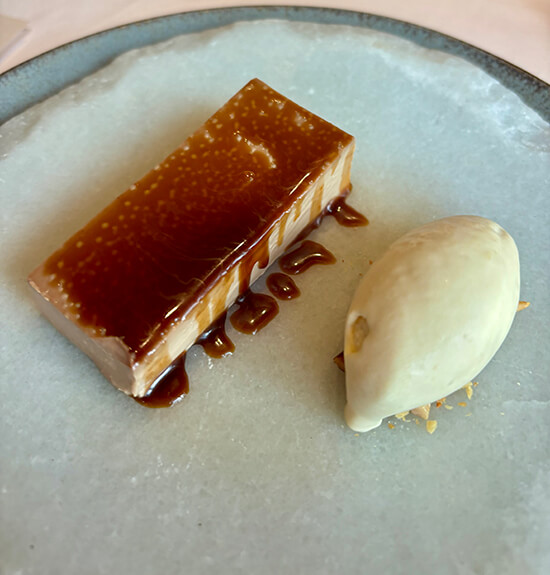
By the time the Conclusion arrived—a pairing of Cacao Continuation (flan, coconut, pili nuts) and a Matcha Chocolate Ceremony—the point had been made. This was cuisine without borders, an edible dialogue between neighbors who share not just seas, but sensibilities.
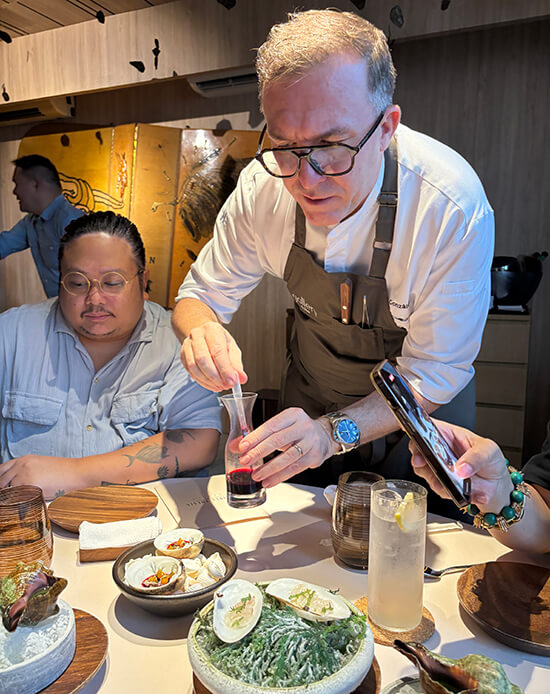
Reflecting on the impending Michelin ceremony, Gonzalez said simply: “We just did as we always have, since we started 13 years ago.”
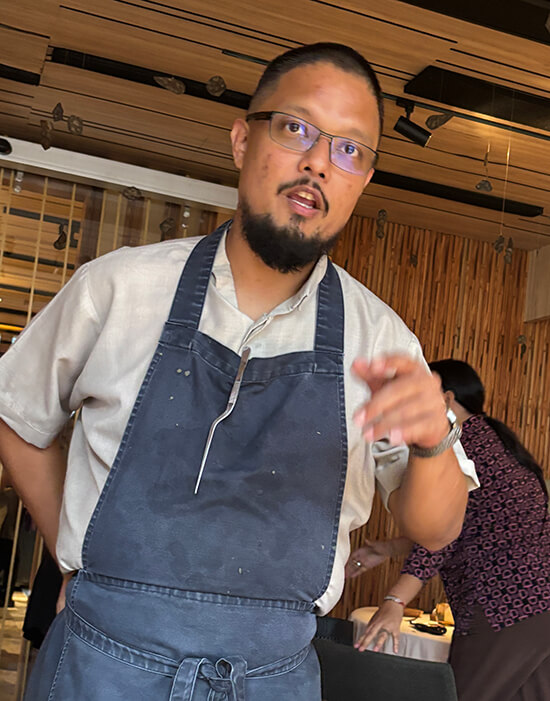
That constancy, that devotion to doing the work without fanfare, perhaps explains why this collaboration felt so effortless. For both chefs, the stars—literal and otherwise—were never the destination. They were merely bright points along a shared journey: a reminder that meaning, like good food, comes from the ground up.

WATCH: Discovering Vietnam in three days
June 9, 2026
WATCH: How to experience Bangkok and Kanchanaburi in one trip
October 21, 2026