

The hard and soft powers of Guizhou
(Part 1 of 2)
Exploring the capital of Guiyang in Guizhou, an inland province in southwestern China, our first day was a breathtaking experience of its most astounding marvels, both natural and man-made. You cannot but surrender to the thunderous magnificence of the Huangguoshu Waterfall, the largest in the country and one of the largest in East Asia, at 67 meters high and 83.3 meters wide, surrounded by lush forest greenery.
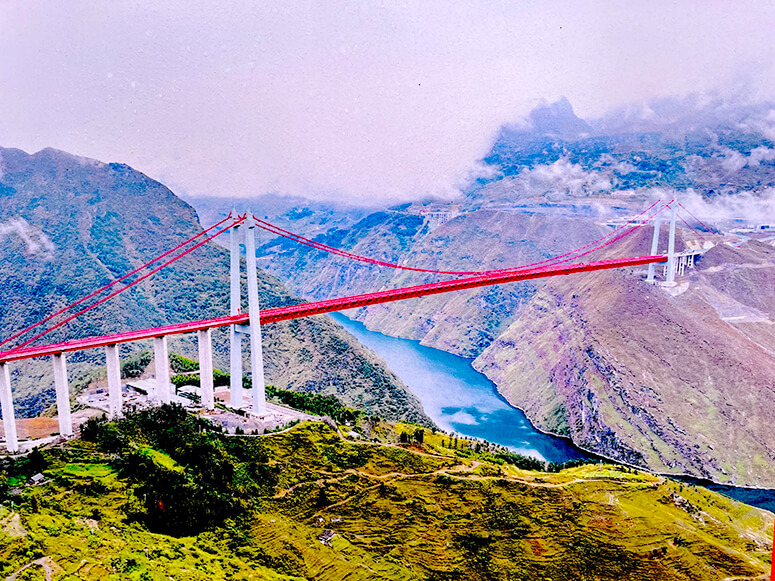
Nor can you be unmoved by the Balinghe Bridge, an engineering feat with the world’s first super-long main suspension span of 1,088 meters, out of a total length of 2,377 meters, built across the grandeur of a mountainous canyon. But even just traversing the highways and riding high-speed trains that pierce through the lovely karst landscapes leave you in awe of how this once-impoverished and isolated province has progressed rapidly over the past two decades into a booming technological hub and economic powerhouse—a metamorphosis regarded as a textbook example of modern development driven by massive infrastructure investments, the rise of the digital economy, and highly targeted social programs.
Known as China’s “Big Data Valley,” Guizhou operates dozens of mega data centers that include the likes of Apple, Huawei, and Tencent. Its GDP has skyrocketed to 2.36 trillion RMB, with one of the fastest growth rates in China. A history of high poverty rates due to its rugged terrain has been alleviated, achieving the highest reduction in poverty among all provinces in China through subsidy programs and tech employment that have improved the livelihoods of over nine million people.
CONTINUE READING BELOW

It’s the region’s soft power, however, that touches the heart and captures the imagination enough to remain in our memory after the few days spent visiting the different ethnic villages where the traditions of the past live on.
In Congjiang, the Dong have settled in the southeastern part of the province, surrounded by some of the most abundant river valleys, terraced rice fields, and greenest mountains that are so soothing to jaded urban eyes like ours. How could a people and culture not thrive in such a setting? After being driven to migrate by centuries of territorial expansion, the Dongs finally found their rightful place in the world, which, aside from Guizhou, includes Hunan and Guangxi.
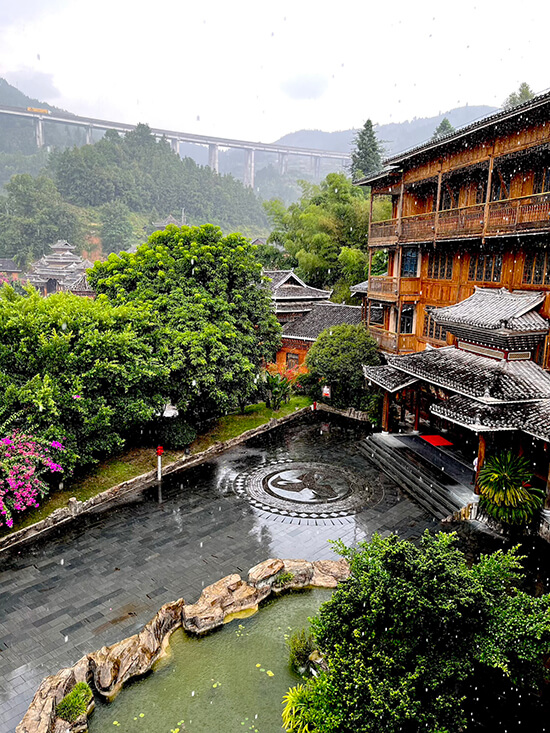
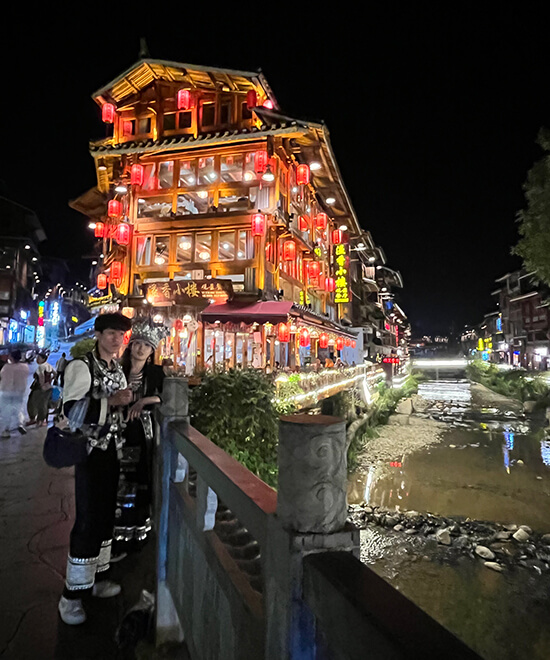
For our tour group, organized by former Sen. Nikki Coseteng with the Federation of Filipino-Chinese Associations of the Philippines Foundation Inc., and the Federation of Filipino-Chinese Chambers of Commerce and Industry Inc., we found our home away from home in the Zhaoxing Hotel, done in the Dong wooden architectural style of timber framing and folk craftsmanship characteristic of their Diaojiaolou traditional stilt houses, but with modern interiors and amenities.
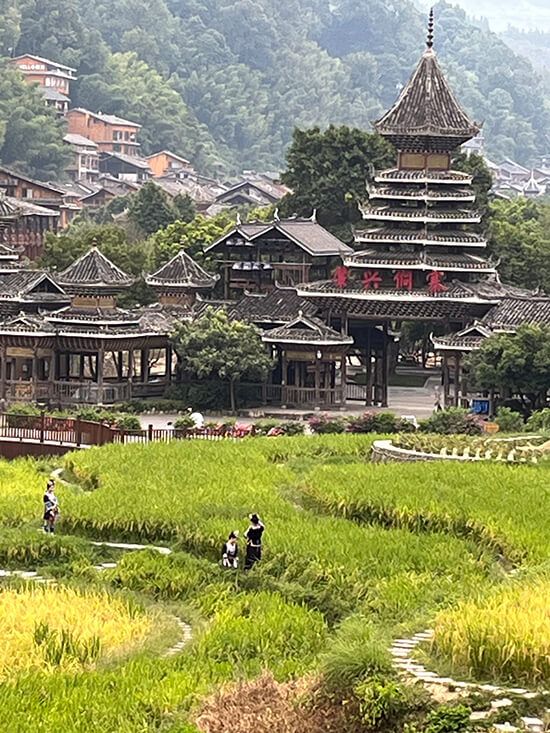
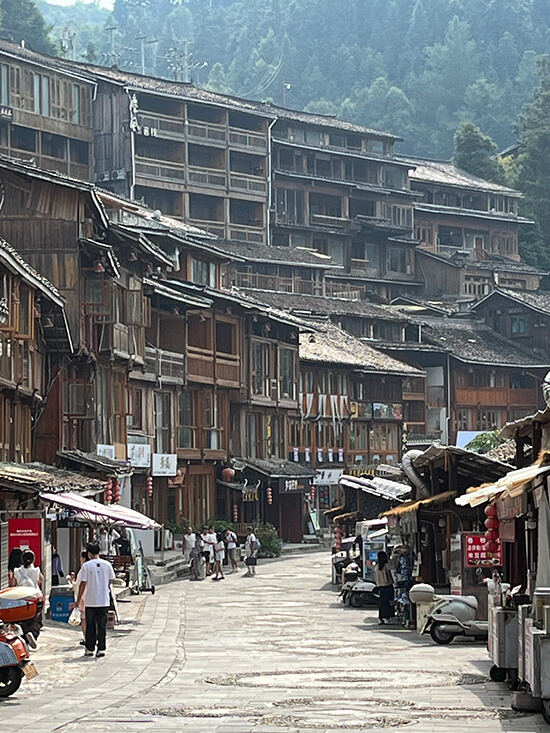
A short shuttle ride takes you to the Zhaoxing Dong Minority Village, where you are greeted by rice fields and charming, multi-story stilt houses made of nail-less fir wood featuring tiled, gabled roofs. Ornate covered bridges known as flower and wind-rain bridges are pure poetry, tracing the meandering river and designed for socializing and contemplation as one sits on their benches.
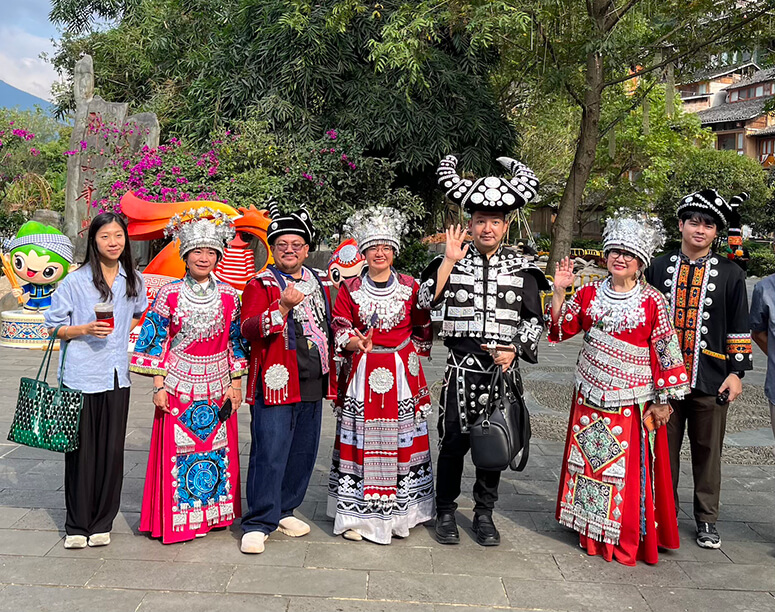
At the pagoda-tiered Drum Towers, structures built bayanihan-style, community gathering is still a priority in a world where digital technology has crept in. This grand structure is the first to be built, in fact, even before the houses of the village. When not used for meetings, it is a place of relaxation, just as we witnessed that afternoon when a game of native checkers was being played before gongs summoned us to the main plaza, where you could learn traditional dances wearing costumes available for rent, complete with hair and makeup. The more adventurous fashionistas in our group, including former senator Coseteng, donned some of the most elaborate iterations of Dong sartorial elegance and got their feet tapping and arms swaying to infectious ethnic beats.
Lustrous home-woven and dyed Dong cloth has origins in the Ming Dynasty, when poems praised it for its delicate, radiant blue color with rosy accents, crafted into short jackets and the quintessential accordion-pleated skirts, an arduous process of six months from weaving to finishing. A bright red version is made by boiling the fabric with sweet potato chips. For men, the cloth is made into trousers and broad headbands. Finer cloths and silks are used for embellishing and for sarongs. Silver is the favored ornament for jewelry and hats, which reach glorious proportions as crown headdresses, and is even sewn into garments, since it is believed that the more silver worn, the greater the sign of nobility as well as beauty, prompting parents to buy as much silver as they can afford for their daughters.
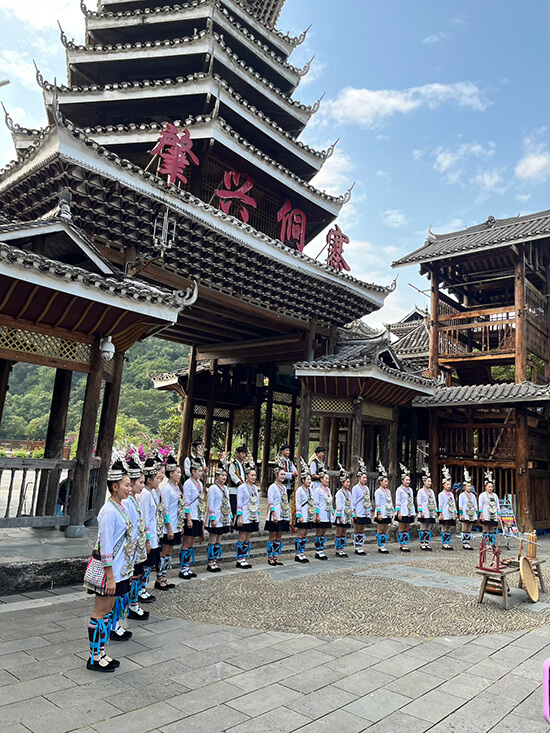
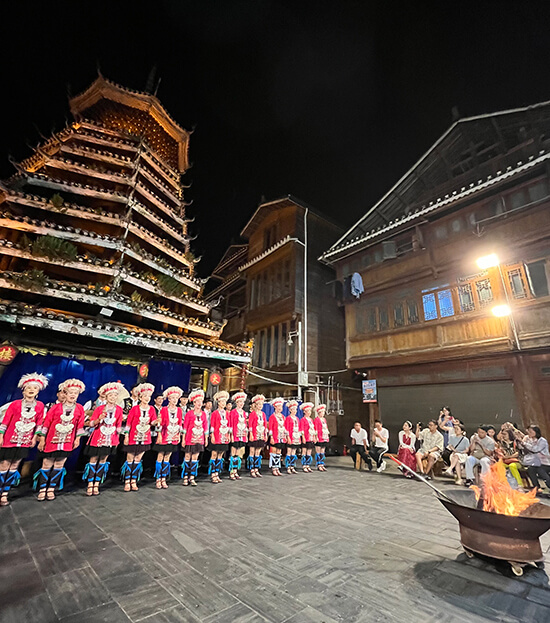
These trappings are on full display at the performances in the plazas: an afternoon one featuring the Grand Song of the Dong, a UNESCO-recognized women’s chorus singing a cappella, is simply mesmerizing in its polyphonic style of rich, layered harmonies; and an evening one of dances around a ritual bonfire engages with its diversity. It is said that every Dong member can sing and that courtship between girls and boys is done through song. Dance is not just entertainment but a living, breathing preservation of an ancient culture where music and movement are used to pass down history, values, and daily wisdom. They have their own tinikling, in which the audience can participate, but the most moving is the Duoye, a massive circle dance where locals and visitors hold hands, singing and shuffling together in a display of community spirit and absolute inclusivity.
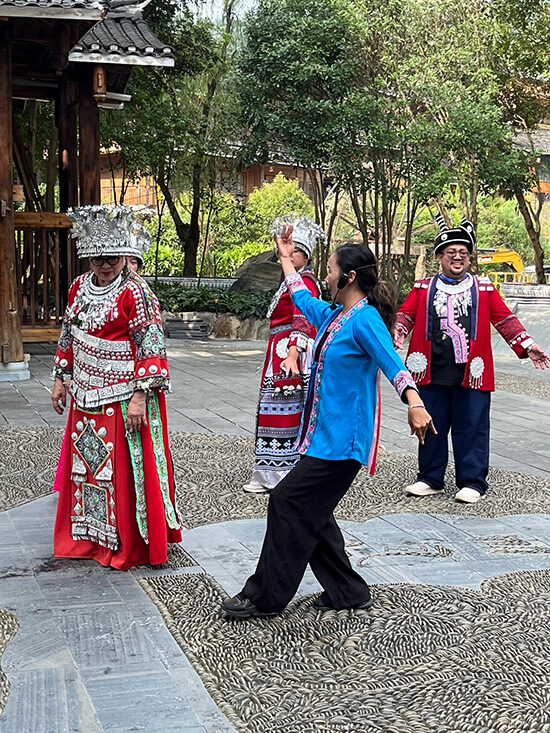
Nikki Coseteng learning a Dong dance in traditional attire. Photo from @rickytchitov/Instagram
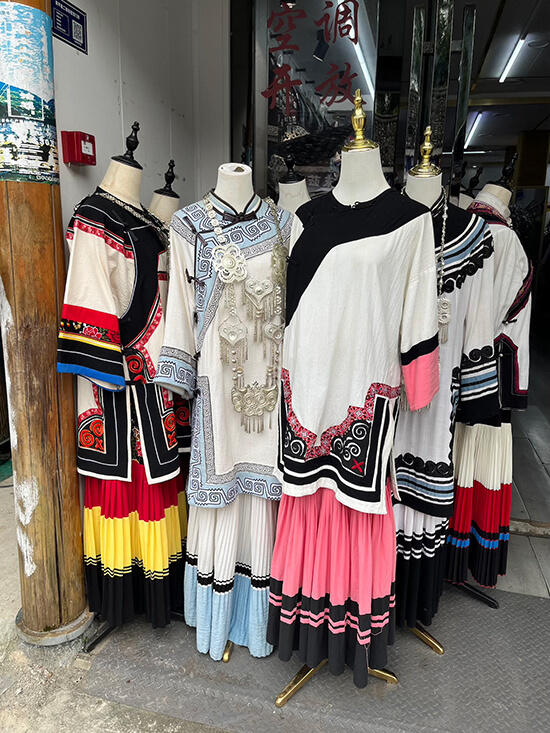
A boutique selling Dong embroidered tops, pleated skirts and matching silver jewelry. Photo from @rickytchitov/Instagram
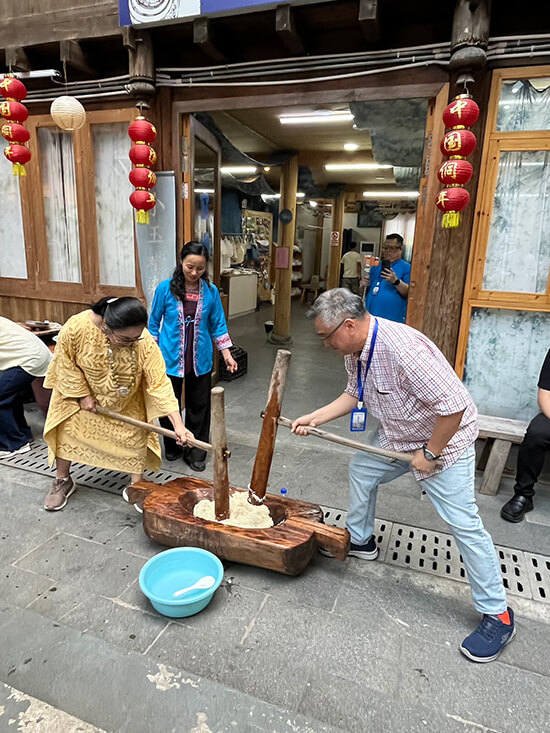
Nikki Coseteng and Rico Hizon try their hand at Dong rice cake making. Photo from @rickytchitov/Instagram
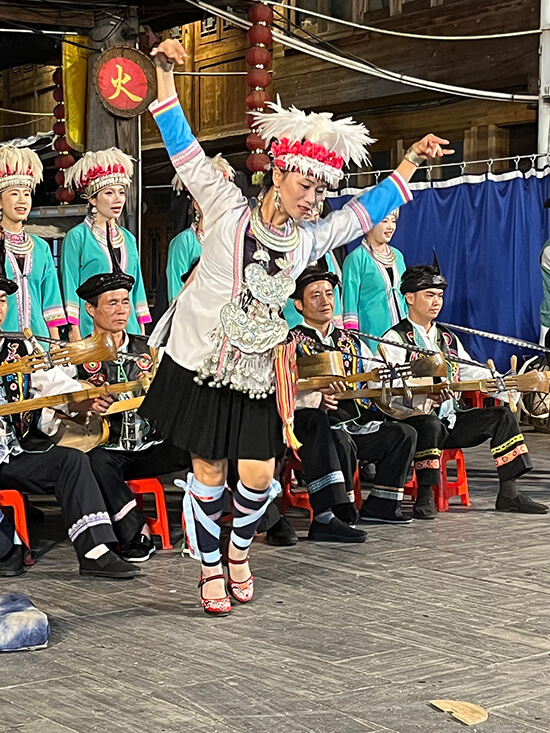
Dong dance troupe and musicians. Photo from @rickytchitov/Instagram
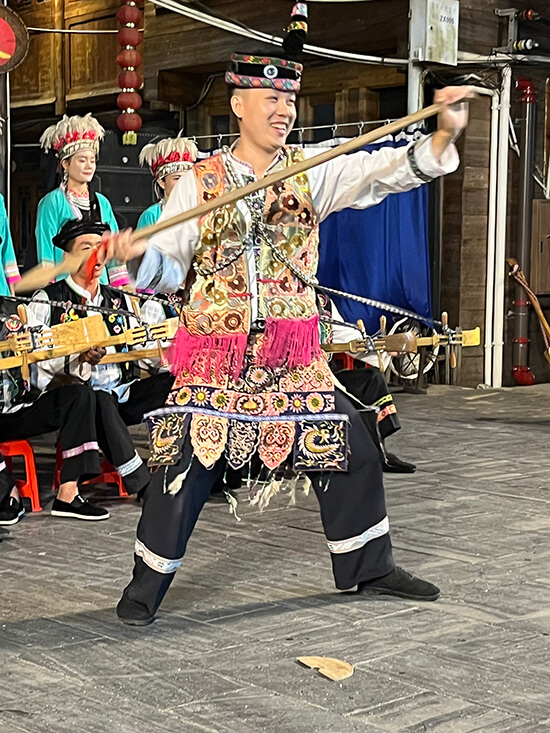
Dong dancer in embroidered finery. Photo from @rickytchitov/Instagram
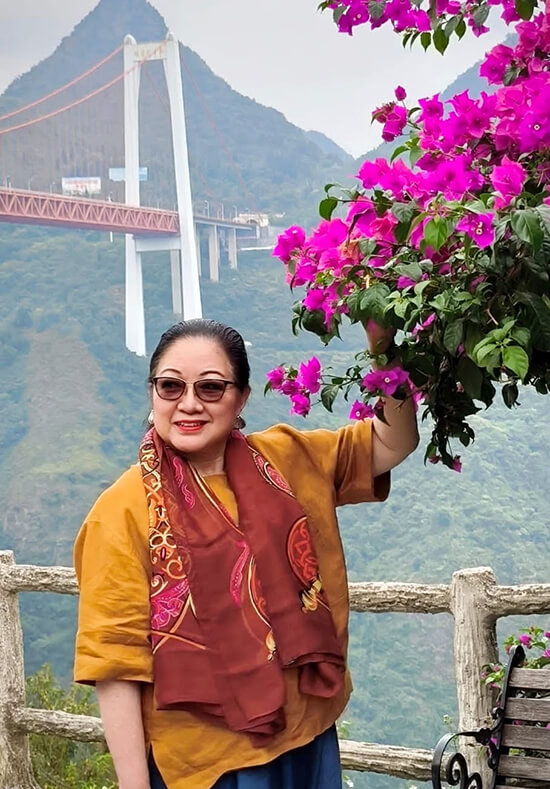
Nikki Coseteng in front of the Balinghe Bridge in Anshun, Guizhou. Photo from @rickytchitov/Instagram
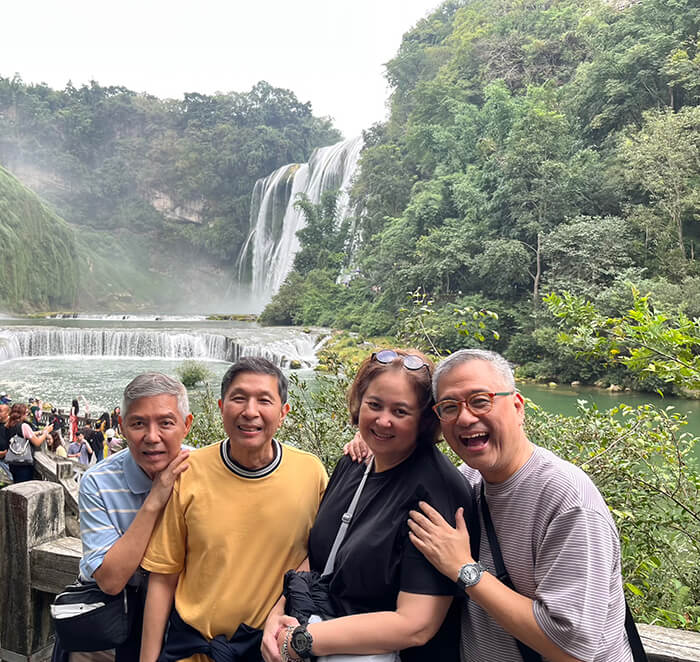
The authors Chito Vijandre and Ricky Toledo with Melannie and Rico Hizon at Huangguoshu Waterfall. Photo from @rickytchitov/Instagram
Nikki Coseteng learning a Dong dance in traditional attire. Photo from @rickytchitov/Instagram
A boutique selling Dong embroidered tops, pleated skirts and matching silver jewelry. Photo from @rickytchitov/Instagram
Nikki Coseteng and Rico Hizon try their hand at Dong rice cake making. Photo from @rickytchitov/Instagram
Dong dance troupe and musicians. Photo from @rickytchitov/Instagram
Dong dancer in embroidered finery. Photo from @rickytchitov/Instagram
Nikki Coseteng in front of the Balinghe Bridge in Anshun, Guizhou. Photo from @rickytchitov/Instagram
The authors Chito Vijandre and Ricky Toledo with Melannie and Rico Hizon at Huangguoshu Waterfall. Photo from @rickytchitov/Instagram
CLOSE
(To be continued)

WATCH: Is OPM still as good as it used to be? (Generations Ep. 20)
September 9, 2026