

Kazakhstan: Your hassle-free ticket to a winter wonderland
For many Filipinos, the idea of frolicking in the snow during the Yuletide season is the stuff of pipe dreams.
You long for the gentle caress of a snowflake as it melts on your flushed cheeks. You dream of twirling under falling snow like Winona Ryder in Edward Scissorhands.
Whatever wintry activity you wish to pursue before spring melts the snow, I highly recommend the last country I had the privilege of visiting— one that ticks all the right boxes for the budget-conscious Pinoy traveler: Kazakhstan.
Visa-free entry? Check.
In Kazakhstan, it’s not the thick puffer jackets that protect you from the blistering cold. It’s the warmth of its people.
Scenic landscapes straight out of a nature magazine? Affirmative.
Affordable food and accommodation? Certainly.
CONTINUE READING BELOW

Friendly and approachable people? Three ayes.
Kazakhstan offers all that and more.
At first glance, you might think Kazakhstan lacks the “prestige tourism” tag that more well-known destinations like Japan or South Korea possess. However, its relative obscurity works to its advantage: the fewer the tourists, the more pristine and well-kept its attractions remain. Locals are not swamped by rowdy visitors; thus, they are neither rude nor dismissive.
Kazakhstan is the largest landlocked country in the world. This means it has no ocean coastline of its own (the Caspian Sea, despite its name, is technically a saltwater lake). A beach to Kazakhs is as foreign a concept as snow is to us Filipinos.
It is one of the five “Stan” countries in Central Asia, alongside Uzbekistan, Tajikistan, Turkmenistan and Kyrgyzstan.
Amazing Almaty
Almaty is Kazakhstan’s largest city and served as the nation’s capital before Astana (formerly Nur-Sultan) replaced it.
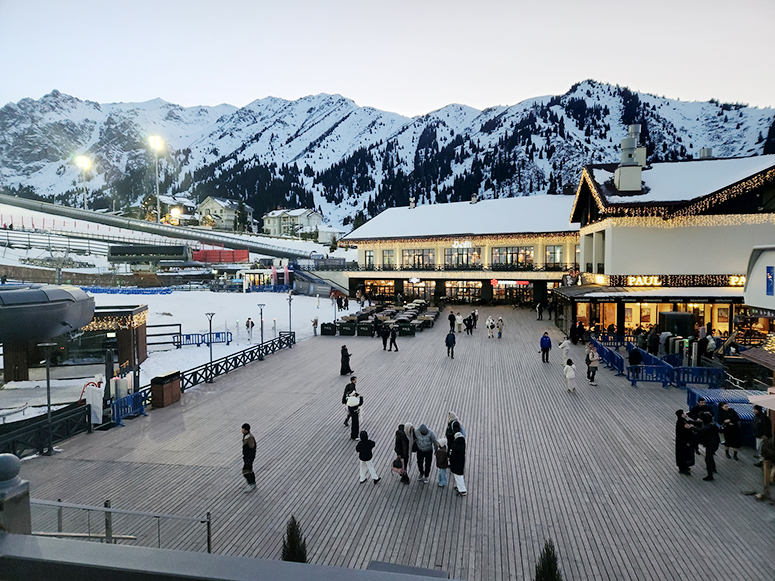
The biting cold was the first thing that hit me when my tour guide and I stepped out of Almaty International Airport. It was mid-November, and temperatures had already dropped below zero. In winter, the sun sets early—around 4 p.m.—so we had to leave the hotel early the next day to maximize daylight.
Joining three fellow Filipino tourists, our first destination was a one-hour trip to Oi-Qaragai Mountain Resort, part of Ile-Alatau National Park. “Ile-Alatau” translates to “motley mountains” in Kazakh, a fitting name for a range that showcases forests, canyons, lakes, rock formations, and snow in one sweeping panorama.
The resort sits between 1,550 and 1,820 meters above sea level. A 15-minute chairlift ride offers a bird’s-eye view of trees and mountains blanketed in pillowy white. At the peak, you are rewarded with stunning views of the steppes and foothills.
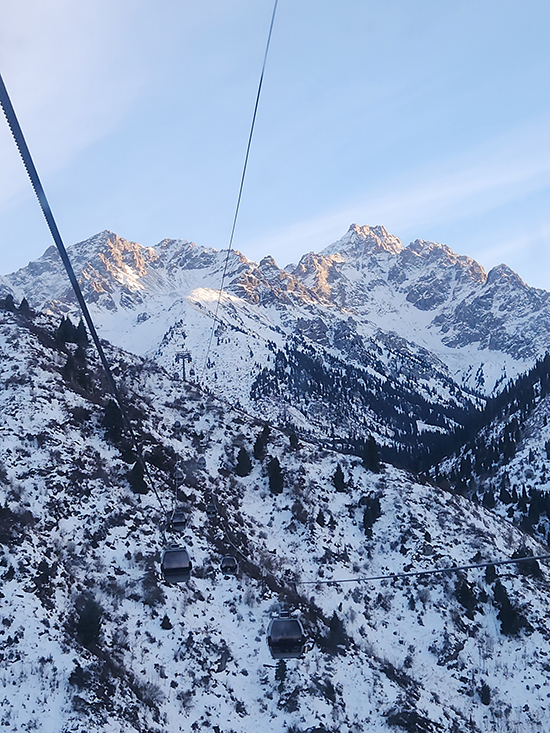
Next, we headed to Shymbulak, about 48 kilometers away. With its bustling atmosphere, diverse slopes and vibrant winter energy, Shymbulak can hold its own against Swiss resorts—at a fraction of the price. A round-trip gondola ticket from Medeu Station to Combi 1 and 2 costs only 5,000 Kazakh tenge (around 570 pesos).
As we descended in our gondola, I was mesmerized by sun-kissed snowcaps glowing like golden tiaras atop majestic peaks.
The higher stations were closed for maintenance, so we stayed at the base—just as well, since bouts of epistaxis (nosebleeds) convinced me I had reached my elevation limit for the day.
From tubing and snowshoeing to skiing, hiking, ice skating and snowboarding, there was no shortage of activities. I contented myself with taking photos—and even got budol-ed by enterprising photographers who, to be fair, took excellent shots with their professional cameras.
Food is where Kazakhstan’s affordability truly shines. In Saudi Arabia, Paul’s traditional onion soup in a bread bowl costs 39 SAR (around P610). At Shymbulak, the same dish cost me 2,100 tenge (about P237).
That evening, we dined at Navat, one of Almaty’s busiest restaurants.
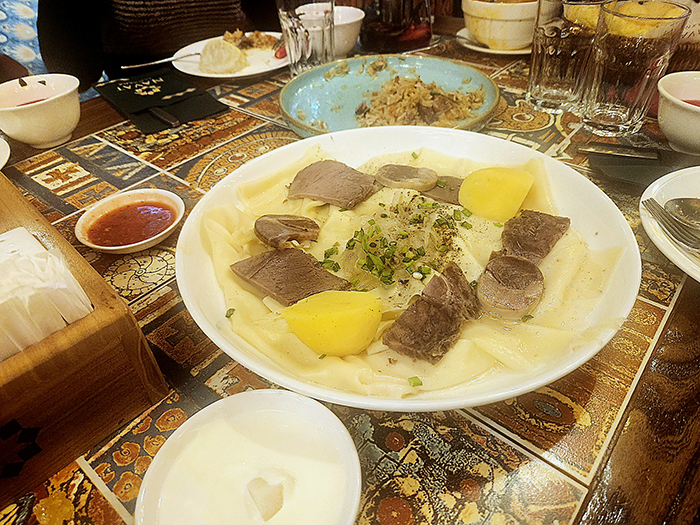
No dish represents Kazakh culture better than beshbarmak, which literally means “five fingers.” Traditionally eaten by hand, it reflects Kazakhstan’s nomadic roots. The dish consists of dough noodles cooked in meat broth and topped with sliced beef, lamb, or horse meat (a popular local choice), along with qazi (horse-meat sausage), potatoes, onions and spices.
Natural Wonders
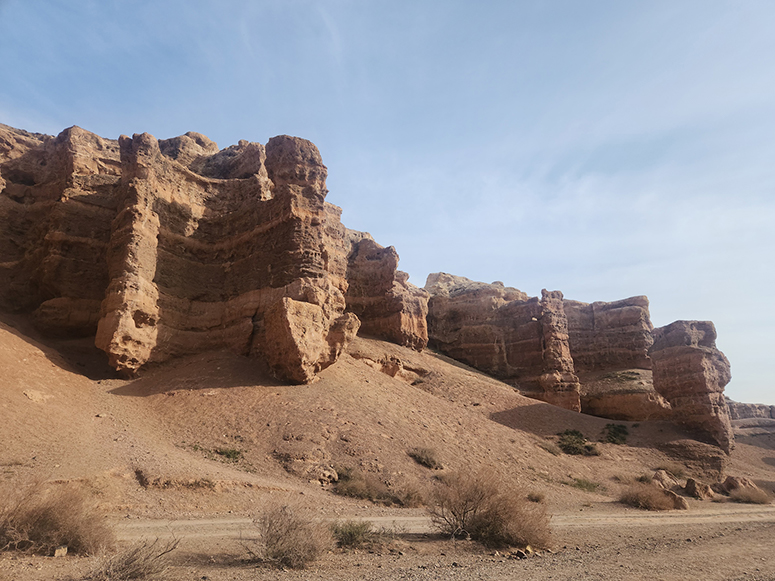
On day two, we visited Charyn Canyon National Park near the Chinese border. Dubbed “Central Asia’s Grand Canyon,” its dramatic red sandstone formations—carved by wind and water—are breathtaking. The hike down to the Charyn River was exhausting but worth every step.
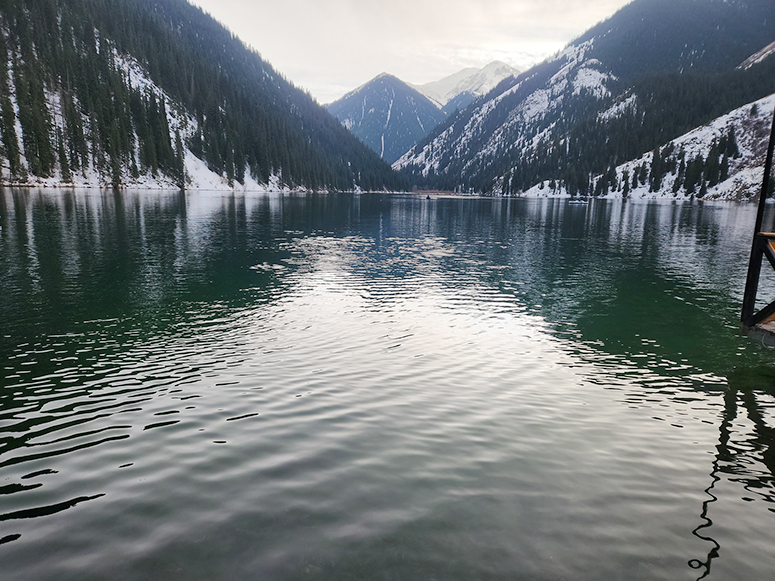
Later, we traveled to Kolsay Lakes National Park, home to three alpine lakes: Nizhneye (lowest and most accessible), Mynzholki (middle), and Verkhneye (highest and least visited).
Before reaching the lake, wranglers convinced us to try horseback riding. As someone with zero equestrian skills (I am no Mikee Cojuangco), I expected a gentle trot. Instead, we rode down a steep, slippery trail. I later sprained my left knee while dismounting—but we made it safely.
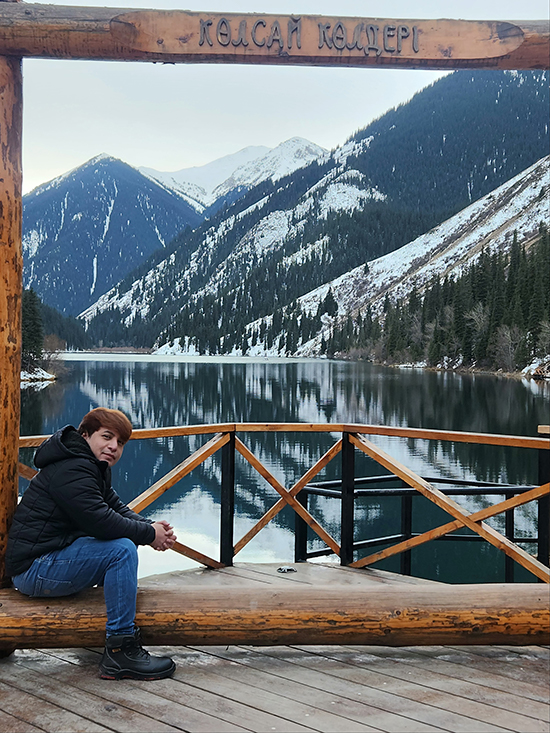
When I finally saw the lake, all stress evaporated.
Ethereal. Calming. Breathtaking.
The unfrozen waters shimmered in shades of teal and emerald, every photograph resembling a postcard.
Astounding Astana
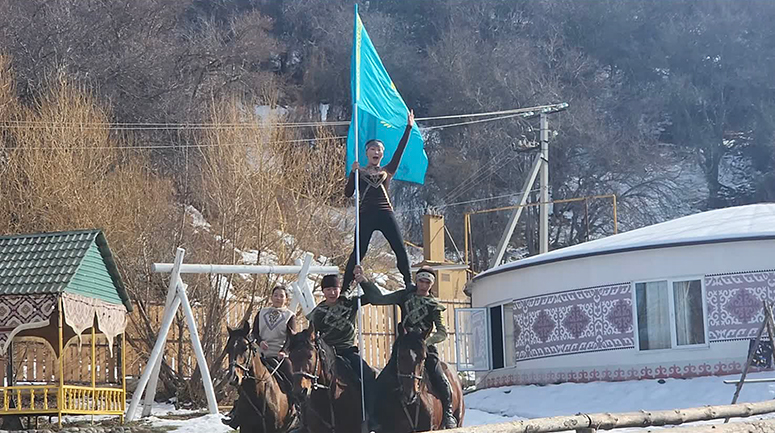
Before flying to Astana, I visited the Huns Ethno Village in Talgar, where we listened to folk songs, made traditional baursak bread, and watched daring horseback performances.
From the 97-meter Baiterek Tower to the majestic Astana Grand Mosque—the largest in Central Asia—to the pyramid-shaped Palace of Peace and Reconciliation, Astana is brimming with architectural marvels.
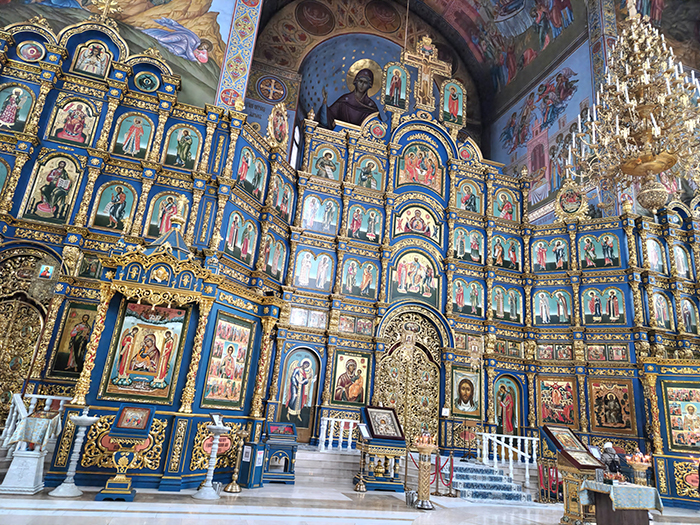
The Assumption Orthodox Cathedral is stunning inside and out, with its gilded iconostasis radiating grandeur.
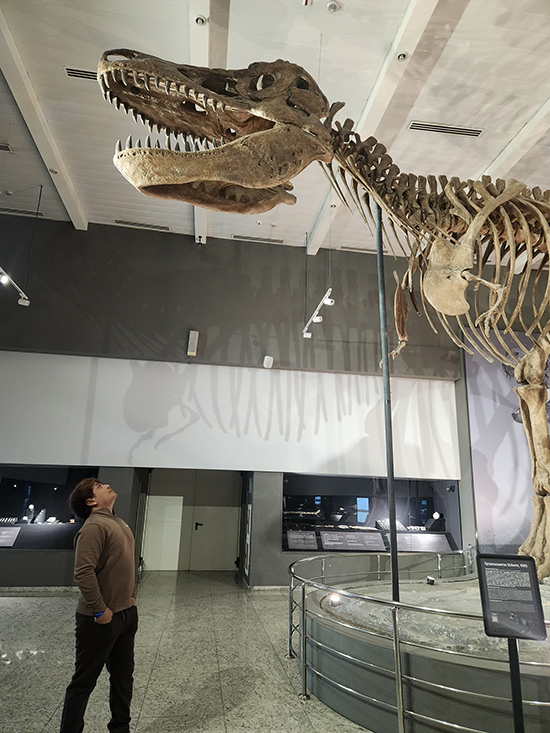
At the National Museum of the Republic of Kazakhstan, the Paleontology Hall’s Tyrannosaurus rex skeleton left me awestruck. No documentary can prepare you for seeing its immense jaws and towering frame up close.
On my flight back to Saudi Arabia, I found myself already planning a return—perhaps in spring.
Despite knee sprains, nosebleeds, and Siberian winds, I had the time of my life. I experienced breathtaking landscapes, rich culture, and, above all, genuine hospitality.
In Kazakhstan, it’s not the thick puffer jackets that protect you from the blistering cold.
It’s the warmth of its people.

WATCH: Is Philippine cinema still thriving? (Generations Ep. 19)
September 2, 2026
WATCH: Pixar Summer Fest adventure at Hong Kong Disneyland
August 10, 2026
WATCH: Is Gen Z too soft? (Generations Ep. 23)
September 30, 2026