

Yes, the dog is flying with me
I used to think flying with dogs was something that happened only elsewhere. I’d see it in European and North American airports—travelers with their dogs tucked calmly into the cabin, a paw or a snout peeking out from under the seat across the aisle—and feel a quiet envy. It was an experience I assumed I’d never have as a dog owner. Certainly not in the Philippines. Certainly not at Christmas. Certainly not with a pug whose breathing sounds like Darth Vader after a little run.
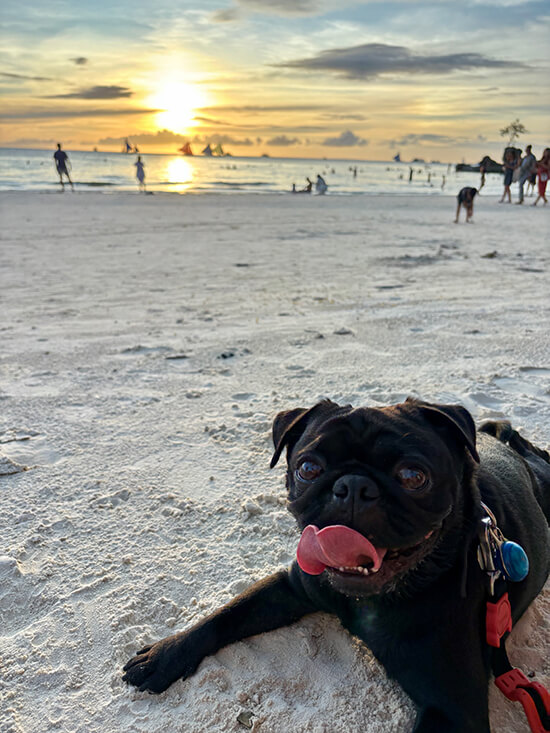
And yet, last Christmas, my pug flew to Boracay with me.
If you’ve had dogs long enough, you carry a kind of institutional memory. Mine includes the era when my previous pugs flew to Boracay on Philippine Airlines—but all the way to Kalibo, always in cargo, because that’s where the larger planes landed. It was stressful, but manageable—until it wasn’t. Eventually, brachycephalic dogs (snub-nosed breeds like pugs and bulldogs) were no longer allowed to fly. The decision made sense from a safety standpoint, but it quietly closed the door on a particular way of living: holidays that didn’t involve leaving your dog behind.
So when PAL launched its FurPAL service in November, tickets were booked almost immediately. No overthinking. No waiting to see how it would go for other people first. Some opportunities feel fragile—you grab them before they disappear. (For context, PAL isn’t alone. Cebu Pacific also allows service and emotional support dogs in the cabin—a small but telling sign that the landscape, however slowly, is shifting.)
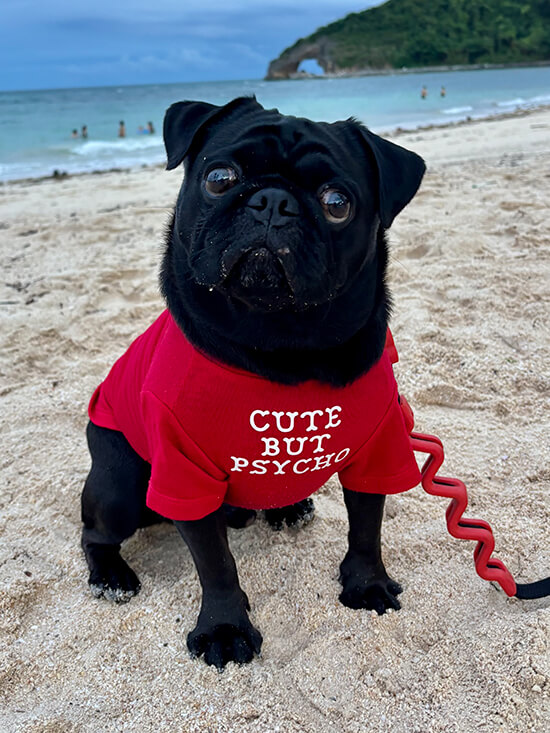
First, my 9.5-kg pug, Hermès, had to go on a weight-loss diet to meet the requirement: a maximum of 10 kg, including the pet carrier. We were braced for a close call, so it was a shock when he weighed in at 7.6 kg at check-in. Apparently, Christmas miracles come in many forms. (He gained back the weight after the holidays, in case you’re curious.)
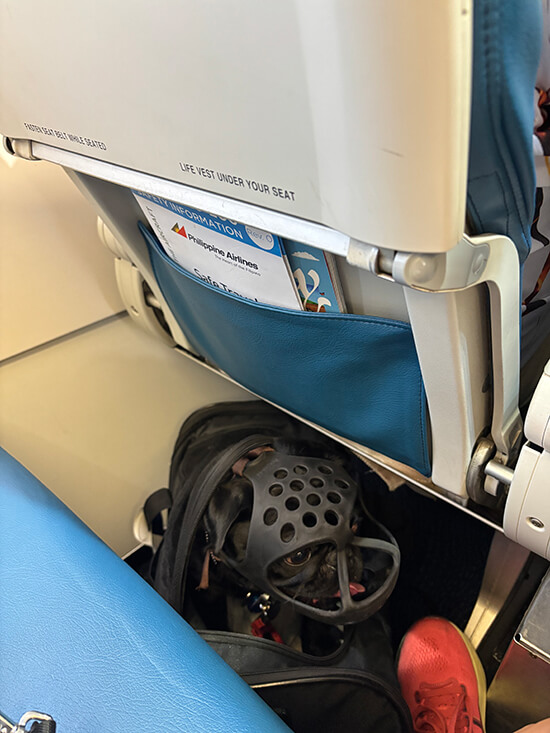
He also needed to be trained to stay in his carrier for extended periods. This turned out to be easy: Hermès is highly food-motivated, and the carrier quickly became synonymous with treats. Training was necessary, since dogs must remain inside their carriers for the entire flight, stowed under the seat in front of you. (No, you can’t buy a separate seat for your dog.) We flew on an A320-200 both ways, and it would be generous to say the carrier fit under the seat. If the flight isn’t full, though, you can request at check-in to be seated in an empty row, which makes a real difference.
CONTINUE READING BELOW

The fee is P2,500 per dog, per way (and it’s one dog per person). Don’t bother paying extra for bulkhead or exit-row seats, which we did, assuming we’d need the extra space. Designated FurPAL seats are at the very back of the plane, and everyone traveling with pets gets reseated there regardless. A couple flying with two dachshunds learned this the hard way, too—we were all advised to request refunds afterward.
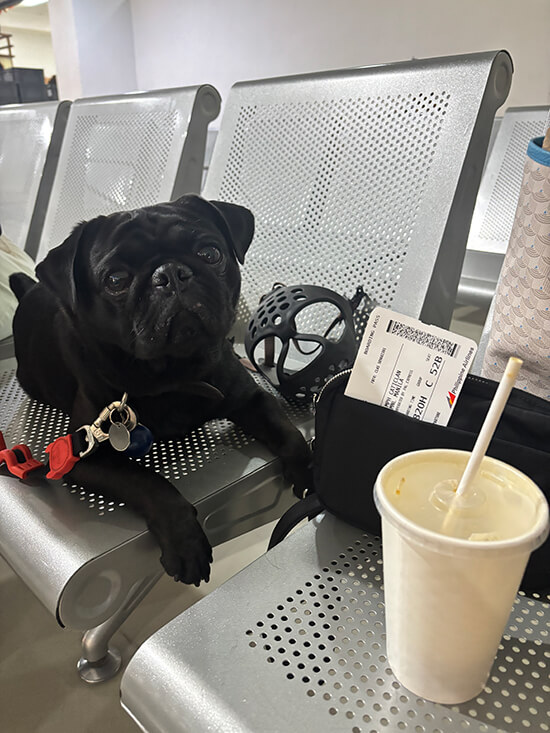
People have asked how Hermès handled the flight. He startled slightly during takeoff, but stayed quiet the rest of the way. I unzipped the top of his carrier mid-flight so he could see us, but he stayed put. On the return flight, he carried himself with pug-sized confidence and the mild indifference of someone who had decided flying was now part of his life.
For now, FurPAL flies to only three destinations: Caticlan (Boracay), Siargao, and Tagbilaran. That may not sound like much. But if you’ve ever planned your life around your dog, you’ll understand why those three places suddenly feel expansive.
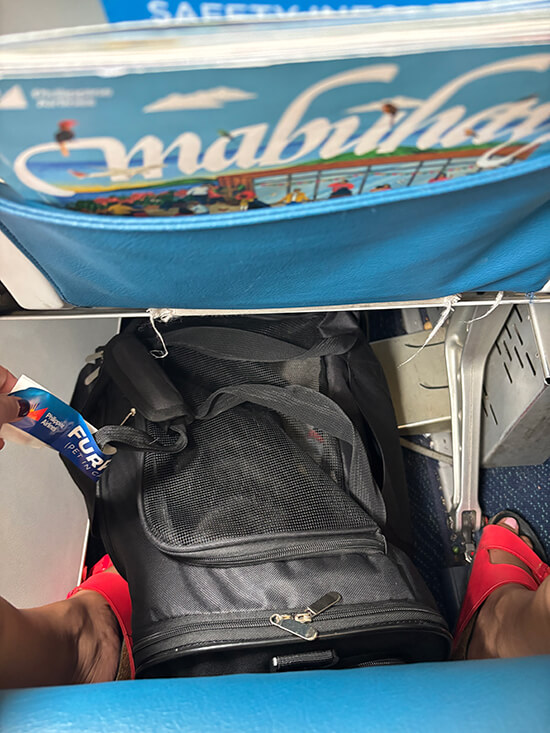
Flying out of NAIA a few days before Christmas was… an experience. Check-in took longer than usual, with moments of confusion and recalibration. This is a new service, and it shows—in the best and messiest ways. There were small delays, minor hiccups, and a sense that everyone involved was still figuring out how FurPAL works in real life, not just on paper.
What stood out was intent. The staff wasn’t annoyed or dismissive. They were careful. Curious. Sometimes even excited. When you’re traveling with a dog, that matters more than efficiency.
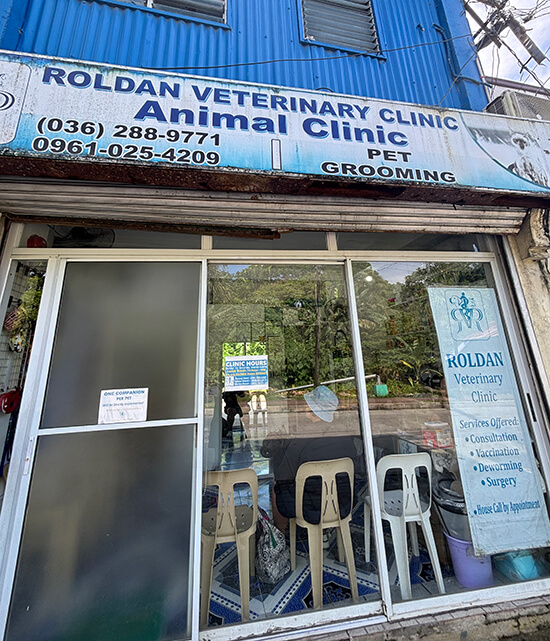
Because we were traveling during the holidays, there were extra bumps—like figuring out how and where to secure a veterinary certificate in Boracay before offices closed for Christmas. It’s required for the animal shipping permit for the return flight, which you apply for online. (Read the sidebar for how-tos and requirements.) On arrival in Caticlan, we were told no one was manning the Bureau of Animal Industry counter, and no one could say when someone would arrive. It was already past 9 a.m. Travel, like faith, requires patience.
The return flight, interestingly, was far smoother. Faster check-in. Fewer questions. Less waiting. Practice helps. So does a smaller airport. It went so smoothly that Hermès even got a few moments out of his carrier before boarding. We were asked to board the bus to the plane first — small gestures, but meaningful ones. The announcement may not yet include instructions “for passengers traveling with dogs,” but it felt like a start.
We chose Belmont Boracay from PAL’s list of pet-friendly hotels. It isn’t on White Beach, which was precisely the point. Hermès is reactive. Crowds unsettle him. Holiday crowds even more so.
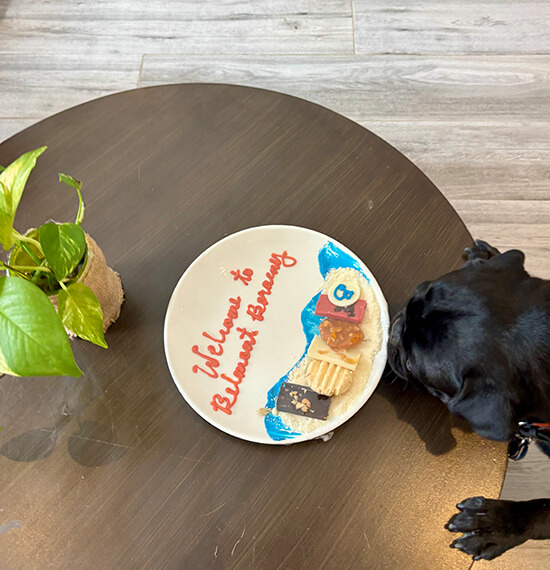
We’d stayed at Belmont before with friends, minus the dog, and I was relieved to find they hadn’t softened their pet-friendly stance. The room came with a crate, a dog bed, disposable pet towels, and diapers. I did have to request an extra dog bowl—they’d only set out one, and any dog owner knows: one bowl for food, another for water—and I asked for the cat litter that was oddly in the room to be removed. During our stay, there was only one other dog guest.
The beach at Boracay Newcoast doesn’t photograph like White Beach—to be fair, few other beaches do—but it offers space, quiet, and fewer negotiations. Hermès had room to walk without apology. Sometimes luxury looks like fewer variables.
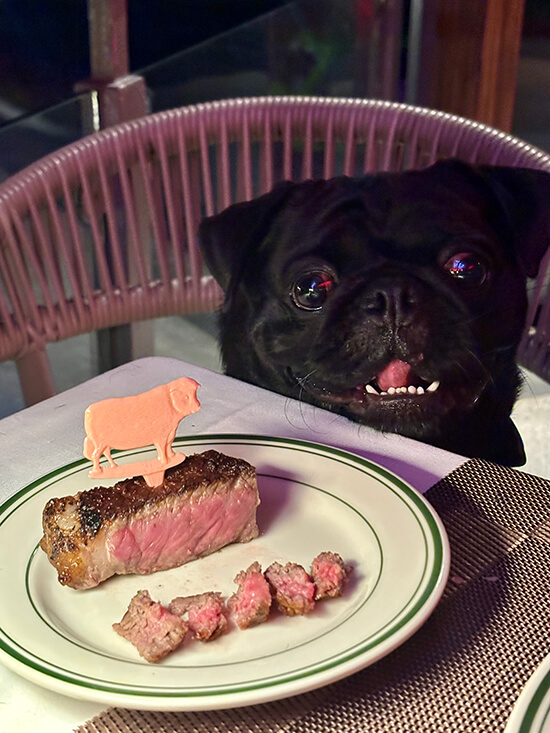
Belmont was genuinely accommodating. The hotel allowed us to dine with him near the café entrance, still indoors, which suited us. Hermès doesn’t care for strangers. For Christmas Eve, the Wolfgang Steakhouse Grill at the property also accommodated my request for al fresco seating, so we wouldn’t have to choose between dinner and the dog. Steak tastes better when you’re not worrying about your dog left behind in the room.
White Beach, particularly around Station 2, does not allow dogs in the water, even if it’s only to dip their paws to cool down from the midday heat. We learned this publicly, via loudspeaker. A reminder that rules are often enforced loudly and learned belatedly.
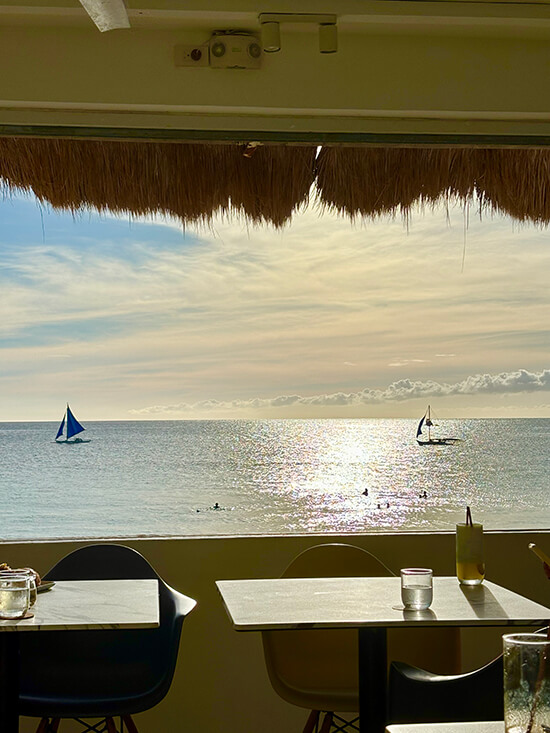
Another hotel on Station 1, however, told us dogs are allowed to swim directly in front of their property. Regulations, it turns out, are hyperlocal. Ask. Always ask.
In Belmont’s area, there were no such restrictions. It may not be postcard Boracay, but it felt livable. And that distinction matters when you’re traveling with an animal, not just Instagramming a vacation.
Many Boracay restaurants are pet-friendly, or at least pet-tolerant. The key is to ask politely and to be a responsible dog owner. Your dog shouldn’t be barking through someone else’s dinner or lunging at servers carrying sizzling plates. The success of traveling with pets depends largely on whether we prove we deserve the privilege.
Walking around Boracay on Christmas Day, seeing tourists strolling with their dogs, something clicked. This is what PAL must have seen when they launched FurPAL. Not just a service, but a shift. An acknowledgment that dogs are not cargo, not accessories, not complications. They are family.
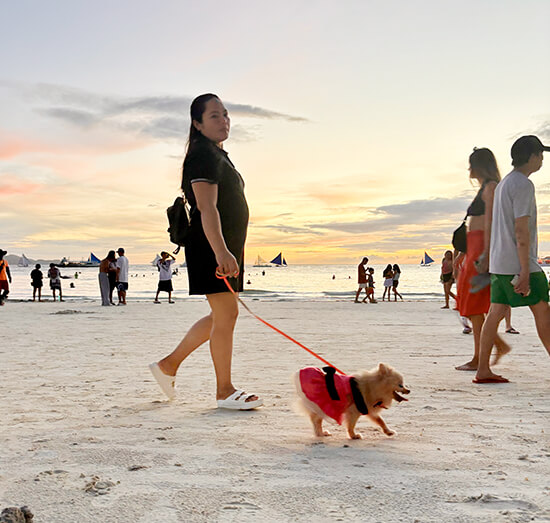
The program isn’t perfect. It’s new. There are gaps, pauses, learning curves. But it exists. And that alone alters the landscape.
For years, traveling with a dog meant compromise. This Christmas, it meant possibility.
How to fly with your dog in the cabin
Or how to test your patience before you even get to the airport
Start by checking if your pet is even allowed.
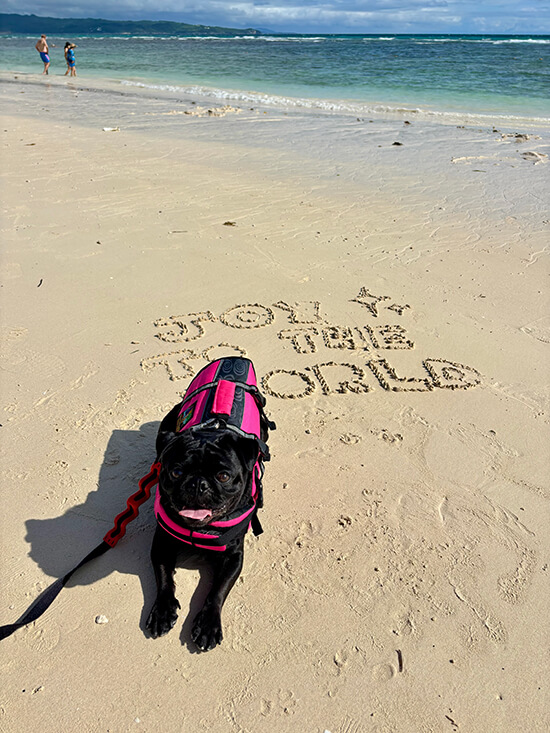
FurPAL has rules on dog size, carrier dimensions, and how many pets are permitted per flight. Cats are not allowed. Slots are limited, especially during peak seasons, and yes—your dog will need to wear a muzzle. This is non-negotiable, no matter how gentle or angelic he is at home. Crowds are stressful for dogs, so how they react can be unpredictable. Read everything carefully, preferably before you get emotionally invested: https://www.philippineairlines.com/ph/en/inflight-experience/furpal.html
Make friends with paperwork. You’ll be spending time together.
You’ll need three things: 1) updated vaccination records; 2) a veterinary health certificate; 3) an animal shipping permit; and 4) FurPAL’s waiver form. The first two are required to apply online for the shipping permit (https://nvqsd.bai.gov.ph/), along with a photo of your dog. Timing matters. The vet certificate is valid for three days. The shipping permit lasts seven days. Miss a window and you start again. You’ll need the same documents for the return flight, so locate a veterinary clinic at your destination early. Print everything twice. Bureaucracy respects paper more than optimism.
Buy your dog his own plane privilege.
The fee is P2,500 per dog, per way. This covers exactly one thing: the right to coexist in the cabin inside a carrier. Your dog must have a confirmed FurPAL reservation, coordinated directly with PAL. It does not magically attach itself to your own ticket.
Arrive at the airport earlier than feels reasonable.
Especially at NAIA. There will be questions. There may be new interpretations of old rules. Build in time for recalibration, polite waiting, and deep breathing (yours).
Assume everyone is learning as they go.
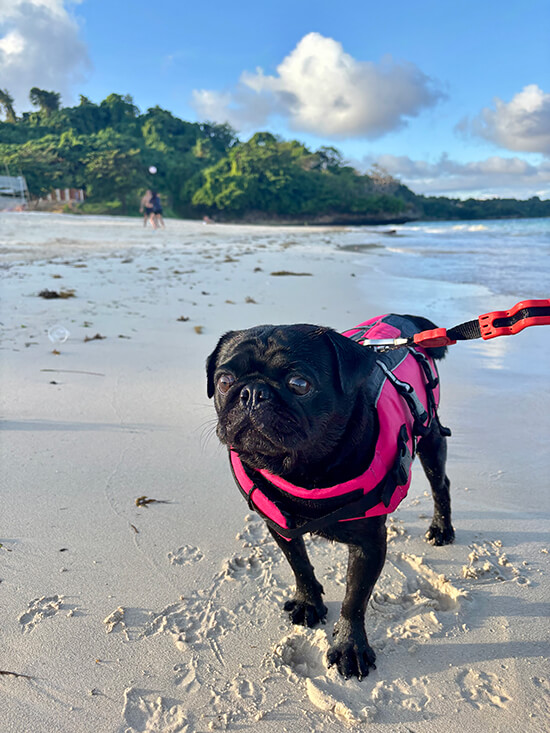
FurPAL is new. Expect pauses, small delays, and the occasional shrug. None of this is personal. Patience is part of the fare.
Choose your hotel like your sanity depends on it.
Start with PAL’s list of pet-friendly properties, then confirm directly with the hotel. “Pet-friendly” can mean anything from enthusiastic welcome to tolerated presence under strict conditions. Then decide what’s acceptable for you.
Ask about local rules. Then ask again.
Beach access, swimming, dining — regulations vary by location and, in Boracay, sometimes by which stretch of sand you’re standing on. Never assume. Asking is easier than being corrected over a loudspeaker.
Be the reason this keeps working.
Your dog should not bark through someone else’s dinner or lunge at staff carrying hot plates. Before travel, make sure that your dog has done its business or is at least wearing a diaper. The vet advises withdrawing food at least 12 hours before the flight to avoid stomach disturbance. (It should be nice if the airports can designate an area where dogs can stretch or go potty before the flight.) Always pick up after your dog. Traveling with pets remains a privilege, not a right—and its future depends largely on how well we behave.

WATCH: Is OPM still as good as it used to be? (Generations Ep. 20)
September 9, 2026