

Papa Kape: Brutalism equals nostalgia
Papa Kape is a homegrown coffee chain with a cult following. They have come a long way since opening their first branch in Palanan, Makati, during the pandemic. Next to open was the iconic branch at Fort Santiago, followed by Luneta Park, each exhibiting a Filipino identity through their coffees, unique twists on kakanin, and an aesthetic that complements their heritage locations.
They caught everyone by surprise by opening at the National Museum, blending in seamlessly with the artwork in their space. This was greatly welcomed because, as anyone who has visited museums abroad will tell you, the National Museum has long been in need of a place where visitors can pause, rest their feet, and collect their thoughts after walking through gallery after gallery of great art.
As Papa Kape founder Manu Reyes puts it, “The National Museum was a curve ball that I couldn’t let go of even while our newest branch on Legazpi Street in Makati was underway.” The newly opened Legazpi branch is already drawing crowds of culture vultures who seek it out in the hidden recesses of Manila Bankers, an old office building.
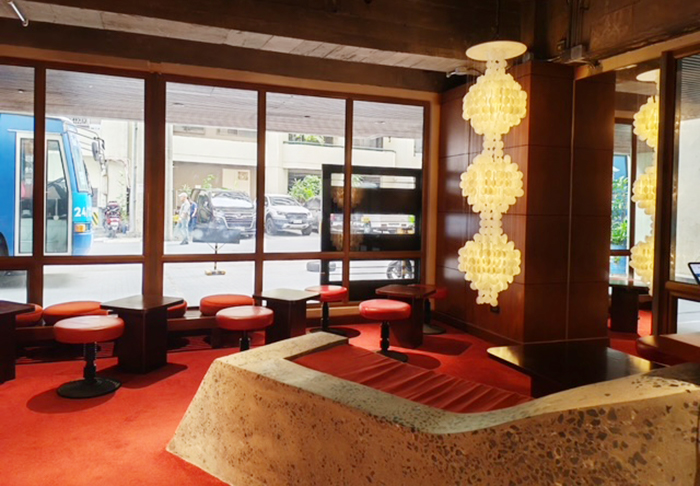
Old office is precisely one of the vibes that Manu was after. The red carpet, red leather stools, terrazzo bench, and capiz chandeliers have guests wondering: Are they in a theater? In an old hotel lobby? The CCP? An airport lounge? People feel they are in a different decade, a different era. I really picked up 1976 Makati; the signature drinks here are inspired by four buildings that are no longer in Makati: the Intercontinental Hotel, Sulu Restaurant, Rizal Theater, and the former Mandarin Oriental.
“I’m starting my first signature here with the Mandarin Oriental, with a drink called Kapitan for the Captain’s Bar and I’m doing that because this is my little love letter to my parents, who met in 1976 Mandarin. They worked there as pioneering employees,” Manu says. The coffee drink Kapitan is also inspired by Manu’s dad who likes the flavor combination of orange, spices, and rum.
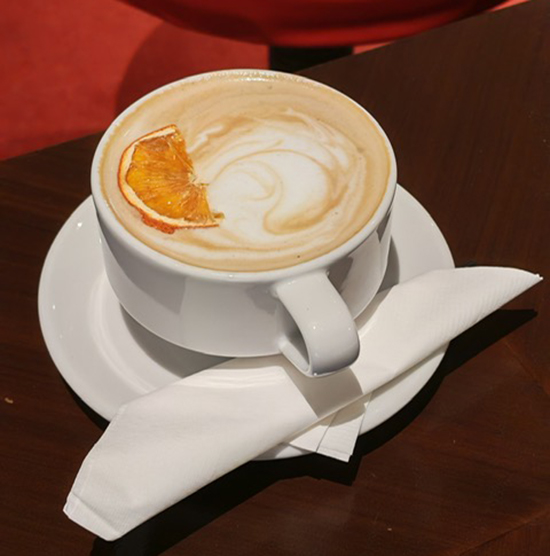

As to the references of architecture, old offices, old lobbies, or airport lounges, Manu explains, “We’ve been branded as coffee shops in heritage spaces. Moving to Makati, what will I do? Will it work for Papa Kape to not have a heritage space? I had to dig into a narrative of things that bring nostalgia, hence this reference to Nakpil, Locsin and all those other architects and their works.
“That was like a test for us. How we will grow, how do we expand outside the spaces that we’re in, and how do we do it? I had to dig a little bit deeper into my own history which was my parents and the Makati I knew growing up here.”
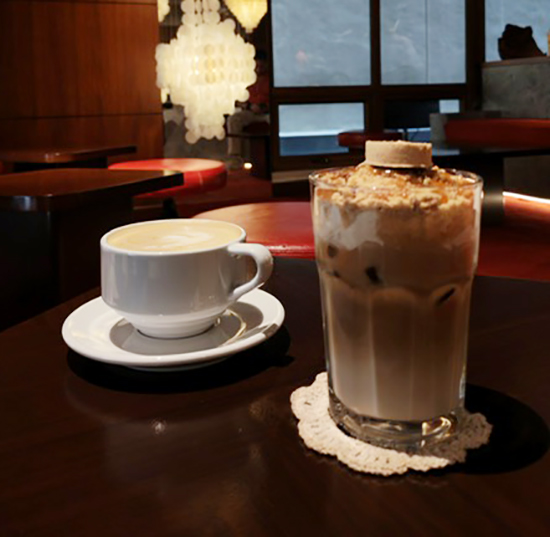
Manu brought in the nostalgia rather than looking for a nostalgic space.
“I asked myself, there are so many coffee shops in Makati, what will make us different aside from our branding? I wanted to give people a new experience, an experience that’s somehow lost in time. It was intentional putting a carpet so it feels different on the feet, even this terrazzo bar. The Locsin architects have been here; I had a sit-down with the granddaughter because they heard about this referencing of the CCP. They liked it and said, ‘You get it, you get what Brutalist is.’”
Aside from the interiors, which Manu designed himself with a compelling sense of nostalgia (even for people who weren’t even born in 1976), there is the coffee and the kakanins to draw people in. At every branch of Papa Kape there are coffee and non-coffee drinks plus kakanin or other small plates that have been given a uniquely Pinoy flavor profile. The Legazpi branches serves a Halo-halo Sandwich, a Suman A la Mode, and a puff pastry filled with Bicol Express, among its offerings. Many of the coffee preparations use coconut milk instead of dairy and that’s another Pinoy twist.
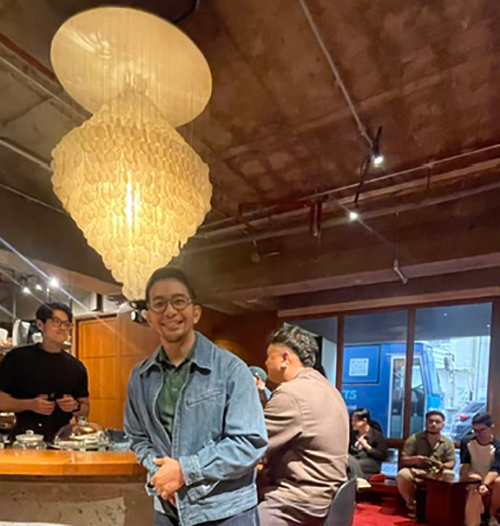
“I gave my ice cream makers my recipe for a frozen custard,” says Manu. “I call it frozen leche flan. There are five flavors, the leche flan and there’s coffee, tablea, ube, and langka. The Suman A la Mode has frozen leche flan, tablea sauce, and latik. I’m just bringing together Philippine flavors, textures and narratives reminding us of how amazing we have it with food.”
Manu reflects, “To land on a clear brand identity and having the opportunity to land in Fort Santiago, Rizal Park, the National Museum, I’m thankful to have that rooted identity on nostalgia, history, and culture. It was important for the growth of our group, but it was also the challenge. After four years I wondered, do I need another historical place? Makati was really a test for us to do something different. Will the public trust us to tell a Philippine narrative without a historical space?”
Clearly, they do. Mornings are supposed to be quiet and at some points they are; other times they are almost as full as the afternoons. But it’s okay to arrive and find no place to sit (even the back of the terrazzo bench is used by people to sit on). People come and go, so, sooner or later, a place to sit in will open up.
“It was a test and a testament to this coffee shop,” says Manu. “We’re here, we’re sharing our ideas and our vision of Philippine architecture, specifically cosmopolitan architecture.
“People responded to it well because it is a storyline that’s close to the Filipino heart. These are spaces, buildings that we know, we’ve seen, we’ve been in. We’re grateful that we were given the trust to tell these stories through coffee.”
He believes authenticity requires being brave because you have to bare your soul. “When you do something unapologetically you have to be prepared whether it’s liked or not. That authenticity, that soul is the je ne sais quoi. People respond to it.”
“Eyes on the prize” is a phrase they go by at Papa Kape.
“It’s all about awakened connections through coffee,” he says. “What I teach the baristas is not the technicalities of making coffee but the awareness that what we do here in this company is to make and awaken connections between people, cultures, and the community.”

WATCH: Do you still believe in marriage? (Generations Ep. 17)
August 19, 2026