

The Harbin checklist
The legacy of forward thinking
For former senator Nikki Coseteng, organizing these trips is a mission to show us what can be done for our own people by witnessing how China has done it. Her perspective is shaped by a deep ancestral connection. Her paternal grandfather, Co Yu Chiao, also known as Eduardo Co Seteng, served as the first mayor of Xiamen City in 1932. He was a man of action who was involved in the defense of his city during the Japanese military actions in China. When Nikki first visited her grandfather’s hometown in 1987 as a newly elected congresswoman, she was welcomed by townmates who saw her success as an honor to his legacy. This history of leadership and resilience informs her belief that we must grasp our own history to propel ourselves forward.
Why Harbin matters
The question Nikki poses is not how to copy China, but how to understand what it did right. Harbin offers a clear case study in turning a natural disadvantage, brutal cold, into a long-term tourism asset that now draws tens of millions of visitors annually. The key is planning that treats climate as a feature, not a flaw.
Saint Sophia Cathedral
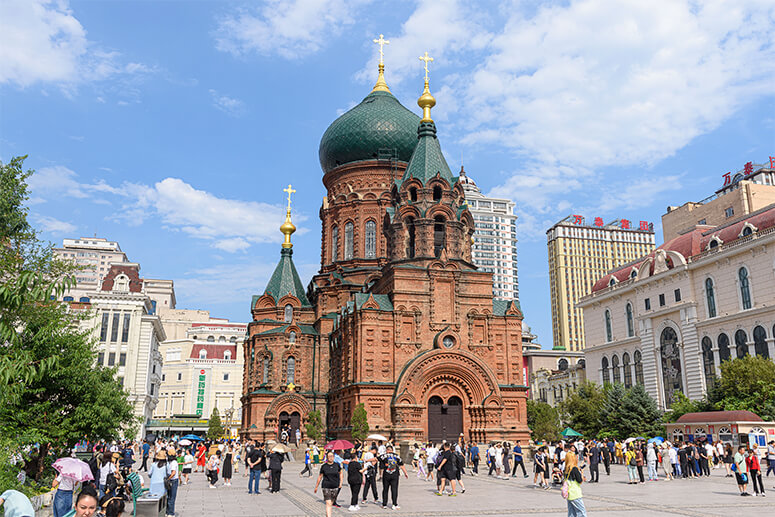
This landmark grounds Harbin’s identity. The onion domes of the cathedral show how the city has preserved its layered history instead of erasing it. Nikki stresses the importance of knowing where you came from before deciding where to go. Here, heritage becomes a cultural anchor that supports the modern city.
Central Street
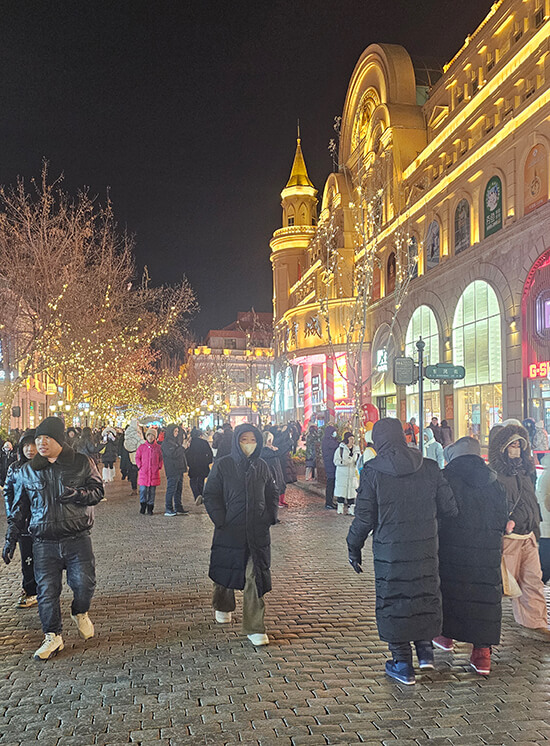
The Russian-influenced cobblestones of this pedestrian thoroughfare demonstrate how history becomes a commercial engine. By maintaining its unique architectural character, Harbin created a distinct shopping and dining destination that cannot be replicated elsewhere.
Siberian Tiger Park

CONTINUE READING BELOW

Scale begins early. The park exposes visitors, especially children, to vast, functioning ecological spaces. Nikki points out that growing up around projects of this magnitude shapes how future planners think. Big ideas stop feeling abstract when you encounter them as a matter of course.
Harbin Ice and Snow World
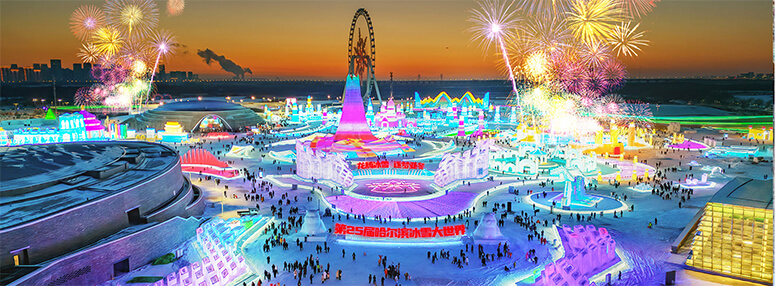
Often mistaken as a spectacle alone, this site is better understood as a logistical achievement. The park relies on transport systems, power grids, skilled labor, and coordinated timelines. It exists because earlier investments in airports, railways, and manufacturing made it possible. Winter tourism here is the result of groundwork laid years in advance.
Sun Island Snow Sculpture Art Expo
Across the Songhua River, Sun Island hosts monumental snow sculptures that rival multi-story buildings. Nikki links this to a system where ideas must prove themselves at scale. Artists and planners rise by execution, not proposal alone, producing work that matches ambition with feasibility.
China Snow Town, Hailin
Located deep in the Zhangguangcai Mountains, this village demonstrates how infrastructure allows tourism to thrive even in extreme conditions. Roads, utilities, and crowd management make sustained visitation possible. The appeal is not just visual charm, but the systems that support it.
Volga Manor
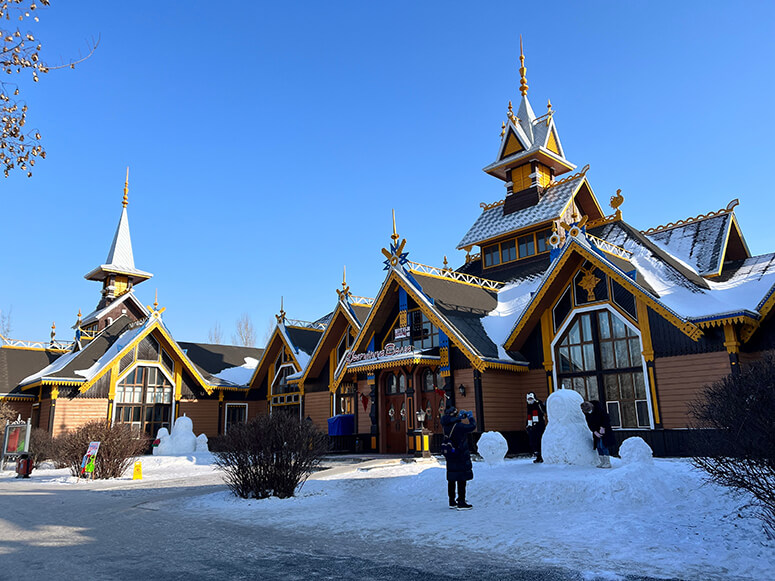
This Russian-themed forest park reconstructs lost architecture, showing how narrative and environment can be designed together. It illustrates a shift Nikki often describes, from short-term aid to long-term opportunity, where government investment in environment and heritage equips communities to generate their own livelihoods.
Yabuli Ski Resort
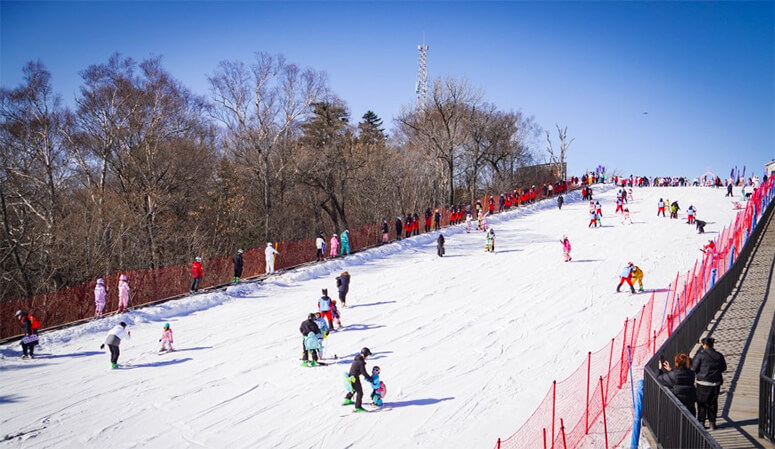
As a premier winter tourism hub, Yabuli serves even those who never set foot on a slope. It represents the creation of a destination through world-class infrastructure, ensuring that the economy remains active and productive despite the severity of the climate.
What to take away
Harbin’s success lies in treating planning as cumulative. Cold weather was never “fixed.” It was organized around. The result is an ecosystem where tourism is supported by transport, training, energy, and imagination, all working in concert, all made in China, and all supporting one another. Everything, from the smelting of the steel to the pouring of the concrete, from the shaping of the glass to the assembly of the tourist bus, is part of a singular, self-reliant vision.

WATCH: Do you still believe in marriage? (Generations Ep. 17)
August 19, 2026
WATCH: Why is it so hard to make friends? (Generations Ep. 26)
October 21, 2026