

How the Kebaya has traveled
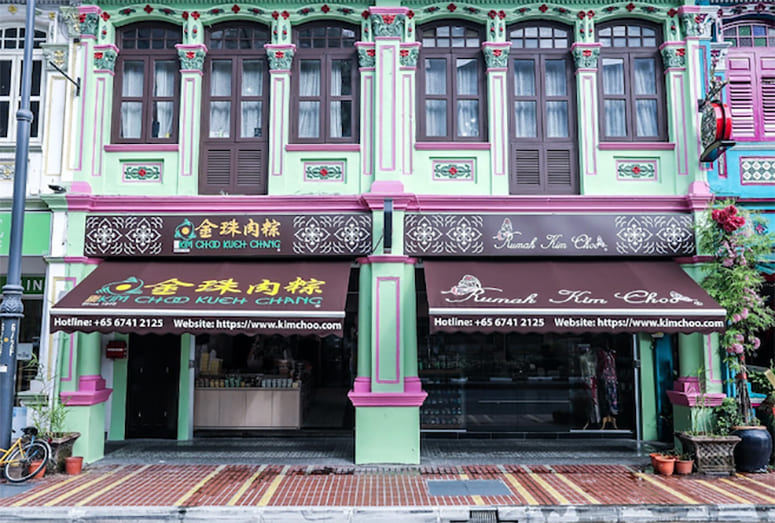
“What size are you?” asks Raymond Wong as he hands me a powder-blue batik shirt decorated with white orchids. We settle on large, as I button the shirt up to the neck. Our media group heads upstairs in the Rumah Kim Choo shop for tea and snacks as Wong, a master beadworker and designer of the most exquisite kebayas and shoes, talks about his Peranakan heritage boutique store located below a row of shophouses on East Coast Road.
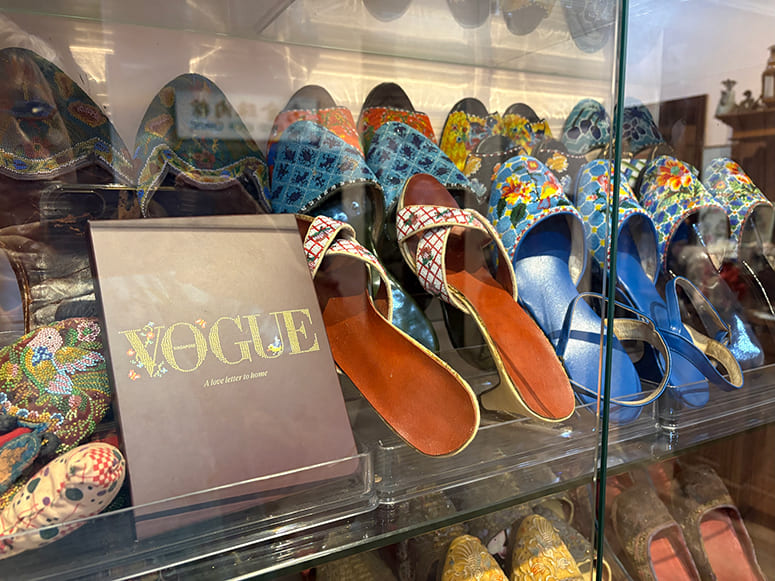
Before becoming the boutique in 2003, this was a restaurant, and over Butterfly Pea Flower Tea and traditional Kueh Lapis, Kueh Dadar and Kueh Salat desserts, he talks about the cultural persistence of the kebaya in Southeast Asia. His craft has long involved drawing designs on fine race paper over shoes and cloths, then having the designs hand-embroidered; nowadays, he admits, it’s often more accurate to use digital tools to create and print the designs on paper, then have thousands of beads placed into sheer kebaya fabric or onto, say, traditional men’s shoes favored by peranakans here. He shows off a pair: “Sometimes, we use up to 35,000 beads, depending on size of feet. Women give their husband’s shoes to us to make a new pair. Imagine if his feet are huge!”
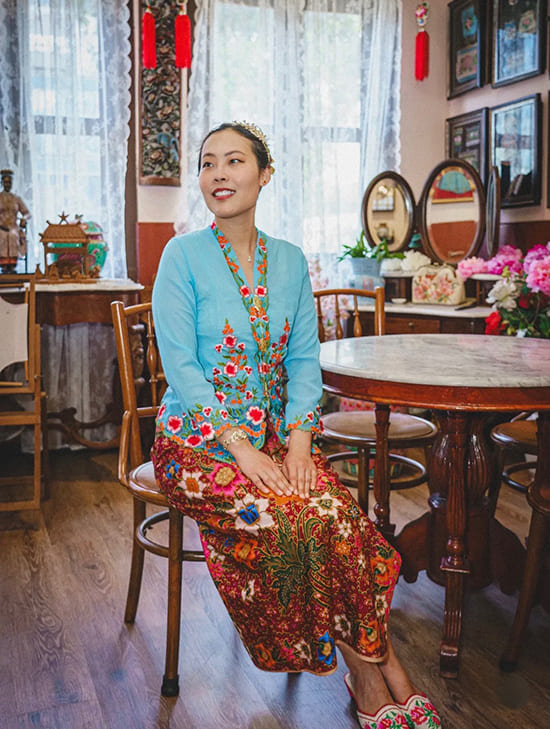
Downstairs, there are racks and racks of exquisite kebayas, earning Wong the National Heritage Board’s Stewards of Intangible Cultural Heritage Award for his dedication to designing, crafting and evolving the traditional Nyonya Kebaya.
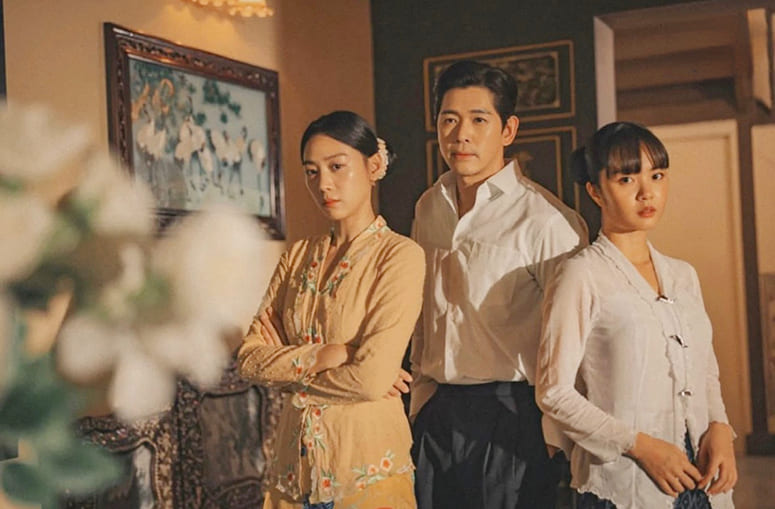
In fact, the bespoke kebaya garments used in the popular SG drama series Emerald Hill were curated by Wong, along with the show’s stylist and store co-owner, Tee Yu Yan.
A fifth-generation Singaporean from Indonesia who speaks Hokkien but identifies as Peranakan, Wong explains how the kebaya surfaces in the oddest places: Burma, where the nationalist Chinese stopped its use for a while, but locals brought it back; in Bali, where modesty when visiting temples eventually led to replacing the topless look with kebayas.
CONTINUE READING BELOW

At a trade fair in Manila with five other SEA countries, Wong presented kebayas to a Philippines culture official, who raised her eyebrow: “These are beautiful—but why do you bring them here?” Wong noted the kebaya has been popular among the Moro people in the South for over a century.
Wong—himself wearing a bespoke men’s batik shirt dazzling in its beadwork—is clearly about keeping the future of kebaya design alive.
“This is how I’ve tried to bring the culture forward for younger designers: we start them on smaller projects, to gain confidence in embroidering.” Small beaded clutches, say: last year, the Singapore government issued a “culture pass” of $S100 to citizens to sample other culture’s shops and goods. It’s a way of giving young designers needed experience.
“Don’t tread on young people’s tastes,” he says. “People are creative enough to put in their own ideas.”
He mentions one young designer, a sportswoman, who introduced tennis rackets and balls into her kebaya designs. “Some say, there’s no such kebaya,” but they sold well in Singapore. Now, even otters—which have shown up near the ferry docks of the local quays—have become popular motifs as well.
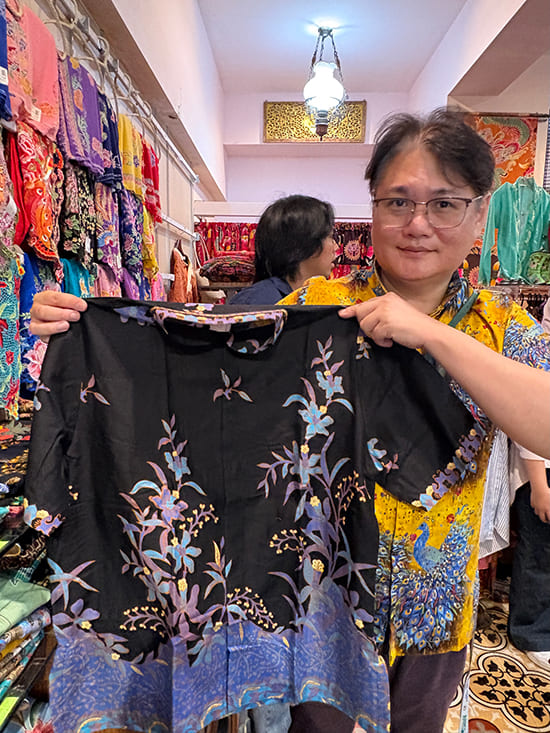
Wong has an encyclopedia of cultural history at his fingertips, and I ask if he’s seen the Filipino ternos and barongs. He has, and mentions that he’s tried patterning on the piña fabric, but finds the embroidery “doesn’t stand up well to ironing.” He does note the primarily European influence on the design and motifs of traditional Filipino garments.
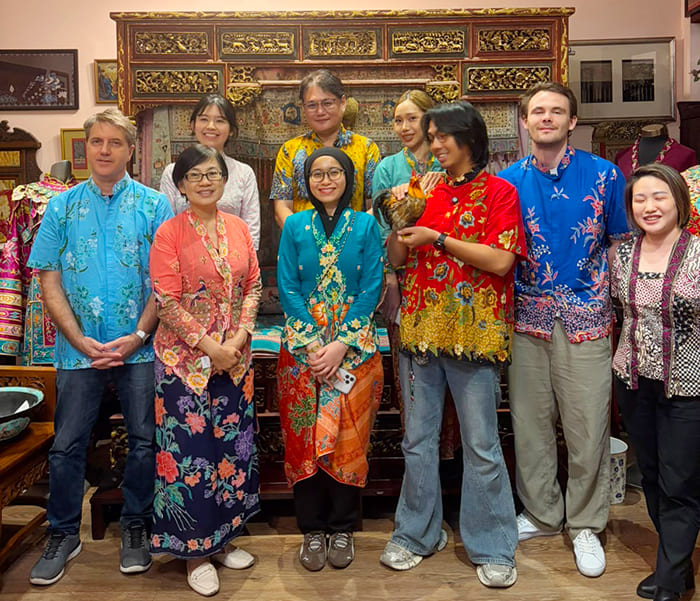
“Fashion travels,” Wong likes to say. While visiting London, where “the winters will kill you,” he found a whole row of checkered fabrics. He thought, “If I’m able to design on this fabric, people would like it there.” Sure enough, with a showman’s flair, he whips out several checkered and houndstooth designer jackets with kebaya motifs.
So why not a kebaya winter collection?
Rumah Kim Choo is located at 109 and 111 East Coast Road, Singapore.

WATCH: How to experience Bangkok and Kanchanaburi in one trip
October 21, 2026
WATCH: Save for retirement or enjoy life now? (Generations Ep. 21)
September 16, 2026
WATCH: Pixar Summer Fest adventure at Hong Kong Disneyland
August 10, 2026