In Fiji, a colonial past blends with the natural world
One feels an inescapable sense of wonder when starting life in a new country. While adapting to our new adoptive home, I’m consciously learning typical aspects of life in this splendid island state, Fiji. Here where no one seems to be alone, I’m immersing into the cadence of Fijian life sensing how it’s shaping us. From the immensity of New York to the intimacy of Suva, I discern, grasp, and ask: What are our commonalities? How are we different from each other?
Sunrise, sunset and rain in between
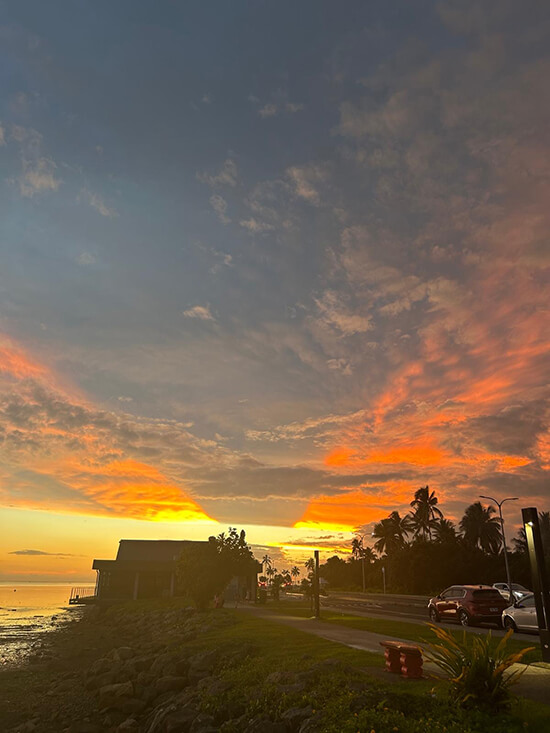
Basking in the sun doesn’t only make us happier. A New York Times article suggests, “spending more time in the sun is associated with lower blood pressure.” Here in Suva, staying outdoors—from sunrise to sundown is a way of life. Parallel to the stretch of Queen Elizabeth Boulevard is a long bay walk with a commanding view of the placid Pacific Ocean. Here, promenaders walk, run, bike, greet each other and exchange genuine smiles. We watch the sunset in its varied hues and charm as we briskly walk at the end of each day.
Now and then, a family of birds—which I later learned are bar-tailed godwit—peck on the sand to munch on crabs or fish. Some days, a luxury cruise ship passes by to dock at Suva port, and locals pitch tents to sell handcrafted souvenirs. Across the port is a building that houses shops selling crafts and wares that are quite similar to ours.
Most days, we see families having a picnic or people by the embankments holding fishing lines or spearfishing from afar for what could be their meal. We hear children happily squeal as they play or swim. From a nearby mangrove, their gentle voices blend with a chorus of birds serenading passersby. Mangroves are critical to Fiji’s ecosystem. They are habitats for birds and the fish beneath and serve as natural levees against cyclones.
I am becoming accustomed to the pattern of island life, marveling at the moon changing from crescent to full, the tide ebbing and receding, or the mighty sun reappearing after a sudden downpour. A fan and an umbrella have become necessities; otherwise, it’s perfectly fine to get drenched or sunburnt, occasionally.
All within walking distance
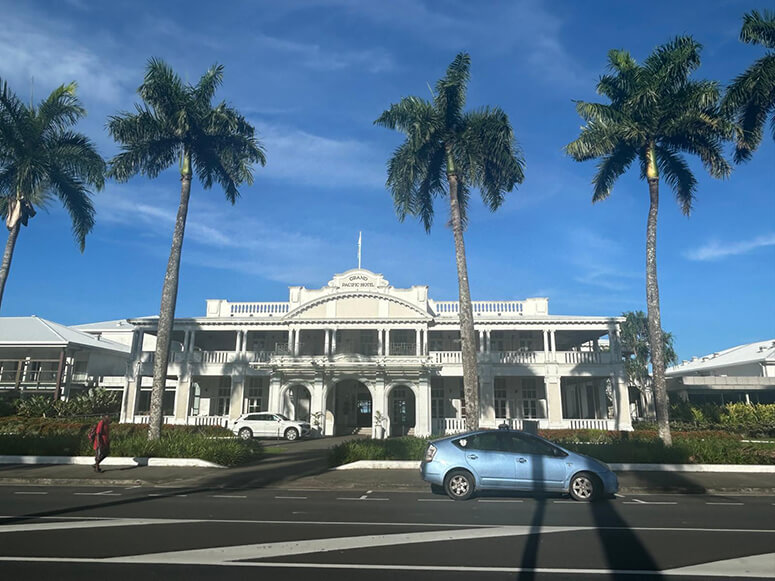
Fiji is one of the four former Commonwealth countries whose flag still bears the Union Jack symbolizing their historical ties with the British Empire. These ties are palpable in sites that have stood witness to events past that remain popular venues for significant occasions.
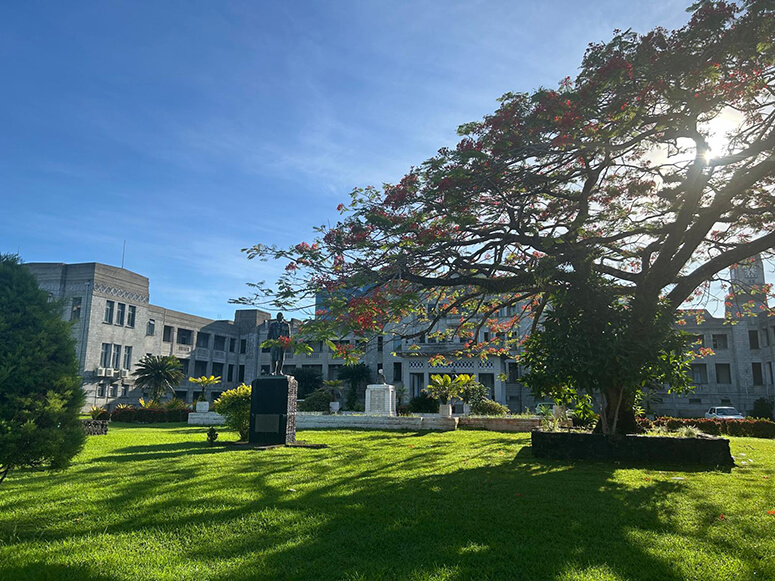
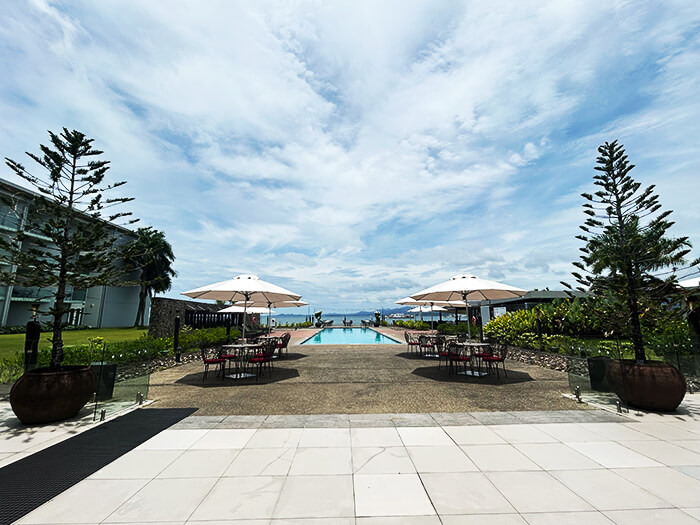
Her Majesty Queen Elizabeth II stayed at the Grand Pacific Hotel or GPH during her first visit to Fiji in 1953. A preferred hotel for visiting heads of state and dignitaries, most of its rooms have a resplendent view of Suva Harbour. When gazing at the ocean from the veranda, one measures time through the sunrise and sunset. The Queen Elizabeth suite is named after its most honored guest, a reverence that remains deep-seated as reflected in Fiji’s motto: “Fear God and honour the Queen.” I imagined the room to be grand brimming with Victorian embellishments. I was surprised by its simple elegance enhanced by refined vestiges of a royal past. The suite leads to a balcony that overlooks Albert Park at the center, the Parliament house to the left and Thurston Garden, home to the Fiji Museum to the right.
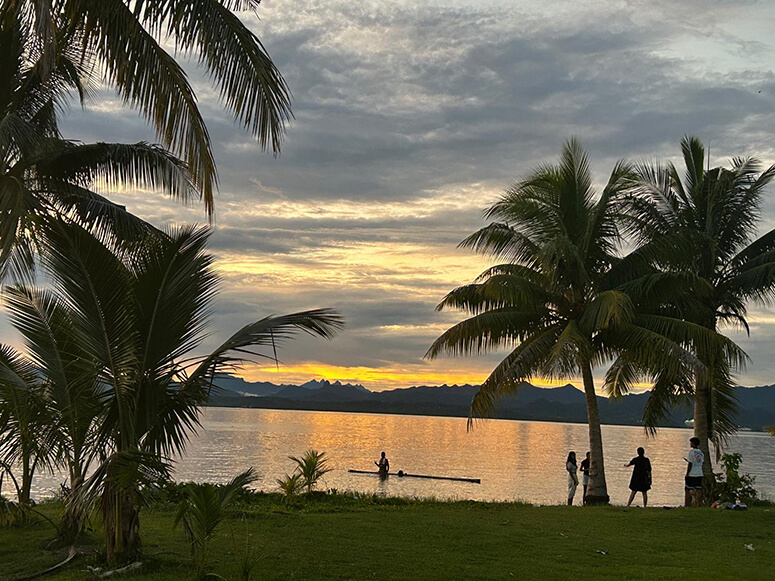
Apart from being the landing site of Australian aviator Sir Charles Kingsford Smith on his first trans-Pacific flight from America to Australia in 1928, the Fijian flag was first hoisted in Albert Park on October 10, 1970, and the venue for Pope John Paul II’s visit in 1986. Nowadays, the park, named after Prince Albert, the husband of Queen Victoria, is a functional hub for sports, rugby, and social events. It teems with people running or brisk walking on early mornings, late afternoons, and on weekends. We join the crowd on days when we don’t walk along the harbor.
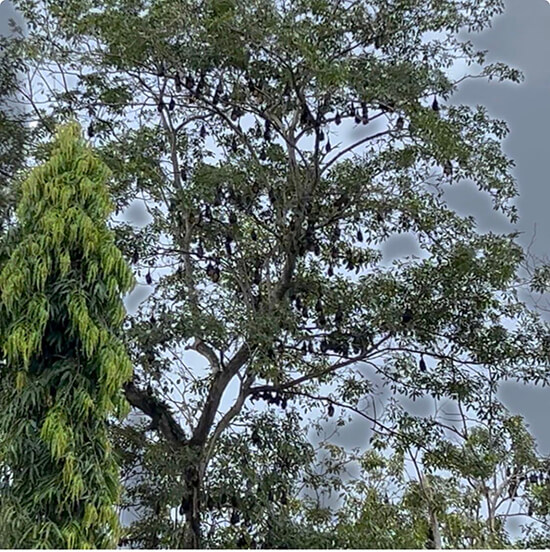
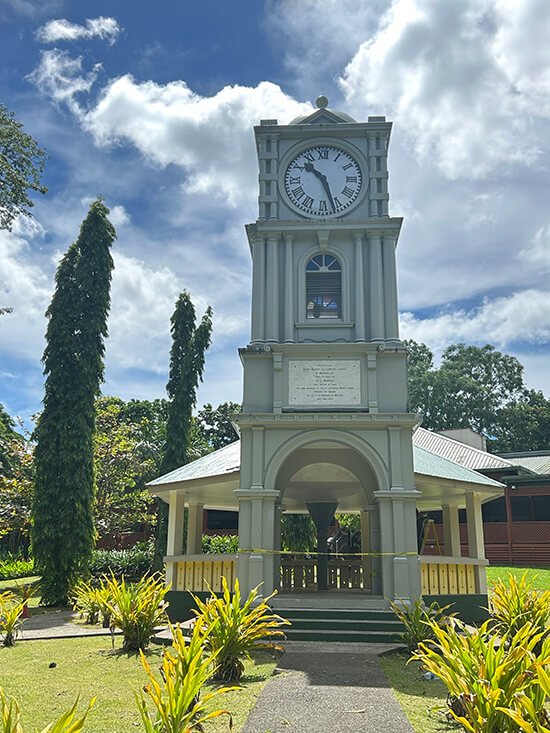
Thurston Garden is in honor of Fiji’s governor Sir John Bates Thurston, an amateur botanist, who founded the botanical garden. Century-old trees and gigantic bamboos serve as a refreshing sanctuary for pedestrians on very hot days, and are home to hundreds of birds and bats, mainly. We see them cling and hear them squeak anytime of the day, particularly at dusk. I passed through the garden the first time I visited Fiji Museum. I indulged in a feast of multicolored tropical flora and fauna and headed to the clock tower via a pathway that led to the museum.
Rugby, a sport of speed and agility
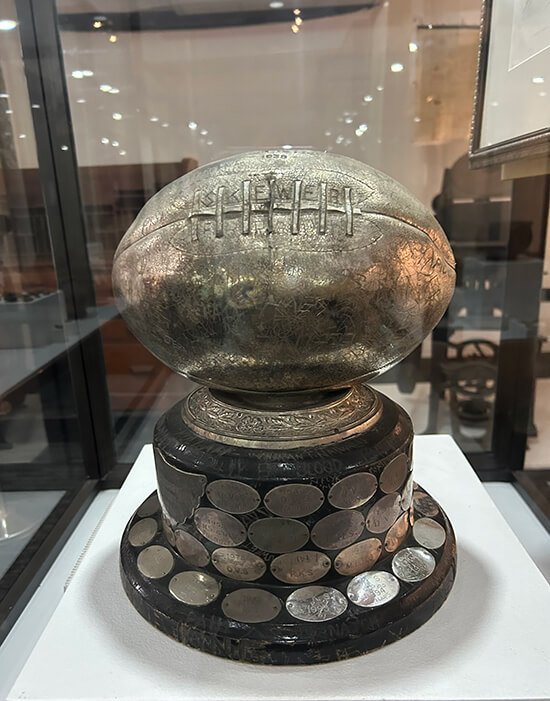
What is basketball to the Philippines or soccer to all over Europe is rugby in Fiji. While the superpowers and their allies were battling against enemy states during the World Wars, Fijians were playing rugby. I learned this from the guide who showed me the glass-encased shelf at the Fiji Museum where the original Dean’s Trophy is displayed. The silver trophy was bestowed by the New Zealand Maori rugby team on their first trip to the Pacific in 1938. It is considered the most prestigious and oldest sports award among Fiji secondary schools' sporting competitions.
A travel website notes that Fiji rugby is the nation’s pride. Fiji has won four Olympic medals—all in rugby—including gold medals in Rio (2016) and Tokyo (2021), bringing enormous joy and enduring honor to Fijians. The Rio gold medalists are immortalized through commemorative bills and coins.
Rugby players are known for their agility and speed. I see them train at Albert Park at any time of the day, unmindful of the blistering heat. Their regimen often involves singing, which I think is a way to strengthen esprit de corps.
Words come easy
Although Fiji is a predominantly English speaking-nation, Fijian language and Fijian-Hindi are largely spoken. Unlike in China and Indonesia, where I took formal language lessons, in Fiji, I don’t see the immediate need to. Yet I was delighted to find out that while we count isa, dalawa, tatlo, apat, lima. For the iTaukei (Fiji’s indigenous people), they start counting with duwa (one), then rua, tulo, va, lima. Duwa and tulo are two and three in my Bicol language, while lima is five in most Filipino languages. For novelty’s sake, I’d like to learn beyond counting. Oh, and coconut is niu and we say niyog!
Suva Saturday market
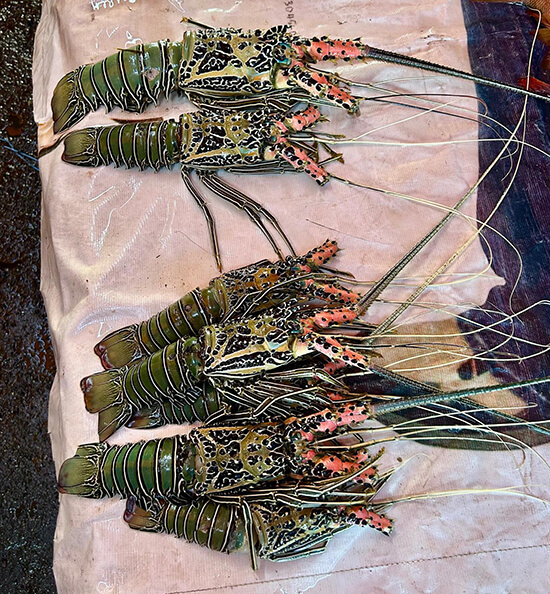
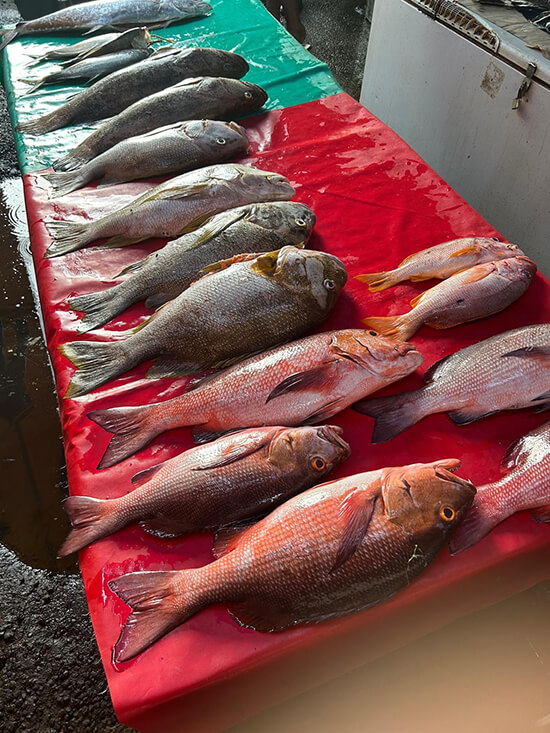
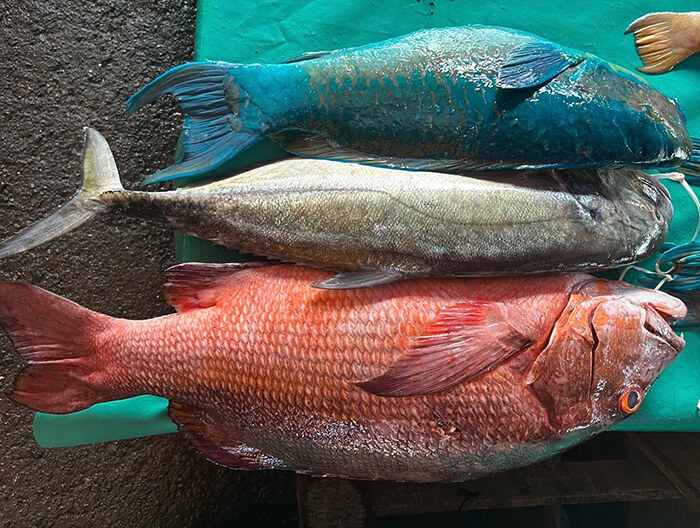
In the market, giant tunas, groupers, live crabs, and lobsters mingle with avocados and pumpkins. One day, I bought a whole pumpkin from a shrimp vendor. Most vendors sell their farm produce. Children help their parents by way of packing items or summing up the cost of their purchase. I once asked a boy who gave my change if he goes to school. I’m glad he does.
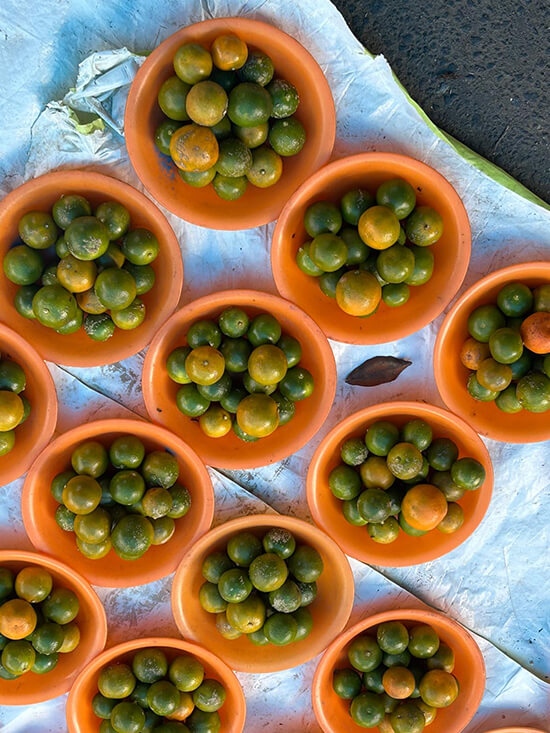
Fruits and vegetables sorted in heaps are spread on sacks and mats. If one wishes to buy guavas or pineapples from a pile, one must squat or stoop to examine their quality. Prices are handwritten on cardboards; vendors don’t hard sell I sometimes wonder if there’s a Fijian version for “bili na suki.” I usually buy half-ripe papaya and banana then we savor their natural sweetness after a day or two. Kumquat, a bigger and juicier variety of our kalamansi has become a staple. I have since used this versatile fruit for thirst-quenching juice sweetened with Fiji honey, for sinigang, pangat na isda or as marinade for tuna a la bistek.
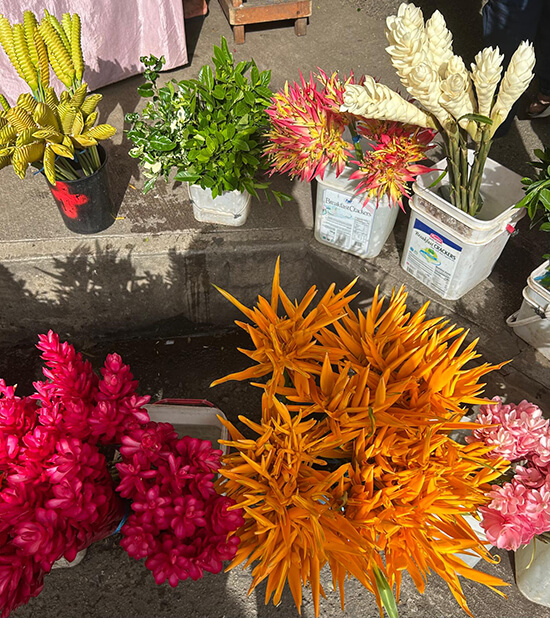
Because the alleys are narrow, one must give way to burly men pushing a small version of a wheelbarrow brimming with goods. I sooner learned, they assist marketgoers to carry their load for a fee, quite like the komboys of Baguio market. Before heading home, one could be tempted to stop by the flower stands. A bunch of exotic blooms like the red ginger (known as Samoa’s national flower), wild orchids, false bird of paradise decked with garden croton or ti plant is a steal for Fijian dollars or about 130 pesos.
For the uninitiated, Suva’s outdoor Saturday market seems topsy-turvy. But after two weekend forays, I found harmony through its jumbled scene.
What binds us
More than a trailing spouse doing my role in supporting the newly established Philippine Embassy team in Suva, I sometimes ask the hubby: in a broader people-to-people or diplomatic perspective, how could we expand our relations with Fiji? Our friendship and cooperation apart from existing ones? How could we make our presence relevant as we engage deeper with the Pacific Islands states, given their unique concerns, climate change, and sea level rise being fundamental among them?
There are quick answers, but the real work entails actions that are methodical, strategic, coordinated, sound, and collaborative. Like the events that shaped the Philippines and Fiji from their respective colonial pasts, and the bounties of the land and sea that sustain Filipinos and Fijians, the opportunities are bright, hopeful, and immense—as far-reaching as the largest ocean that binds South Pacific countries and ours altogether.
* * *
Doris Delgado Novice recently relocated to Fiji when her husband was named the Philippine ambassador to Fiji.