

The thousand-year feast: Why 'Chibog-Chow' is more than just a meal
There is a sacred kind of magic that happens when thousands gather—not to argue, not to accuse, not to draw red lines in the sand, but to share a hearty meal. It is the oldest magic we know: the alchemy of turning grain and pork into siopao; of simmering flour and broth into bowls of pancit that steam like incense; of wrapping memory into lumpia so that when you bite down, you taste not only savory filling, but centuries of uninterrupted friendship.
That was the quiet power of the “Chibog Chow Festival on Philippines—China Food and Culture,” held on Feb. 21 and 22 at Robinsons Manila.
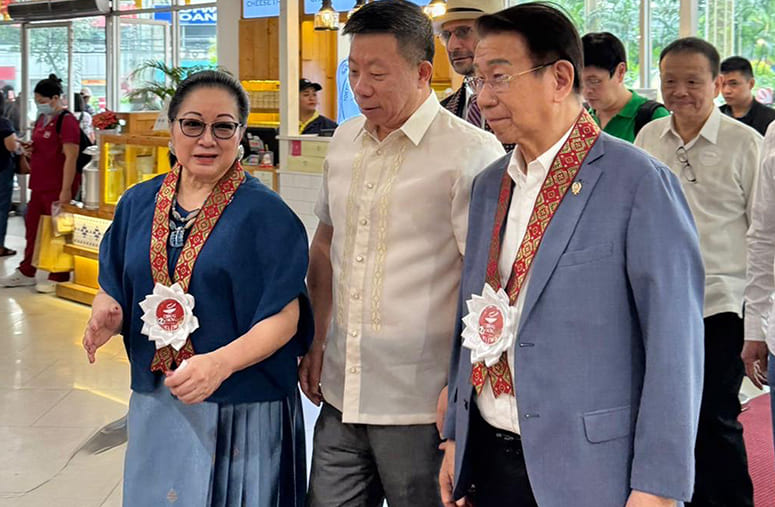
Conceived by educator and former senator Nikki Coseteng—a nationalist, bridge-builder, and longtime advocate of Philippines–China cultural dialogue—the festival combined the playful Filipino slang “chibog” with the universal “chow.” What emerged was not merely a successful, fun event. It was a remembering.
At a time when headlines magnify tension, the deeper story between our two nations is older than fleeting politics, steadier than rhetoric, and written not in ink—but at the table.
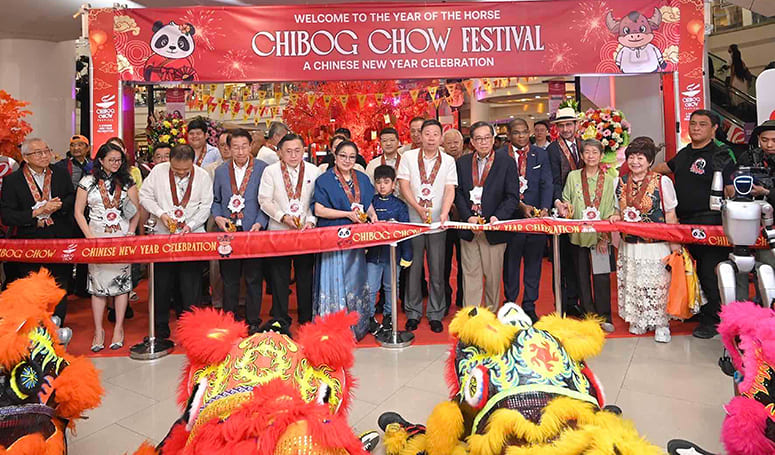
You could feel it upon entering. Chinese Ambassador Jing Quan moved through the crowd warmly, greeting business leaders, civic figures, and scholars. Federation of Filipino Chinese Chambers of Commerce and Industry, Inc. (FFCCCII) president Victor Lim broke bread, sharing hopia and conversation. Malaysian Ambassador Abdul Malik Melvin Castelino spoke animatedly with Palestinian Ambassador Mounir Y.K. Anastas. Sen. Bong Go clasped hands with families and fashion exhibitors. Robinsons Land Corporation president Mybelle GoBio looked on as the mall transformed, however briefly, into a living cathedral of taste and tradition.
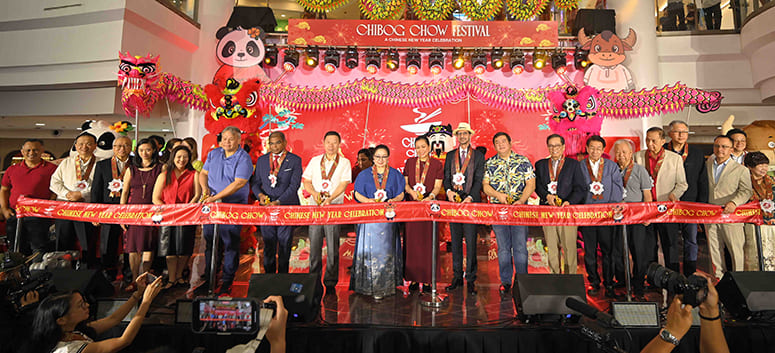
Behind the venue stands the Gokongwei-led conglomerate JG Summit Holdings, helmed by Lance Y. Gokongwei and Robina Gokongwei-Pe, proof that enterprise, too, is part of this shared story.
CONTINUE READING BELOW

But the festival’s true heart beat in the stories simmering beneath each dish.
Filipinos eat pancit at birthdays, imbibing the old Chinese belief that long noodles symbolize long life—never cut, only lifted whole, as if honoring continuity itself.
Historians remind us that Chinese traders sailed to precolonial Philippine polities more than a thousand years ago, especially during the Song dynasty. They crossed uncertain seas carrying ceramics, silk, and culinary traditions. In exchange, they encountered coconut, vinegar, gold, pearls, and tropical abundance.
What arrived as wheat noodles evolved into pancit bihon and pancit canton. Spring rolls became lumpia. Siopao, siomai, mami, biko, hopia, machang, kiampong—dishes born elsewhere in China—were reborn here and Filipinized.
This is not borrowed culture—it is braided culture.
Former senator Coseteng’s own family history embodies that braid. Her late grandfather, Eduardo Coseteng, was a prewar lumber tycoon and civic leader, part of a generation that navigated identities across two shores long before “globalization” became fashionable jargon. Lives like his remind us that history is not abstract. It is lived in ships boarded, risks taken, and loyalties carried in the heart. When Nikki spoke of bilateral friendship, it was not diplomatic choreography. It was inheritance.
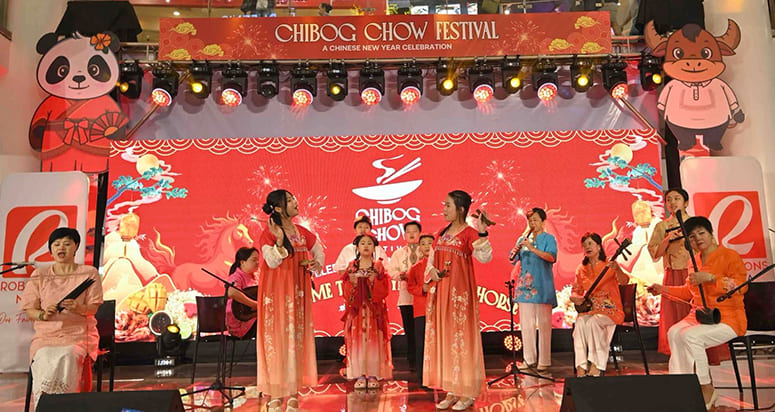
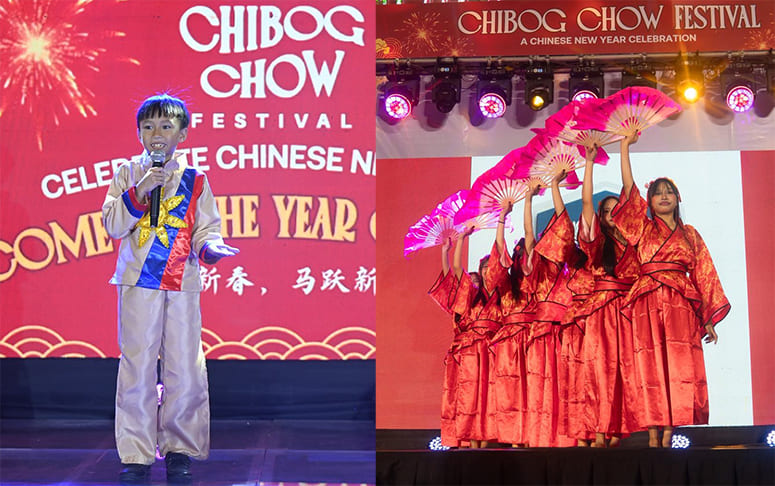
The Chibog Chow Festival stage reflected that layered continuity.
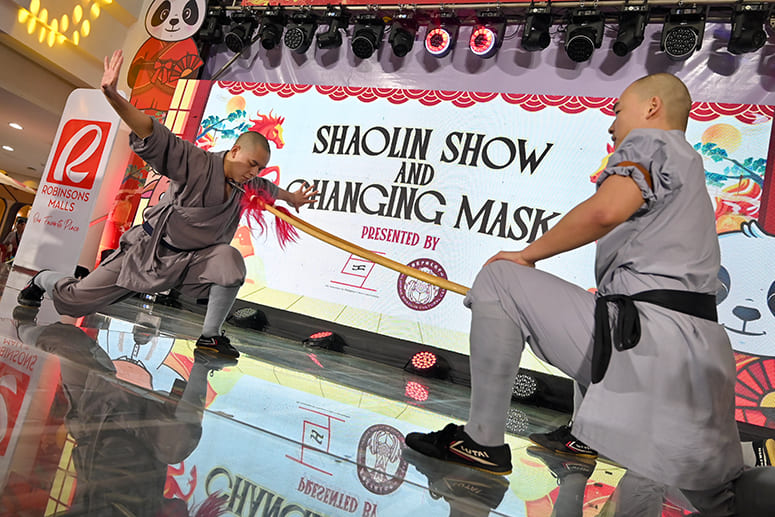
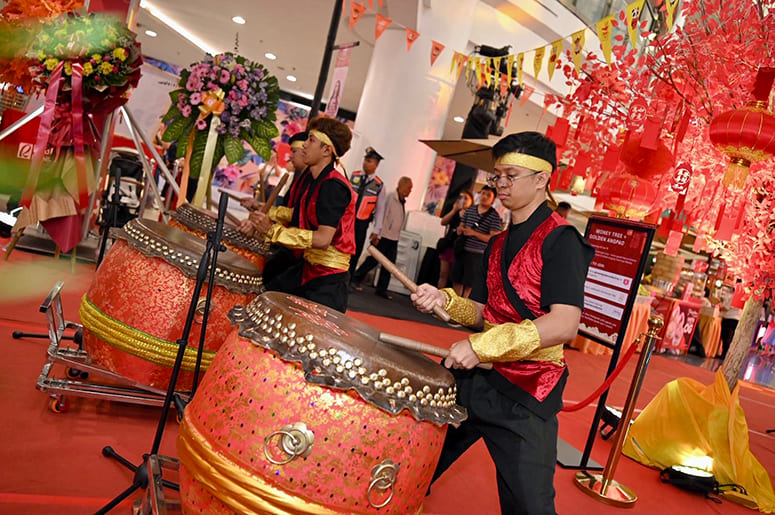
The Philippine Shaolin Center wowed the crowd, carving arcs of strength through the air in disciplined kung fu forms. The New Era University Choir sang both the Philippine and Chinese national anthems, and for a moment, the two melodies seemed less like separate compositions and more like harmonies seeking one another.
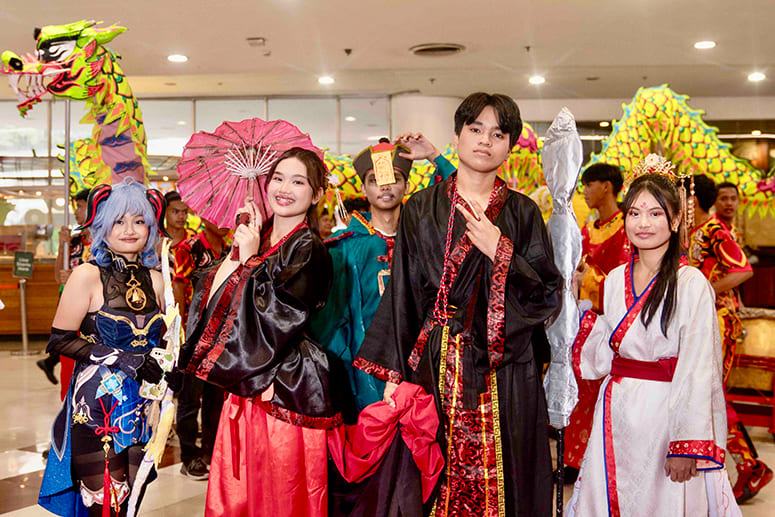
Prof. Dr. Rommel Banlaoi and Dr. Cynthia Liang discussed food security, diplomacy, and culinary exchange, serious conversations unfolding amid the scent of roasting meats and simmering broth. Leaders of the FFCCCII, led by philanthropist Victor Lim, mingled with entrepreneurs, educators, and families.
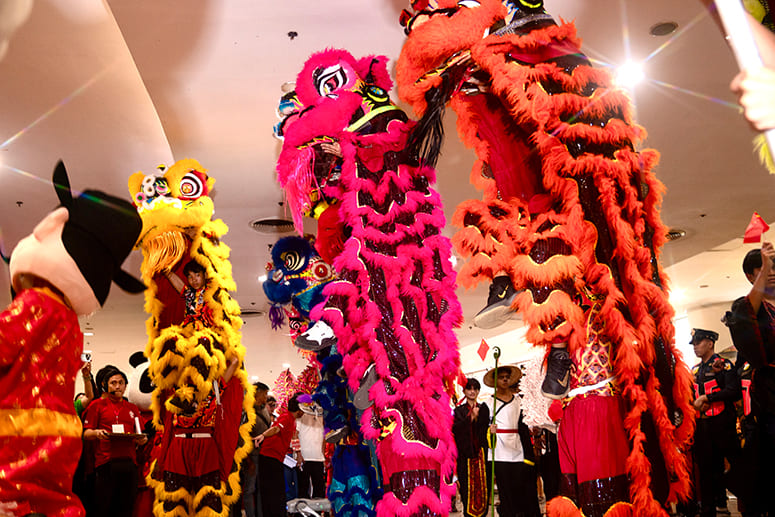
Dragon and lion dance troupes pulsed like living folklore. Neurologist Dr. Tan Cho-Chiong spoke about traditional Chinese medicine and acupuncture—ancient healing arts that have already taken root in Filipino soil. This writer of the 87-year old Kamuning Bakery Cafe was invited to recount colorful tales of Chinese contributions to Filipino food culture—such as how the Chinese invention of toyo, or soy sauce, deepened Filipino adobo, which previously used only vinegar, and how hopia and siopao became everyday comforts.
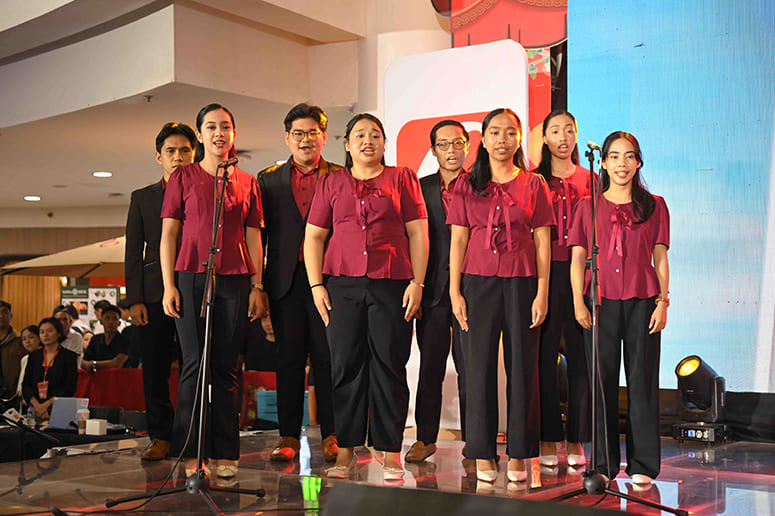
Feng shui consultant Marites Allen spoke of prosperity not as superstition, but as alignment. The Sanidad Sisters sang in bright harmony; Xiaoyang Zhao’s guzheng trembled like a river remembering its source. 6cyclemind performed on Sunday night to an enthusiastic audience.
Even the future joined the Chibog Chow feast: Converge’s humanoid robots, Convi and Convo, danced beside mascots Pinchi the Panda and Nanoy the Tamaraw.
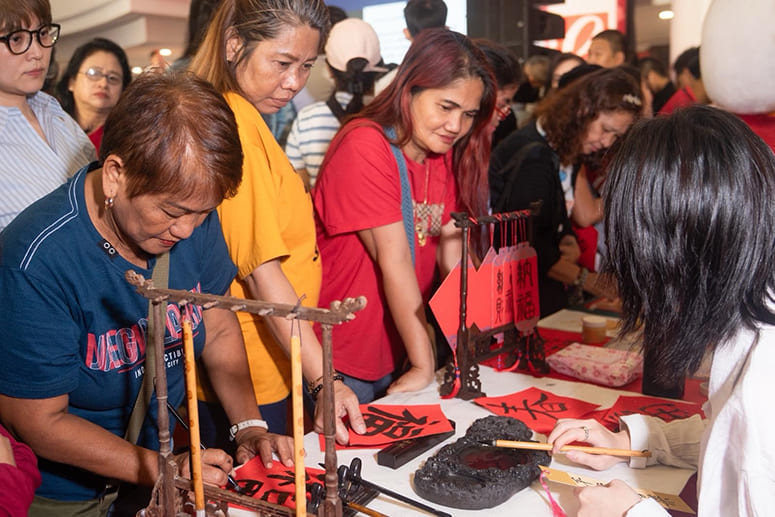
Yet the most moving sight was the simplest: numerous people lining up—for tikoy and taho, siomai, batchoy and arroz caldo; for angpao red envelopes and other gifts. Students from Diliman College and other schools. Diplomats. Business leaders. Professionals. Curious weekend mallgoers who wandered in and stayed. They shared tables, passed bowls, compared flavors, and laughed over second servings.
Culture, after all, is the longest river. Governments posture. Policies fluctuate. Politicians come and go. Trade winds shift direction. But ordinary people continue to cook, to eat, to celebrate births and mourn losses with food placed at the center of the gathering.
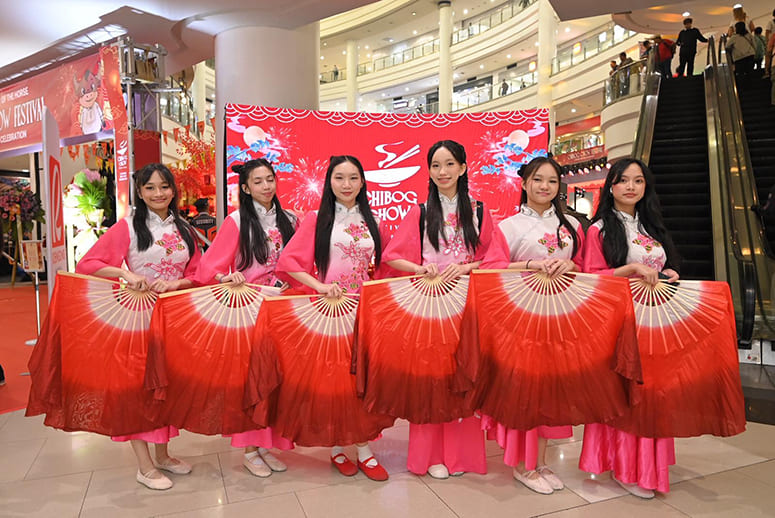
Centuries before Western colonizers discovered the Philippines on their maps, Chinese traders and artisans were already part of the archipelago’s commercial and cultural landscape. Over many generations, migration, cultural exchange, and vibrant trade shaped what we now simply call Filipino life.
We are not strangers across the sea. We are co-authors of kinship and commerce.
As Coseteng moved through the crowd—embracing old friends, welcoming new ones—the symbolism was unmistakable. The noodles did not break. The bowls did not empty. Conversation flowed.
If the past thousand years were written in trade winds and shared meals, perhaps the next thousand will be written the same way—not in confrontation, but in communion. Served warm. Passed hand to hand. Sustained by memory.
Here’s to the next thousand years.

WATCH: Pixar Summer Fest adventure at Hong Kong Disneyland
August 10, 2026