

Experiencing Türkiye through food
Eating Turkish food is like experiencing an entire culture, centuries of history, and a world of traditions and rituals. Influenced by constant migrations and the country's geographic location, Turkish cuisine is both East and West—exotic, unique, universal, and everything in between. After all, Türkiye is the only country that straddles two continents, Europe and Asia. As such, it has long enjoyed access to trade routes and the resulting exchange of goods such as spices, wines, honey, dyes, and teas. Türkiye's luxuriant fertile land, as well as the resources of the Mediterranean and the Black Sea, have likewise contributed to the development of its rich and diverse cuisine.
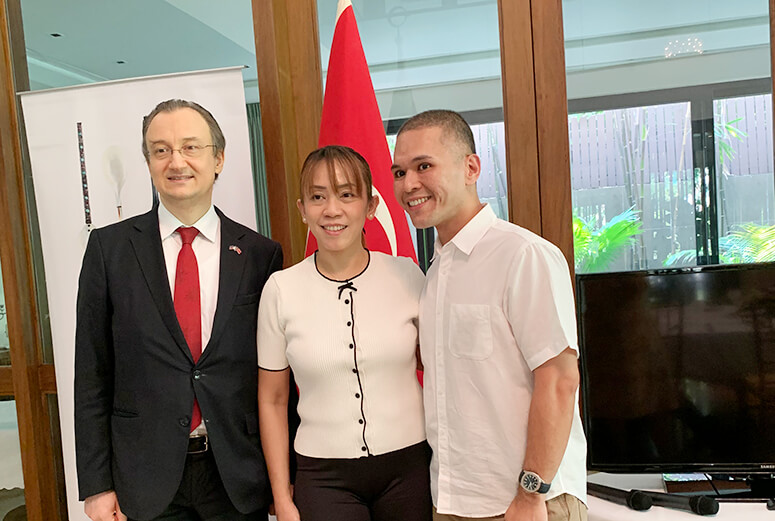
A heritage table prepared at the residence of Turkish Ambassador Niyazi Evren Akyol and Indri P. Akyol in celebration of Turkish Cuisine Week recently gave us a taste of this vibrant cuisine. “The meal table (sofra) is the most complete expression of this accumulation,” Amb. Akyol noted in his introductory speech. “It is a silent but enduring platform for dialogue established between eras, geographies and lifestyles.”
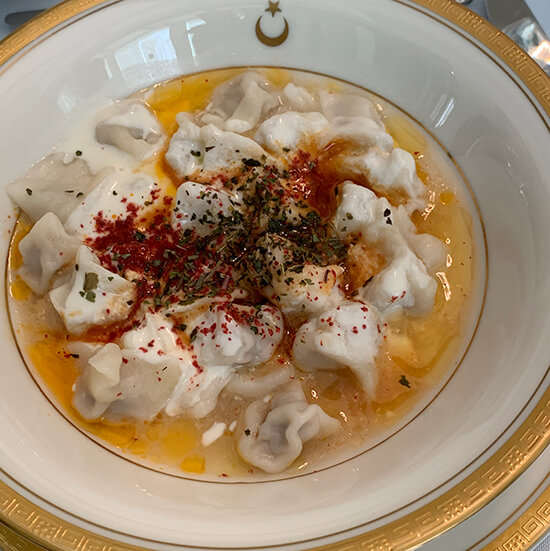
Held in cooperation with Wildflour Hospitality Group (represented by its CEO Ana Lorenzana de Ocampo), the luncheon was prepared by chefs Ilhani Kulig and Carlo Miguel and melded Turkish dishes with touches of Filipino ingredients. For a starter, we had manti, thumb-sized dumplings of seasoned beef encased in thin dough. A butter sauce with a pinkish hue and generous slathers of garlic yogurt added a pleasant, piquant flavor. It is a heritage dish with several variations across the country's different regions.
Next was the classic Zeytinyağlı Yaprak Sarma. A stuffing of fragrant rice, sweet onions, and aromatic herbs such as dill and mint was seasoned with warm spices like cinnamon and allspice, then wrapped in softened grape leaves. Simmered in olive oil and served chilled, this delicacy is often the centerpiece of Turkish mezze platters.
Another appetizer was Peynirli Tepsi Böreği, a savory pie with a smooth filling of crumbled white cheese and fresh parsley encased in translucent sheets of phyllo dough. Its creamy texture and golden-baked crust made it seem like a complex dish requiring considerable expertise. But Mme. Akyol said it is actually her “lazy dish,” one she prepares for her family when she is in a hurry because it is surprisingly easy to make.
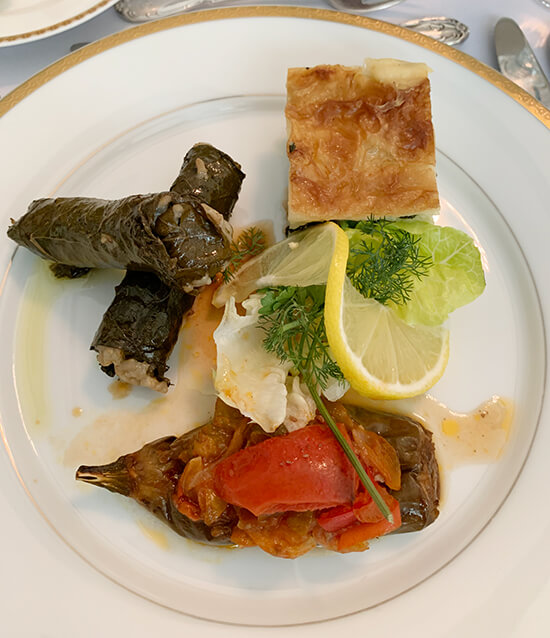
The next appetizer had the playful name Imam Bayıldı, which translates to “the imam fainted.” Legend has it that a local religious leader fainted after tasting the heady flavors of eggplants stuffed with onions, tomatoes, and garlic cooked in olive oil. Here, we found a Filipino connection because it tasted somewhat like the eggplant sauce served with pochero and nilaga. The dish was so delightful that it probably deserves the whimsical name it has been given.
CONTINUE READING BELOW

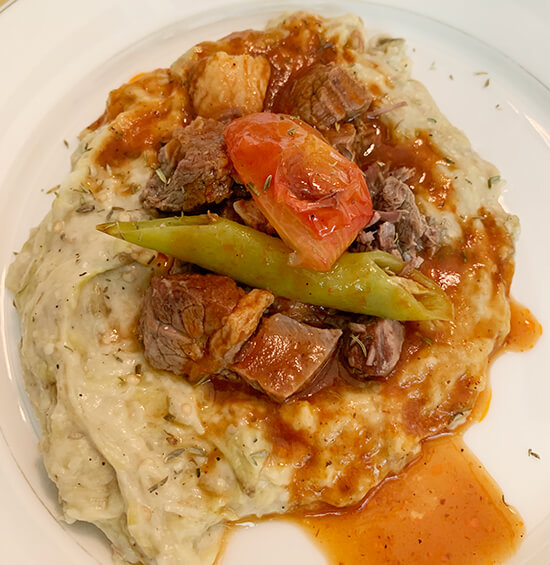
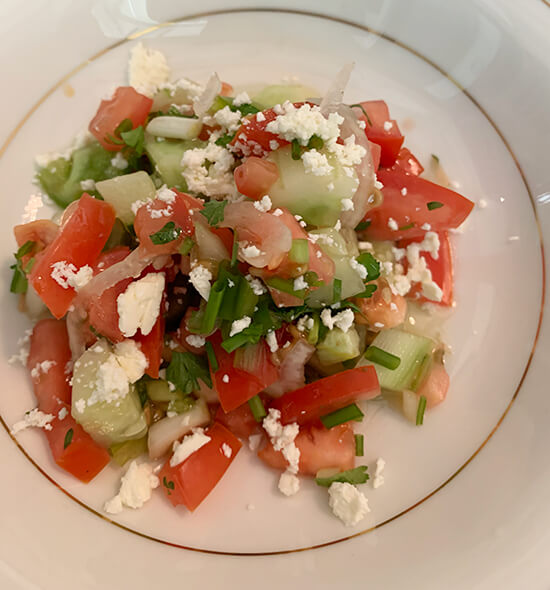
The main dish, on the other hand, translates to “the Sultan liked it,” or Hünkar Beğendi. This classic Ottoman palace dish again featured eggplants, this time transformed into a velvety purée with a redolent, smoky flavor. Topped with slow-cooked, tender beef stew and served with a creamy béchamel sauce, it was richly satisfying. We were glad to have a refreshing salad on the side. While in some countries salad is usually served as a separate course, in Türkiye people eat salad alongside the main dish, alternating bites of one with the other, according to Amb. Akyol. That is probably a wise choice because the Shepherd Salad of crisp cucumbers, juicy tomatoes, green peppers, onions, and parsley, drizzled with olive oil and lemon juice, was the perfect counterpoint to the hearty flavors of the beef and eggplant.
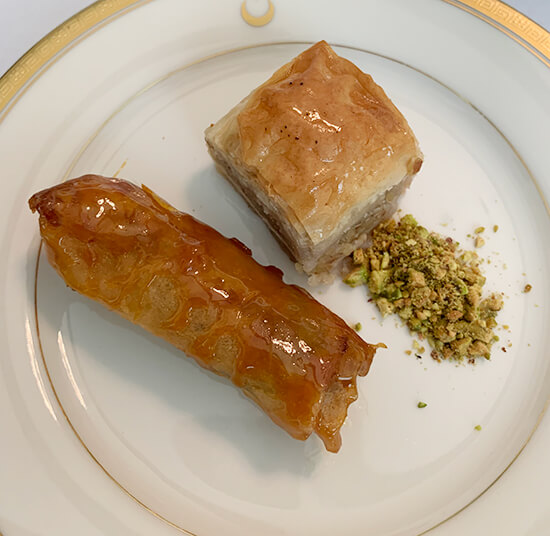
The first dessert was “another example of a culinary journey across geography and time”: the classic baklava. Crushed pistachios were encased in delicate pastry sheets and drizzled with sweet syrup.
“There are many varieties of baklava,” said Amb. Akyol. This, he explained, is one of the more familiar versions. With its crisp pastry and chewy filling, this Middle Eastern delicacy was served in dainty slices. And although it tasted excellent to us, Amb. Akyol said there are even tastier ones in Türkiye.
The second dessert was a fusion of Turkish and Filipino cuisine: katmer turon. Inspired by the Turkish katmer, a decadent pastry, and the Filipino turon, it consisted of a lumpia wrapper filled with caramelized white cheese instead of banana. It was a clever way of presenting two culinary favorites in one.
“Every recipe bears the mark of an era,” Amb. Akyol noted. “Every cooking technique is a document of a way of life.”
In addition, Turkish food is very family-oriented, said Mme. Akyol. Thus, not only is it a cuisine of shared history and shared culture, but, as we learned at the Heritage Table, it is also a cuisine meant to be shared among family and friends.

WATCH: How to experience Bangkok and Kanchanaburi in one trip
October 21, 2026
WATCH: Do you still believe in marriage? (Generations Ep. 17)
August 19, 2026
WATCH: Can you still trust someone who betrayed you? (Generations Ep. 22)
September 23, 2026