

Eye-catching today, iconic tomorrow: Inside the IKEA PS 2026 Collection
BrandedUp in partnership with

ÄLMHULT, Sweden—Those three Democratic Design Days were a blur. It took us less than two hours by train from Copenhagen to reach this little Swedish town called Älmhult, the historic heart of Ikea and home of its mothership. It is a one-vinyl-store, village-like area straight out of a piece of Scandinavian cinema where it’s cold, calm, and serene on the outside, but bursting with life on the inside. It was the total opposite of my current life in the Groundhog Day subdivision filled with Zumba and pickleball obsessives.
That trip was a big, bold, beautiful haze (to steal a phrase from the real Homelander) of talks, museum tours, house visits, dinners, drinks, and jazz-playing Swedes. Even now, I miss those daily routines. We stayed at the Ikea Hotel with its unlimited coffee and sparkling water as well as all things comfy and, well, Ikea. We were treated to dinner at MUMS (Meeting & Museum Spaces), which was festooned with scarlet as far as the eye could see, weirdly reminding me of the “Red Wedding” in Game of Thrones. (Thankfully, no throats were slit. It rained, though).
We also found ourselves standing next to an almost eight-foot, teal installation of a Vallo watering can designed by Monika Mulder, darkly realizing it might hold just enough freshwater for an AI to generate a picture of Jesus as bodybuilder or a reel of your uncle flying in a Superman costume. A short bus ride on day three brought us to Loshult—a rustic, Scandinavian Noir-esque village—to visit the homes of designers who work for Ikea. We saw farmlands punctuated by picturesque houses in Swedish Falu red. But, most importantly, we attended the launch of the much-awaited Ikea PS 2026 Collection with each piece exhibited—ambiently lit, museum-style—at the original Ikea store in Handelsvagen.
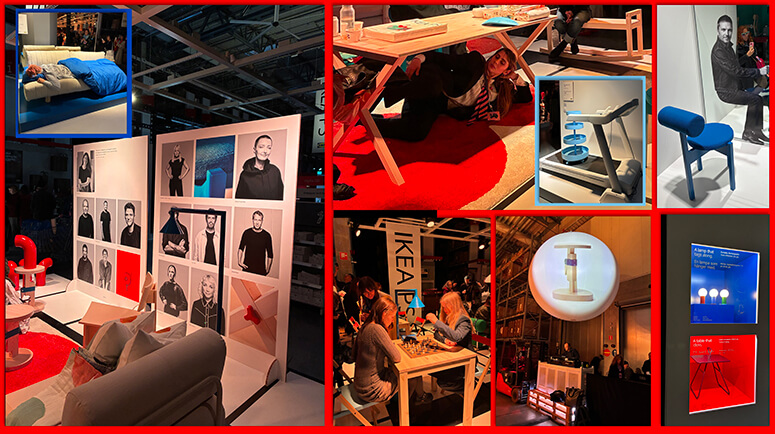
We also sat down with their design brain trust and discussed the new lineup: eye-catching today, iconic tomorrow.
Design may well be the last functioning democracy. In the case of furniture, it is still “of, by, and for” the discerning many. If a piece is playful, functional, relatively affordable and uniquely quirky (not just some mass-produced trappings), it simply makes design sense. And when it fits right into one’s home, more people—the ones with good taste, in particular—will inevitably embrace it, even finding a certain charm in the entire overture of unboxing and assembly.
And, yeah, you would never realize how opera fits right into the halls of Ikea until you hear it for yourself.
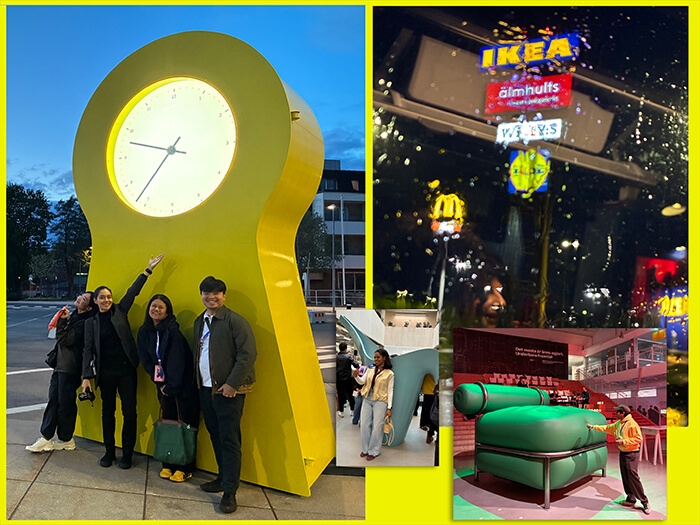

So there. A lady singing opera, wine and Stonewall lagers in trolleys, and a chat with some of the brightest minds in modern Scandinavian design and the evening was set.
Since its inception in 1995, the PS (“Post Scriptum”) line has served as Ikea’s playground, or its platform, for the boldest, most experimental design that the designers could imagine, while remaining accessible to everyone. For the 10th edition, the driving philosophy centers on “playful functionality” and a distinct approach to simplicity. Ikea Philippines’ Cidge Laxamana and I tracked down creative leader Maria O'Brian to ask her how ideas hatched in a tiny Scandinavian town resonate so well with us Filipinos living halfway across the world.
We learned how each piece is designed for the reality of small spaces; very apt indeed for our living situation especially in Metro Manila. (Heck, my first apartment had enough space for a bed, a modular rack of books and CDs, a mini ref, and a weathered, sticker-happy Samsonite suitcase—a veritable crib fit for that rascal Raskolnikov—and yet I was able to transform it with key Ikea pieces, such as a purple Espressivo telescopic halogen lamp and, later on, Red Dot-awarded PS low-metal cabinet by Nicholai Wiig Hansen that would endure house-moves and other upheavals.)
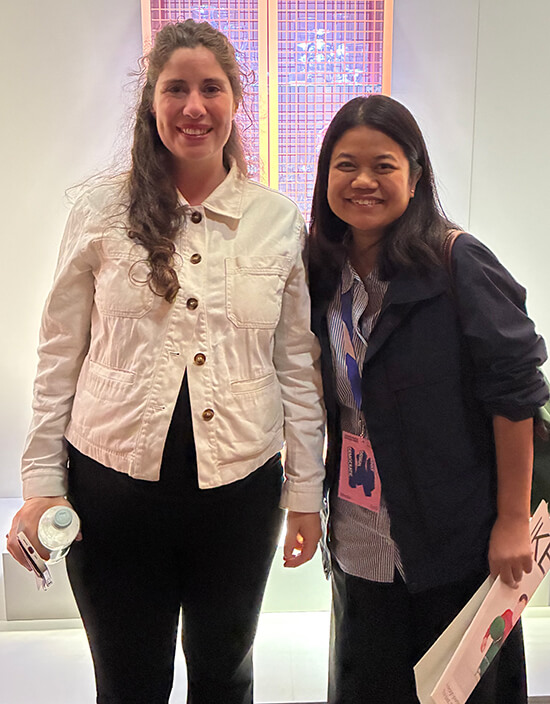
O’Brian understands the prevailing conditions. A foundational pillar of the collection is addressing the global trend toward dense, urban environments. She emphasized that “the likelihood that we are going to have bigger homes is so small, because we are more and more living in dense areas with more and more people.” However, living in limited square footage should not mean compromising on character.
“We really wanted to make a bold design that could fit in a small space, because people do not always want to have smaller aesthetics or smaller things, even though they live in a small space,” O’Brian explained. “The collection aims to celebrate the small space and not make it only functional or only practical, but allow people to have that fun moment and be encouraged to show their personality.”
Acknowledging the tight living spaces in Manila—which often start at just 20 square meters—Cidge asked Maria if she could help choose three pieces that would make the most of the limited area.
One of O’Brian’s top picks is Ellen Hallstrom’s foldable chair, which she admires for its striking aesthetic value. She notes that the chair functions almost like an art piece, particularly when it is hung up and stored on the wall. This design choice draws heavy inspiration from the Shakers’ clever approach to small spaces and their tradition of hanging unused items out of the way. According to O’Brian, the designer perfectly captured this space-saving philosophy by creating a complementary hook rack that works seamlessly with the chair.
When it comes to versatile lighting solutions, O’Brian highly recommends Lex Pott’s lamp. The appeal of this piece lies in its multifaceted efficiency. While a single room might typically call for an up-light, a reading lamp, and a spotlight, owning three separate fixtures takes up valuable square footage. This specific lamp tackles that problem by rolling all of those lighting needs into one streamlined product.
Rounding out her favorites is the collection’s trolley, which O’Brian praises as a surprisingly accommodating addition to the home. She notes that despite not looking like a traditional small-space storage unit at first glance, it provides an impressive amount of holding capacity and utility, making it a highly useful piece for compact living.
All three embody the credo: less but more, simple but not a bore.
“This is almost like picking your favorite child,” said Maria with a chuckle. During her opening remarks, she said that they worked with the idea of “playful functionality,” as those are two words that they think people will need even more of in the future. “(Each piece offers) Scandinavian simplicity, but with a little intervention, making it exciting, giving you a surprise, and even through the functionality, bringing a smile to your face.”
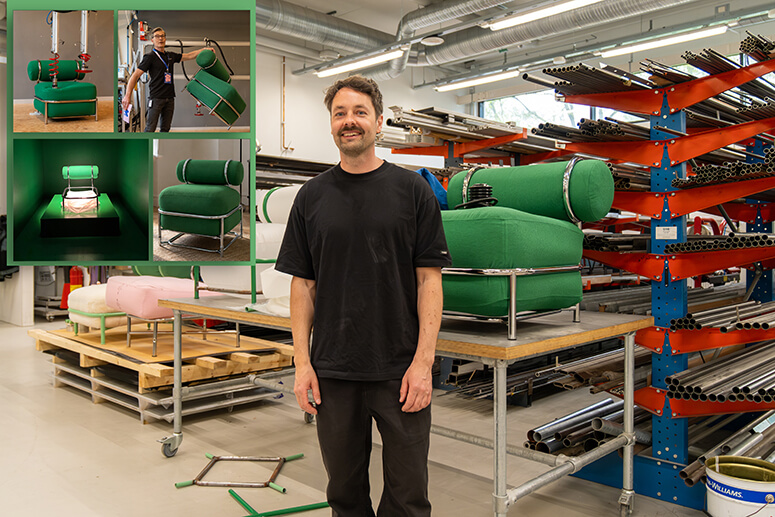
A smile did creep upon my face upon seeing Mikael Axelsson’s Inflatable Chair. If I had it in my first apartment, that chair in a nameless pop-green shade would have totally tied the room together.
Shop talk
It was time to pick the brains of some of Ikea’s most celebrated designers during our visit to the prototype shop.
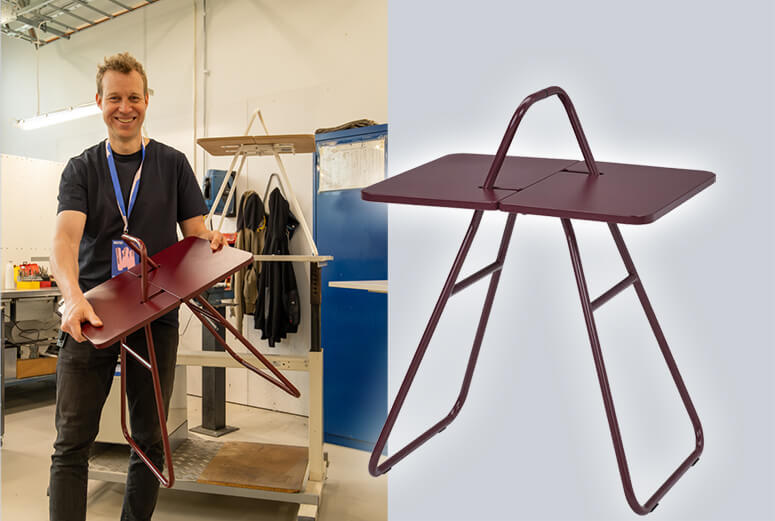
“I think especially for this side table, the scenario was small-space living,” said designer David Wahl of his innovative, highly portable project. Drawing inspiration from his life as a gigging musician, Wahl sought to create furniture that matches a fast-paced, transient lifestyle. “Being a drummer is mostly about carrying things around and then setting them up. That is really inspiring, actually,” he shared. For this side table, you do not need to take it apart every time with a lot of screws. “You can just fold it and put it on your bike, or take it on the subway.”
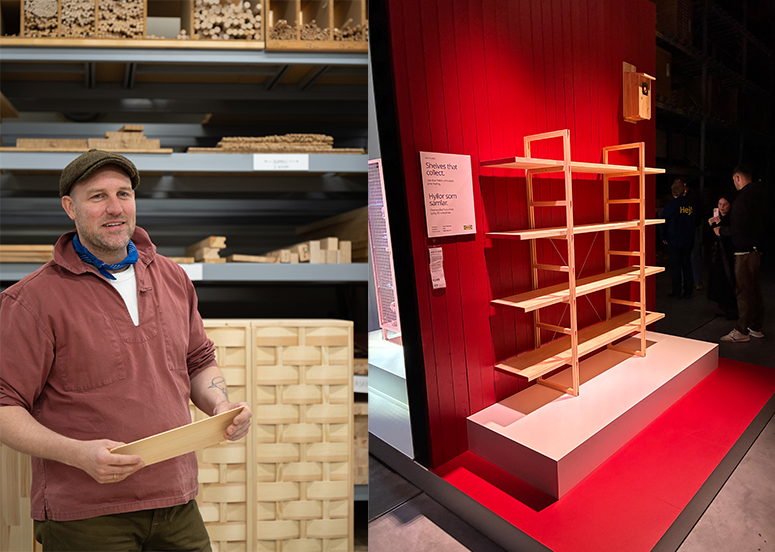
“I have a background as a cabinetmaker,” remarked designer Friso Wiersma, discussing the inspiration behind his new wooden shelf. Drawing on his five-year apprenticeship, he sought to bring a traditional practice into his modern design process. “In the world of craft, it is quite common that you do what we call a homage. It is like honoring your master in the work that you do.” The result is a tribute to a classic Ikea piece originally from 1985. “I wanted to do a fully wooden version of that shelf, and this is the result,” Wiersma noted. He specifically aimed to capture the airy aesthetic of the original. “What I like so much about the cabinet is that you have the shelves, but it is open and light. When customers buy it, they can put their personality onto it, which I think is amazing.”
I could just imagine the stacks of fusion records that would inhabit those spaces, or maybe a murder of books by Tolstoy and Pynchon, all dog-eared, dusty and abandoned halfway.
Wiersma recalled, “One of my former teachers said, ‘Wood is the boyfriend you cannot trust (laughs). Wood will tell you one thing and then behave in another way. When you are learning the craft of wood, it is also about humbling yourself.”
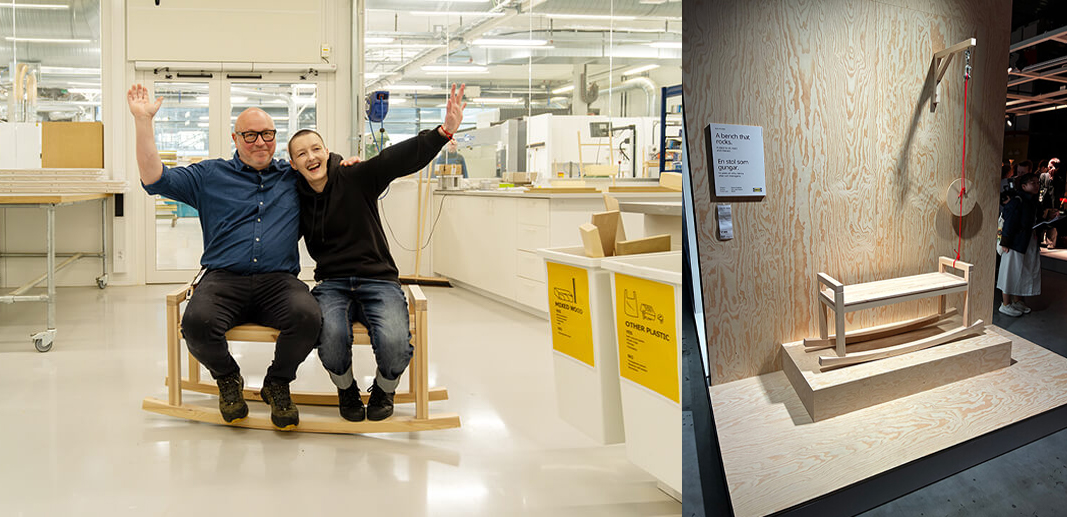
When tasked with designing a simple piece of seating around the theme of an “optimistic future,” designer Marta Krupinska knew she had to create something extraordinary. Driven by a desire to design an “ultimate joy maker,” she decided to push the boundaries of her original assignment. “The function was given to me from the start to design a bench. But I have this giant rebellious kid inside me, and I wanted to do more than just a plain bench,” she explained. Teaming up with prototype engineer Fredrik Larsen, Krupinska transformed her vision into a unique “walking bench” by adding runners to the base, like a compact seesaw. And to encourage a communal, interactive experience, she also made a crucial structural change to the final design.
“We want people to have the possibility to sit from both sides,” Krupinska noted. “They sit, they drink beer, and they enjoy themselves. They are doing this move (describing a swaying motion), and that is what I wanted to capture. With that bench at home, you can have this small version of Oktoberfest.”
When designing the aforementioned inflatable chair, Mikael Axelsson had to overcome some historical hurdles. “Ikea tried air furniture back in the mid-1990s, and it was a big failure, so people did not really dare to do it.” he explained. Past issues included the furniture being too light and customers accidentally melting the plastic by using hot hair dryers to inflate them.
However, Axelsson remained passionate about the concept’s sustainable and democratic potential. “One reason I did not leave the concept was because I think it is such a nice idea to use something that is free and available for everyone,” he shared. “It is poetic, I think, to use air. It is also really nice to try to reduce as much material as possible, to reduce foam and material.”
I wanted to be witty, maybe say something about Aristophanes as TikToker, sitting on air, haughtily commenting on the amplified choruses of humanity’s dregs. But all I could think of at that moment was how Mikael put the air in chair. Geez.
Postscript
Imagine being back in our nation of warring legislators, shutting it all out by listening to obscure vinyl bought from Hot Stuff Sweden with its wall-mounted Johnny Rotten-signed “Never Mind The Bollocks” LP. You catch yourself staring at a piece from the latest Ikea PS Collection— vases that hear, a table that clicks, or curtains unceasingly changing colors when wet—thinking that even my veritable house of horrors could be transformed into a home Swede home.
My biggest takeaway from that Älmhult trip is the reason why democracy thrives at Ikea: the furniture is designed by ordinary people with extraordinary lives. Take the former drummer who gigged in China and still becomes animated at the mention of Neil Peart or the Purdie Shuffle. Then there’s Lukas, who lives in a house with a bageri (bakery) on the ground floor, and Sarah, who spent her youth watching concerts at Roskilde—the site of the Pearl Jam crowd disaster in 2000. There was also a fellow who apprenticed for a master carpenter and is now married to a Dutch artist who uses the giddiest, most delirious blue you’d ever see. All day long, inside the prototype shops of that unforgettable Scandinavian town, they think up new objects for us ordinary people who aspire to an extraordinary home.
In every piece of Ikea furniture, from their rooms to ours, a forest of stories.
Dreams and democracy, after all, both require some assembly.
* * *
Ikea PH customers have access to the complete PS 2026 Collection. Cidge Laxamana emphasized the brand’s commitment to broad availability, stating, “We believe great design should be accessible to everyone and we’re excited for customers to experience the full collection as it was intended… playful, functional, and designed for everyday life.” The collection’s multifunctional nature is expected to strongly resonate with local customers, particularly those living in condos and smaller urban spaces where “every square meter matters.” Because Filipinos are highly creative with compact or shared living areas, Cidge noted that the new line is “filled with smart and flexible designs that help make room for everyday life without compromising on personality.”
Special thanks to Jasmin Ferrero-Cruz and Ikea Philippines. For information, www.ikea.com/ph.
* * *
Editor’s Note: This article was provided by IKEA Philippines.

WATCH: Save for retirement or enjoy life now? (Generations Ep. 21)
September 16, 2026
WATCH: Can we talk about death and grief? (Generations Ep. 25)
October 14, 2026
WATCH: Is OPM still as good as it used to be? (Generations Ep. 20)
September 9, 2026