

Tasting Culinary History at Digámo
There is excitement as Digámo opens in Marikina. This new restaurant by Chef Francis Lacson provides a neo-Filipino Experience that combines Filipino food history with modern culinary artistry.
Francis is a multi-awarded chef and food writer who grew up among family and community cooks preparing food for the town’s largest gatherings in Capiz.
Today, Chef Francis is recognized not only for his cooking but also for his contributions to Philippine food writing. He is a three-time recipient of the Doreen Gamboa Fernandez Food Writing Award and has also been recognized for his work in food storytelling through video and culinary competitions.
Francis offers diners a deeply personal and progressive Filipino dining experience grounded in memory, culinary history, and flavor. The Hiligaynon word digamo speaks not only of the act of cooking but the thoughtful “setting in order” of a shared table.
The 14-seater restaurant presents its inaugural tasting menu, “Playful Evolution,” a sequence of dishes that traces Filipino cuisine across centuries of influence and exchange. From pre-colonial techniques to the legacies of Chinese trade, Spanish and American colonial histories, Japanese influence, and contemporary culinary thought, the menu reflects Chef Francis’ belief that Filipino food is best understood as a dynamic conversation.
Among the dishes on the opening menu are imaginative interpretations of deeply rooted flavors. Among my favorites are Binabak — Ulang (river prawn), reimagined as the classic steamed Antique delicacy called binabak as kilawin-style river prawn and its rich prawn fat and under is a bed of creamy, pounded cassava leaves infused with coconut milk, and topped with latik.
CONTINUE READING BELOW

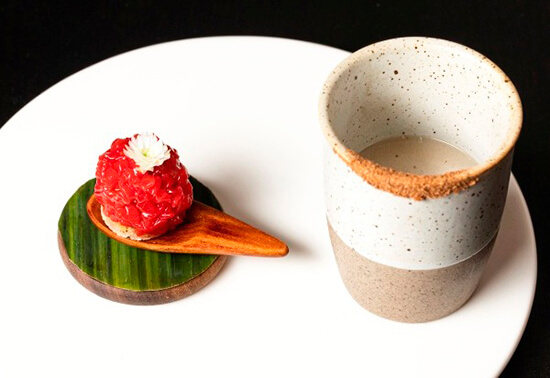
Then there’s Nilupak, “a tribute to the countryside culture of mashing using lusong (wooden mortar and pestle) to prepare a mixture of pounded saba (banana), palm sugar, and coconut meat on top of a crisp cassava cake, coated in nata de batuan for a Visayan tangy finish.
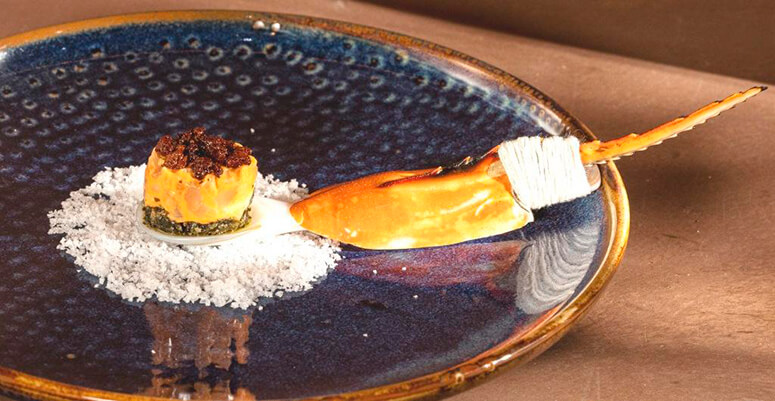
The Tenga at Tenga at Tenga is coined from the name (and textures) of ears (or tenga in Tagalog). This dish honors sugba, a pre-colonial wood-firing technique that serves as the foundation of our modern Filipino barbecue. This trio features three types of “ears”—tenga ng baboy (pig’s ears), tenga ng daga (wood ear mushroom), and abalone, each offering resistance to the bite. This is dipped into the ‘bloodless’ dinuguan (blood stew) made from savory corn smut (like the Mexican huitlacoche), a fungus found in the corn of Quezon province gives a hint of truffle flavor.
Diners travel to the Visayas with linagpang, another pre-colonial technique where grilled meats and aromatics are transformed into a smoky, savory broth that features.
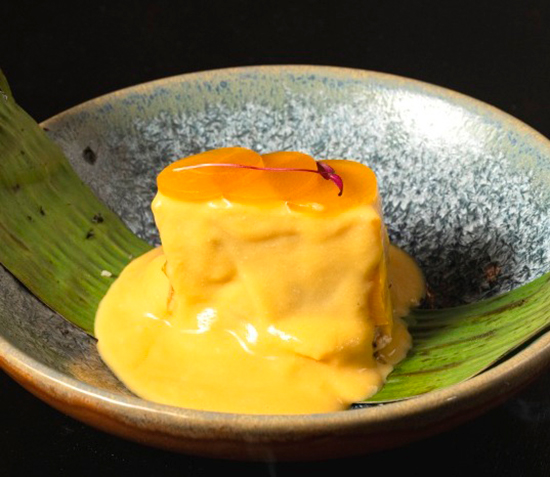
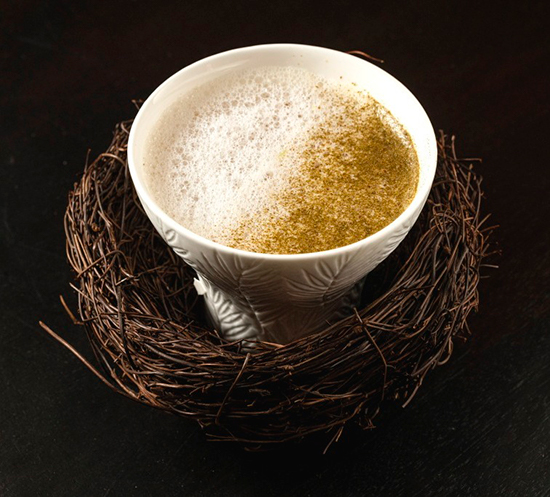
Iloilo’s dumaraga nga manok (free-range chicken) and sinalay (smoked shrimp) from Capiz, topped with ginger-lemongrass foam and tangy libas leaves. The broth tops a chicken taho (custard) at the bottom of the cup. Tamales arrived here via the Galleon Trade.
Kalabasa (pumpkin) is prepared in two ways by Francis. First, ribbons of kalabasa are tossed in Bukidnon honey, unsalted butter, rice flour, and coconut oil, then pressed and steamed in banana leaves then served with burong hipon (fermented shrimp) adding an umami flavor touch and pickled kalabasa, then topped with an airy salted egg sauce. Kulawo is an indigenous pre-colonial Southern Tagalog process infusing freshly grated coconut with hot coals to create a smoky coconut cream that tastes like grilled meat.
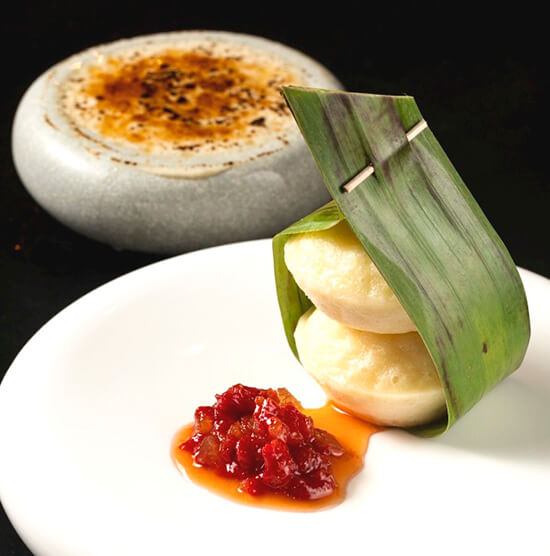
A smooth and velvety talong kulawo (eggplant) version by Francis is topped with burnt brown sugar, and finished with extra virgin coconut oil and served with a sweet-tangy watermelon jam to help balance the richness of and to incorporate a bit of American influence.
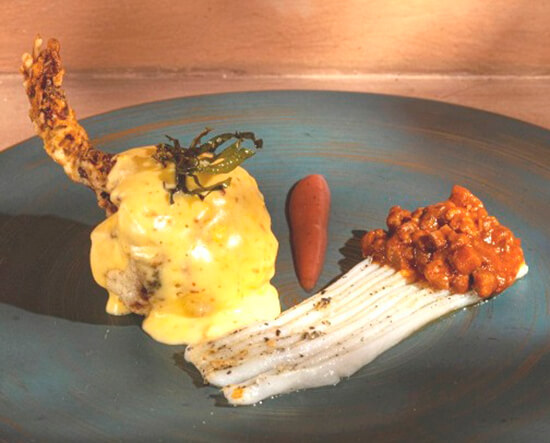
Then comes C3 inspired by the American fast-food era. This is a nod to the iconic “chicken-and-spaghetti” combo. Francis applies the signature techniques of that famous fried chicken to soft-shell crab, paired with lumot (cuttlefish) a la plancha cut into “spaghetti” shaped noodles and dressed with a rich taba ng talangka (crab fat) sauce and egg rice.
Each course of the tasting menu draws from research, regional traditions, and lived memory, transforming familiar references into refined expressions. Francis adds that “Digámo is a longer table. It is a place for better and deeper conversations about Filipino food. It comes from the desire to honor where we come from while allowing our cuisine to move, question, and grow.”
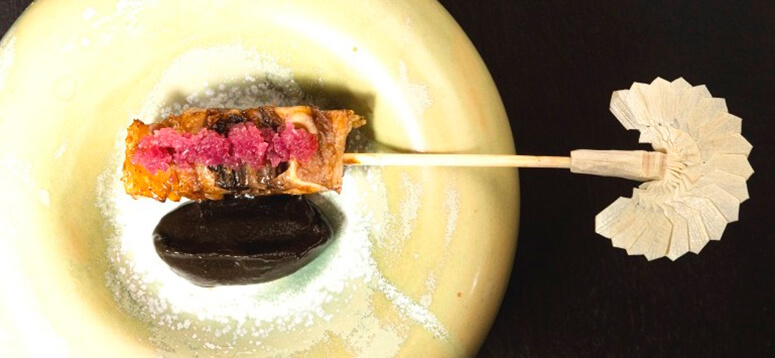
I enjoyed the majority of the tasting menu but highlighted what I truly loved. Francis stated before we left, “For our Happy Endings, we’re serving LuzViMinda. Inside that nostalgic stainless baunan are Bulacan’s pastillas de leche made of fresh carabao milk, Iloilo’s baye-baye made of pounded pinipig, and Sulu daral or rice crepe filled with salted hinti (sweet coconut meat). Enjoy each bite with your fingers.”
The biggest surprise of the evening was the pastillas wrapped in those intricately cut colored paper wrappers that I thought was a lost art. I am glad that art is not dying and that Filipino traditions, such as the pastillas wrappers will live on, just like what Digámo is doing to highlight the memories of the Philippines’ past through its dishes.
Digámo is located at GCN Building, 240 Narra Street, Marikina Heights, Marikina City. For reservations, go to www.digamo.ph.

WATCH: Can we talk about death and grief? (Generations Ep. 25)
October 14, 2026
WATCH: Discovering Vietnam in three days
June 9, 2026
WATCH: Save for retirement or enjoy life now? (Generations Ep. 21)
September 16, 2026