

There’s no ‘kakapeepeedoodoo’ in this master class
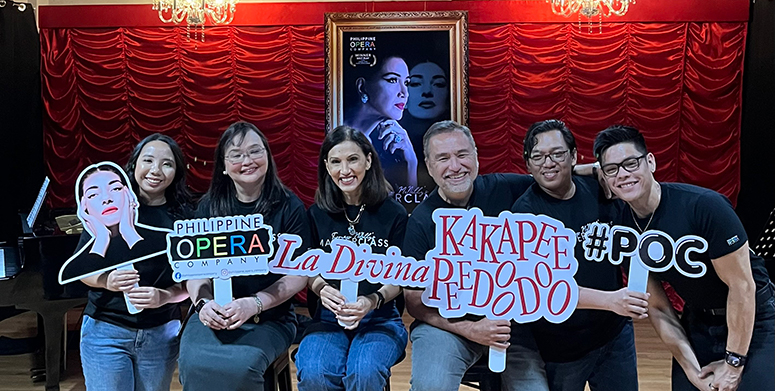
Maria Callas endured a lot of things in her life but one thing she could never tolerate was kakapeepeedoodoo. That’s nonsense or a lot of crap that was verboten as far as singing was concerned in Master Class, the Tony-award winning play written by Terrence McNally who created a fictionalized dramatization of the opera diva’s master classes for students at Juilliard in the early 1970s. It was so close to home for Karla Gutierrez, a soprano and artistic director of The Philippine Opera Company, that she found it a most fitting show for the company’s 25th anniversary celebration.
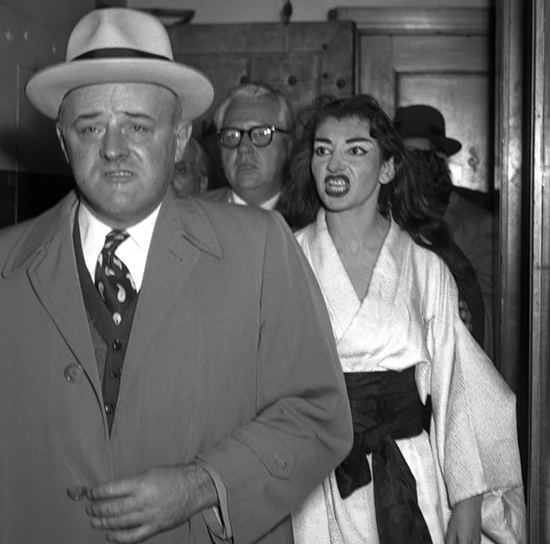
There’s a lot of colorful language and high drama in McNally’s piece. The legendary singer was known for her fiery temperament, after all. Who could forget that 1955 photo of her snarling, still wearing her Madama Butterfly kimono and makeup, at the backstage of the Civic Opera House in Chicago, after being served a summons for a breach of contract lawsuit. Headlined “Not so Prim a Donna” in the media, it was a major scandal that marked the “Tigress” persona associated with her when she was considered the greatest dramatic soprano of her generation, with a personal life just as theatrical as the operas she performed – feuds with opera management, rivalries with other singers like Renata Tebaldi, whose voice she compared to Coca-Cola versus her sterling standard of champagne; and love affairs including the one with Aristotle Onassis who left her to marry Jackie Kennedy.
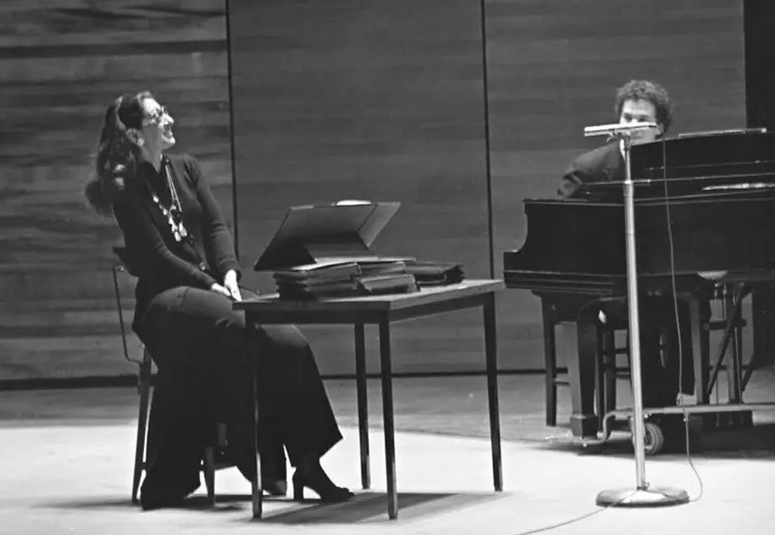
So you can just imagine the fireworks that take place in the Callas classroom, which was actually on a stage with a paying audience that included opera singers, students critics and celebrities in 1971-1972. For the play, the fourth wall is broken for the diva to interact with the audience.
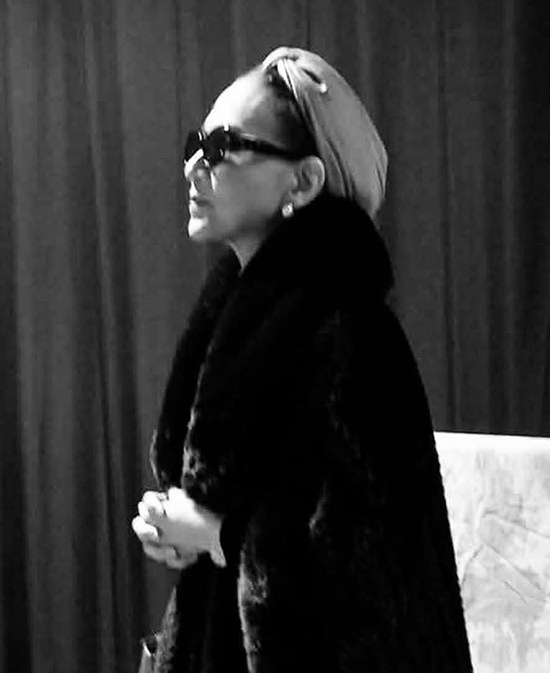
At a preview, we got a glimpse as Menchu Lauchengco-Yulo, playing Maria Callas, made her grand entrance onstage to intimidate her piano accompanist, Manny Weinstock (Louie Angelo Oca), whom she doesn’t recognize from the day before when he wore a red sweater but now looks nondescript, prompting her to give the first lesson: “It’s important to have a look! Be someone so people can remember you!” She goes on to relate that she always knew how she needed one when she just started and was overweight, going on a crash diet so that she could become thin enough to wear designer couture and have a distinct look that would help make her famous. She is no less caustic with her student, Sophie de Palma (Alex Bernas): “So do I make you nervous? Good. I take this seriously and so should you!”
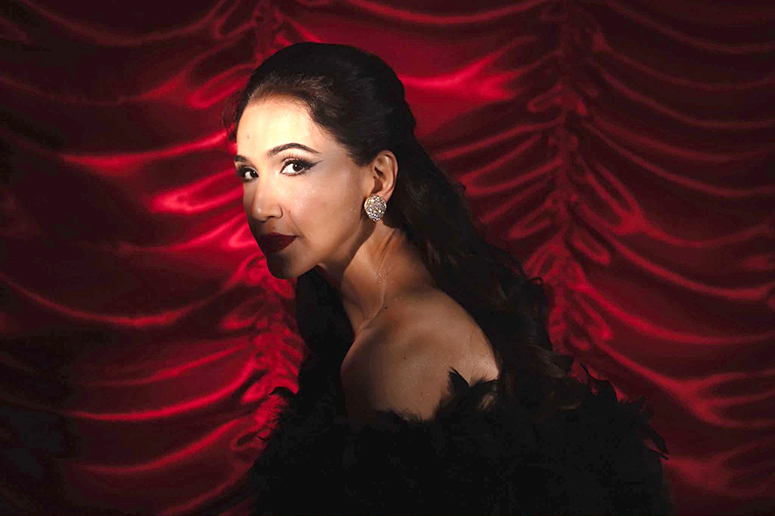
Menchu captures the imperious and sardonic manner of a commanding yet vulnerable figure who demands total sacrifice for art. Despite her severity, the character’s wit and acerbic humor shines through, creating a rich, moving and comedic experience. This period was in Callas’ final years, when her voice was just a shadow of what it once was, so there are moments of looking back to the high and low points in her life, both professional and personal, as stories that the students can contemplate.
Aside from Sophie, there’s Sharon Graham (Angeli Benipayo) and Anthony Candolino (Arman Ferrer), her students who will undergo scrutiny, singing arias from Callas’ famous operas: Bellini’s La Sonnambula, Verdi’s Macbeth and Puccini’s Tosca. The lessons from the play resonate profoundly with Alex, who realizes that “an opera begins long before the curtain rises and lasts long after leaving the theater.” Arman, who concentrated on the singing in his student days, learned from Callas that “there’s more than just a voice, you have to let people see the role. That’s why she would let her voice crack as Violeta in La Traviata because she was dying.”
CONTINUE READING BELOW

“There’s a joke about BC and AC. After Callas, there was more drama; she brought acting to opera and that’s partially why she lost her voice,” Menchu shares. “She has a line, ‘How can I have rivals when nobody can do what I do?’” Nobody in fact did La Traviata and Tosca one day after the other, two roles demanding opposite, highly taxing techniques and emotional temperaments.
It’s really all about love, about passion,” says Jaime Del Mundo, the one that Menchu and Karla singled out to direct this play. “It’s communicating to the younger generation what makes art work, that art is beautiful, art is necessary. Here, Callas pulls from her own life but this could be about Da Vinci, Picasso, Fonteyn.”
“It’s being the best you can be at whatever craft,” adds Menchu. “You always give a hundred percent to your audience. Sometimes I hear people saying ‘Di na bale, konting tao lang naman,’ but whether you’re performing for one or one thousand, each person went out of his way to watch so he or she deserves the best.” The multi-awarded actress and director actually conducts her own master classes. “What really resonates is how Callas works the lyrics and all the details. That’s why I do a lot of text analysis. I tell them, it’s more than just your song, it’s your dialogue, it’s your inner monologue.”
Jaime hopes the audience will realize “how much work goes into it, what Callas sacrificed. It adds value to art. Sometimes art is glossed over not because of a lack of exposure but because many do not realize the value of it. It’s really a lot of blood and guts that an artist gives.”
* * *
Master Class runs from May 15 to 30 at Carlos P. Romulo Auditorium, RCBC Plaza, Makati. Follow @philippine_opera_company Tickets 09176452946 or @ticket2me

WATCH: Is Gen Z too soft? (Generations Ep. 23)
September 30, 2026