

DOTS fantastic: Yayoi Kusama's connection with Filipino collectors Kim and Lito Camacho
Yayoi Kusama, the Japanese contemporary artist who is one of the world’s most celebrated and best-selling artists, died last Aug. 14 at age 97, her company announced. The news saddened many of her fans and collectors, two of the most prominent of whom happen to be right here in the Philippines: Kim and Lito Camacho who have been collecting Kusama since 2005, amassing a collection that grows to this day and includes many important pieces that have been lent to major exhibitions around the world.
“Yayoi Kusama is a veritable force of nature, a genius who appears like a comet once in a century! I am blessed to have known her and to have discovered her when I did. May she rest in peace. Thank you, Kusama san!” Kim said in a chat we had yesterday.
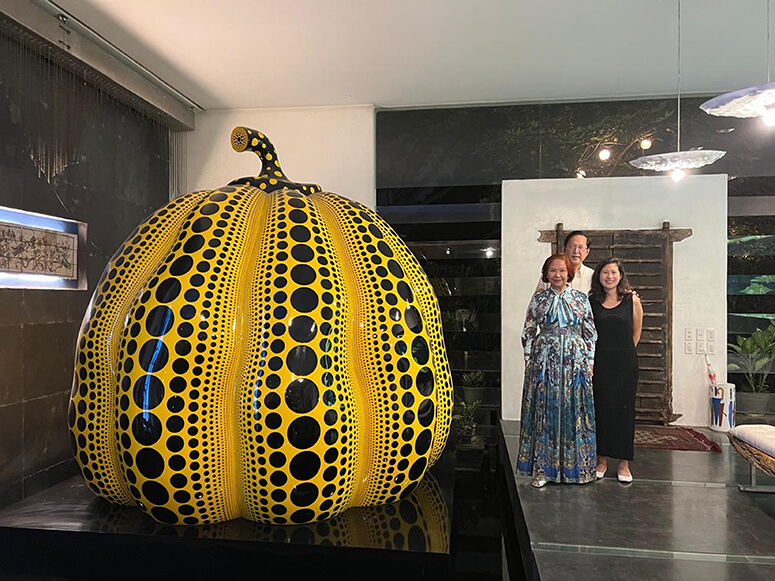
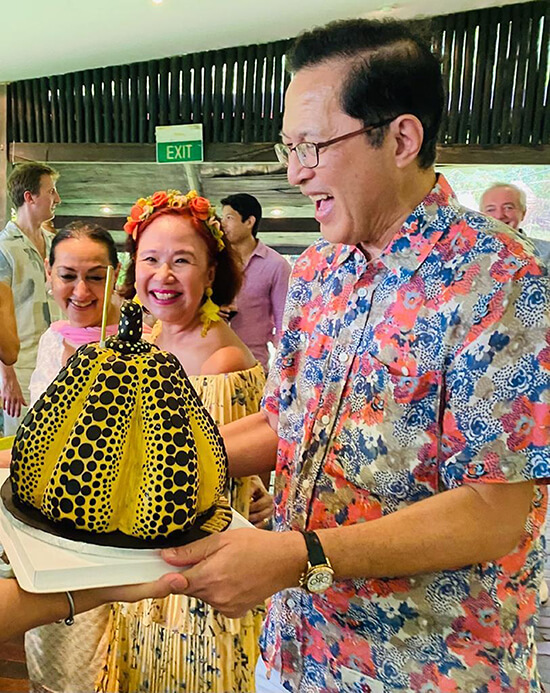
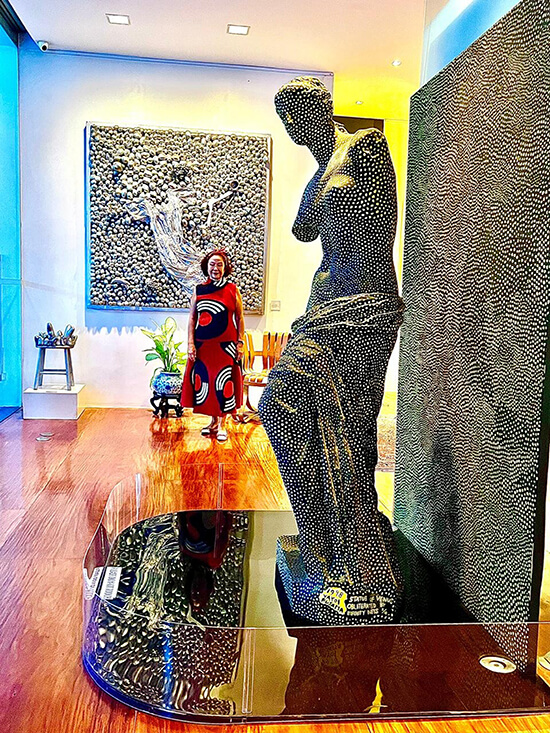
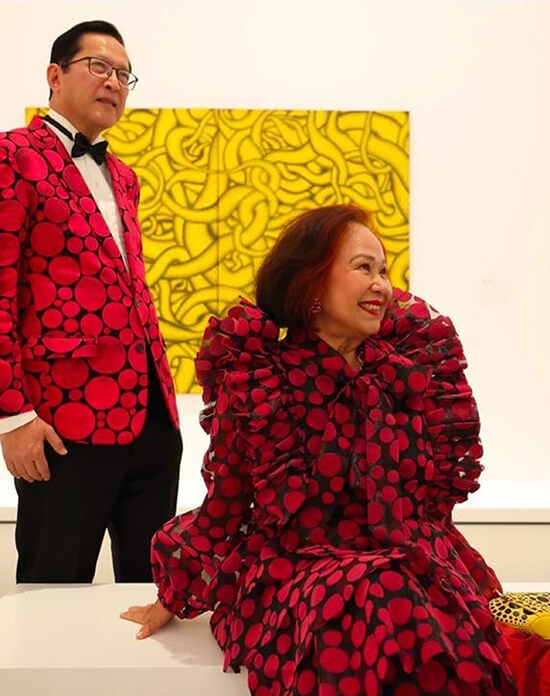
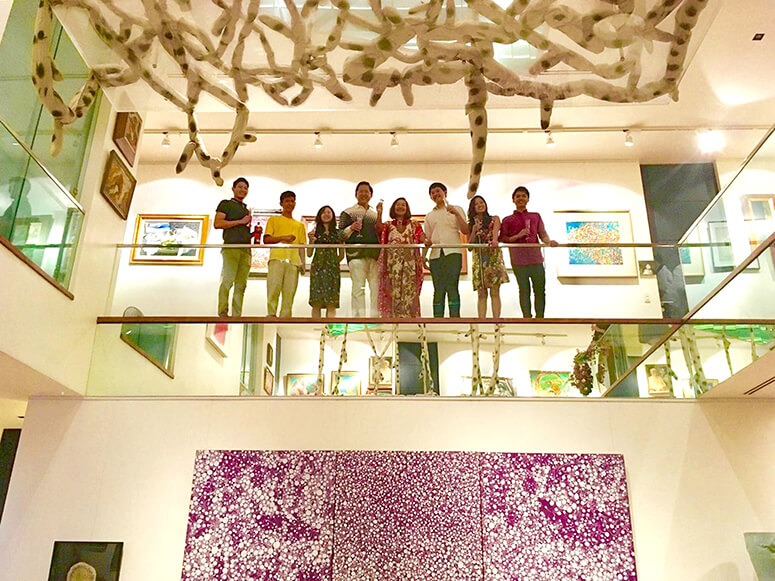
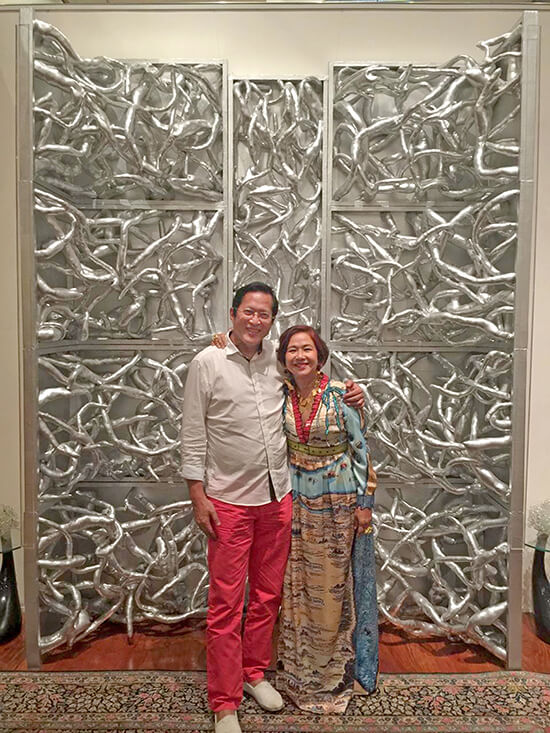
We are two of the lucky guests who have seen the Kusamas in the Camacho home. The house was actually renovated when their collection started growing so that the art can be enjoyed instead of keeping them in storage. “Living with Yayoi Kusama’s works, exhibiting them in our home, and lending them for museum exhibitions all over the world have definitely made me understand the overwhelming power that Kusama’s artworks have over people of all ages, all socio-economic classes, all faiths, and all races. The attraction is immediate and strongly felt. It’s truly a joy to witness!” Kim says. To share this joy, the couple has also been known to throw Kusama-themed parties where guests come in polka dots and the birthday cakes come in the shape of Kusama’s famous pumpkin motif.
Kim relates that the first time she encountered Kusama’s work was in 2004 at the National Museum of Modern Art Tokyo retrospective. “There were no more than five visitors then. Her quirky, fun, amazingly varied, original, refreshing, and totally unique artworks instantly blew my mind! I had never before experienced such artistic genius. Among the works was ‘The Fireflies on the Water’ infinity mirror room that sent me straight to heaven. Since there were no viewers, I stayed for as long as I wanted. Never again was that extraordinary privilege repeated. Little did I know that in 10 years’ time, people would line up for seven hours to be in that room for 30 seconds!” Kusama’s infinity rooms, in fact, have kept her relevant in the age of social media, when the exhibit lines get longer and the viewing time gets shorter just to get that selfie to post on Instagram.
CONTINUE READING BELOW

After seeing that exhibit, the Camachos naturally wanted to acquire one of her pieces right away, but their interpreter said it was not possible since she had just accompanied the director and curators of the Serpentine Galleries to Kusama and she proved “difficult.” A year later, they moved to Singapore where one day, at their home, a postcard from a local gallery arrived, addressed to the previous tenant inviting her to a Kusama exhibition. “As you can see, it was providential. We were chosen to collect Kusama. I clearly saw God’s hand. I saw it as His reward for Lito’s selfless service to the nation at great financial sacrifice!”
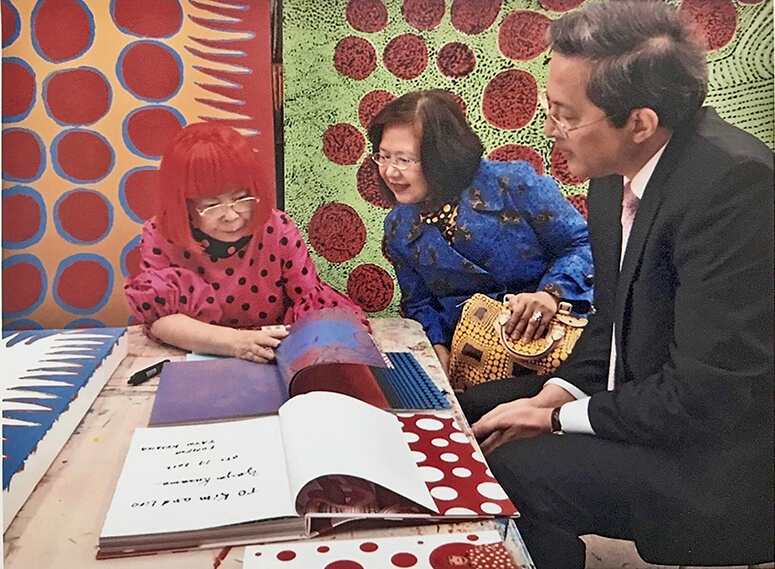
The couple was also lucky to have a meaningful encounter with Kusama in her studio in 2012 while she was painting. Expecting their arrival, the artist had the Pen magazine open to the page showing them surrounded by their Kusama collection. “She smiled when she saw me as I was dressed from head to toe in the highly successful LV Kusama collection. I was blessed that she agreed to sign my LV Kusama Mackintosh and handbag!” The artist also signed several books, showed them her inventory of paintings and office, and happily ate the mooncakes that they brought for her, saying “Oishi!” She entertained them for 2.5 hours, which was a big deal because they were informed beforehand by Hidenori Ota, the head of Ota Fine Arts, the mother gallery of Kusama, that the visit would only last 15 to 20 minutes. They obviously had a connection. “She allowed me to hold her hand, and even recited two poems to us. When I told her that we had just returned from Matsumoto and asked if she still had family there, her eyes teared up and she said, ‘My parents were very rich, but they did not support me at all.’ I felt very sad for her.”
Kusama, who was born in 1929 in Matsumoto, had a miserable childhood, with a physically abusive mother who discouraged her from drawing and asked her to spy on her father’s extramarital affairs, resulting in her lifelong contempt for sexuality, particularly the male’s lower body and the phallus. “I didn’t want to have sex with anyone for years. The sexual obsession and fear of sex sit side by side in me,” Kusama said once. She also experienced a lot of hallucinations: “flashes of light, auras, and dense fields of dots.” Patterns that she stared at would come to life, multiplying and engulfing or expunging her, a process that would lead to her “self-obliteration” pieces of infinity nets and repeating dots. Pumpkins that she saw at her parents’ nursery farm would also affect her the same way and become a recurring motif. Her art became her way of escaping from her family and her own troubling mind.
She studied nihonga painting in Kyoto in 1948 but found it too traditional since she was drawn more to European and American avant-garde, eventually moving in 1958 to New York where she established herself creating the paintings and sculptures that she would become known for, aside from performance art in “happenings” where she painted polka dots on naked bodies, creating scandals that made her a pariah back in Japan. She even wrote President Nixon, offering to sleep with him if he ended the Vietnam War. Her “soft sculptures” of fabric-stuffed phallic shapes, an attempt to heal her disgust around sex, also drew attention and became a recurring motif.
Although she produced unique pieces and was even copied by the likes of Claes Oldenburg and Andy Warhol, the art world never fully embraced her and left her a struggling artist, prompting her return in 1973 to Japan, where she did not receive any sympathy, either. She became depressed and had suicide attempts until 1977, when she met a doctor who used art therapy to treat mental illness in a hospital setting. She checked herself in and made the hospital her residence ever since, with her studio nearby—a place where she became productive again, creating art in various media and even writing novels and poetry. She finally got the attention she deserved, causing a stir at the Japanese Pavilion in the Venice Biennale in 1993 with her mirrored room of pumpkins and having retrospectives in New York’s MOMA in 1998, London’s Tate Modern in 2012 and Washington DC’s Hirshhorn Museum in 2017, aside from numerous shows around the world.
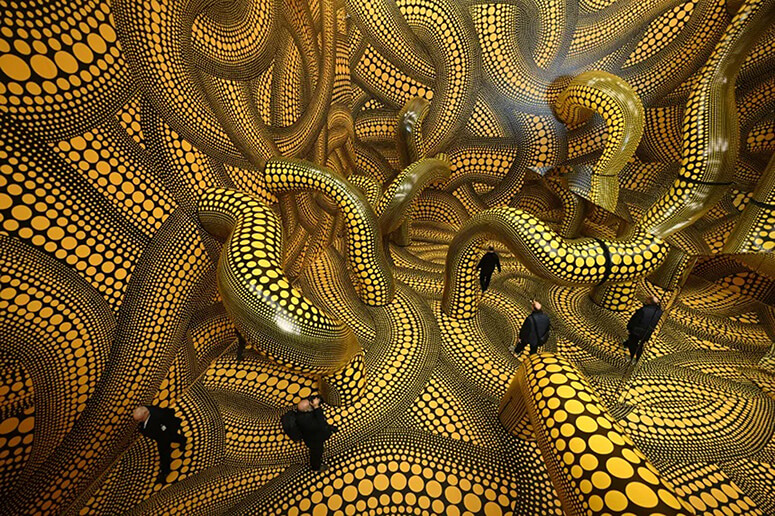
Kusama’s work exhibited at the Museum Ludwig in Cologne earlier this year. Photo from Ina Fassbender/AFP
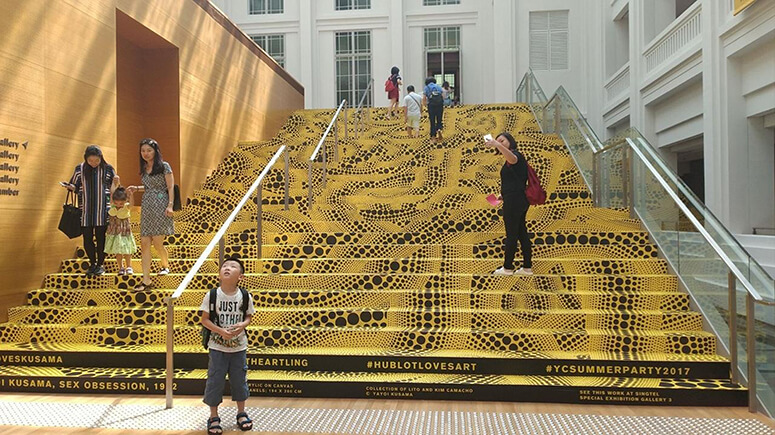
The Camachos’ “Sex Obsession” was blown up for the stairs at M+. Photo from Kim Camacho
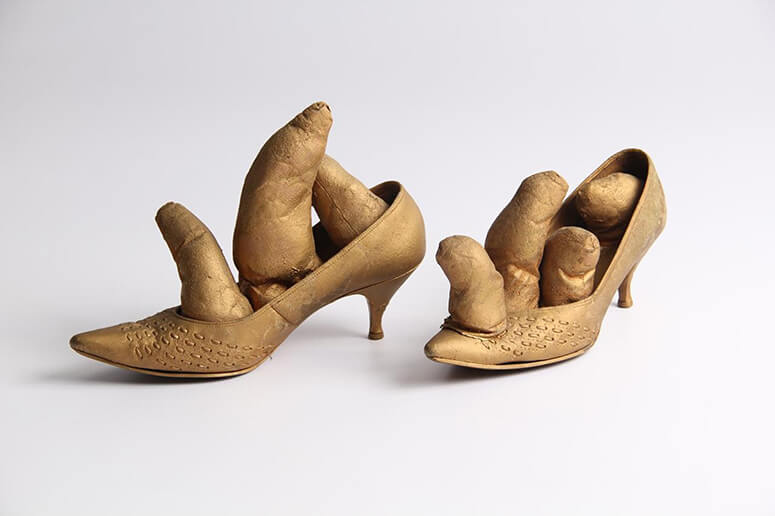
Kusama’s famous golden shoes in the Camacho collection, exhibited in about 10 museums. Photo from Kim Camacho
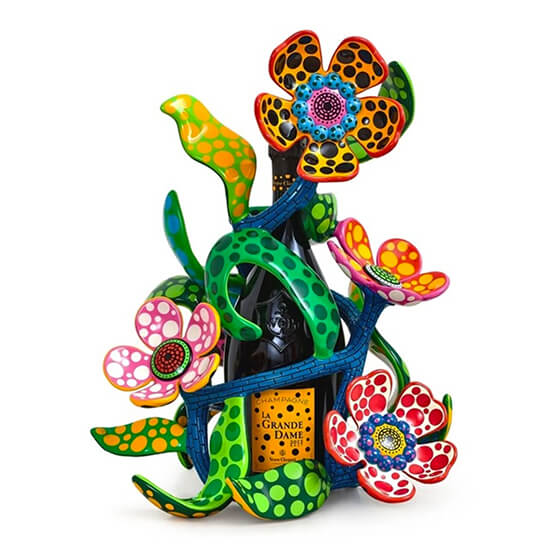
A Kusama sculpture from Camacho collection. Photo from MutualArt
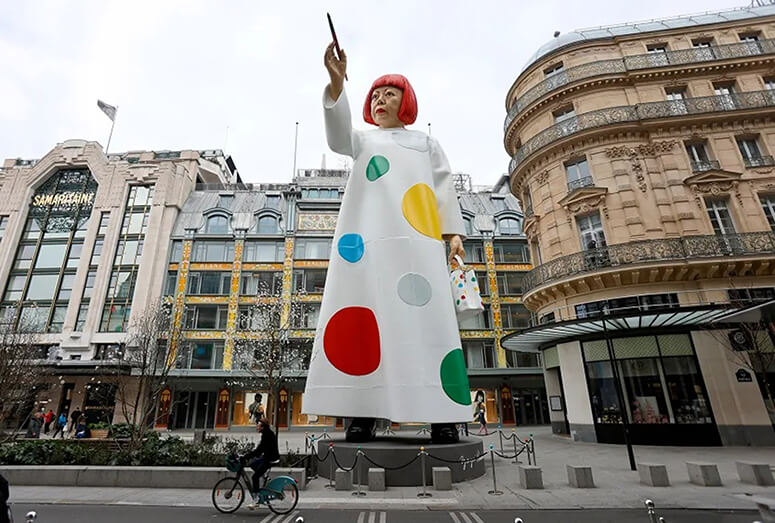
A large sculpture of Kusama between the Louis Vuitton headquarters and Samaritaine store earlier this year. Photo from Chesnot
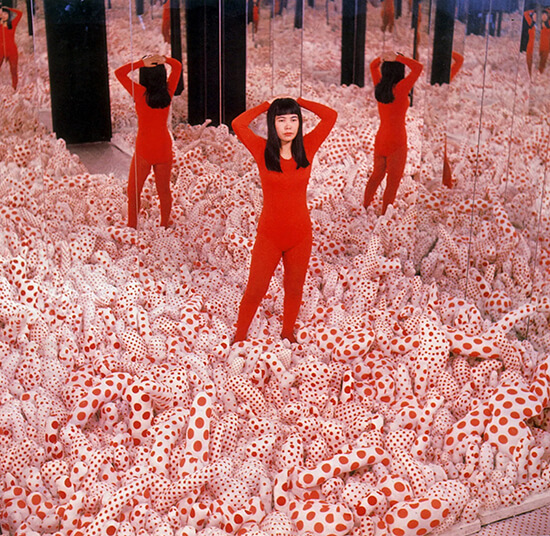
Kusama in a mirrored infinity room in 1965. Photo from Ota Fine Arts, Victoria Miro and David Zwirner

Kim Camacho wearing LV Kusama at the Kusama exhibit featuring their collection at the Ayala Museum in 2013. Photo from Kim Camacho
Kusama’s work exhibited at the Museum Ludwig in Cologne earlier this year. Photo from Ina Fassbender/AFP
The Camachos’ “Sex Obsession” was blown up for the stairs at M+. Photo from Kim Camacho
Kusama’s famous golden shoes in the Camacho collection, exhibited in about 10 museums. Photo from Kim Camacho
A Kusama sculpture from Camacho collection. Photo from MutualArt
A large sculpture of Kusama between the Louis Vuitton headquarters and Samaritaine store earlier this year. Photo from Chesnot
Kusama in a mirrored infinity room in 1965. Photo from Ota Fine Arts, Victoria Miro and David Zwirner
Kim Camacho wearing LV Kusama at the Kusama exhibit featuring their collection at the Ayala Museum in 2013. Photo from Kim Camacho
CLOSE
Her output was phenomenal since she never stopped working till her final days, as Kim discovered once over lunch with Ota in Singapore when he received a call from Kusama. “I asked Ota if I could listen in, and he agreed. I heard her saying the same thing over and over again in Japanese: ‘Bring me more canvases!’ Ota was incredulous, saying, ‘I just brought 19 canvases three days ago, and now she wants more?!” Kim was just as stupefied. “What an obsessive artist. She totally lived for art.”

WATCH: Is Gen Z too soft? (Generations Ep. 23)
September 30, 2026
WATCH: Save for retirement or enjoy life now? (Generations Ep. 21)
September 16, 2026
WATCH: Is OPM still as good as it used to be? (Generations Ep. 20)
September 9, 2026