

Meet the design duo behind Art Fair Philippines’ ever-changing moods
If you’re wondering how Art Fair Philippines manages the chameleon-like task of adapting to new environments from year to year, ask Rita Nazareno and Gabriel Lichauco, the design team that has put together the look for several editions.
After staging pop-ups at the 4th Floor of Art Fair 2023 in The Link, Nazareno/Lichauco got the nod to design the Special Projects section in 2025 when Art Fair shifted venues to Ayala Triangle Gardens, with its domed outdoor archways leading through tubular passageways, expanding out again into “raw, high-ceiling spaces” that helped express their theme of “temples of worship.”
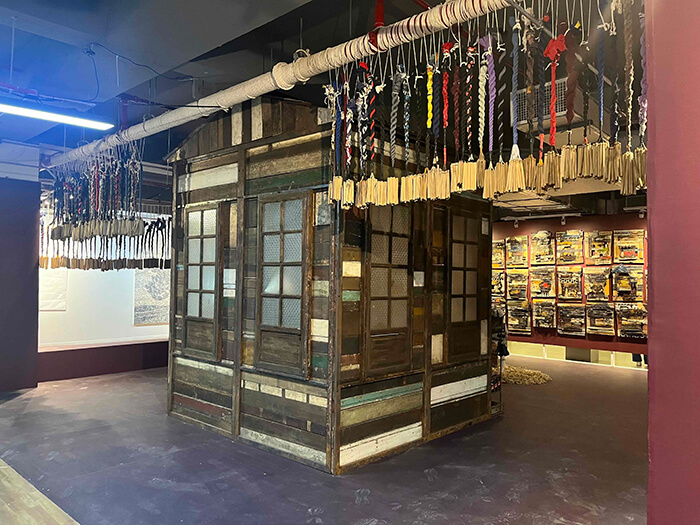
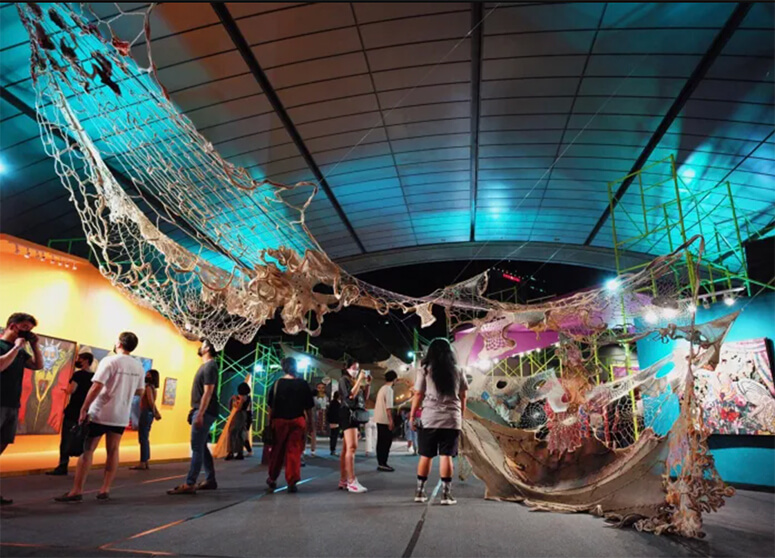
This year is a completely new space—Circuit Makati, where a former horseracing track repurposed into a complex of corporate office spaces unfurls today something even more culturally Filipino: an “imaginary barrio,” not plucked from history but from the conceptual touch of Nazareno/Lichauco.
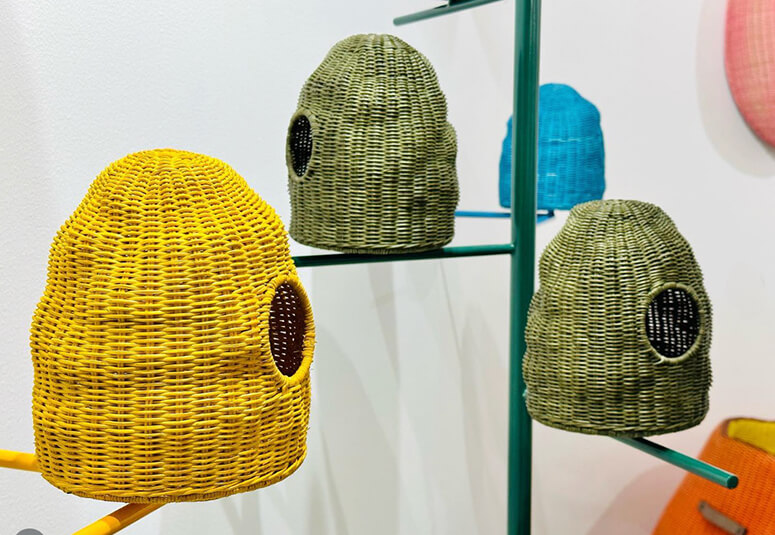
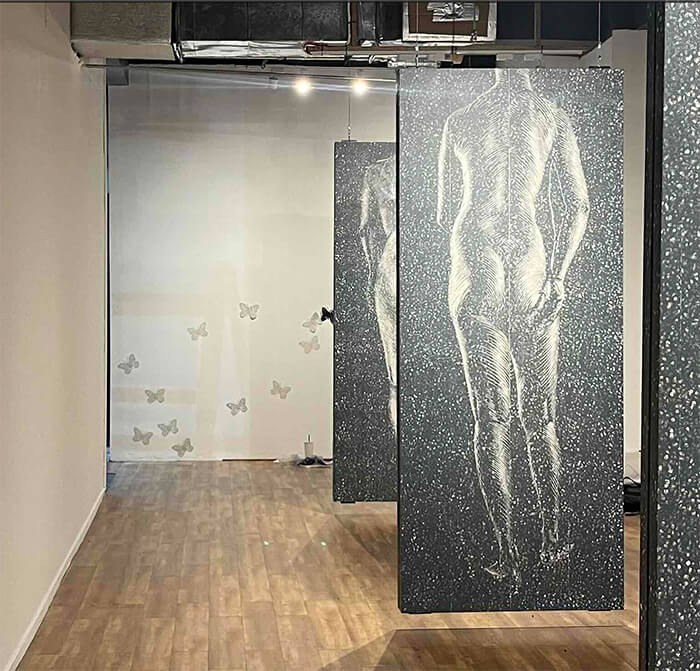
Interactive spaces like Art Fair are only part of their expansive portfolio. From bags and Filipino-infused décor to public art spaces, the duo shows versatility, wit, and a sharp eye for detail—from curating the Philippine participation at Maison et Objet Paris under Kindred Design Collective for Citem’s Design Philippines, to handling creative direction for the 2020-2022 Maison et Objet editions, to curating the 2020 design exhibition “ITIM: Material Manipulations in Black,” and recently reimagining a 30-year-old section of Museo Pambata.
Nazareno holds a master’s in Communication Arts from AAU San Francisco and Design Management from London College of Fashion and has participated in international tradeshows in Milan, Florence, Paris, Dusseldorf, London, Singapore, and Tokyo. An Emmy winner (for Television Creative Services Producer), she also runs Zacarias 1925, a local brand crafting hand-woven bags and home accessories with a contemporary slant, honoring the traditional work of the S.C. Vizcarra Workshop founded by her grandmother in 1925.
With a master’s in Industrial Design from Schuola Politecnica di Design in Milan, Lichauco designed for the 2017 Venice Art Biennale, the 2016 XXI Triennale and several editions of Salone Internaionale del Mobile di Milano. He also founded Openstudio, a multi-disciplinary design consultancy that focuses on space, installations and objects, and Newfolk, a creative platform for innovative designers, artists and producers. In 2020 Lichauco was named one of Asia’s “100 Leading Designers” in Design in Asia: The New Wave.
CONTINUE READING BELOW

PHILIPPINE STAR: How did you start working together, and what is the role of each of you in your process?
GABBY LICHAUCO: Rita and I met in 2012 at a dinner party and we hit it off. We immediately started throwing ideas of what would be interesting to do and the next week, I started going to Rita’s family workshop and started making the pieces. We haven’t stopped working together since. How we communicate plays a big role in our design language.
RITA NAZARENO: The conceptualization of projects with Gabby is one of my favorite parts in our process and that’s for whatever we are designing—whether objects, bags or even spaces. I enjoy our discussions and the back-and-forth in the beginning stages of a project. The process can be quite random which makes it interesting and we also appreciate each other’s temperament. We bring different things to the table as well.
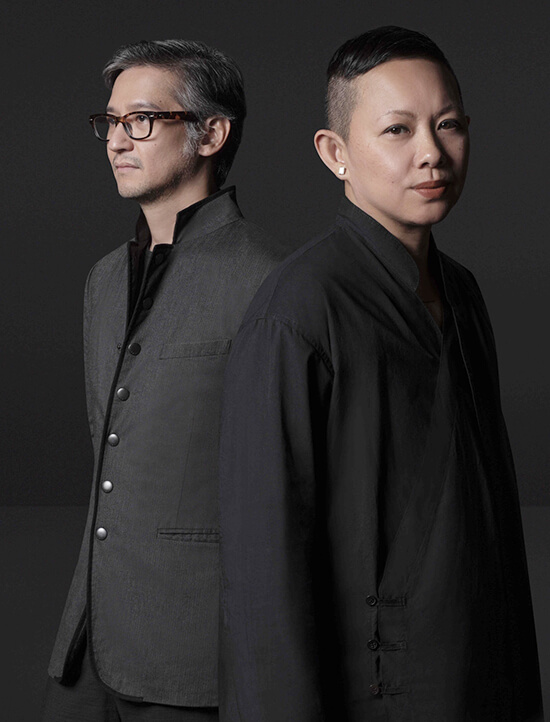
Our intention for Nazareno/Lichauco is to develop our potential, both individually and as a partnership. There is a limit to working alone sometimes but working with someone with the same wavelength just pushes you to be better.
When did you first get involved with Art Fair, and what was “the assignment”?
RITA: In 2023, Nazareno/Lichauco had a design shop during ArtFair PH at The Link. In 2025, at Ayala Triangle, we were tasked to work on the Special Projects space, with artists such as Manuel Ocampo and Goldie Poblador. The concept then was a spiritual space, a secular place of worship. If you remember, there were these altar-like stairs leading up to Ocampo’s massive work. We had a raw, high-ceilinged space to work with then.
With Art Fair, we always look at the space first and hear about the artists involved and their work before we come up with a concept. This year is interesting as the assignment was to activate an abandoned BPO commercial office space into an art experience.
What was the inspiration for this year’s barrio or town plaza design at Circuit?
Nazareno/Lichauco’s concept for the Special Projects area is reminiscent of a long-ago plaza in an imaginary barrio. In the center of this población usually is the plaza, flanked by a prominent structure of religious significance. The plaza forms a core of civic-religious-commercial hub—flowing through areas such as back-door eskinitas, through spaces where artists and makers all converge in this barrio-like setting, where life and vibrance course through.
Probably 90% of museums and galleries have very basic floor plans and layouts. Should museums and galleries be more interactive and interesting?
GABBY: Galleries are fairly standard as their program is to introduce artists and to sell. It depends on the direction of the museum, whether to show art or design.
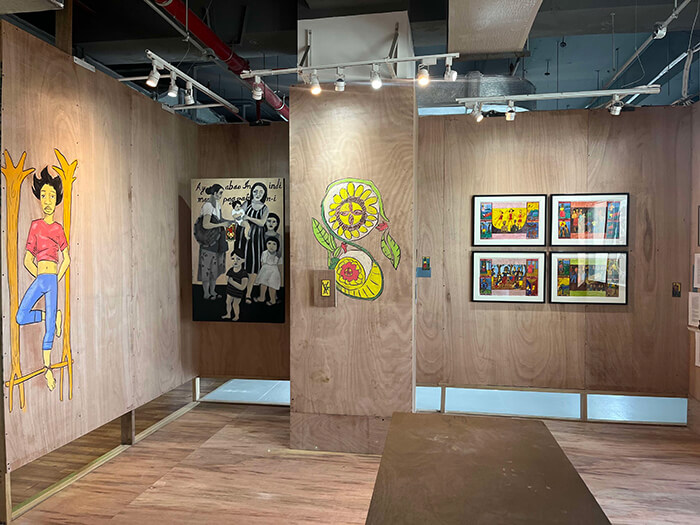
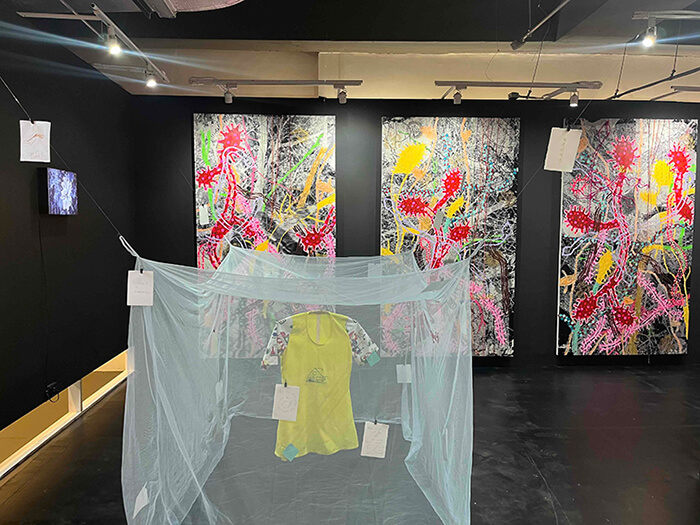
RITA: It is always a celebration to be able to show art. The constraints are real —budgetary, space, and what have you. The task for designers is how to make it more fascinating and captivating for both the artwork and the audience.
For our recent work with one of the Museo Pambata’s rooms, we were challenged to overhaul a 30-year-old exhibit. We then updated and modernized the display for the children of today.
What is your idea of an interesting museum or gallery space?
GABBY: Chichu Museum in Naoshima is one of my personal favorites.
RITA: There are magnificent spaces globally that I enjoy. From Hong Kong’s M+ to Chateau La Coste in the south of France. I always find Tokyo’s Watarium Museum provoking because it is built on a small triangular plot, with a minimalist geometry by Mario Botta from the ’80s. The contrast with its urban surroundings makes the building itself a significant artwork.
Did the COVID lockdown change your way of thinking about public spaces where people interact?
GABBY: Not for me, but for others I know. It may have opened the importance of public spaces.
RITA: Most definitely. I feel it actually broadened possibilities and reset minds.
Is there ever any disconnect between what you conceive and what clients finally want?
RITA: Execution is key.
* * *
Art Fair Philippines 2026 is now open to public at Circuit Makati from Feb. 6-8. Enter the fair through the Circuit Corporate Center One lobby and proceed to the 5th floor reception area.

WATCH: Can you still trust someone who betrayed you? (Generations Ep. 22)
September 23, 2026
WATCH: Is Philippine cinema still thriving? (Generations Ep. 19)
September 2, 2026