

‘Something sexy… happening in the Apocalypse’
There are bits of Somatosonic’s music where it feels like a weather disturbance spewing forth: with staves that boom like collapsing mountains, a pole dance stage that jars like a crack of doom, and sensors that conjure electronic scatting and symphonic static. The multi-disciplinary art unit—composed of Tad Ermitaño, Christina Dy (CD) and Marco Ortiga—recently had a gig at WHYNot in Karrivin Plaza, where the trio engaged in an artistic dialogue with new media artist Miggy Inumerable. Their performance wove together technology, sound, pole dance, audio-kinetic sculptures, live visuals, and a darkly brewing storm of sounds.
PHILIPPINE STAR: For people new to your work, how would you describe what Somatosonic does?
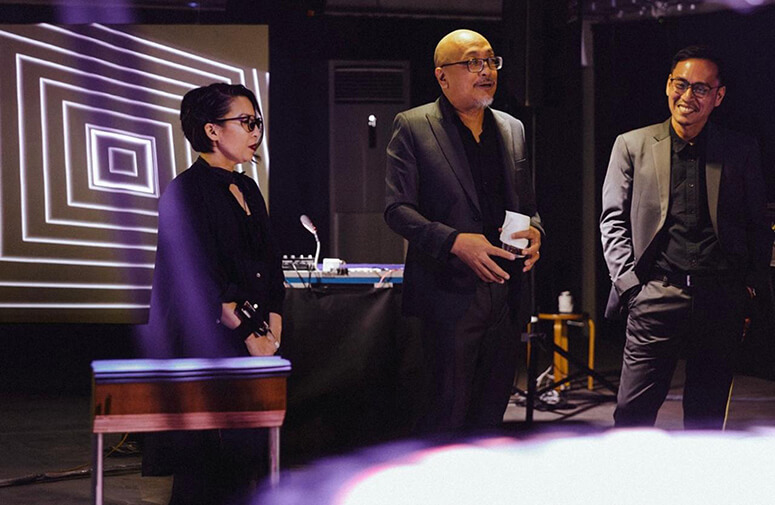
TAD ERMITAÑO: We’re basically the art equivalent of a band. We perform music exactly like a band does, but we make art and build our own instruments, all collaboratively. We also have totally different specialties: CD dances and draws; Marco builds kinetic sculptures; and I do noise, electronics and programming. One of the things we naturally do is explore and use new technologies in art—sensors, microcontrollers, wireless networking, and so on.
What was the concept behind your set at WHYNot?
I’m only half-joking when I said “Totality 1.0” was our stab at rethinking Wagner’s idea of the gesamtkunstwerk—literally “total-art-work.” It was an attempt at a culmination: to use everything that we know and have built into a single immersive, theatrical piece with scripted moments of tension, relaxation and climax.
Did the performance continue ideas from past shows, or was it completely new?

It definitely built on stuff we’ve done before. We have a set of musical pieces that we’ve been performing and practicing for over a year now. We added some new songs and more segments. For instance, CD’s “BoneFone” performance is a totally new thing, as was the “Plaka Reader” interlude that featured Marco on the Hinangin. Another way of putting it is that we’ve been developing this show for over a year.
How do you divide roles between sound, movement, and objects during a performance?
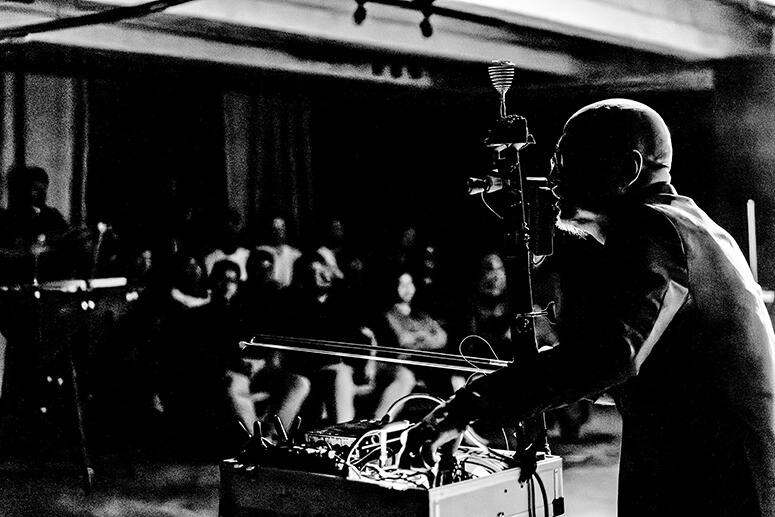
That’s kind of a difficult question. We’re very conscious of trying to put things into words, but that process of shaping—shifting from CD’s dancing to maybe me playing a low drone on the Tungkod to create a kind of pregnant silence into which Marco drops a beat… this is all done by feel and intuition.
I remember this bit in Andy Warhol’s From A to B and Back Again where Warhol talks about how he painted: “I look at my painting, and then I add a little bit of pink here, then I decide it needs a bit of blue over there…” That’s exactly how we shaped the script.
Were there happy accidents—glitches, feedback, unexpected noises—that you kept?
We do that so often. We don’t even remember if something was unexpected. We kind of dance with the unexpected; it’s really part of the way we perform. We don’t play jazz, but maybe we have the same attitude to the unknown.
I’d say we practice structured improvisation: Marco lays down a grid of beats, but whoever is lead on the piece is the one the other two support and adapt to. If I decide to recite stuff for longer or shorter than a multiple of four bars, Marco will adapt. If I try to play a note on the Tungkod that turns screechy, I follow up with stuff so the screech makes sense.
Tell us about the visual collaboration with Miggy Inumerable. How did that begin?
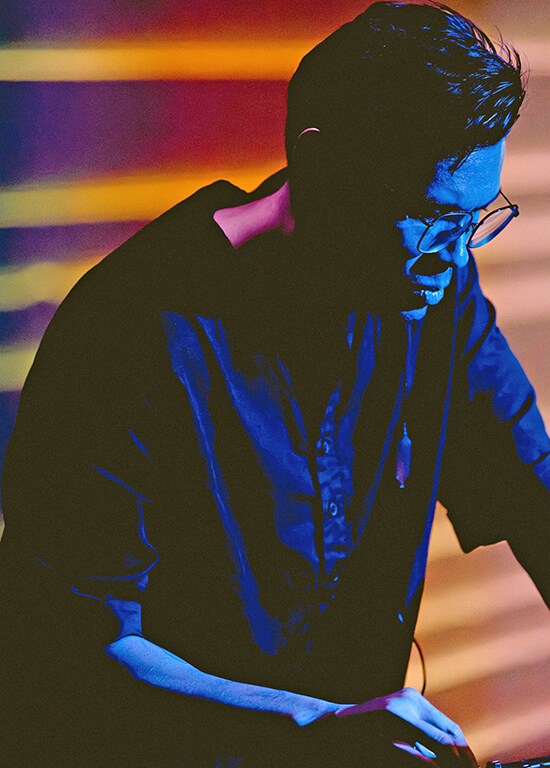
That was one of WHYNot’s contributions. They introduced us to Miggy. He and I had heard of each other—we both work with the program Processing, so we kind of understand the kind of work the other does. We had seen each other at various events, but had never worked together or even had an extended conversation.
WHYNot thought we might match. But that’s just the beginning. What kind of energy does he have? Is he open to input? Who follows who? Does he have ideas about how some kind of sound would help him?
So, we invited him over to our Monday tambays where we rehearse, drink and stuff, and it turns out we had good chemistry. He was open to us asking if he could, for instance, make something with jagged lines during CD’s “BoneFone” performance to mirror the idea of dysfunction, things breaking and running down.
How would you describe the visuals in terms of mood or narrative?
The audience seemed to think they really merged with and enhanced whatever the music was putting across.
This girl in a bar we once played at once described one of our pieces as “something sexy happening in the Apocalypse,” and that’s just one of the moods. As for how the video contributed… I want to quote what Lebowski said about his rug, “It really pulled the room together.”
Were the visuals reactive and live, or pre-composed?
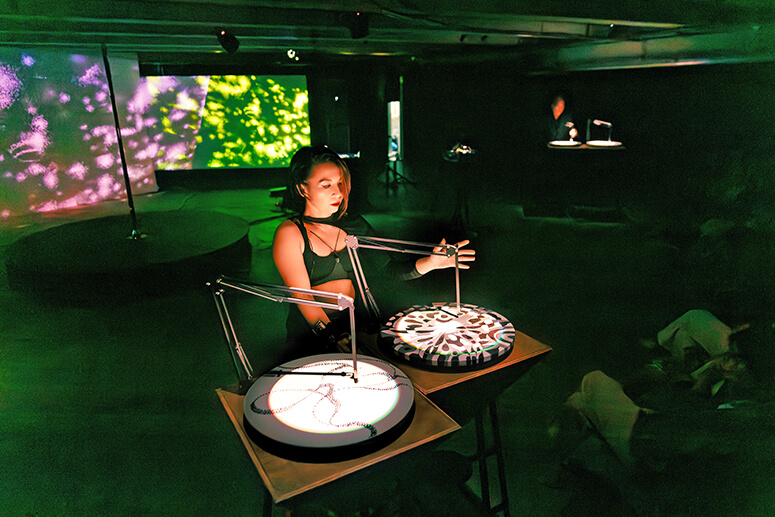
Think of a DJ remixing records on the fly. That’s pretty much what Miggy was doing, except he was remixing records he himself had made. He had pre-written a lot of bits using code in Processing—expanding squares, broken lines, lightning flashes, and this insect swarm of particles — and he flew them in, sped them up, slowed them down, layered them, and so on, as he saw fit.
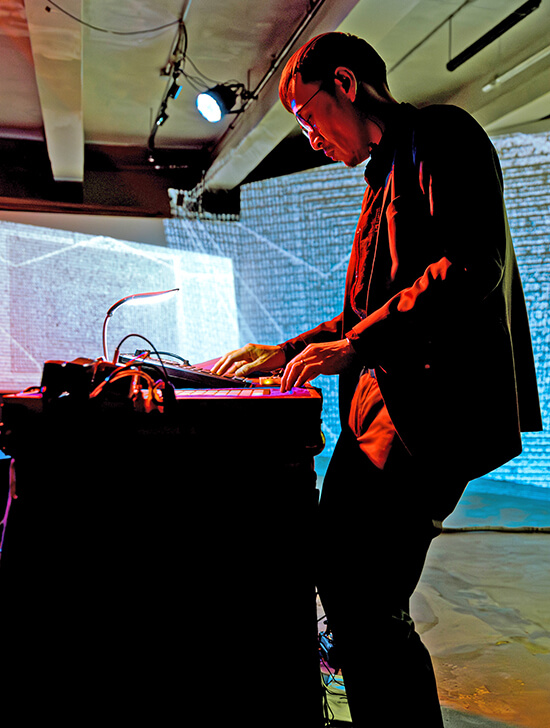
How did the space and architecture of WHYNot shape your setup?
The space and architecture influenced our setup a lot, but mainly through the WHYNot girls. We rehearse in a tiny room at Marco’s place, so we’re not used to thinking in terms of how to distribute ourselves dramatically in space and how to use lights to enhance the music.
Baby Imperial and Marta Lovina—who are masters of the theatrical possibilities of their space—essentially edited us by dispersing us in theatrical space. For example, that bit where CD and I played the Plaka Players among the audience—that was all Marta and Baby. That would never have occurred to us.
What reaction do you hope people leave with after a Somatosonic show?
We want them blown away, period. My dream would be that some of the bits people experienced would help them put a finger on things they feel or perceive in the future. I would love it if we were memorable enough to become part of their vocabulary.
Are there new instruments or materials you’re working on for future performances?
Lots. CD wants me to help her sonify drawings. I have this idea of reading the heartbeats of embryos in eggs. Marco wants to go deeper into the Hinangin. I’m thinking of more complicated networking arrangements so we feed data to each other… Lots!
Where do you see Somatosonic evolving next?
We’re thinking of releasing stuff. As in objects. Maybe in a limited edition. A physical album, maybe. Maybe a line of toys—miniature versions of the Plaka Player, maybe. Syempre, more music and more instruments.
Sounding the invisible
Tad Ermitaño walks us through the instruments in Somatosonic’s arsenal.
BoneFone (2025)
Dy’s “BoneFone” performance—presented as a separate movement in “Totality 1.0”—is a concrete outcome of Somatosonic’s “Yes-and” method of collective creation. The piece emerged from the crepitus (cracking sounds) in Dy’s right shoulder. Instead of suppressing it, Dy asked Ermitaño to build a sensor to foreground the sound. Ermitaño then developed a wireless stethoscope, prompting Ortiga to design an audio-effects chain to process its output. The resulting instrument allows Dy to make music directly with her body, exemplifying the trio’s instinct for accommodating and extending one another’s ideas.
Sound Pole (2021)
One of Somatosonic’s earliest attempts to sonify CD’s movements, the Sound Pole reimagines CD’s pole as a touch-sensitive MIDI controller. Touching the pole triggers samples in Ableton Live via MIDI.
McG (2025)
The McG (a MIDI-controller glove) is S2S’s latest exploration of translating physical gestures into sound. It contains an accelerometer that tracks the position of CD’s hand in space; this data is converted into MIDI and transmitted via Bluetooth to Ableton Live.
Tungkod (2018)
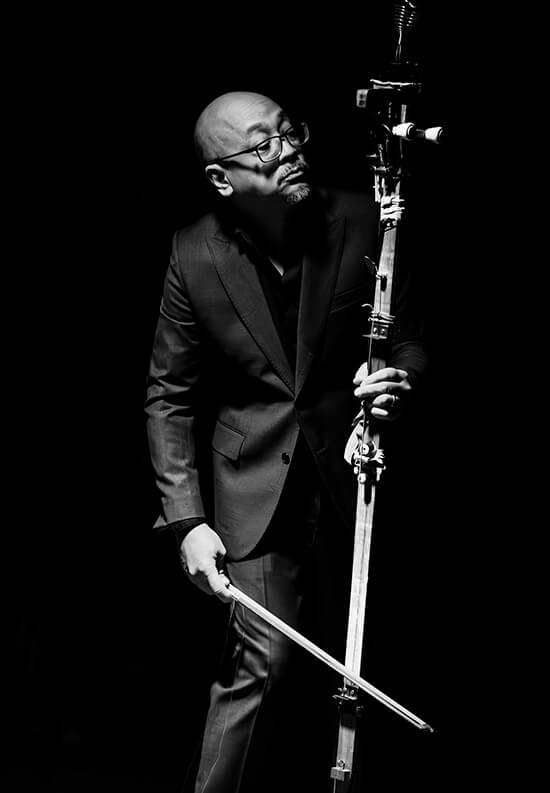
Tad Ermitaño’s primary instrument, named Tungkod ng Ermitanyo (“the hermit’s staff”). Initially inspired by Nana Vasconcelos’s use of the berimbau, Ermitaño began by striking the monochord with a stick but later shifted to a violin bow. He now employs both traditional and extended techniques—spiccato, flying spiccato, sautillé, harmonics, scraping, and more—to produce a wide range of timbres.
Two major mechanisms have since been added:
Godslam—a bass-percussion mechanism that produces a deep, reverberant boom when the Tungkodis slammed on the floor.
Dirty Mic—a low-fidelity DIY microphone made from a cheap speaker, giving his voice the character of a distant radio transmission or a 1930s recording.
Sumba (2023)
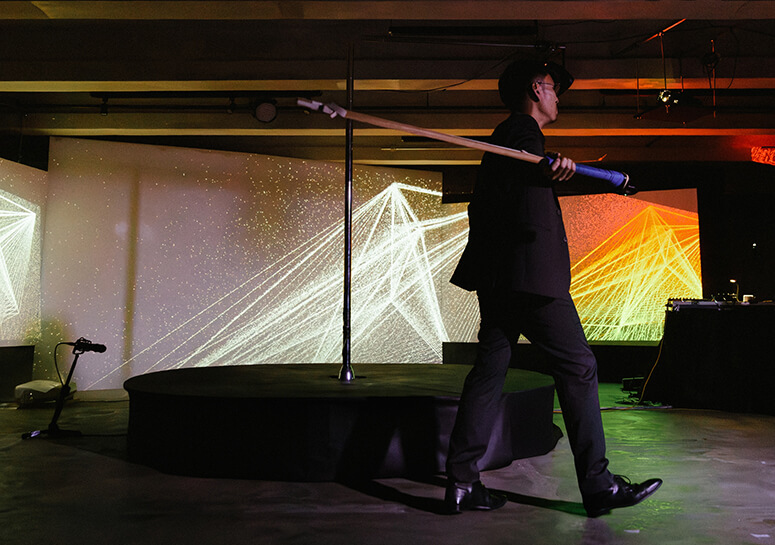
Created during a windy residency in Calatagan, Sumba is a “wind bow,” inspired by the buzzer mechanism used in indigenous kites—here reimagined in sword form.
Hinangin (2024)
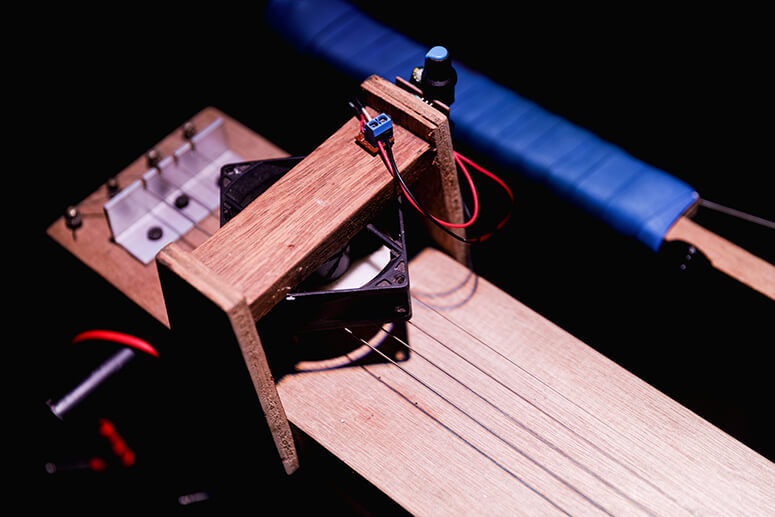
Inspired by the 17th-century aeolian harp, the electric Hinanginmerges it with an electric lap steel guitar, adding a whammy bar, replacing wind with magnets spun by a small motor—a low-tech e-bow generating magnetic turbulence.
Plaka Reader (2024)
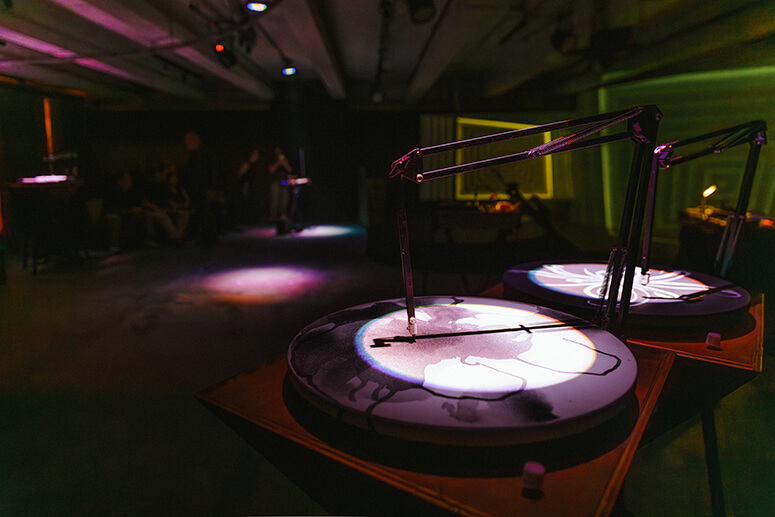
A machine that reads paintings as synthesizer scores. An infrared sensor scans patterns of light and dark, sending data into an Arduino microcontroller, which triggers, synthesizes, and modifies sound.

WATCH: Can you still trust someone who betrayed you? (Generations Ep. 22)
September 23, 2026